REVIEW · AGRIGENTO
Agrigento: Private Tour of Ancient Akragas with Local Guide
Book on GetYourGuide →Operated by Italygonia Travel T.O. · Bookable on GetYourGuide
Agrigento’s Valley of the Temples turns stone ruins into a clear story fast, and you get a private, licensed guide to connect the dots. I love the way the route hits major Doric stops in an efficient loop, and I especially like the mix of big set-piece monuments (like Juno and Jupiter) with smaller details (like the Icarus sculpture). One thing to consider: tickets aren’t included, so you’ll want to buy entry at the ticket office before your start.
This tour is timed for a tight 2-hour visit starting at the Juno (Hera Lacinia) temple area. Since it’s private for a group of up to 25, it’s also a good fit if you want questions answered on the spot in English, Italian, French, German, or Spanish. The main drawback is simple: because the focus is the Valley, you won’t be doing a broader museum visit as part of this experience.
In This Review
- Key things that make this tour worth your time
- Where your guide starts: Juno temple and the Valley’s big picture
- Temple of Juno (Hera Lacinia): height, columns, and a wedding connection
- Temple of Concordia and the Icarus moment you will not forget
- Temple of Hercules (Heracles): the name behind the bronze
- Panoramas and walking paths: reading the valley like a map
- Temple of Jupiter (Zeus): damage, quarrying, and the Telamons
- What’s included, what’s not, and how to plan your ticket strategy
- Languages, group size, and why private can feel more relaxed here
- Who this tour fits best
- Price and value: $326.26 per group up to 25
- Should you book this Agrigento private Valley tour?
- FAQ
- How long is the tour?
- Where do I meet the guide?
- Are tickets included in the price?
- What temples and highlights are included?
- What languages does the guide speak?
- Is this a private tour?
- Is a museum visit included?
Key things that make this tour worth your time
- Temple of Hera Lacinia (Juno), on Rupe Atenea hill: the opening stop sets the height and scale right away.
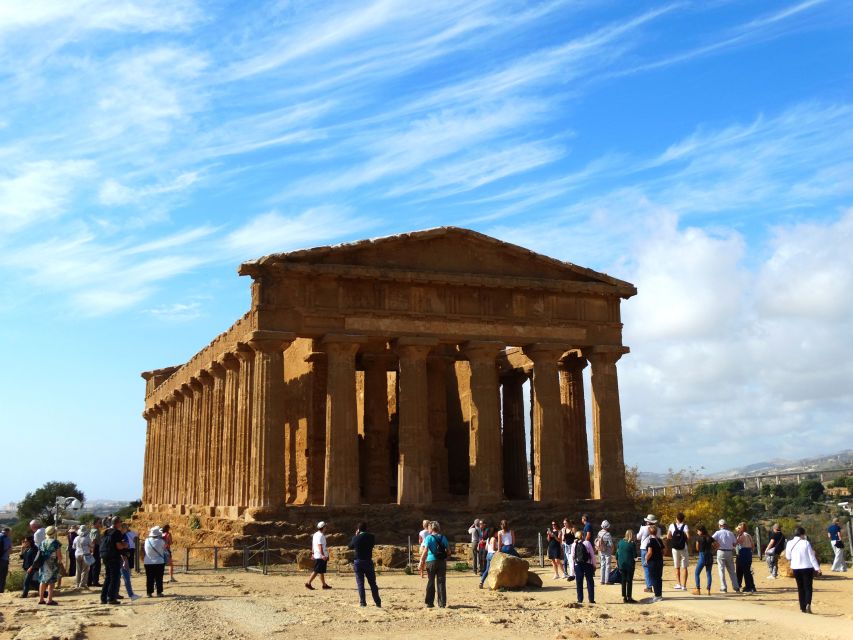
- Temple of Concordia, one of the best-preserved Doric temples: the Christian church adaptation is a key part of what you’ll notice.
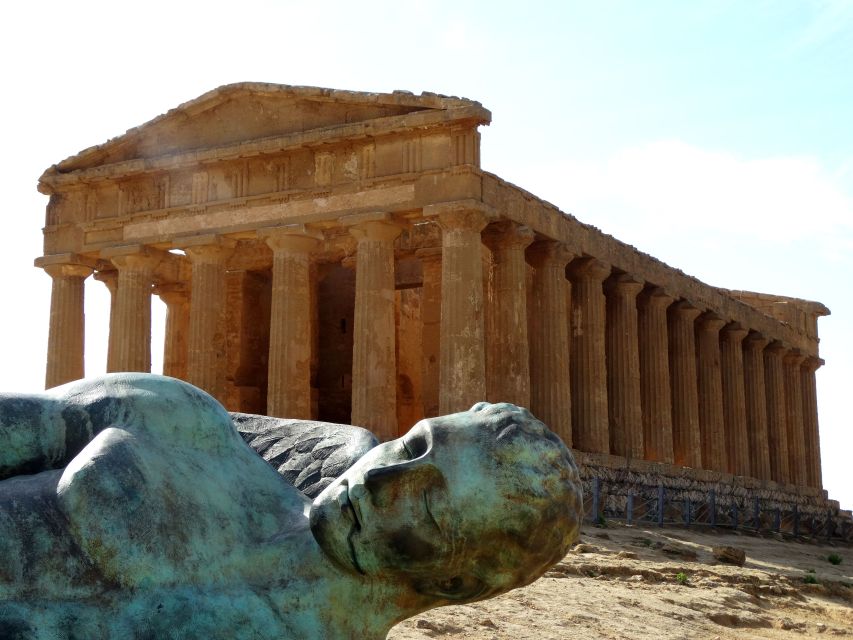
- Icarus bronze statue by Igor Mitoraj: you’ll see the famous fall-of-Icarus theme placed right at the front of Concordia.
- Temple of Hercules (Heracles): you’ll connect the name to a Hercules bronze statue inside the temple.
- Temple of Jupiter (Zeus) and Telamons: giants-on-guard details help explain what the temple looked like before damage.
- Panoramic viewpoints over the valley: the walk includes stops where the landscape does the explaining.
Where your guide starts: Juno temple and the Valley’s big picture
Your meeting point is at the Valley of the Temples, outside the ticket office/car parking area by the Juno temple (Hera Lacinia). The guide carries a visible license badge around the neck, so you can spot them quickly and avoid the usual start-of-tour scramble.
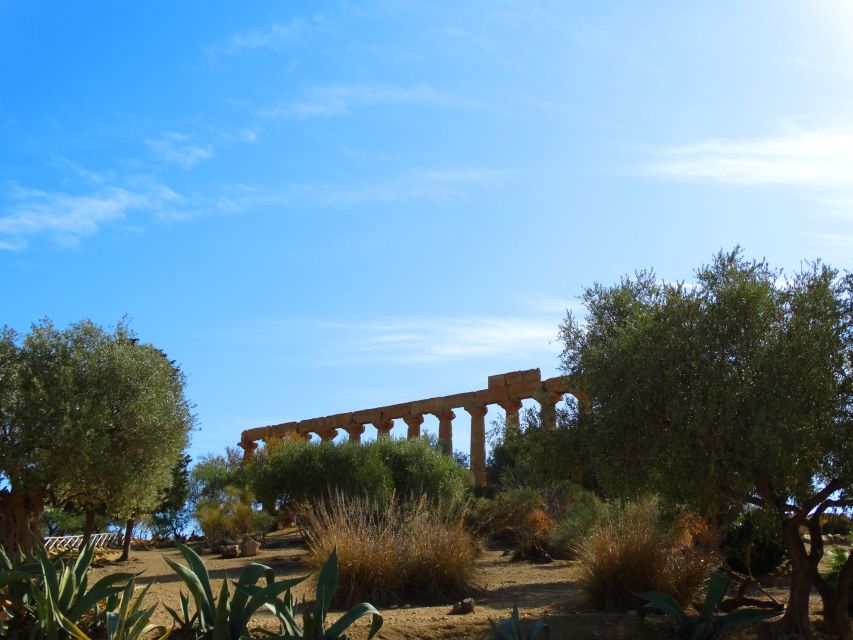
The tour begins here on purpose. The Temple of Hera Lacinia (Juno) is described as standing about 120 meters high on the Rupe Atenea hill, with Doric columns dating to around 450 BC. Even if you’ve seen photos before, the live experience hits different: you can feel the site’s command over the valley. It’s one of those places where your brain starts asking better questions, like why this exact spot and why this design.
From here, the guide builds the timeline in a way that feels logical. You’re not just walking from ruins to ruins—you’re learning what each temple meant, how it was used, and why it ended up the way it looks today.
Temple of Juno (Hera Lacinia): height, columns, and a wedding connection
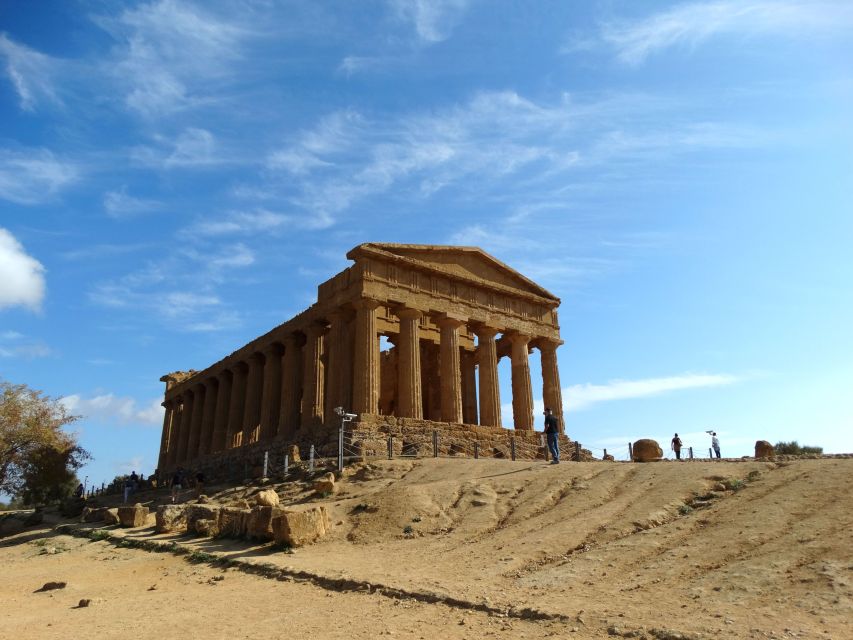
At the start, you’ll learn why this temple mattered. It was erected around 450 BC on Rupe Atenea, and it’s dedicated to Juno (Hera). The tour explanation includes the idea that the temple was linked with women and fertility, and that a painting kept inside it probably depicted the goddess in that protective role.
There’s also a detail that makes the stop more than just architecture: the temple is tied to the idea of weddings. The guide points out how that dedication shaped what people likely associated with the space, long before the word “tour” ever existed.
Practical note: this is an early stop, so you’ll be walking with a clear sense of direction. If you’re the type who likes context before you start snapping photos, you’ll appreciate how the tour frames this temple first instead of leaving you to guess.
Temple of Concordia and the Icarus moment you will not forget
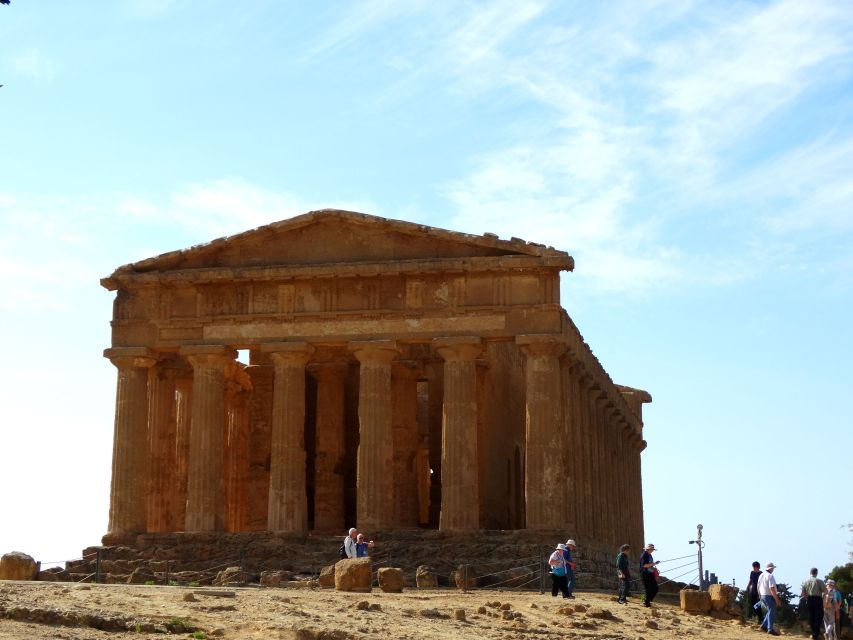
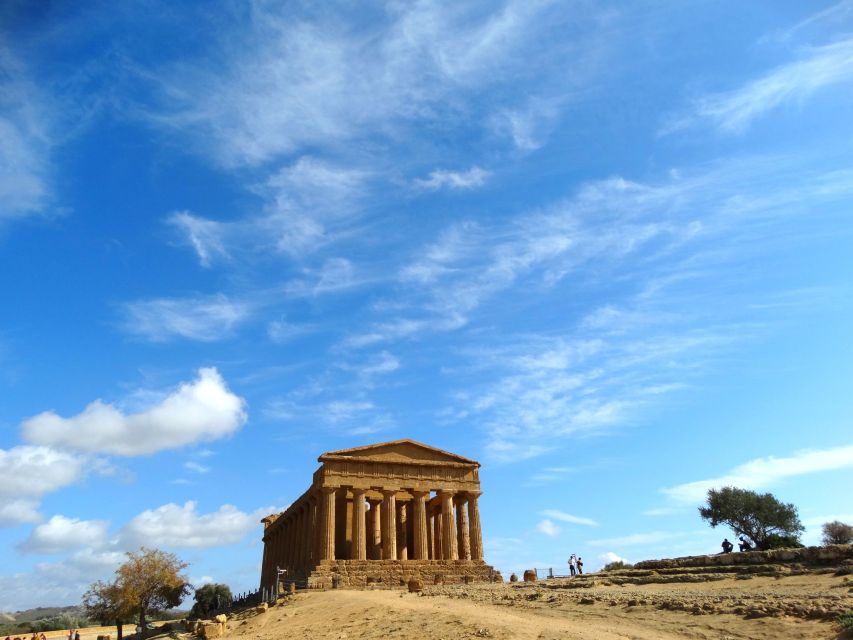
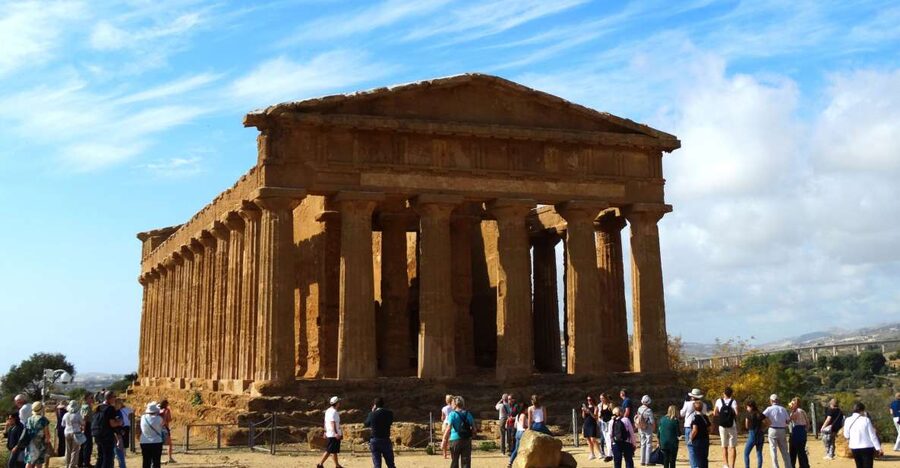
A few steps away comes the Temple of Concordia, often highlighted as the second best-preserved temple in the world after the Parthenon in Athens. Dating to about 430 BC, it’s in remarkably solid shape today, and the reason is part of what you’ll notice on the tour: the temple was transformed into a Christian church, which helped protect the structure over time.
That transformation is more than trivia. It changes the way you read the building. You can stand there and see how a site can shift meaning across centuries without disappearing. The guide uses this to help you understand the temple as a living landmark, not just a frozen relic.
Then comes the statue detail—the kind that changes your photo angle. In front of the temple you’ll see a bronze Icarus statue donated by Polish sculptor Igor Mitoraj. The description on the tour focuses on Icarus’s story: he disobeys his father, flies too close to the sun, burns his wax wings, and falls into the Mediterranean.
Here’s why that matters for your experience: Icarus gives you a human-scale myth in the middle of giant Doric stone. It turns the visit from purely architectural into something you can feel. You might even catch yourself looking at the columns differently after you’ve made that myth-connection.
Temple of Hercules (Heracles): the name behind the bronze
Next you’ll head to the Temple of Hercules (Heracles), described as one of the oldest Doric temples of Agrigento. This stop has a clean, memorable explanation for the name. The temple owes its identity to a bronze statue of Hercules inside—Hercules (Heracles) being the strongest and most valiant of the gods in the Greek imagination.
If you’ve ever wondered why some temple names stay consistent while others shift, this is a good moment to see how symbolism and objects can reinforce a dedication. The guide points you toward the key idea: the temple isn’t just called Hercules because that sounds good. It’s tied to the presence of the deity’s representation inside.
Also, you’ll be walking through parts of the valley where the guide points out prickly pear trees. It’s a small detail, but it’s useful. You’ll start to see how the landscape fits the ruins—this isn’t a dead museum set. It’s an outdoor environment that shaped (and continues to shape) what you see.
Panoramas and walking paths: reading the valley like a map
As you move between temples, you’ll get breathtaking panoramic views over the valley. This isn’t just a nice break. It’s part of how the Valley of the Temples makes sense. From the viewpoints, you can connect what you’re seeing with how the monuments relate to each other across space.
A tip I’d give you: if the guide stops for a view, don’t treat it like a pause. Treat it like the tour’s “chapter heading.” Look first at the layout, then take photos. When you do that in the right order, the pictures don’t turn into random snaps—they become part of the story you’re learning.
Because the tour is only 2 hours, you’ll want to move at the pace of the group. That time limit is not a problem when your goal is a focused primer of the main sites.
Temple of Jupiter (Zeus): damage, quarrying, and the Telamons
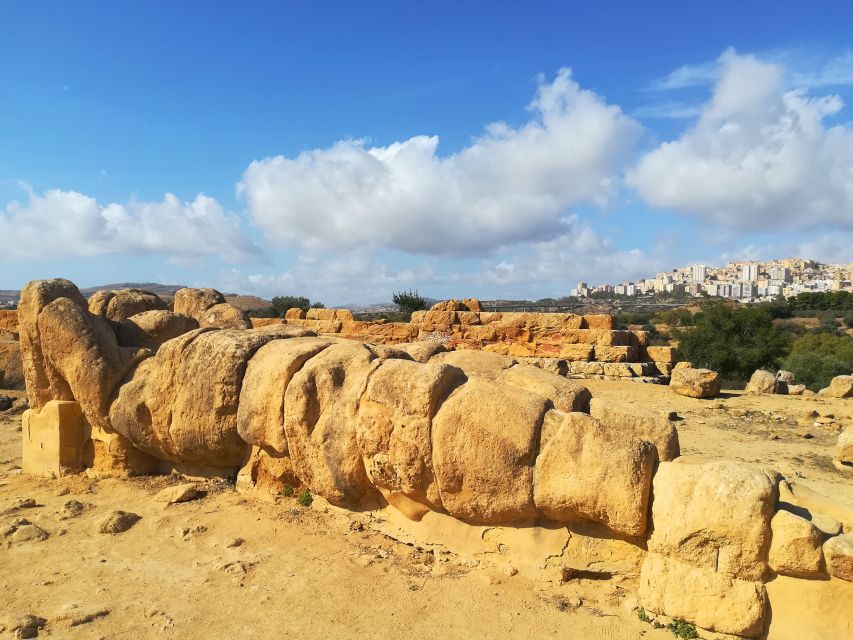
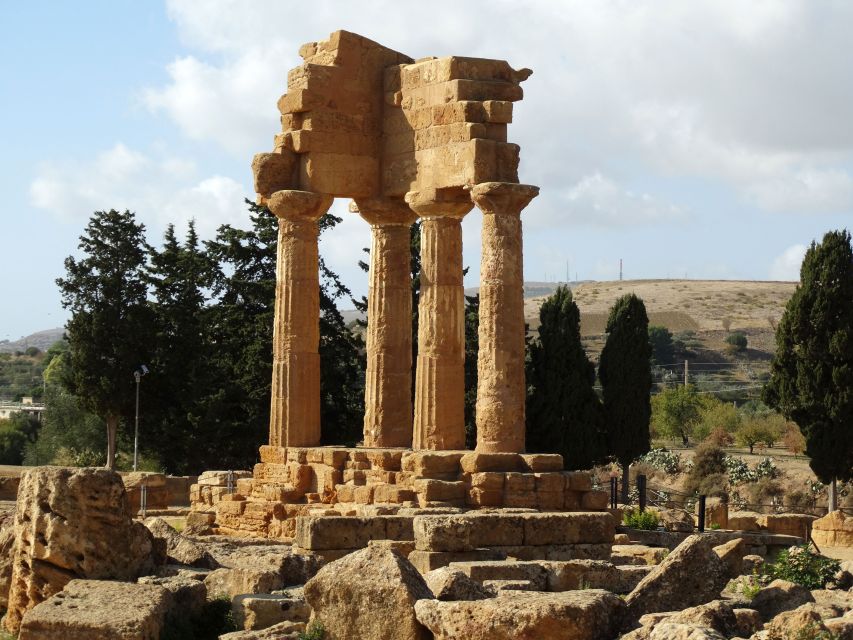
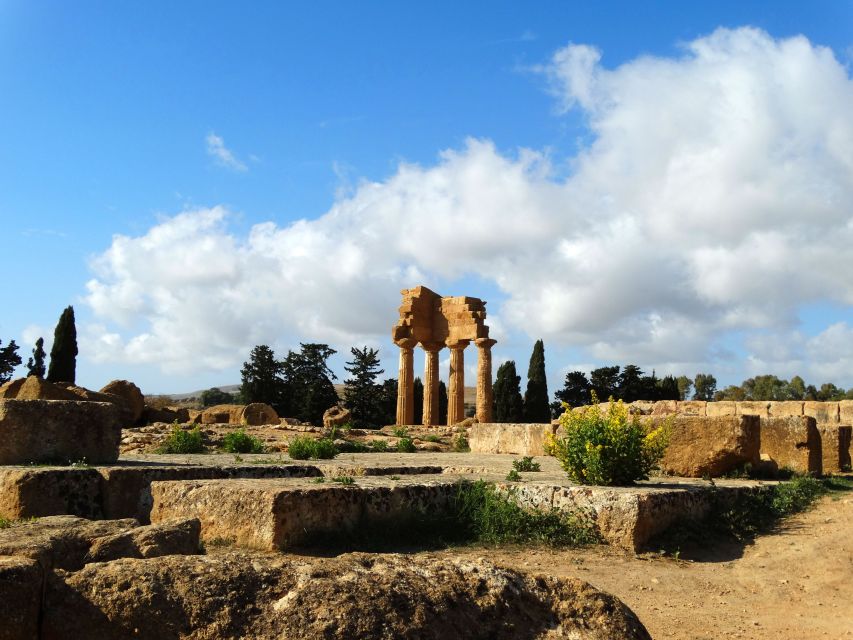
The finale is the heavy-hitter stop: the Temple of Jupiter (Zeus). The tour explanation covers the reason it looks the way it does. Over time, the temple suffered damage due to earthquakes, and it was later used as a quarry for the construction of the Porto Empedocle pier.
That history changes your mindset as you stand among ruins. Instead of thinking only about what’s missing, you can understand what happened to the stone. The guide also uses this to explain how classical sites often get cannibalized by later needs—then, much later, revived in the public imagination as archaeology.
One of the most striking parts here is the reconstruction of one Telamon over 7 meters high. Telamons are stone giants placed to protect or symbolize protection of the divinity. The tour also points out stone sculptures of giants placed outside the temple. Even in damaged form, those elements give you a strong sense of the temple’s original grandeur.
When people say this area is spectacular, they’re usually talking about scale. But what’s really happening here is scale plus imagination. You’re being guided to picture what the temple once looked like—so the “ruins” stop feeling like leftovers and start feeling like evidence.
What’s included, what’s not, and how to plan your ticket strategy
This experience includes a licensed tour guide. The tour also makes it clear that tickets entry are not included, and you can buy them on the spot at the tickets office.
That means you should plan for a small buffer at the start. If you arrive right at meeting time with no ticket in hand, you might burn minutes before you even begin. For a 2-hour experience, those minutes matter. If you’re visiting in high season, buying on the spot can still work, but it’s smart to show up ready.
Also, museum entry is not included. This is a Valley-of-the-Temples tour, not a museum package. If you want museum time, you’d need separate plans before or after.
Languages, group size, and why private can feel more relaxed here
The tour is private, with a group size of up to 25. It’s live guided in Italian, English, French, German, and Spanish.
This is one of those arrangements where private doesn’t necessarily mean you’re alone. It can mean your group moves together at a human pace, and the guide can tailor explanations. If you’re traveling with family or friends who want time for questions, private format often helps more than you’d expect—especially in a site where the details matter.
Duration is 2 hours, which is a practical length for temple visits. You’re not stuck in a long tour where fatigue wins. You get the big points and enough context to make the stones meaningful.
Who this tour fits best
This tour is a strong choice if:
- You want a guided way to understand the Valley’s main Doric temples without spending all day here.
- You like mythology and symbolism, especially the Icarus and Hercules connections.
- You prefer a focused outdoor route with panoramic viewpoints and clear stops.
- You’re traveling with a group and want a private guide without paying for individual private transfers.
It’s also a good fit if you’re on a tight itinerary and hate guessing. A licensed guide helps you avoid the common problem: wandering impressive ruins while missing the “why.”
Price and value: $326.26 per group up to 25
The listed price is $326.26 per group (up to 25 people), for a 2-hour guided visit.
For value, the key detail is the “per group up to 25” setup. If you’re booking for a small group, you’ll feel the cost more on a per-person basis. If you’re traveling with several people, the math becomes much friendlier because you’re sharing the guide cost across the group.
What you’re paying for here is not just someone walking with you—it’s a guide who can connect:
- why Concordia is so well preserved,
- why Icarus is placed where it is,
- what Telamons represent,
- and why damage happened and what the stone was later used for.
If you already plan to buy tickets anyway, the guide component is what makes this worth it. If your goal is strictly to explore on your own with zero structure, then a guided tour won’t feel like a bargain. But if you want the site to “click” quickly, this format is good value.
Should you book this Agrigento private Valley tour?
Book it if you want the Valley of the Temples to make sense quickly: big temples, myth-linked details, and the kind of explanations that help you look smarter while you’re standing there. The 2-hour length keeps it efficient, and the private guide format makes it easy to ask questions in your preferred language.
Skip or rethink it if you’re hoping for museum time or a longer, slower day. This experience is built around the Valley stops, not an all-day “everything in Agrigento” plan.
FAQ
How long is the tour?
It runs for 2 hours.
Where do I meet the guide?
You meet at the Valley of the Temples, outside the ticket office/car parking area by the Juno temple (the biggest).
Are tickets included in the price?
No. Tickets entry are not included, and you can buy them on the spot at the tickets office.
What temples and highlights are included?
You’ll see the Temple of Hera Lacinia (Juno), the Temple of Concordia with the Icarus statue, the Temple of Hercules (Heracles), and the Temple of Jupiter (Zeus) with the Telamons reconstruction and giant sculptures, plus panoramic valley viewpoints.
What languages does the guide speak?
The guide offers live commentary in Italian, English, French, German, and Spanish.
Is this a private tour?
Yes, it’s a private group.
Is a museum visit included?
No. A museum is not included as part of this tour.