REVIEW · ERCOLANO
Discover Herculaneum: A guided tour of the ancient Roman city
Book on GetYourGuide →Operated by inStazione · Bookable on GetYourGuide
Herculaneum feels eerily close to everyday life. This guided tour in Campania brings you into a Roman city famously frozen by Vesuvius, with a two-hour structure that keeps you moving while your guide makes the details click. I especially like how the focus stays on ordinary rooms and objects, not just big ruins.
I also love the highlight stops: the tour shines in the House of the Deer and other standout homes like the House of the Bicentennial and the House of the Wooden Partition. You’ll see the refined mosaics connected to daily taste and status, including the mosaics of Neptune and Amphitrite, and you’ll understand why they matter for how people lived.
One consideration: it’s not suitable for wheelchair users, and if you don’t want tight logistics you should plan carefully for the meeting point, since it can vary by option.
In This Review
- Key things to look for before you go
- Why Herculaneum hits harder than a quick stop
- Meeting the guide and getting oriented fast
- Touring the Roman houses that make the city feel lived-in
- House of the Deer: where you learn to read decoration
- House of the Bicentennial: an example of household identity
- House of the Wooden Partition: the shockingly human scale
- Mosaics of Neptune and Amphitrite: small art, big meaning
- The daily-life details that turn 79 AD into something real
- Staying after the tour: what you can do on your own
- Pairing Herculaneum with Vesuvius by bus (best for a full-day plan)
- Practical tips to make the two hours feel effortless
- Price and value: what you’re really paying for
- Who this tour suits best
- Should you book? My honest take
- FAQ
- How long is the Herculaneum guided tour?
- Is there skip-the-line access?
- What languages are available for the live guide?
- Where do we meet the guide?
- Can I stay in Herculaneum after the guided portion?
- Is transportation included?
- What’s included in the tour package?
- Is the tour suitable for wheelchair users?
- What should I bring?
- Are there any rules about food or drinks?
Key things to look for before you go

- Skip-the-line ticket help so you spend more time inside the site
- Two-hour expert guide that explains daily life, not just dates
- Roman house interiors including the House of the Deer and the House of the Wooden Partition
- Mosaics you can actually appreciate like Neptune and Amphitrite
- Optional Vesuvius + Herculaneum day with scheduled bus transfers
Why Herculaneum hits harder than a quick stop
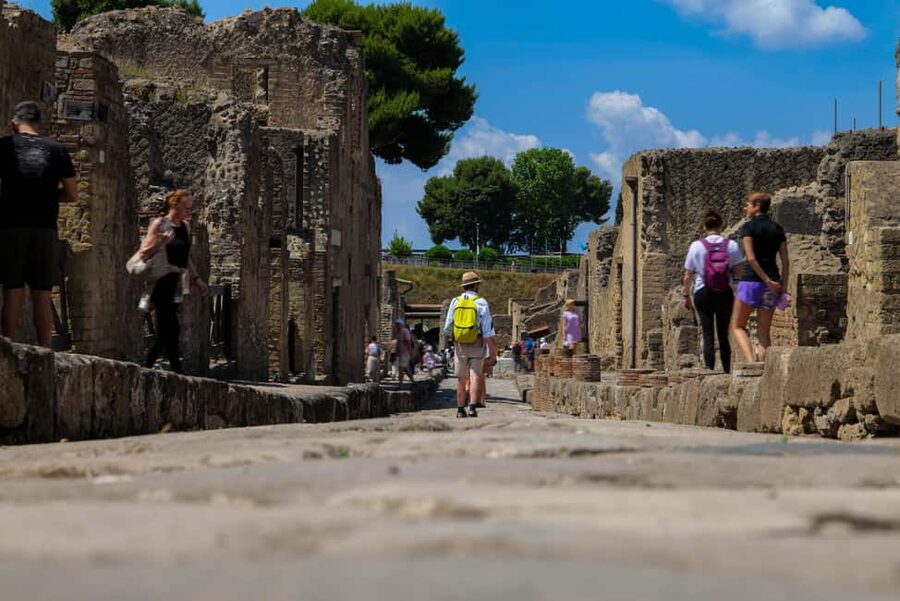
Herculaneum sits in the shadow of Vesuvius, and that single fact powers the whole visit. Pompeii gets a lot of attention, but Herculaneum can feel more personal because the preservation is so strong. You don’t just see walls—you get a sense of how spaces worked, how people decorated, and what they might have grabbed on a normal day.
On this tour, you’re in a guided loop designed to make the site readable. Instead of wandering and guessing, you’re pointed toward the elements that tell the story: houses with recognizable room layouts, fresco themes, everyday objects, and even details that survive in charred form. The result is a stronger mental image of 79 AD than you’ll get from going in alone without interpretation.
And the time box matters. Two hours is long enough for a real walkthrough with explanations, but short enough that you won’t feel trapped when the site gets busy.
Meeting the guide and getting oriented fast
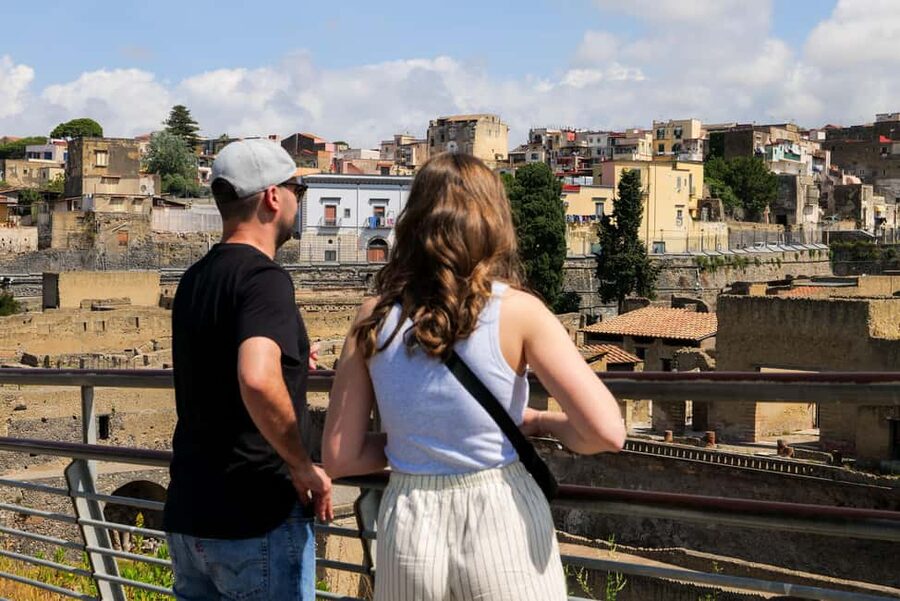
You meet your guide at a designated meeting point, which can change depending on the option you book. The company branding you’re looking for is the inStazione logo (it’s listed at the meeting location). Once you’re together, the guide—an ancient history enthusiast—frames the city before you step too deep into the ruins.
This orientation is useful because Herculaneum can look confusing at first. Street lines and building footprints are there, but your brain still needs help putting the pieces in order. When your guide starts explaining how residents used different areas of the house and how decoration connected to status, you start seeing patterns fast.
The tour is available in French, English, and Italian, and you get full assistance during your visit. That matters if you’re trying to move smoothly through the site without constantly stopping to figure out what you’re looking at.
Touring the Roman houses that make the city feel lived-in
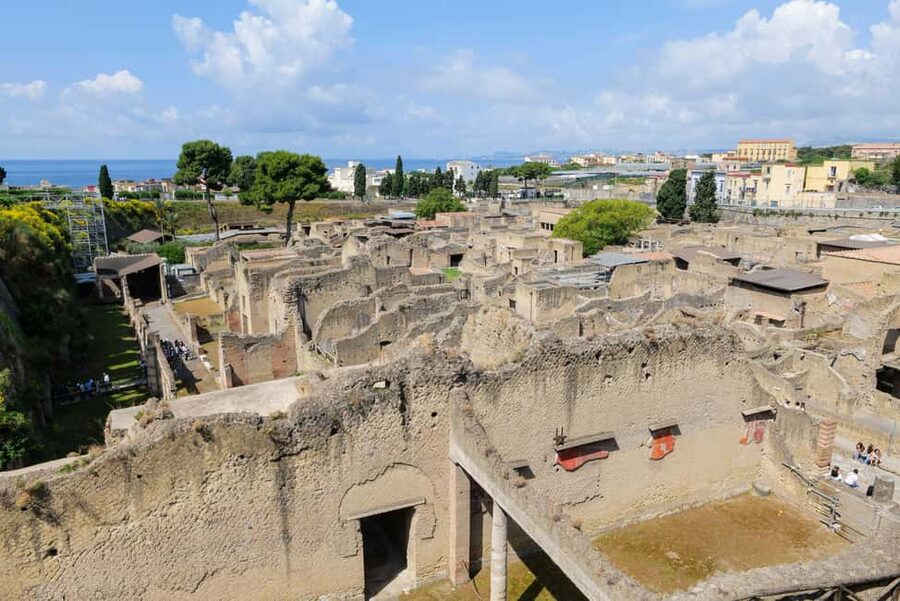
The tour’s heart is the set of Roman homes you visit. These aren’t random stops; they’re chosen because they help you understand how wealthy and middle-status families arranged space and signaled taste.
House of the Deer: where you learn to read decoration
The House of the Deer is one of the big names for a reason. Your guide will direct you to the kind of features that help you visualize daily movement through rooms. Even when some details are fragmentary, the way the house is presented turns the ruins into a plan you can follow—where you would walk, gather, and display.
House of the Bicentennial: an example of household identity
The House of the Bicentennial adds another angle: it helps you connect the idea of a home to cultural identity and time. Your guide’s explanations help you move past simply seeing a “house ruin” and start thinking about what residents wanted visitors to notice.
House of the Wooden Partition: the shockingly human scale
The House of the Wooden Partition is a standout because it points you toward how fragile and detailed ancient interiors could be. Wooden elements don’t usually survive well, but here you get clues about partitions and domestic separation—so you start picturing how privacy and function worked inside the home.
And this is where you’ll feel Herculaneum’s special preservation. You’re not just looking at stone shells; you’re being encouraged to notice what survived in forms that feel almost impossible. That’s one reason people walk away thinking about the people, not just the archaeology.
Mosaics of Neptune and Amphitrite: small art, big meaning

Roman mosaics are easy to overlook if you treat them like decoration only. This tour encourages you to see them as statements—about money, education, and cultural references that were understood by residents.
The mosaics of Neptune and Amphitrite are a perfect example. Your guide explains their place in the household setting and helps you understand why mythological imagery mattered. Even if you’re not a museum person, you’ll likely notice how carefully these scenes were placed within the rhythms of daily space.
When you pause for a mosaic, you also slow down enough to take in surrounding details: nearby walls, floor transitions, and the way the room’s layout frames the art. That’s the difference between looking at ruins and actually learning them.
The daily-life details that turn 79 AD into something real
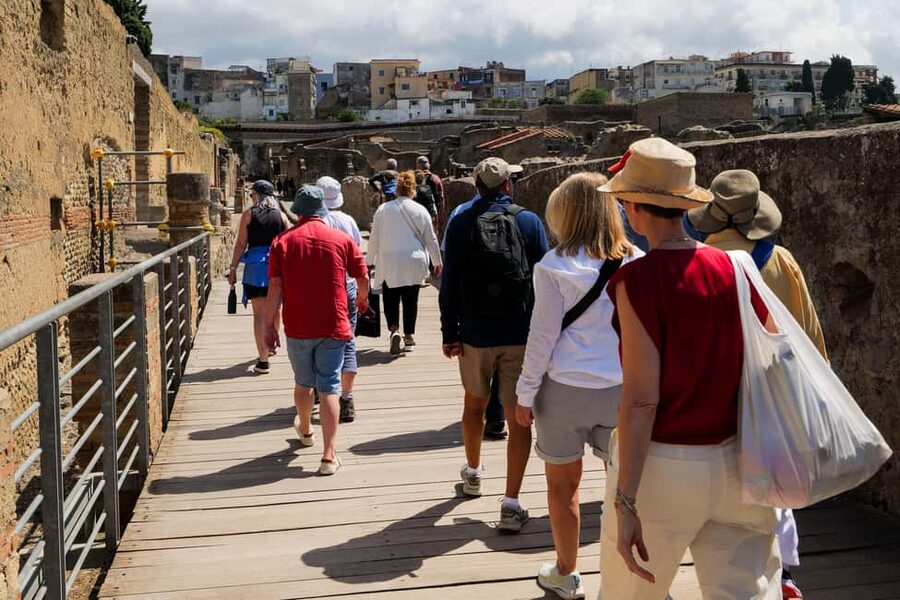
A lot of Roman-site tours focus on emperors, politics, or major public buildings. Herculaneum is different, and this experience leans into that. You’ll spend your time with the textures of ordinary living: frescoes and color traces, everyday objects frozen in place, and those charred wood elements that can be especially haunting.
One strong theme of the guide-led approach is perspective. Your guide’s job is to help you understand that the eruption didn’t just destroy a city; it stopped routines mid-flow. That’s why you feel the impact when you look at household spaces rather than only big public monuments.
You’ll also find the tour’s pace suits the kind of facts you’re receiving. Two hours is enough time for your guide to connect dots, but it’s not so long that you’re rushing through highlights at the end.
Staying after the tour: what you can do on your own
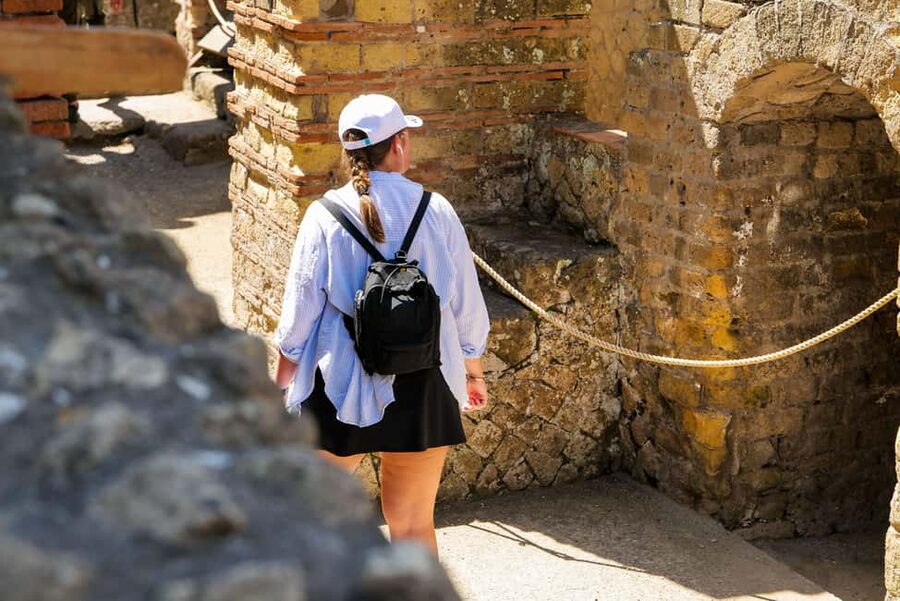
After the guided portion ends, you can stay inside the ruins and keep exploring independently. That’s a big plus because it lets you follow your own curiosity—spending extra time on the rooms or mosaics that grabbed you.
There’s one practical rule to keep in mind: each exit is final. So if you’re thinking you might step out for a coffee or photo break, plan your route before you make your move. Otherwise, just commit to finishing your self-guided wandering once you’re out of the guided segment.
If you want a complete day, you can also build a longer plan around this visit, pairing it with the Vesuvius area depending on which option you choose.
Pairing Herculaneum with Vesuvius by bus (best for a full-day plan)
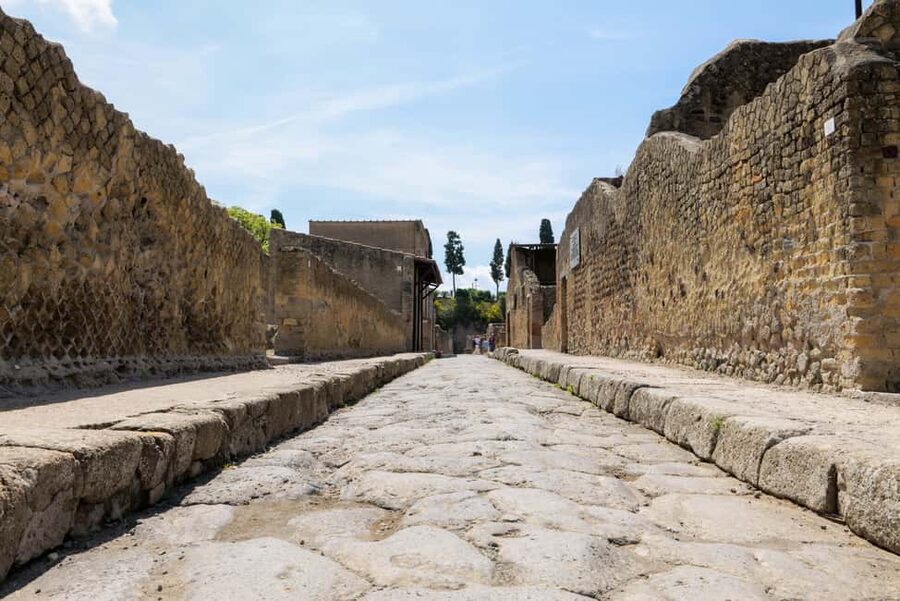
If you want the full “Vesuvius to Roman city” arc, there’s a combined option. With that choice, bus transportation is included and you get time at the Vesuvius National Park before moving on to Herculaneum.
Here’s how the day is scheduled:
- The bus leaves Naples Central Station at 9:00 AM, goes to Vesuvius, and you’ll have about two hours to explore on your own with your entrance ticket.
- The bus departs Vesuvius at 11:40 AM, then heads to Herculaneum.
- After your Herculaneum guided tour, you return to Naples, with pickup and transfer timing set so you’re back by 4:45 PM.
There’s also another departure pattern:
- Leaving Naples at 10:15 AM
- Leaving Vesuvius at 1:30 PM
- Returning from Herculaneum to Naples at 4:45 PM
This option is worth it if you’re short on days in Naples and want maximum variety. You’ll get volcano views and hiking time first, then shift back into Roman domestic life with the context that Vesuvius provides. The main trade-off is that your schedule is tighter; you’re committing to the bus timetable rather than setting your own pace.
Practical tips to make the two hours feel effortless
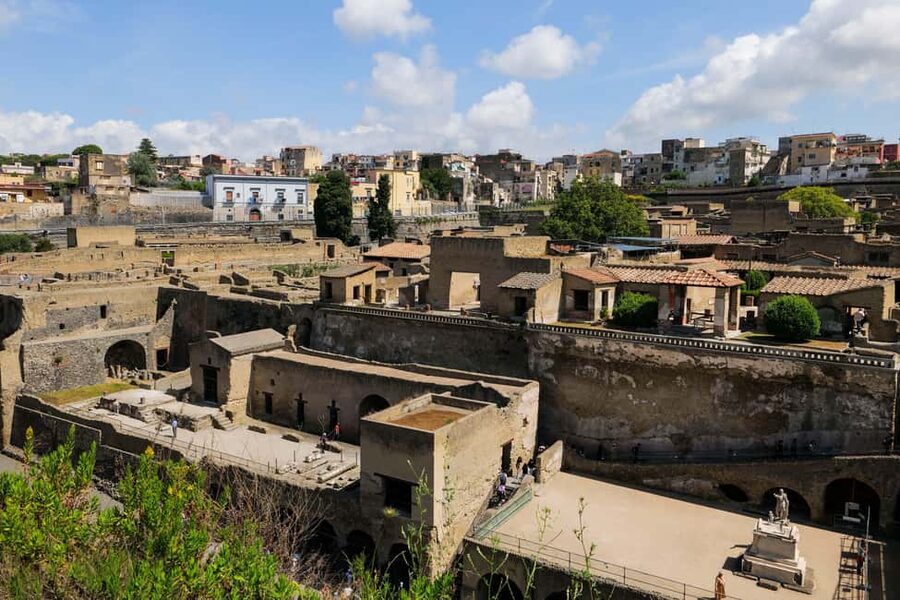
This is a walking-focused visit, so your comfort gear matters.
- Bring comfortable shoes. The site is uneven, and you’ll be standing and moving between houses.
- Bring a sun hat, especially in warmer months.
- Plan to keep light. Food and drinks aren’t included, so if you need a snack strategy, think ahead.
If you’re traveling with special needs, note that wheelchair access isn’t listed for this activity. And for basic rules inside the experience: no alcohol and no drugs.
Language-wise, your guide can be French, English, or Italian. If you have a strong preference, double-check the language option when you book so you get the tone you want from the explanations.
Price and value: what you’re really paying for
Even without seeing a specific price tag here, the value equation is clear. You’re paying for three things that add up quickly when you compare alternatives:
- Skip-the-line entry support, which removes one of the biggest time-wasters at popular sites.
- A focused two-hour guide, which helps you understand Herculaneum’s domestic spaces and mosaics instead of wandering without context.
- Tickets and full assistance included, so you’re not juggling paperwork mid-day.
If you’ve ever visited a complex site on your own and ended up with lots of photos but few clear takeaways, this is the fix. The tour gives you a guided narrative for the key houses and mosaics, plus enough time to continue independently after.
Who this tour suits best
This experience is a strong fit if:
- You want Roman life in an intact setting, not only general ruins.
- You enjoy learning from an expert guide who explains how houses worked.
- You like a medium-length tour that doesn’t swallow your whole day.
It’s less ideal if:
- You need wheelchair accessibility.
- You want a fully self-paced visit with no guide timing.
- You’re hoping for transport to Herculaneum by default (transport is only included in the combined Vesuvius option).
Also, if you’re a bit uncertain about Herculaneum versus Pompeii, this tour helps with that too. You’ll see why Herculaneum feels different—especially when you’re looking at preserved household details.
Should you book? My honest take
Book this tour if you want your visit to feel organized and meaningful within a short window. The expert guide, the skip-the-line ticket handling, and the targeted focus on houses like the House of the Deer and the mosaics of Neptune and Amphitrite are exactly the ingredients that turn ruins into understanding.
Skip it only if you’re already very comfortable reading Roman domestic layouts on your own, or if you strongly prefer a self-guided stroll with no schedule. Otherwise, this is a very efficient way to see the site’s best-preserved story without burning hours figuring things out.
And if you’re building a one-day Naples plan, the Vesuvius bus pairing is a practical add-on—just go in with your eyes open that you’ll be working inside a timetable.
FAQ
How long is the Herculaneum guided tour?
The guided tour is listed as 2 hours.
Is there skip-the-line access?
Yes. The experience includes skip-the ticket line help.
What languages are available for the live guide?
The tour is available with a live guide in French, English, and Italian.
Where do we meet the guide?
The meeting point may vary depending on the option booked.
Can I stay in Herculaneum after the guided portion?
Yes. After the guided tour you can stay inside the ruins to explore on your own, but each exit is final.
Is transportation included?
Transportation is not included for the Herculaneum-only option. Transport is included if you book the combined option with Vesuvius by bus.
What’s included in the tour package?
Included items are entry tickets and a 2-hour guided tour (plus full assistance during your visit).
Is the tour suitable for wheelchair users?
No. It’s listed as not suitable for wheelchair users.
What should I bring?
Wear comfortable shoes and bring a sun hat.
Are there any rules about food or drinks?
Food and drinks aren’t included, and alcohol and drugs are not allowed.