REVIEW · VISAYAS
Full-Day Historical Heritage Guided Tour of Tacloban and Palo
Book on Viator →Operated by Ma. Lourdes Bernadette Ruiz · Bookable on Viator
History has scars here. This guided loop ties WWII sites to Haiyan survival stories across Tacloban and Palo. I also like the way the route pairs big monuments with human details, so the day feels personal rather than just scenic sightseeing, and the guide quality can really matter on a day like this, including the well-regarded local storytelling style of kuya Jeff.
The main thing to consider is time: it’s a 6–7 hour day with short stops, so if you want lots of wandering and long museum time, you may feel a bit rushed. Tight timing is the trade-off for hitting many meaningful places.
In This Review
- Key things to know before you go
- Tacloban and Palo Through War, Storm, and Survival
- Price and logistics: what your $51 really covers
- The full-day rhythm: 8:30 am start, short stops, big payoffs
- Sto. Nino Shrine and Heritage Museum: Marcos-era art and local memory
- Leyte Landing Memorial: MacArthur’s landing and the turning point
- Palo Cathedral: a church that became a wartime hospital
- M/V Eva Jocelyn Shrine: when Haiyan turned ships into monuments
- Tacloban City Hall: a viewpoint with Cancabato Bay in frame
- Leyte Provincial Capitol: government space with Commonwealth-era WWII weight
- San Juanico Bridge and Madonna of Japan: connection and peace after conflict
- Sto. Nino Church: typhoons, earthquakes, and shelter in one place
- Lunch and comfort: the part that keeps a long day humane
- Who this tour suits best
- Should you book the Full-Day Historical Heritage Guided Tour of Tacloban and Palo?
- FAQ
- What time does the tour start?
- How long is the full-day experience?
- How much does the tour cost?
- Is pickup included?
- What’s included in the price?
- What ticket type do I receive?
- Is this a private tour?
- Are there admission fees at the stops?
- Does the tour run in any weather?
Key things to know before you go
- A single story arc: WWII to Super Typhoon Haiyan to recovery, all in one day
- Waraynnon focus: learn how locals rebuilt after the 2013 storm
- Six to seven hours with lunch: air-conditioned vehicle plus a sit-down meal
- Photo-friendly government stops: Cancabato Bay viewpoints from Tacloban City Hall
- Concrete Haiyan reminders: the M/V Eva Jocelyn shrine turns a shipwreck into a monument
- Private tour format: only your group, so questions are easier to fit in
Tacloban and Palo Through War, Storm, and Survival
If you want a history day that doesn’t feel like a slideshow, this one works. The route in Tacloban and Palo strings together locations tied to WWII, the Allied fight, and the long shadow of Japanese occupation—then it brings you straight to the 2013 Super Typhoon Haiyan and what came after.
What makes it more than a list of stops is the human thread: you’re not just looking at plaques. You’re hearing how people lived through it and how they rebuilt. The local “Waraynonn” culture is part of the point, so the day lands with meaning, not just dates.
And you do get a proper break. Lunch is included, and the whole plan runs on an air-conditioned vehicle with pickup offered. That matters because Tacloban and Palo can take a lot out of you if you’re trying to do everything solo.
Price and logistics: what your $51 really covers
At $51 per person, you’re paying for more than transportation. You’re covering a full guided day (about 6–7 hours including travel), an air-conditioned vehicle, pickup offered, and lunch. You also get a mobile ticket, which keeps the start of the day simple.
Most stops along the way are free, but one key place is not: the Sto. Nino Shrine and Heritage Museum includes its admission ticket. That combination—lunch plus guided pacing plus at least one paid entry—makes the price feel more fair than tours that nickel-and-dime you at every stop.
One more practical note: this experience requires good weather. If weather turns, you’ll be offered a different date or a full refund. That’s worth factoring into your planning, especially if you have tight travel days.
The full-day rhythm: 8:30 am start, short stops, big payoffs
The tour starts at 8:30 am. Expect the day to move steadily, with time set aside at each major location (often around 15 minutes at the free stops, longer at the museum). The goal is coverage, not lingering.
That can be good. You’ll see a lot of “anchor” sites in one run, from churches used as wartime medical spaces to Haiyan shipwreck memory points to bridges and peace monuments. It also helps you understand how Tacloban’s meaning is built in layers.
But here’s the trade-off: shoes matter. Even if each stop is short, you’ll still be walking, climbing in viewpoints, and moving in and out of sites. Bring water, and dress for warm daytime weather, then add a light layer if you’re sensitive to AC during the ride.
Sto. Nino Shrine and Heritage Museum: Marcos-era art and local memory
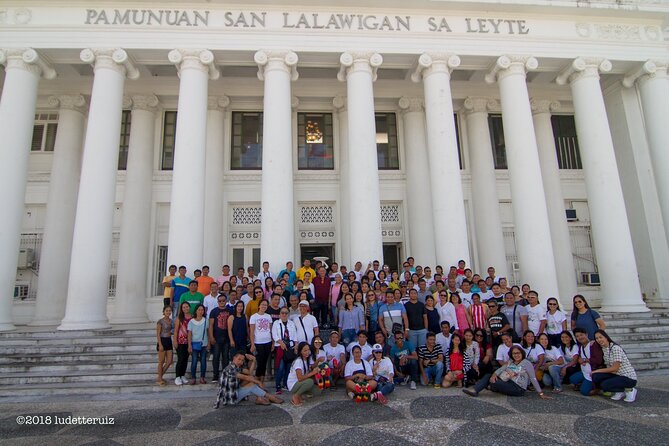
Your first stop is Sto. Nino Shrine and Heritage Museum. You’ll have about 30 minutes, and admission is included. This stop is interesting because it’s not only spiritual and cultural—it also intersects with political history.
The museum highlights art collections that were gifted to the Marcos family during the late Ferdinand Marcos Sr.’s era. That means you get a conversation piece about how art, power, and patronage worked in the Philippines, and how those stories connect to what a community chooses to preserve.
If you’re the type who likes your history grounded in physical objects, you’ll likely enjoy this start. If you prefer purely wartime and storm-focused places, you may wish there were more time here, since it sets up context early rather than hitting the WWII sites immediately.
Leyte Landing Memorial: MacArthur’s landing and the turning point
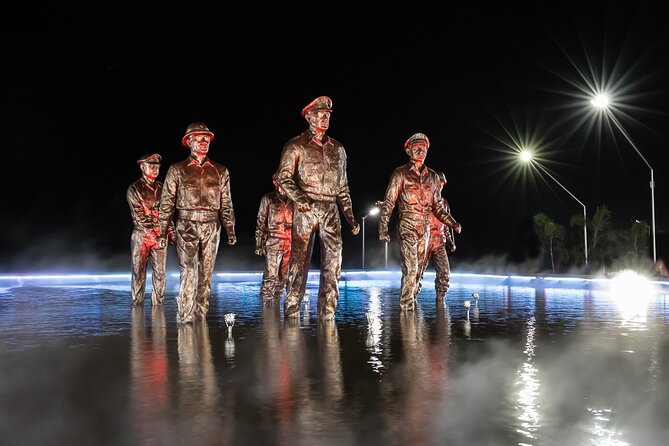
Next comes the Leyte Landing Memorial, built to commemorate Gen. Douglas MacArthur’s historic landing in Leyte Gulf. The landing is tied to the wider campaign to liberate the Philippines from Japanese occupation—and it connects to one of the biggest naval battles in the region’s WWII story.
Even if you don’t know the details going in, this stop helps you orient the rest of the day. It frames why Leyte mattered so much, and why later sites in Tacloban and Palo feel like more than local landmarks—they’re pieces of a larger turning point.
A practical bonus: when areas around the memorial are closed for repairs, the tour team may arrange access to see the memorial site during construction. That kind of problem-solving matters because it can mean you don’t lose the highlight to timing.
Palo Cathedral: a church that became a wartime hospital
Palo’s Metropolitan Cathedral of Our Lord’s Transfiguration—often called Palo Cathedral—shows how a religious space can be reshaped by war. You’ll spend around 15 minutes here, and admission is free.
During WWII, the cathedral was converted into a hospital for wounded Allied Forces soldiers. That’s heavy context. It also changes how you look at the building, since you’re not only seeing architecture—you’re seeing a place that had to serve urgent human needs when the world turned dangerous.
If you’re moved by stories of how ordinary spaces were repurposed, this is one of the stops that tends to stick with people. It’s also a quieter moment in the schedule, so it can work well for reflection before you jump to the Haiyan reminders.
M/V Eva Jocelyn Shrine: when Haiyan turned ships into monuments
Then the tour pivots into Super Typhoon Haiyan (ST Haiyan). The M/V Eva Jocelyn Shrine marks the story of one ship involved in the disaster.
Here’s the detail that gives this stop weight: 17 ships were reported to have run aground during Haiyan in Nov. 08, 2013, and M/V Eva Jocelyn is one of them. The storm surge was strong enough to push the ship into the middle of a street. This shrine keeps that memory visible.
The free stop time is short (about 15 minutes), but the takeaway is long. You see how the storm wasn’t only wind and water. It was a force that rewrote the shape of the city.
If you want to understand the Haiyan story as more than tragedy headlines, this kind of site helps. It gives you a physical anchor for what recovery required afterward.
Tacloban City Hall: a viewpoint with Cancabato Bay in frame
Tacloban City Hall is next, also around 15 minutes, and admission is free. The building sits on top of a hill, so the stop is as much about views as it is about architecture.
The key payoff is the photo angle: Cancabato Bay looks especially picturesque from here. It’s a good moment to reset your eyes after WWII and storm context. Even on a history-focused day, your brain needs a visual breather.
Also, this stop helps show how today’s civic life sits on the same ground that carried wartime and disaster realities. It’s not a museum. It’s still government in action, and that makes it feel real.
Leyte Provincial Capitol: government space with Commonwealth-era WWII weight
You’ll also visit the Leyte Provincial Capitol Building in Tacloban City, again with about 15 minutes. Admission is free.
This building served as the seat of government of Leyte until 2019. Before that, it had a much larger national role. It served as the seat of the Philippine Commonwealth government from October 23, 1944 to Feb. 25 (year not fully shown in the tour description you have, but the dates provided still point to late-war governance).
That’s a lot of meaning packed into a single structure. It also explains why Tacloban’s story isn’t only about battles; it’s also about administration and the struggle to keep a functioning government under pressure.
If you like history that connects institutions, this is a strong stop. If you prefer purely human-scale locations, you might find this one more factual than emotional—but it still matters.
San Juanico Bridge and Madonna of Japan: connection and peace after conflict
The tour then moves toward two different but complementary ideas: connection and reconciliation.
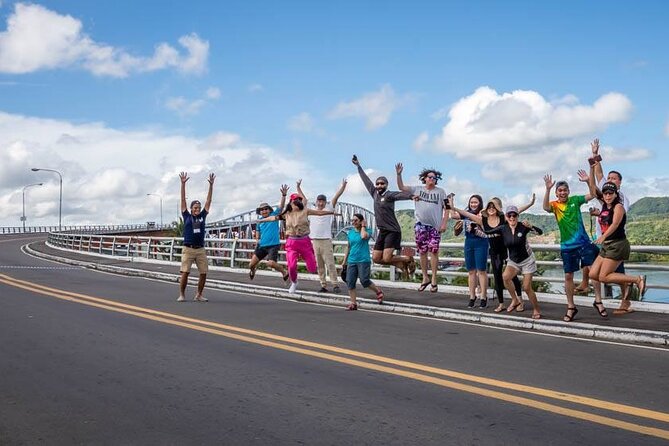
San Juanico Bridge is an iconic site linking Leyte and Samar, stretching 2.16 kilometers across seawater. It was once the longest bridge in the Philippines. You’ll get a short look (about 15 minutes) and free admission.
Why does it fit here? It’s a reminder that after war and after disasters, communities rebuild connections—roads, bridges, and the routes people use to work and live.
Then comes the Madonna of Japan monument, described as a symbol of peace between Filipinos and Japanese people. The monument was erected 33 years after WWII, remembering brave soldiers who fought and died in battle.
That timing matters. It signals that peace wasn’t only a treaty moment; it was also something people chose to mark decades later. This stop keeps the tour from ending only on pain. It adds a thread about how communities choose to move forward.
Sto. Nino Church: typhoons, earthquakes, and shelter in one place
The final historical stop in Tacloban is Sto. Nino Church. You’ll have around 15 minutes, and admission is free.
This church has battled typhoons and earthquakes over time. During Super Typhoon Haiyan, it was partially damaged, but the description notes that it provided cover. That detail changes the meaning of the building. It wasn’t just standing there—it helped people during the worst moments.
This is a good ending point because it ties back to the human theme from the start: the story is not only what happened, but how places and communities responded.
When your day ends here, you’re left with a clear mental map: religion, war, storm, civic life, and peace efforts all show up in the same geographic area.
Lunch and comfort: the part that keeps a long day humane
Lunch is included, and that’s one of the simplest value wins. A 6–7 hour day with multiple stops can turn unpleasant fast if you’re hungry or stuck waiting.
Since you’re on an air-conditioned vehicle for the transit segments, you’ll likely be grateful for the break from the heat. Still, plan for warm walking at the hill viewpoint areas like City Hall. Comfortable shoes will pay off more than you think.
If you’re sensitive to motion, ask your driver how the route usually feels in traffic. The tour doesn’t specify route pace, but Tacloban days can vary.
Who this tour suits best
This is a strong pick if you want:
- WWII context without getting lost in broad, abstract lectures
- a Haiyan-focused stop that’s not only about tragedy headlines
- an experience that mixes monuments with local cultural framing, including Waraynonn stories
- a guided day that’s easy to manage with pickup, lunch, and A/C transport
It may not be ideal if you want long, slow museum time or if you prefer fewer stops with more free wandering. The schedule is built for meaning-through-coverage.
Should you book the Full-Day Historical Heritage Guided Tour of Tacloban and Palo?
Book it if you want a guided day that connects the region’s story in a way that feels grounded. The value is strong for $51: lunch plus an air-conditioned vehicle plus guided interpretation, and at least one included paid admission stop.
Skip it or think twice if you dislike tight pacing. This tour trades spare time for breadth, and several stops are brief by design.
If you do book, go in with one mindset: don’t just look. Listen for the links between places. That’s where the day makes sense—why a church became a hospital, why a ship ended up as a shrine, and how a city’s present depends on how people rebuilt after shock.
FAQ
What time does the tour start?
The tour starts at 8:30 am.
How long is the full-day experience?
It’s about 6 to 7 hours total, including travel time between attractions.
How much does the tour cost?
The price is $51.00 per person.
Is pickup included?
Yes, pickup is offered.
What’s included in the price?
Air-conditioned vehicle transport and lunch are included.
What ticket type do I receive?
You receive a mobile ticket.
Is this a private tour?
Yes. It’s a private tour/activity, and only your group participates.
Are there admission fees at the stops?
The Sto. Nino Shrine and Heritage Museum includes an admission ticket. Other listed stops are free.
Does the tour run in any weather?
The experience requires good weather. If it’s canceled due to poor weather, you’ll be offered a different date or a full refund.