REVIEW · HALIFAX
Half-Day Historical Tour of Halifax
Book on Viator →Operated by Halifax Titanic Historical Tours · Bookable on Viator
Halifax hits you fast. This 6-hour, small-group tour uses a day-trip pace to connect Canada’s immigration and shipping story to Titanic-era heartbreak and the Halifax Explosion aftermath. I especially love the way guide Paul ties landmarks together with the people behind them, from Pier 21’s Canada gateway to the memorial stops that explain what happened in 1917. The one thing to consider is timing: it packs a lot in, and if you have a tight cruise departure window, you’ll want to be clear about where you must end up.
You’ll ride in a comfortable high-roof 15-passenger van with bottled water and WiFi, and you’ll get frequent short walks where it matters (citadel, gardens, boardwalk viewpoints, and the Halifax waterfront). I also like that this doesn’t feel like a checklist of photos only. It’s more like a guided narrative where the city’s sea power and suffering and rebuild make sense as you go.
In This Review
- Key Things I’d Bookmark Before You Go
- A 6-Hour Halifax History Run That Feels Like a Story, Not a Drive-Thru
- Small-Group Comfort in a High-Roof Van (And Why That Matters)
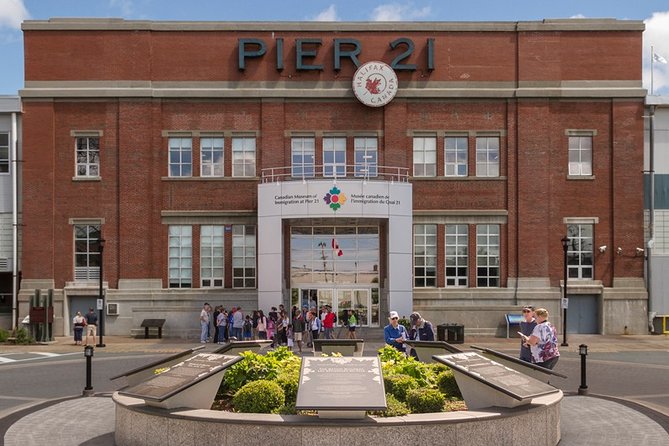
- Pier 21 to Halifax Farmers Market: The Gateway to Canada
- Art, Shipping Moguls, and the City’s Waterfront Power
- Georges Island: Forts, Tunnels, Acadian Deportation, and a Lighthouse
- Alexander Keith’s and HMCS Sackville: Brewing and Naval Memory Side by Side
- Downtown Landmarks: Churches, Government, and the Halifax Explosion Echo
- Cemeteries and Memorials: The Most Important Part of the Day
- Halifax Citadel at Noon and the Old Town Clock: British Timing in Real Life
- From Point Pleasant Park to Universities: A Halifax Day Beyond the Waterfront
- Dartmouth’s Side: Lake Banook and Fisherman’s Cove Photos
- Lunch, Admissions, and How to Avoid Timing Stress
- Should You Book This Halifax Historical Tour?
- FAQ
- How long is the tour?
- What is the group size?
- What does the tour price include?
- Is lunch included?
- Do I need a mobile ticket?
- Where does the tour start?
- Are pickup and transfers available?
- What language is the tour in?
- Is admission included for every stop?
- Can I cancel for a refund?
- Is the tour suitable for most travelers?
Key Things I’d Bookmark Before You Go

- Small group size (up to 10): you get more back-and-forth and less “hurry up” energy.
- Guide Paul’s multimedia style: you’ll see history explained with photos, videos, and tablet-style visuals on board.
- Georges Island’s layers: defenses, tunnels, a lighthouse, and its role during the Acadian deportations.
- 1917 Halifax Explosion stops that don’t feel generic: the memorial bell tower and the hydrostone reconstruction story.
- Dartmouth’s change of pace: Lake Banook’s sports history and the colorful photo-friendly Fisherman’s Cove.
A 6-Hour Halifax History Run That Feels Like a Story, Not a Drive-Thru
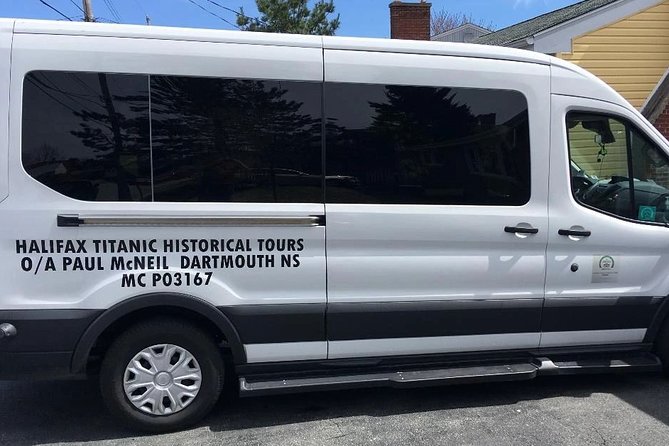
Halifax has a way of turning history into something you can actually picture. That’s what this tour does well: it moves from place to place so the themes become clear. You’ll start on the waterfront, get pulled into the shipping world, then jump to how the city remembers the people lost to Titanic and the Halifax Explosion.
Even though it’s called a half-day tour, plan on a full stretch of time—around 6 hours. The route is designed to keep you moving while still giving you short moments outside for the key stops: fort views, memorial overlooks, and the best photo angles.
The style is practical. You’re not stuck sitting for long stretches without purpose—though yes, there is a lot of time in the van. If you want a tour that feels mostly like walking a city center all day, this isn’t that. If you want history explained while you see more territory in fewer hours, it works.
You can also read our reviews of more historical tours in Halifax

Small-Group Comfort in a High-Roof Van (And Why That Matters)

This tour runs with a maximum of 10 travelers, and you’ll be in a Ford Transit 350 XLT high-roof van. That high roof is a real quality-of-life detail when you’re getting in and out repeatedly through a packed itinerary.
You also get the basics handled for you: air-conditioned vehicle, bottled water, and WiFi on board. Those sound small, but when you’re hopping between multiple neighborhoods and stops, it helps the day feel smooth instead of stressed.
Seating is handled by first confirmed, first choice. If you’re traveling as a couple or with mobility needs, it’s worth prioritizing your seat early when the group is set.
Pier 21 to Halifax Farmers Market: The Gateway to Canada
Pier 21 is the opening stop for a reason. It frames Halifax as more than a scenic harbor town—it’s tied to arrivals and departures, and to Canada’s broader identity as a place people come to. Your guide sets the tone right away, so you’re not just seeing ships and warehouses; you’re learning how the port functioned as a gateway.
Next up is the Halifax Farmers Market story, which is surprisingly deep for a place that might sound like just breakfast plans. The market’s roots go back to 1750, created by royal proclamation shortly after Halifax was founded. It operated for decades in what was described as a livestock and produce market context, then later became part of the civic charter story—where the property was conveyed for the public and common benefit.
Today it’s at the Halifax Seaport area and is described as the longest continuously running market in North America, with more than 250 vendors. Even if you don’t shop much, the point of the stop is context: this market survived because Halifax grew around it.
Art, Shipping Moguls, and the City’s Waterfront Power
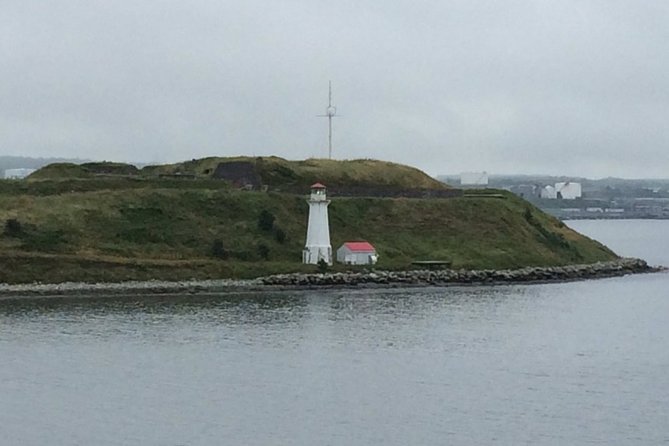
One stop that really adds emotional texture is the sculpture by Armando Barbon, created after he emigrated from Italy in 1951. The story is about the pain of separation overcome with faith and hope, with his wife and kids shown later. You don’t just see a monument—you get reminded that migration is the backbone of places like Halifax.
Then the tour pivots to shipping power through Sir Samuel Cunard, the British-Canadian shipping magnate born in Halifax and a founder behind the Cunard Line. It’s the kind of connection you wouldn’t catch on your own: Halifax isn’t only a backdrop for maritime history. It helped shape it, and it produced people who drove shipping networks.
You’ll also hear about the long downtown boardwalk and the fact that Halifax has one of the world’s largest natural harbors. That combination—human-made pathways for walking plus a harbor built for maritime work—helps you understand why the city’s identity stays tied to the water.
Georges Island: Forts, Tunnels, Acadian Deportation, and a Lighthouse
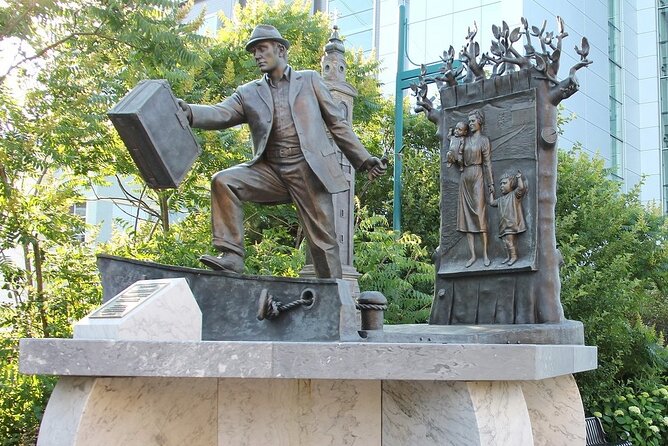
Georges Island is the tour stop that gives you the most layered “this place did everything” feeling. The island’s strategic location in the middle of Halifax Harbour turned it into a critical part of seaward defenses for the British Empire across the 18th and 19th centuries.
You’ll learn about Fort Charlotte and the island’s powerful seaward-facing batteries, plus a complex of underground tunnels. There’s also mention of one of Canada’s first fully automated lighthouses—small detail, big impact, because it shows how technology and survival sat side-by-side here.
Then the tone turns heavier. During the deportation of the Acadians—Le Grand Dérangement—Georges Island became a holding place between 1755 and 1763. The guide connects that grim chapter with the island’s subterranean passageways, which also feed local folklore. It’s not morbid for morbid’s sake; it’s part of telling the full story of how Halifax’s harbor shaped people’s fates.
Alexander Keith’s and HMCS Sackville: Brewing and Naval Memory Side by Side

Halifax’s history isn’t all uniforms and memorials. Alexander Keith’s Nova Scotia Brewery is an early anchor of local industry: the brewery opened nearly 200 years ago, and it’s still a popular destination today. The tour frames it as one of North America’s oldest working breweries, tied to small-batch brewing inspired by Nova Scotian culture and Keith’s heritage.
From industry, you shift to naval commemoration at HMCS Sackville, described as the only one of 269 Allied corvettes from the Second World War that remains and continues to serve as Canada’s Naval Memorial. It’s also noted as a National Historic Site and built in Canada as one of 123 corvettes.
If you’re a maritime-history person, you’ll like how the tour walks this line: warships and industry, danger and everyday life, all in the same city geography.
The tour also recommends the Maritime Museum of the Atlantic as a visit you can fit before or after your Halifax history tour. If you want deeper context after the guided ride, this is the obvious place to expand.
Downtown Landmarks: Churches, Government, and the Halifax Explosion Echo

The downtown portion is where Halifax starts to feel like government and architecture rather than only war and port work. Historic Properties comes next, described as the first restoration project of its kind in Canada, with three city blocks of some of the oldest surviving waterfront warehouses and Victorian-Italianate façades dating to the late 1700s and early 1800s.
You’ll also see a range of religious architecture, including the iconic Round Church—Saint George’s—built in 1800. The tour connects its cylindrical, wooden Palladian-style design to Edward, Duke of Kent, and the church’s purpose for the growing Little Dutch Church population.
Then comes another kind of historical layer: the oldest surviving Anglican building in Halifax with the Ghost Window and a piece of wood embedded in an interior wall connected to the 1917 Halifax Explosion. It’s a rare way to see how a natural landmark and a devastating event coexist inside everyday architecture.
From there, you’ll pass or learn about municipal and legislative power:
- Halifax City Hall, built 1887–1890 and designated a National Historic Site of Canada in 1997.
- Province House, opened 1819 as Canada’s oldest legislative building and linked to the first elected House of Assembly.
- Government House, described as the oldest official residence in Canada and the working home of the sovereign’s representative in Nova Scotia.
You’ll also hear about the Old Burying Ground, with more than 1,200 stones and a distinctive concentration of gravestone art from the 18th and early 19th centuries, now functioning as an urban green space.
Cemeteries and Memorials: The Most Important Part of the Day
If you’re going to spend hours in Halifax, this is the section that makes everything else feel real. The route includes multiple cemeteries tied to Halifax’s layered tragedies and survival stories.
Stops include places like Camp Hill Cemetery, where notable names include Viola Desmond and Alexander Keith, plus references to Halifax ties to Titanic survival such as Miss Hilda Mary Slayter. You’ll also see long lists of other historical figures connected to wider events.
Then the tour moves to the story of the Titanic victims. You’ll visit sites described as “Forgotten Titanic Cemetery” at Mount Olivet Cemetery, with markers for Roman Catholic Titanic victims and specific stories such as Margaret Rice and other named individuals. Another cemetery stop is Fairview Lawn Cemetery, where Titanic victims are also interred, along with stories tied to the Halifax Explosion aftermath.
The emotional centerpiece is the Halifax Explosion Memorial Bell Tower at Fort Needham, overlooking the devastated area from December 6, 1917. The tour frames it with key numbers: around 1,900–2,000 deaths and about 25,000 people left homeless, plus thousands more wounded and with destroyed lives. This stop also explains how survivors rebuilt Halifax and Dartmouth in the years that followed.
The guide also adds a critical detail about reconstruction materials. After the explosion, hydrostone was proposed to reduce fire danger when wood-frame buildings collapsed on coal stoves and furnaces. Hydrostone is described as concrete blocks finished with crushed rock, and the tour notes manufacturing in Eastern Passage and hauling across the harbor.
And if you’re wondering how destruction becomes story, there’s even a physical artifact moment: a cannon thrown nearly 3 miles to Albro Lake where it was later recovered.
Halifax Citadel at Noon and the Old Town Clock: British Timing in Real Life
The tour is timed for Halifax Citadel National Historic Site, where you can experience the tradition of the firing of the Noon Gun and the Changing of the Guards of the 78th Highlanders at noon. That timing matters. If you arrive earlier, you get your view spot and don’t feel rushed.
The citadel portion explains that the present Fort George (completed in 1856) is the fourth fortification on Citadel Hill, with a star shape typical of 19th-century British forts and defensive ditch positions. The point isn’t just architecture; it’s why the city took defense seriously when it lived at the edge of empire.
Another clock-related stop covers the idea of a turret clock for the British garrison, credited to Prince Edward, Duke of Kent, and tied to solving garrison tardiness before his return to England in 1800. It’s a small story, but it makes sense of how communities ran on schedules long before your phone showed the time.
From Point Pleasant Park to Universities: A Halifax Day Beyond the Waterfront
You’ll also get a break from strictly port-and-war themes. Point Pleasant Park is a historic wooded park with preserved ruins of early fortifications and coastal ecosystems, plus an extensive trail network.
The tour then shifts into education and institutions. You’ll pass stops tied to Dalhousie University, founded in 1818, and King’s College, established in 1789 and described as the oldest chartered university in Canada and the first English-speaking university in the Commonwealth outside the UK.
One extra cultural stop is Sir Sandford Fleming Park, also called The Dingle, which connects to standard time zones and representative government commemoration. It’s a neat reminder that Halifax didn’t just react to history—it participated in systems that mattered far beyond the harbor.
Dartmouth’s Side: Lake Banook and Fisherman’s Cove Photos
After the Halifax center portion, you’ll cross into Dartmouth. You stop at Lake Banook, a freshwater lake known for sprint canoe and kayak clubs, rowing clubs, and a dragon boat club—and it’s credited as the birthplace of ice hockey.
Then comes Fisherman’s Cove, described as a restored 200-year-old working fishing village. This is where the pace softens. You get colorful streets, photogenic corners, and the kind of “look how people lived here” vibe that complements the heavier memorial stops earlier in the day.
This mix is intentional. You leave knowing Halifax as both a place of industry and a place of survival, then you end with a calmer, human-scale waterfront village feel.
Lunch, Admissions, and How to Avoid Timing Stress
Lunch isn’t included, but there is an optional stop at Evan’s Seafood described as a place for fresh Nova Scotia seafood with an amazing view. Food orders are described as being phoned ahead to speed things up, and there’s a mention that a gluten-free option is available. If you’d rather not wait, it helps to know you’re choosing a restaurant stop inside the tour flow.
Admissions aren’t uniform. Some stops note admission is not included (for example, Halifax Citadel and Old Town Clock are listed with admission ticket not included). So if you’re trying to budget tightly, be prepared for a few potential extra ticket costs.
Finally, if you’re on a cruise, treat the day like a schedule-sensitive experience. This tour starts in the morning window (pickup typically begins at 8:00 AM) and ends back at the meeting point. If your ship departure involves tender timing or a strict return deadline, confirm your exact “back where” location before you commit.
Should You Book This Halifax Historical Tour?
Book it if you want a high-value small-group history day that connects major landmarks to the human stories behind them—especially if Titanic and the Halifax Explosion matter to you. The price includes the driver-led route, water, and WiFi, plus you’re getting an organized narrative across waterfront, downtown, and Dartmouth.
Skip it (or choose carefully) if you hate long van time, or if you have a very strict cruise departure plan and can’t risk missing even one planned stop. Also consider whether you want many cemetery and memorial moments in one day—this route doesn’t shy away from tragedy, because Halifax’s identity is tied to it.
If you’re choosing one way to see more than just the postcard Halifax, this tour is one of the smartest bets in town. It turns a half-day into a coherent story, and it leaves you with details you’ll actually carry home.
FAQ
How long is the tour?
The tour is listed as approximately 6 hours.
What is the group size?
It’s a small-group experience with a maximum of 10 travelers.
What does the tour price include?
Price includes an air-conditioned vehicle, bottled water, and WiFi on board.
Is lunch included?
No. Lunch is not included.
Do I need a mobile ticket?
Yes, the tour uses a mobile ticket.
Where does the tour start?
The start and end point is listed as 1041 Marginal Rd, Halifax, NS B3H 4P7, Canada.
Are pickup and transfers available?
Pickup is offered from downtown hotels. Cruise and driving guests meet at the Pier 22 parking lot at 1041 Marginal Road.
What language is the tour in?
The tour is offered in English.
Is admission included for every stop?
Not necessarily. Some stops specify that admission tickets are not included.
Can I cancel for a refund?
Free cancellation is available up to 24 hours in advance for a full refund.
Is the tour suitable for most travelers?
The tour indicates that most travelers can participate, with a few short walks and most time spent via the vehicle.