REVIEW · HURGHADA
Luxor’s Ancient Wonders:Day Expedition from Hurghada (Group Tour)
Book on Viator →Operated by Eyes of Egypt · Bookable on Viator
Luxor in one day can work. This group expedition hits the big names—Temple of Hatshepsut, Valley of the Kings, Colossi of Memnon, and Karnak—without you needing to plan every turn. I especially like how the day is kept lively by strong guiding; one guide name that came up for delivering clear, informative stories is Mimo. The main thing to consider is the pace: you’ll spend long hours on the road and then move pretty fast between sites.
I also like that lunch is built in, so you’re not hunting for food after long travel. With pickup included and air-conditioned transport, the trip feels easier than DIY. On the other hand, it’s a group day (up to 30 people), so the flow depends on how quickly everyone reconvenes.
If you want a high-impact Luxor introduction and you prefer being handled—driver, timing, and the major stops—this tour fits well. Just go in with realistic expectations: each site gets a focused window, not an all-day museum crawl. If that sounds good, you’ll likely leave with the feeling that you saw the essentials.
In This Review
- Key Points to Know Before You Go
- From Hurghada to Luxor: that road time is part of the deal
- Temple of Hatshepsut at Deir el Bahari: the architecture lesson you can feel
- Valley of the Kings: tomb windows, bright color, and a lot of names
- Colossi of Memnon: quick stop, huge scale
- Karnak Temple: the big one where Amun-Ra owns the space
- Silver vs Golden vs Diamond: pick the option that matches your stress level
- The lunch break matters more than you think
- Value for $55: why this price can make sense
- Pace, group size, and keeping your day enjoyable
- Should you book this Luxor day expedition from Hurghada?
- FAQ
- How long is the Luxor day expedition from Hurghada?
- What sites are included in the itinerary?
- Are hotel pickup and drop-off included?
- Does the tour include lunch?
- What’s the difference between Silver, Golden, and Diamond?
- Is tipping included?
Key Points to Know Before You Go
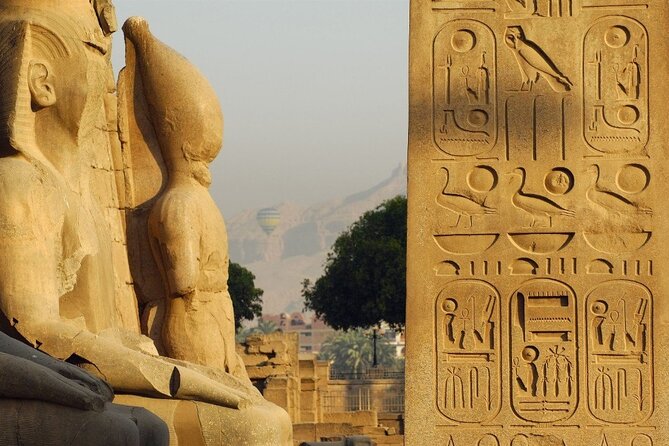
- A one-day Luxor hit list: Hatshepsut, Valley of the Kings, Colossi of Memnon, and Karnak in a single trip
- Good guiding matters: a guide like Mimo can make the history feel clear, not just recited
- Lunch and pickup are included: fewer logistics headaches on a 12 to 13 hour day
- Choose your comfort level: Silver, Golden, and Diamond differ by guide and whether entrance tickets are covered
- Group size up to 30: expect a shared pace and periodic regrouping
From Hurghada to Luxor: that road time is part of the deal
Most days start with pickup in Hurghada, then you’re on the road for roughly 4 hours each way. That means the tour is more than “a temple day”—it’s also a long transportation stretch, and your comfort starts with being ready for it.
The good news: the transfer is described as comfortable, new-model, air-conditioned, and driven by a licensed driver who’s familiar with the route. That matters when you’re packing in multiple sites. You want to arrive with enough energy to actually enjoy what you paid to see.
Also note the structure: you’re doing a shared group transfer, and regrouping is part of the rhythm. If you don’t love waiting for a big group, keep your expectations grounded. A smart move is to use the time between stops to reset your body—stretch your legs, grab water when you can, and keep your camera accessible so you’re not fumbling every time the bus stops.
You can also read our reviews of more tours and experiences in Hurghada.


Temple of Hatshepsut at Deir el Bahari: the architecture lesson you can feel
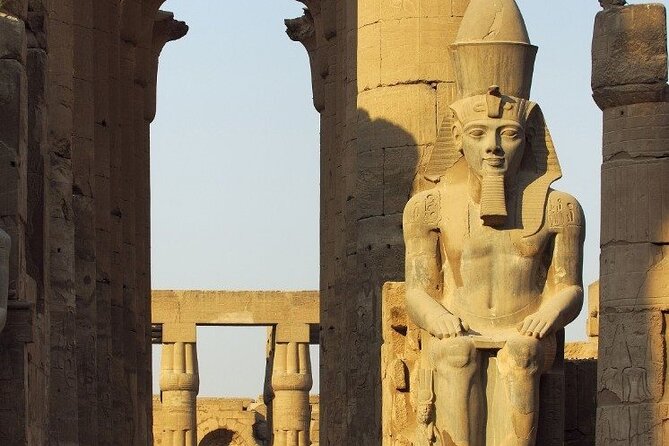
Your first major cultural stop is the Temple of Hatshepsut at Deir el Bahari. You get about 1 hour there, and it’s a temple that people remember for its design as much as its story.
Hatshepsut was a major queen of ancient Egypt, and this complex is dedicated to her. The description you’ll hear focuses on how her temple represented a turning point in ancient Egyptian architecture—so you’re not just looking at columns and walls. You’re spotting how form and layout help communicate power, devotion, and order.
One practical note: with only an hour, you’ll have to choose what you want to linger on. If you love details, pick one or two areas to study instead of trying to absorb everything at once. If you prefer sweeping views, keep your eyes up; Deir el Bahari’s setting helps you understand why the temple was placed where it was.
If you’re lucky with your guide, this is where the explanations can really click. The Mimo mention in feedback points to the value of a guide who can make scenes understandable quickly—so you know what you’re looking at while you’re still there.
Valley of the Kings: tomb windows, bright color, and a lot of names
Next comes the Valley of the Kings, with about 1 hour 30 minutes. This is where the tour earns its “ancient Egypt must-see” reputation.
The time you get here is long enough to do the basics well: understand how burial tombs functioned and then see tomb interiors with color that’s described as well preserved. That’s a big part of why this stop feels different from walking around outdoor ruins. You get closer to what the interior looked like, and that makes the site feel more human and less abstract.
You’ll also hear a list of important royal burials. The names provided include Tutmosis I, Tutmosis III, Tut-Ankh-Amon, Ramssess VI, Mrenptah, and Amonhotep II. Having those names in your head helps you connect what you’re seeing to the larger story of dynasties and succession.
The drawback is built into the setting: you’ll be limited by what’s open and by time. Don’t assume you can calmly check every single tomb. Think of this as a “best-of” visit guided for understanding. If you want a slower, deeper tomb-by-tomb approach, you’d need extra days in Luxor. But for a one-day plan, this is a strong use of time.
Colossi of Memnon: quick stop, huge scale
After the Valley, you continue to the Colossi of Memnon. Your time here is about 30 minutes.
These statues are described as the remaining parts of the mortuary temple of Amenhotep III. Even with a short stop, this is one of those places that does its job fast: you see monumental stone, you get the context, and you move on. It’s the kind of stop that works well in a packed itinerary because it doesn’t require a long, multi-step visit.
Because it’s only half an hour, don’t expect deep museum-style pacing. Come prepared to look, snap a few photos, and soak in the scale. If you’re traveling with kids or you’re prone to fatigue on long days, this quick stop can actually be a blessing.
Karnak Temple: the big one where Amun-Ra owns the space
Your final major site is Karnak Temple, with about 1 hour 30 minutes. It’s described as the biggest temple, dedicated to god Amon Ra and tied to Mut and Khonsu. Construction is noted as beginning around 2000 B.C. during the central state reign, which helps you understand why Karnak feels layered rather than uniform.
What I like about Karnak in a tour like this is that it gives you a reality check. You’re not just seeing one monument—you’re stepping into a complex that grew over time, with massive spaces and columns that make it clear how temples functioned as both religious centers and political statements.
To get the most in 1.5 hours, focus on a few “anchors.” Look for the parts that feel like the temple’s main axis, then catch key views that show the scale. If you try to read everything or photograph everything, you’ll miss the overall effect. This is a stop where your eyes need to move, but your main job is to understand the layout and scale.
Karnak is also a good place to judge your day’s pacing. If you still feel fresh here, it means you timed your energy well earlier. If you feel tired, give yourself permission to skim. Karnak is still worth it even when you don’t linger.
Silver vs Golden vs Diamond: pick the option that matches your stress level
This tour gives you three choices, and the differences are practical—not just marketing.
Silver Tour includes shared transfer and lunch. If you’re comfortable moving through sites on a schedule and you’re happy to rely on general guidance, Silver can be a solid value. Just remember: you’ll still be in a group pace.
Golden Tour adds an expert guide (plus shared transfer and lunch). If you care about understanding what you’re looking at—why Hatshepsut’s temple design matters, how the Valley burials connect to dynasties, what Karnak’s layout is telling you—Golden is the sweet spot. The payoff is knowing the story while you’re standing in front of it.
Diamond Tour is the all-in option: transfer, guide, lunch, and entrance tickets. If you want one less thing to manage, Diamond makes the day smoother. It’s also the better choice when you want to avoid last-minute ticket confusion.
If you’ve got a phone and you like being organized, the tour is also described as having mobile ticket support. That’s useful on a long day where you don’t want to juggle paper vouchers.
The lunch break matters more than you think
Lunch is included in all packages, served at a restaurant in Luxor. On paper, that sounds like a small detail. In practice, it’s a big deal because your day is long: about 12 to 13 hours total.
A good lunch timing can make the afternoon feel easier, especially after the Valley of the Kings. You’ll likely want to eat earlier rather than later, then keep your energy steady until Karnak. If you’re the type who forgets to eat until you’re starving, build in a gentle reminder to yourself: you’re not just “having lunch,” you’re fueling the back half of the day.
Also consider that you’re on a schedule, so your lunch may not be a slow sit-down. Plan to eat efficiently, then rehydrate. This is one of those days where comfort choices matter more than you expect.
Value for $55: why this price can make sense
At $55 per person, this is priced like an efficient group day. The key question isn’t just the cost. It’s what you’re buying with it.
You’re paying for:
- Pickup and drop-off in Hurghada
- Round-trip air-conditioned transport
- A full-day schedule across multiple UNESCO-level sites
- Lunch in Luxor
- A structured group experience with a driver familiar with the route
For many visitors, that added structure is worth something. DIY travel to Luxor can be doable, but it takes planning, time, and nerves. Here, you’re handed the outline and driven from stop to stop.
The only real “value trade-off” is time. Because it’s a one-day route, you don’t get endless wandering. But you do get the major highlights. For first-time Luxor visitors, that’s often exactly what you want.
One more note: gratuities aren’t included (optional but recommended). If you want to keep the day smooth, budget a little extra for tipping so it doesn’t feel like a surprise at the end.
Pace, group size, and keeping your day enjoyable
The tour caps at up to 30 travelers. That’s large enough to feel like a group, but not so massive that you’re lost in chaos.
Still, a packed day is a packed day. You’ll likely find yourself moving quickly between meeting points, and sometimes that means less time for spontaneous stops. I recommend treating the schedule like a checklist of experiences rather than a chance to explore independently.
Here’s another practical thought for anyone mixing this with other Egypt add-ons: one piece of feedback I picked up was that an additional Nile trip some people tack on felt like it could be missed because the timing for sunset wasn’t ideal, and part of the day didn’t land well (including seeing dish-washing/clean-up happening right on the river). I’m not saying don’t do a Nile excursion. I am saying: if you plan one, confirm the timing with a human and ask what you’ll actually see and when.
Should you book this Luxor day expedition from Hurghada?
Book it if:
- You want a first taste of Luxor without planning every detail
- You like guided context, especially for places like Hatshepsut and Karnak
- You want a day with lunch included and round-trip transport handled
- You’re okay with a 12 to 13 hour schedule and limited time at each stop
Skip or rethink it if:
- You hate long bus rides and prefer slow travel
- You want to spend hours inside multiple tombs instead of a focused visit
- You’re hoping for lots of downtime or a super-flexible itinerary
If your goal is to see Luxor’s biggest ancient highlights in one efficient day, this tour makes sense. Choose the option that matches how much you want to rely on the guide, and show up ready for a full day. That’s the recipe for leaving with stories you’ll remember, not just photos.
FAQ
How long is the Luxor day expedition from Hurghada?
The tour runs about 12 to 13 hours total, including round-trip travel time and site visits.
What sites are included in the itinerary?
You visit Temple of Hatshepsut, Valley of the Kings, Colossi of Memnon, and Temple of Karnak.
Are hotel pickup and drop-off included?
Yes. Hotel pickup and drop-off in Hurghada are included.
Does the tour include lunch?
Yes. Lunch at a restaurant in Luxor is included in the packages.
What’s the difference between Silver, Golden, and Diamond?
Silver includes shared transfer and lunch. Golden includes shared transfer, an expert guide, and lunch. Diamond includes transfer, guide, lunch, and entrance tickets.
Is tipping included?
No. Gratuities are not included (optional but recommended).