REVIEW · TASHKENT
Private Multi-Day Tour to Ancient Cities Uzbekistan
Book on Viator →Operated by Afrosiab travel Uzbekistan · Bookable on Viator
A wall of color, tile, and history waits in Uzbekistan. This private multi-day route strings together the big Silk Road names—Tashkent, Khiva, Bukhara, Samarkand, and Shahrisabz—without you having to map out every connection yourself, thanks to a private guide and organized local driving. I especially like how the plan mixes major monuments with real-day-to-day moments like bazaar time and planned meals. You’re not stuck just touring. You’re moving with context.
Two things I like a lot: first, the private setup means your guide can steer the pace toward what you care about most—history, architecture, or food. Second, the logistics do the heavy lifting: you get a domestic flight (Tashkent to Urgench), private transport for transfers, and the high-speed Afrosiyob train between Samarkand and Tashkent. One drawback to consider is the pace: you’ll have early starts (like a 05:00 breakfast day) and at least one long road stretch across the Kyzyl Kum desert.
In This Review
- Key things that make this tour work well
- Tashkent opener: Khast Imam, Chorsu, and Amir Temur Square
- Khiva’s Ichan-Kala: old walls, big minarets, and a performance dinner
- Khiva beyond the walls: palaces, mausoleums, and the outer-city stroll
- Desert road to Bukhara: long distance, tea breaks, and real Central Asia travel
- Bukhara’s Ark, Lyabi Khauz, Kalyan Minaret, and a planned evening show
- A second Bukhara day: countryside sights and an Emir’s summer residence
- Afrosiyob to Samarkand: the fast jump that keeps the trip feeling smooth
- Registan and Gur-Emir: Samarkand’s peak morning, planned lunch, and a full evening
- Shahrisabz day trip: Dor-us Saodat, Ak Saray remnants, and Kok Gumbaz
- Samarkand deep sites: Shah-i Zinda area, Ulughbek Observatory, Daniel, and Konigil’s paper mill
- Back to Tashkent: quick train return and an easy airport finish
- Price and value: what $1,822.89 buys you on this 12-day private route
- Who should book this, and who should think twice
- Should you book this private Uzbekistan route?
- FAQ
- How long is the Private Multi-Day Tour to Ancient Cities Uzbekistan?
- Where does the tour start and end?
- What’s included in the price?
- What transportation is used between cities?
- Are monument entry fees and camera fees included?
- What is the cancellation policy?
Key things that make this tour work well
- Khast Imam in Tashkent: a major religious complex where the famous Uthman Quran is preserved
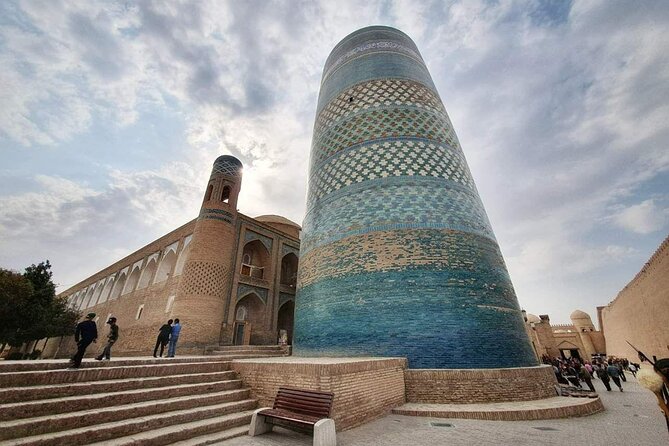
- Ichan-Kala, Khiva’s walled city: concentrated sights like Kalta Minor, Juma Mosque, and Kunya Ark
- The desert road to Bukhara: a real Central Asia drive day, with a tea stop and chances to spot wildlife
- Bukhara’s monument sweep: Ark of Bukhara, Kalyan Minaret, Kalyan Mosque, and more in one guided push
- Samarkand at the right time: Afrosiyob train transfer plus key sites like Registan and Gur-Emir
- Food is part of the itinerary: plov lunch plus dinners that tie local performance and tradition to the day
Tashkent opener: Khast Imam, Chorsu, and Amir Temur Square
Your trip starts in Tashkent with a strong mix of sacred and civic landmarks. After breakfast at your hotel, you head to Khast Imam, a revered architectural complex and religious center of the city. This is where the world-famous Uthman Quran has been preserved, and it’s surrounded by a cluster of sites that help you understand how Tashkent became more than just a modern gateway.
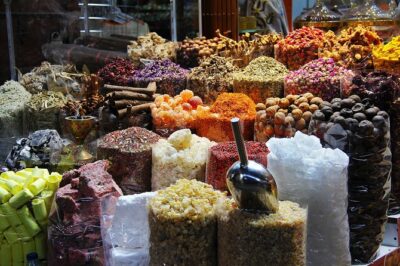
The day doesn’t stay indoors. You drive through the old-town area and reach Chorsu Bazaar, a classic place to get your bearings and see daily rhythms. Then you pivot to major public landmarks: Amir Temur Square, Alisher Navoi Bolishoi Theater, Independence Square, and a memorial complex connected to the victims of repression. It’s a useful ordering—sacred first, then street-level life, then big national symbols.
Practical tip: bring something for walking and small coins for bazaar snacks. Even if you keep your spending modest, this is the day where you’ll want to browse.
Khiva’s Ichan-Kala: old walls, big minarets, and a performance dinner
On day two, the trip turns from Tashkent logistics to the romance of the Silk Road. You fly to Urgench and transfer onward to Khiva, then step into Ichan-Kala, the walled core of the old city. This is the kind of place where distances feel short but details are nonstop—madrasahs, palaces, mosques, and towers packed into a walkable area.
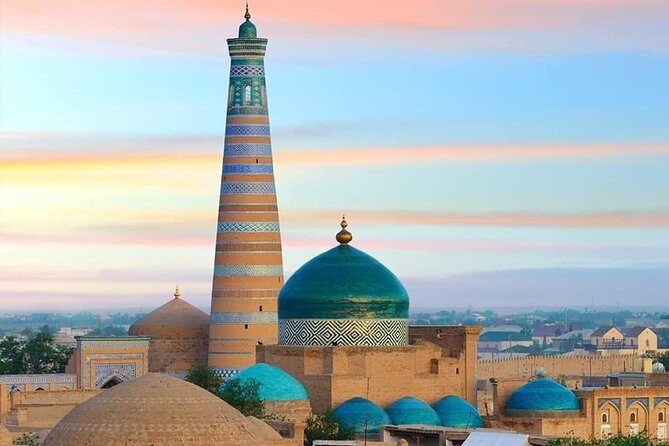
Key sights you’ll spend time on include Muhammad Aminkhan Madrasah and Muhammad Rahimkhan Madrasah, Kalta Minor, Kunya Ark, and the Juma Mosque. These names matter because they anchor what you’re seeing: rulers, religious life, and the city’s power center all show up in the architecture.
The day ends with dinner featuring a folk music and dance program (Chorezmian dance and music). That’s not just entertainment—done right, it helps you remember the architecture in sound and rhythm, not only in photos.
Consideration: this is a day with a lot happening after an early start. If you’re sensitive to fatigue, pace your shopping and keep one small rest window for your eyes and feet.
Khiva beyond the walls: palaces, mausoleums, and the outer-city stroll
The next day expands your Khiva view beyond the main walled district. You’ll see the Tash Hovli Palace and the Islam Khoja Minaret, plus the Pakhlavan Mahmud Mausoleum. Then you continue with sightseeing around the outer city wall—still old, still dense, but a slightly different feel than the tight Ichan-Kala core.
You also visit Toza Bog Palace and the Nurullobay Complex. That matters because Khiva’s story isn’t only “central sights.” The outer zones help you understand how the city extended its identity outward over time.
One plus: the timing includes a more relaxed structure in the morning, so you’re not always in a rush from the second you wake up. Another plus: the listed admissions show that some days are marked as included while others are free, so your site fees may not balloon unpredictably.
If you like photography: bring a camera strap and set expectations. Some monuments can charge extra for photo/video equipment, and those fees are not listed as included.
Desert road to Bukhara: long distance, tea breaks, and real Central Asia travel
Getting from Khiva to Bukhara isn’t a quick hop. You drive roughly 457 km across the Kyzyl Kum desert, and that road day is part of the experience. It’s one of those moments where travel itself becomes the story: steppes rolling by, long stretches where you can watch the horizon change, and at least one planned pause to reset.
There’s a stop at a tea room with steaming green tea and grilled treats. You may even catch glimpses of wild camels if luck is on your side. Whether you see wildlife or not, that tea break helps you arrive in Bukhara with less “tour fatigue.”
When you reach Bukhara in the afternoon, you get check-in time and rest. That’s smart. Bukhara rewards attention, and you don’t want to arrive already running on fumes.
Bukhara’s Ark, Lyabi Khauz, Kalyan Minaret, and a planned evening show
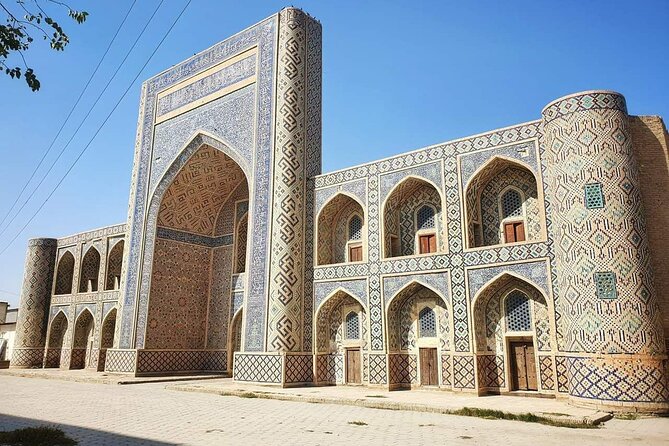
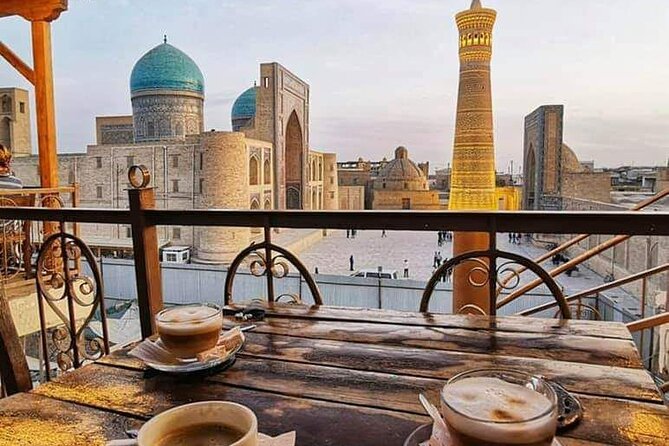
Bukhara is where this route really flexes its guided touring power. After breakfast, your day includes a concentrated sweep of Bukhara’s major sights. You start with Lyabi Khauz, then Magoki Attori Mosque and Chor Minor Madrasah, followed by the Kalyan Minaret and Kalyan Mosque.
Then the day keeps stacking: Miri Arabic Madrasah, Ulugbek and Abdulazizkhan Madrasahs, the Ark Fortress, Bolo Khauz Mosque, Chashma Ayub Mosque, and the Ismail-Samani Mausoleum. It’s a lot of names, but the strategy makes sense: your guide stitches the monuments into one readable city.
For dinner, you’re set up at Madrasah Restaurant Nodir Devonbegi, where you can enjoy traditional dance. That’s one of the smartest moments of the trip because it pairs food and performance with a place name that ties to the city’s culture rather than feeling like a random show stop.
Practical note: if you want photos, check camera policies before you start. Camera and video fees at monuments are listed as not included.
A second Bukhara day: countryside sights and an Emir’s summer residence
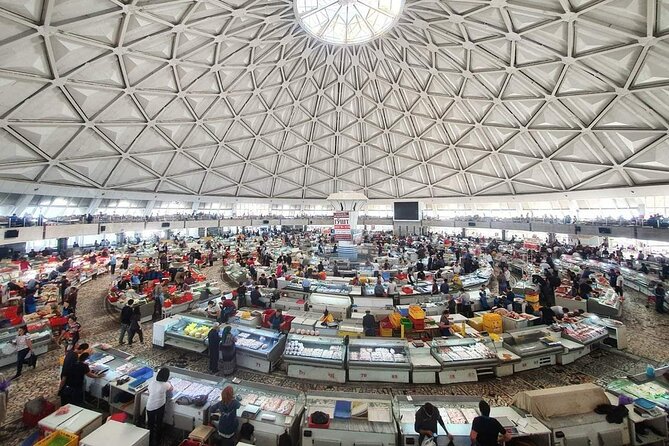
Instead of forcing everything into the same day, the plan includes a lighter day focused on the outskirts and countryside. You’ll visit the summer residence of Bukhara’s last Emir, Sitorai Mokhi-Khosa, plus the Bakhouddin Naqshbandi Mausoleum and the Chor Bakr Necropolis.
This is an important balance. After a big urban monument day, you get a different kind of architecture: residence spaces, memorial grounds, and the spiritual landmarks tied to Sufism and local religious life. It helps you see Bukhara as more than buildings and domes.
The day also includes dinner and an overnight back in Bukhara, so you’re not spending your evening scrambling for logistics. That’s one of the hidden values of a private, multi-day setup: the time you save goes into your ability to focus.
Afrosiyob to Samarkand: the fast jump that keeps the trip feeling smooth
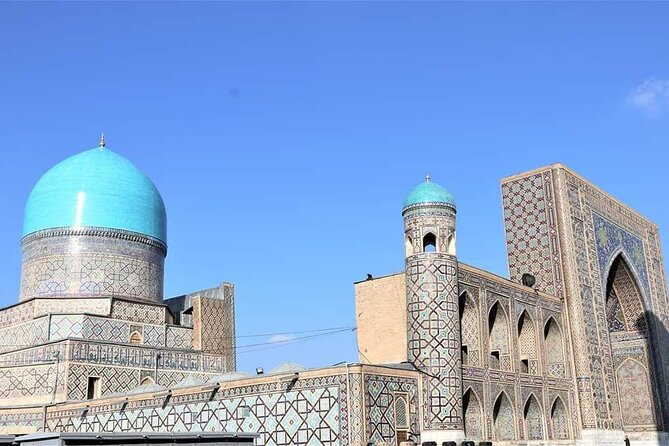
Samarkand is reached by high-speed train, the Afrosiyob. That’s not just a way to travel—it changes the mood. Day seven includes leisure time in the morning, then the transfer by train with a stated departure time (15:51) and arrival (17:30). You’ll check in, and you’ll have free time afterward.
If you want a night view plan, this is the day to consider a late stroll approach. The itinerary specifically recommends visiting Gur-Emir and Registan for night viewing. Even without over-planning, that suggestion is useful because it tells you where the visual payoff tends to be.
You’ll also notice how the tour keeps hotel overnights in the main cities. That matters because it reduces day-by-day fatigue and lets you repeat routes on foot when needed.
Registan and Gur-Emir: Samarkand’s peak morning, planned lunch, and a full evening
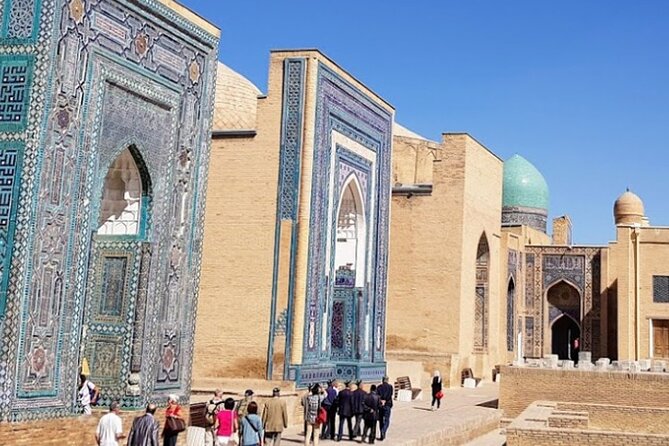
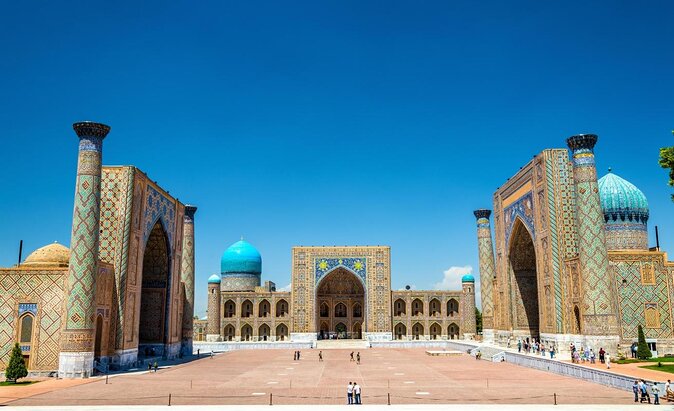
If you’re going to remember one set of images from Samarkand, it’s likely going to be Registan Square and the surrounding monuments. Your morning includes Gur Emir Mausoleum, Registan Square, Bibi Khanum Mosque, and Siab Bazaar.
That combination hits multiple layers: monumental power (Gur-Emir), public square identity (Registan), religious and civic scale (Bibi Khanum Mosque), and everyday life (Siab Bazaar). It’s a smart mix because Samarkand can feel like a postcard city unless you see both the grandeur and the street layer.
Lunch is arranged as a luxury plov. This matters because plov is not only a dish here—it’s part of how people host and gather. Then dinner happens, and you return to the hotel with the day closed cleanly.
Tip: wear shoes you can tighten or loosen easily. Registan and nearby areas involve standing and walking more than you might think.
Shahrisabz day trip: Dor-us Saodat, Ak Saray remnants, and Kok Gumbaz
One of the more interesting diversions on this route is Shahrisabz, reached by car (about 85 km). This is a day where you trade long-distance travel for concentrated architecture.
You visit Jakhongir Mausoleum in the Dor-us Saodat Memorial Complex, see the remains of Ak Saray Palace, and visit Kok Gumbaz Mosque. Even if you’ve never heard these names before, the mix is coherent: memorial complex, palace remnants, and a signature dome structure all help explain the region’s identity beyond the big three cities.
You then drive back to Samarkand and overnight again, so you keep your base city stable.
Consideration: this day is listed as 7 hours. It’s not an all-day hike, but it is a full tour day with driving plus sightseeing.
Samarkand deep sites: Shah-i Zinda area, Ulughbek Observatory, Daniel, and Konigil’s paper mill
The final full sightseeing day in Samarkand gives you a strong “where the science meets the sacred” feel. You’ll visit Khazrat Khizr Mosque, the Mausoleum of the first President of Uzbekistan (Islam Karimov), Shakhi Zinda Necropolis, the Ulughbek Observatory, and the Mausoleum of Saint Daniel.
Then comes a slightly more unusual stop: the Paper Mill in Konigil Village (Meros). It’s exactly the kind of grounded, practical site that helps a Silk Road trip stop feeling like only monuments-on-a-map. You get a glimpse of craft and production rather than only symbolism.
Dinner is at a national house described as a Uzbek family dinner (Davlat family). The value here is cultural context. You’re not only eating; you’re seeing how hospitality works at home.
Back to Tashkent: quick train return and an easy airport finish
On day eleven, you take the fast Afrosiyob back to Tashkent (transfer to the station at 16:30, arrival at 17:30). After that, your driver picks you up and you overnight at the hotel.
Day twelve stays simple: breakfast, then an early transfer to the airport. It’s a good ending structure because it reduces stress right before you fly. You also return to the meeting point area, which keeps things tidy.
Price and value: what $1,822.89 buys you on this 12-day private route
At $1,822.89 per person, this tour isn’t trying to be cheap. The value lives in the parts that are usually a headache: domestic air travel (Tashkent to Urgench), private transport across cities, and a guide in all cities. You also get breakfast daily, plus a set number of included meals—dinners (3) and lunches (5) are clearly listed.
You’re also buying time and mental energy. When trains and transfers are already arranged, you spend your attention on the monuments, markets, and meal experiences instead of on routing and ticket-chasing.
What’s not included is also worth noticing: photo/video fees at monuments aren’t included, and your international flight ticket isn’t included. Those are common add-ons, but you’ll want to budget for them so the final cost doesn’t surprise you.
If you compare alternatives, the best “value” depends on your group size and flexibility. For couples or small private groups, private guiding plus transfers can make more sense than hiring day-by-day guides across multiple cities.
Who should book this, and who should think twice
You’ll likely love this tour if you want classic Silk Road architecture but prefer organized pacing and a guide who can adapt the plan to your interests. It’s also a good match if you care about food moments—plov lunch and traditional dance tied to dinner are built into the flow.
You might think twice if you dislike early mornings or long transfer days. The route includes a very early start on one day and the 457 km desert drive to Bukhara. If you’re the type who wants everything close together, this itinerary will feel like a serious “see it all” circuit.
Should you book this private Uzbekistan route?
If your priority is major monuments with a guide, plus the comfort of having flights and intercity transfers handled, I think you should give this serious consideration. The structure is built to keep you moving through Uzbekistan’s biggest names—without making you do the logistics math.
My call: book it if you like guided context, want your days planned (including meals), and don’t mind a fast-changing itinerary. Don’t book it if you want a slow, flexible vacation with minimal driving and no early starts.
FAQ
How long is the Private Multi-Day Tour to Ancient Cities Uzbekistan?
The tour is listed as 12 days approximately.
Where does the tour start and end?
It starts at Hotel Uzbekistan on Mirzamakhmud Musakhanov Street 45, Tashkent, Uzbekistan, and it ends back at the same meeting point.
What’s included in the price?
Included items listed are breakfast (including every 12 days), private transportation, an air ticket for Tashkent to Urgench, a tour guide in all cities, and meals including 3 dinners and 5 lunches.
What transportation is used between cities?
The itinerary includes a domestic flight from Tashkent to Urgench, private transportation by car for city-to-city transfers, and high-speed train service Afrosiyob between Samarkand and Tashkent.
Are monument entry fees and camera fees included?
Admission tickets are listed as included for some days and free for others, but fees for using photo and video cameras at monuments are explicitly not included.
What is the cancellation policy?
Free cancellation is available. You can cancel up to 24 hours in advance of the experience’s start time for a full refund. If you cancel less than 24 hours before the start time, the amount paid will not be refunded.