REVIEW · SANTIAGO DE COMPOSTELA
Santiago de Compostela: Urban and Heritage Tour
Book on GetYourGuide →Operated by Ars et Urbs Santiago · Bookable on GetYourGuide
Santiago clicks into focus on this walk. I like how the guide turns the historic center into something you can read, not just look at, especially with property marks and carved clues on stone. I also love the way you start in the modernizing Alameda, then move back into medieval Santiago so the city’s timeline actually makes sense in your head. The tradeoff: it’s interpretation-heavy, so if you want a relaxed stroll with zero analysis, the pace of looking up and reading details may feel like a lot in 2 hours.
One more heads-up. The stops are short, so you get smart context rather than long museum-style time. Also, some parts may be shown in the original language, so having English or Spanish really helps you follow the guide’s thread.
In This Review
- Key things I’d bet on before you book
- Why this tour makes Santiago feel readable, not just famous
- Meeting Point at As dúas Marías: start with orientation, not guessing
- Alameda: Santiago’s 19th-century green lung and its urban logic
- Rúa do Franco: from public space to the city’s “in-between” streets
- Property marks on Rúa do Vilar: shields, inscriptions, and the right way to look up
- Platerías: the 12th-century Romanesque façade as a fragmented story
- Pazo de Fonseca: the University’s origin building and the cloister experience
- Plaza del Obradoiro: where four institutions face each other
- Cathedral and University portals: making sense of 15 minutes
- San Martín Pinario in Espacio Cultural: from monastic space to multifunctional reuse
- Plaza de Cervantes and the final return to Obradoiro
- Price and value: why $8 works here
- Who should book this tour
- Should you book it? My straight answer
- FAQ
- How long is the Santiago de Compostela urban and heritage tour?
- How much does it cost?
- What language is the tour offered in?
- Is the tour wheelchair accessible?
- Is there a limit on group size?
- What is included during the tour?
- Where does the tour start and finish?
Key things I’d bet on before you book
- Street-level clues you can spot yourself: shields, inscriptions, and emblems cut into buildings tell you who owned what and why.
- Temporal layers that feel logical: 19th-century urban change in the Alameda, then medieval origins in the old quarter.
- Platerías as a Romanesque puzzle: you see how a 12th-century façade looks broken and fragmented through history.
- A University building with real atmosphere: you go inside the Pazo de Fonseca, including its cloister and temporary exhibits when available.
- The Obradoiro square viewed as a power center: Cathedral, Town Hall, Hospital, and University in one frame, each with a different political story.
- A monastic space explained as a 19th-century transformation: San Martín Pinario is treated as a lesson in how buildings get reused.
Why this tour makes Santiago feel readable, not just famous
Santiago de Compostela is packed with monuments, but it can be tempting to treat it like a postcard. This tour goes the other way. You don’t just pass by landmarks. You learn how the city communicates: through urban layout, small architectural marks, and how buildings relate to each other across centuries.
The value here is practical. By the end, you’ll understand what you’re looking at when you wander on your own later. That means you’ll notice the social logic behind stone choices: who had authority, where power sat, and how everyday life shaped the street fabric.
And yes, the guide style matters. Reviews highlight Vanessa for being friendly and for sharing important context, plus offering extra recommendations like bookstores, the market, and restaurants. That kind of local knowledge turns a heritage walk into something that helps you enjoy the rest of your day too.
Meeting Point at As dúas Marías: start with orientation, not guessing
You meet at As dúas Marías. It’s a solid start because it anchors you outside the thick concentration of medieval streets. That matters: you’re not thrown immediately into narrow alleys and expected to know where everything is.
From there, the route moves toward the Alameda, Santiago’s central green space. If you’ve only seen the Cathedral area so far, the Alameda section gives you a different rhythm. It’s where the city shows how it modernized without abandoning its identity.
If you’re the type who likes a clear plan, this beginning helps. The guide sets the method: you’ll learn to look at the layout like a document, and then you’ll apply that method to each stop.
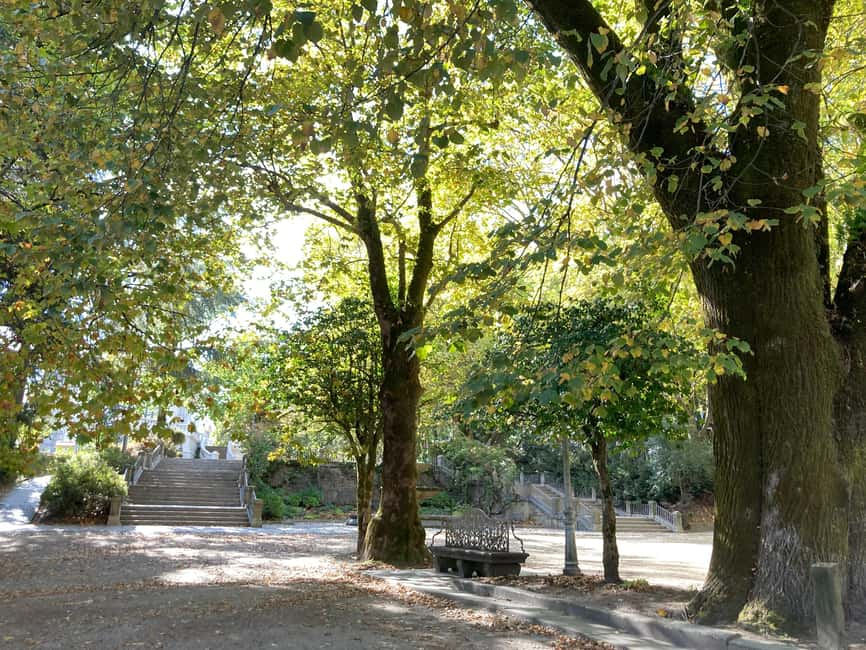
Alameda: Santiago’s 19th-century green lung and its urban logic
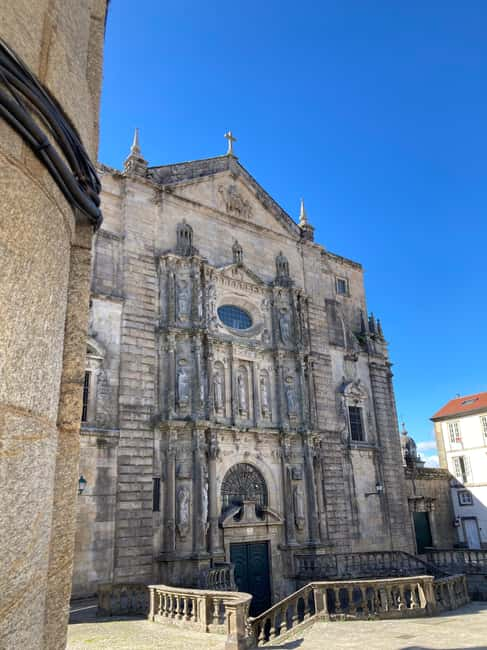
The first main walk is the central Alameda, about 20 minutes. This isn’t just a rest spot. You’re looking at a specific urban typology from the 19th century, designed for citizen leisure, and then shaped again well into the 20th century.
Here’s what I’d pay attention to when you’re there:
- The Alameda’s role as a boundary between city functions.
- How the greenery fits into modernization rather than replacing older patterns.
- The way public space reflects changing ideas about who the city is for.
Even if you only spend a short time in the Alameda, you learn the key lesson: streets and squares are never neutral. They’re decisions made over time.
Rúa do Franco: from public space to the city’s “in-between” streets
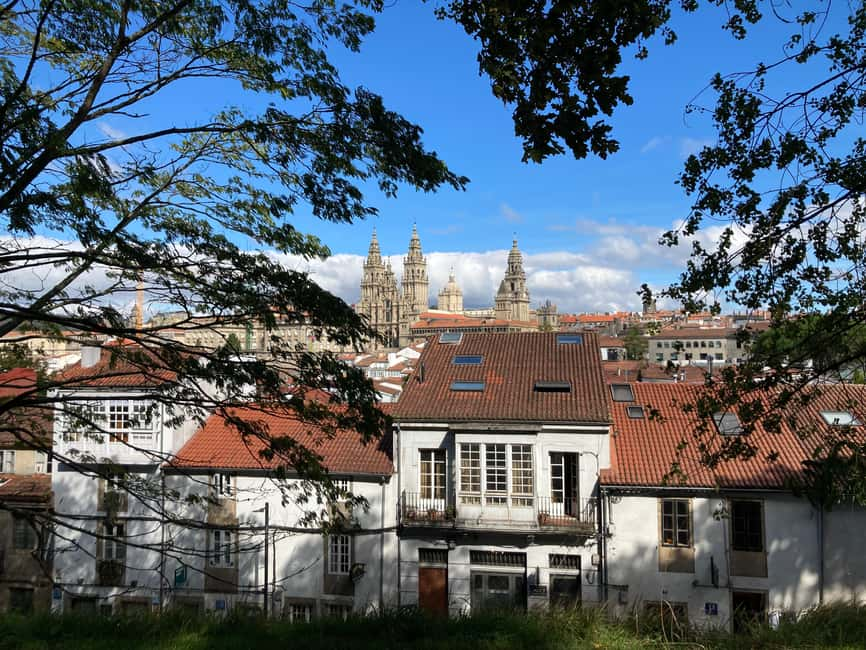
Next comes Rúa do Franco (about 15 minutes). Even without getting a full-on monument stop here, this segment is useful. It’s where you shift your eyes from broad city planning to building-level evidence.
This is also the kind of street where the guide’s interpretive method pays off. If you’ve ever walked past a carved stone and wondered what it was for, this tour trains you not to ignore it. You start connecting the street to ownership, institutions, and the social history built into everyday architecture.
If you’re short on time in Santiago, these “in-between” streets are a quiet way to gain real understanding without feeling like you’re trapped in a single crowded plaza.
Property marks on Rúa do Vilar: shields, inscriptions, and the right way to look up
One of the most rewarding parts happens around streets like Rúa do Vilar. This is where you focus on small details that most visitors miss: roof peepholes and property marks carved in stone.
These aren’t decorative trivia. They’re evidence. The guide helps you read emblems and inscriptions tied to major institutions, including:
- the Cathedral’s Cabildo
- the University
- the Hospital of the Catholic Monarchs
- the Monastery of San Martín Pinario
The effect is big. When you understand what an emblem or inscription likely signals, the city stops being a collection of unrelated buildings. It becomes a system: power, land, and roles mapped into the built environment.
Practical tip: keep your eyes moving upward. The “story” here is often in the stonework you’d normally walk past.
Platerías: the 12th-century Romanesque façade as a fragmented story
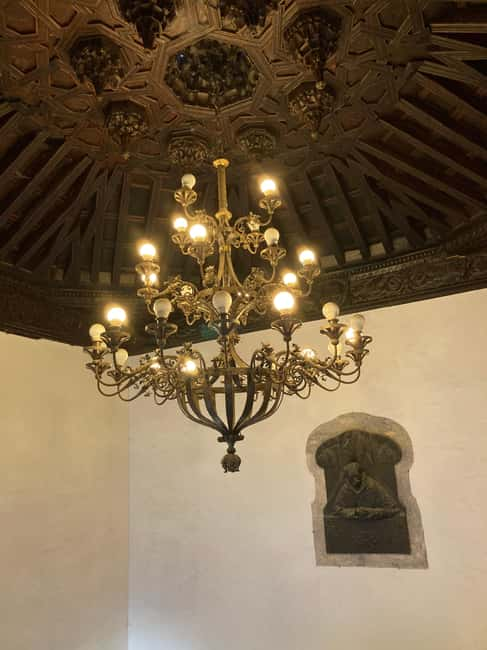
Then you reach the south façade of Platerías. The tour frames it as a 12th-century Romanesque jewel, but also as something history has treated badly—fragmented, disjointed, and presented like a sculptural puzzle.
That description matters because it changes how you look. Instead of searching for a single perfect view, you learn to interpret what you see in pieces. You start asking different questions:
- What parts survived intact?
- What’s missing and what does that absence imply?
- How do the remaining elements still communicate the original artistic and symbolic intent?
Even though your stop here is guided (not a long solo study session), you’ll come away with a better eye for Romanesque cues and how restoration and loss shape what you perceive today.
Pazo de Fonseca: the University’s origin building and the cloister experience
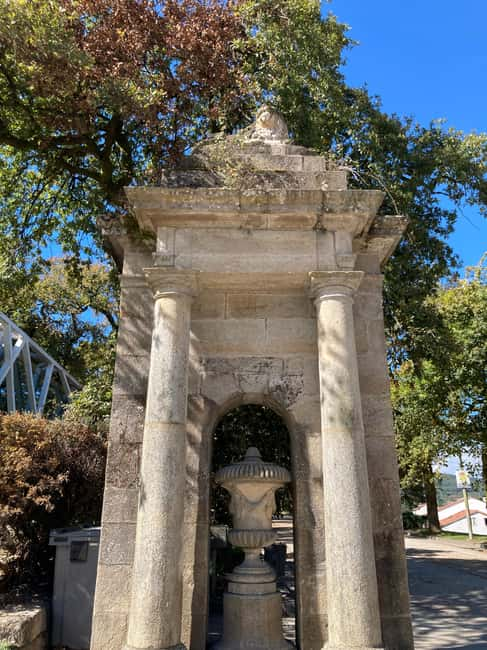
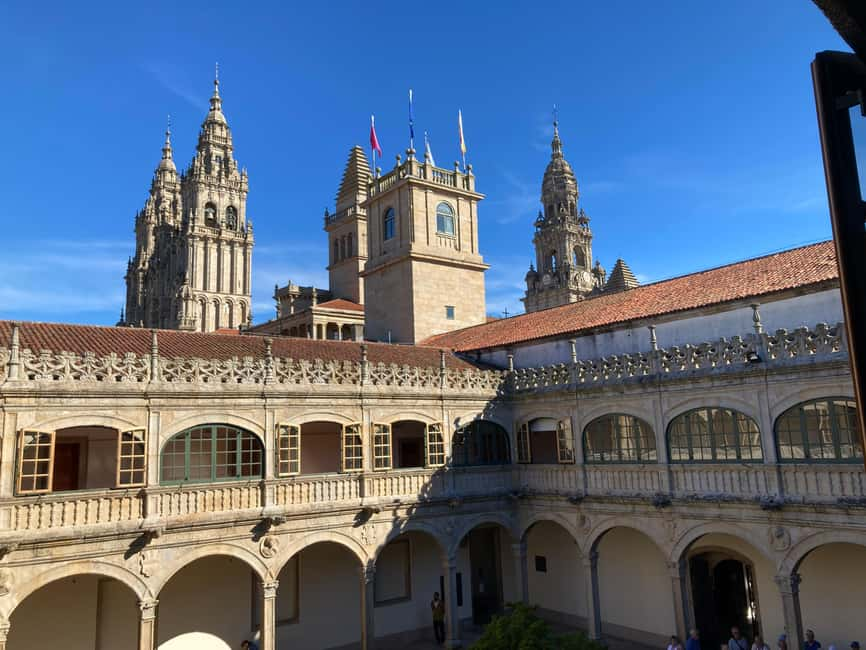
The Pazo de Fonseca is next, with about 15 minutes of guided focus. This Renaissance building connects to the University’s origins, and the tour lets you step inside.
What you can expect:
- A walkthrough that links the building to its institutional roots.
- Cloister time, where the space helps you understand how university life was organized physically.
- Possible access to temporary exhibitions in the Artesonado Room and the upper cloister, if they’re available during your visit. The tour also notes that admission to these temporary exhibitions is free.
This stop is valuable because it turns an architectural background detail into an actual sense of place. You’re not just hearing about the University. You’re standing in the kind of enclosed space where study, authority, and routine were built into the architecture.
Short visit, real payoff. You get to experience the atmosphere without needing hours.
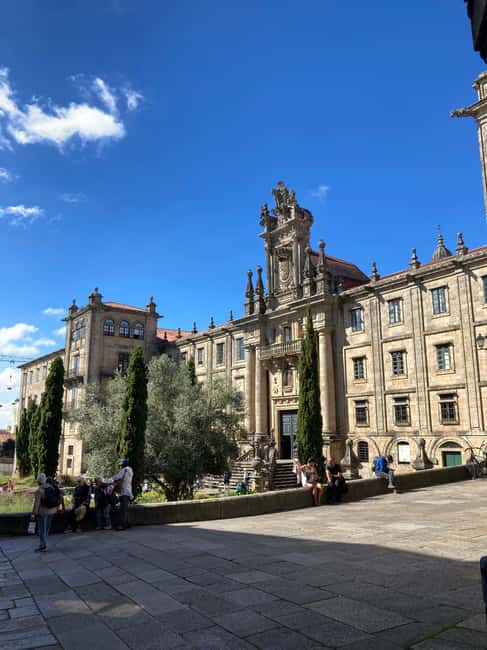
Plaza del Obradoiro: where four institutions face each other
The tour culminates at Plaza del Obradoiro (about 20 minutes). This is the square most people associate with Santiago, and the tour gives it a sharper meaning.
You look at the convergence of four emblematic buildings:
- the Cathedral’s baroque façade
- the neoclassical Town Hall, including the sculpture of Santiago Matamoros
- the old Hospital of the Catholic Monarchs
- the University Rectorate, with a Romanesque portal that evokes the Portico of Glory
The key idea is how power expresses itself. Each building speaks in its own style and era, but together they show a full stack of authority: religious, civic, medical/charitable, and educational.
If you’ve ever stared at a big plaza and felt overwhelmed, this is where the guide’s method helps. Instead of guessing which building matters most, you learn what each one represents and how they relate.
Cathedral and University portals: making sense of 15 minutes
The tour then includes a brief guided moment at the Cathedral of Santiago de Compostela (about 15 minutes). With limited time, the benefit isn’t exhaustive detail. It’s direction—what to notice so you don’t feel lost.
Finally, the University rectorate portal reference pulls you back to the Romanesque thread: a link to the Portico of Glory idea. Even if you don’t know much about Romanesque art going in, you can leave with a workable framework for identifying stylistic language.
This is also where small-group learning really helps. The guide can respond to your questions, and reviews mention that Vanessa stayed engaged even when people asked frequent questions—sometimes beyond the expected timing.
San Martín Pinario in Espacio Cultural: from monastic space to multifunctional reuse
Next is San Martín Pinario, Espacio Cultural (about 15 minutes). This stop is all about transformation, not just architecture.
The tour discusses the 19th-century disendowment and the way monastic spaces shifted into multifunctional uses. That perspective is useful because it keeps you from treating religious buildings as static artifacts. Santiago’s heritage isn’t just preserved. It gets repurposed, reinterpreted, and re-used as the city changes.
So when you look at the space here, you’re not only seeing stone. You’re seeing how society decided that certain places could keep serving new roles without disappearing.
If you like heritage that includes real-life changes—political, social, and cultural—this is one of the more human-feeling parts of the tour.
Plaza de Cervantes and the final return to Obradoiro
You end with Plaza de Cervantes (about 10 minutes), then finish back at Praza del Obradoiro. This final move is smart. It gives you a short breather in a less concentrated moment, then puts you back where you can connect all the threads.
At this point, your brain usually does a helpful trick: you start seeing the city as layers rather than separate stops. The modern Alameda makes sense. The street marks make sense. The plaza power display makes sense.
When you leave, you’re not just carrying photos. You’re carrying a reading key for Santiago.
Price and value: why $8 works here
At about $8 per person for a 2-hour guided tour, the value is strong for three reasons.
First, it’s not just exterior sightseeing. You get interior access to the Pazo de Fonseca and the option to see temporary exhibitions there with free admission. That alone is a higher-value move than many cheap city walks.
Second, the group is capped at 10 participants. Small-group size matters because it makes questions and clarification realistic, not awkward. Based on feedback, Vanessa’s teaching style includes patience for frequent questions.
Third, the tour teaches a skill, not only facts. You’ll learn how to interpret shields, inscriptions, emblems, and urban layout temporal layers. That’s the kind of knowledge that keeps paying off after the tour is over.
Potential drawback on value: if you want a long, slow look at each site, the time per stop is brief by design. This is a learning route, not a sit-and-stare route.
Who should book this tour
This tour is a great match if you:
- like reading architecture and street details rather than only major façades
- want a guide to connect monuments to social history
- enjoy bilingual explanations and small-group interaction
- plan to spend more time in Santiago afterward and want to walk with a better eye
It may feel less ideal if you:
- prefer unstructured wandering with minimal guidance
- want extended time inside major sites beyond short guided moments
Should you book it? My straight answer
I’d book this if you’re in Santiago for a short stay or you want to get your bearings fast and actually understand what you’re seeing. The mix is smart: Alameda modernization, stone property evidence, Platerías as a Romanesque fragment story, then the Obradoiro power square and San Martín Pinario’s reuse history.
Also, the price is hard to ignore. You get bilingual guidance, small-group attention, and at least one interior experience inside the Pazo de Fonseca with free temporary exhibitions when available.
If you’re the type who likes asking questions, this is especially worth it. Vanessa’s reputation for friendly, detailed answers and thoughtful extra recommendations makes it more than a timed route.
FAQ
How long is the Santiago de Compostela urban and heritage tour?
The tour lasts 2 hours.
How much does it cost?
The price is listed as $8 per person.
What language is the tour offered in?
The tour is bilingual (Spanish/English).
Is the tour wheelchair accessible?
Yes, it is wheelchair accessible.
Is there a limit on group size?
Yes. It’s a small group limited to 10 participants.
What is included during the tour?
You get a guided tour of the historic center with heritage and urban interpretation, on-site explanations about monuments and urban layout, and an interior visit to the Pazo de Fonseca, including free admission to temporary exhibitions when available.
Where does the tour start and finish?
It starts at As dúas Marías and finishes at Praza del Obradoiro.