
REVIEW · PRAIA
Santiago Island: Best of Praia & Cidade Velha Tour, a World Heritage Site
Book on Viator →Operated by Bu Country Tours · Bookable on Viator
Most people just rush through Santiago. This one slows you down.
You get a small group feel and a chance to walk major sites in Praia and UNESCO-listed Cidade Velha, including the São Filipe Fortress area and Banana Street. I especially like that your time is organized into short, walkable chunks, so you can actually look at details and not just pass them by, and that you return to Praia the same morning. One drawback to weigh is the overall story emphasis can skew toward the European timeline tied to Cidade Velha, so if you want stronger focus on African history and contributions, come ready to ask your guide.
This is a 4-hour morning loop starting at 8:30 am, with pickup from your Praia accommodation and round-trip transport handled for you. With a maximum of 8 people, the guide can answer questions and keep the pace comfortable, even with a bit of walking.
You’re also paying for more than sightseeing. For $68.53 per person, you’re covered for guide time, transport, and insurance, and many stops are free on entry—only the São Filipe Fortress has an extra fee, so it’s easier to plan your real cost.
In This Review
- Key things to know before you go
- A tight 4-hour loop: Praia streets to UNESCO Cidade Velha
- Praia City Hall and Plateau: seeing the modern city frame
- Mercado de Sucupira: fruit colors, daily life, and quick browsing
- Cidade Velha UNESCO: fortress, cathedral ruins, and the hard parts
- Planning for São Filipe Fortress: the one paid entrance
- Se Catedral ruins and Pelourinho: seeing the layers close up
- Rua Banana: thatched houses, fishermen, and the human scale
- Praia return: keep your energy for the rest of your trip
- How the guide makes (or breaks) the experience
- Who this Santiago tour is best for
- Should you book this Best of Praia & Cidade Velha tour?
- FAQ
- What time does the tour start?
- How long is the tour?
- Is pickup included?
- What’s included in the price?
- What entrance fees are not included?
- Is there a lot of walking?
- Is the group size small?
- Are all attractions open every day?
- Can I cancel for a full refund?
Key things to know before you go
- UNESCO Cidade Velha first city built by Europeans in sub-Saharan Africa, plus fortress and cathedral ruins
- Max 8 people for better pacing, question time, and fewer crowds
- Most entries are free, with the São Filipe Fortress €5 ticket the main extra cost
- Mercado de Sucupira is your local-food and daily-life stop, not just a souvenir walk
- Rua Banana brings you to the thatched-house lanes and a waterfront feeling in Cidade Velha
- Small walking time across multiple sites, so bring sunscreen and comfortable shoes
A tight 4-hour loop: Praia streets to UNESCO Cidade Velha
This half-day tour is built for people who want big history without losing the rest of their day on Santiago. You start with pickup in Praia and spend the morning working through key landmarks, then return to your accommodation afterward. The schedule is compact, with short sightseeing blocks that add up to a satisfying overview.
The value here comes from how much is included. Your price covers transportation, a tour guide, and liability insurance, and most sites listed along the route have free entry. That matters because on many cultural tours, costs creep up fast once you’re in town paying for entrances one by one.
Because it’s a small group (up to 8), you won’t get stuck in the back of a large crowd. I like that this structure tends to support photo breaks and real conversation, which can make a “history tour” feel more like a guided walk through lived space.
Praia City Hall and Plateau: seeing the modern city frame
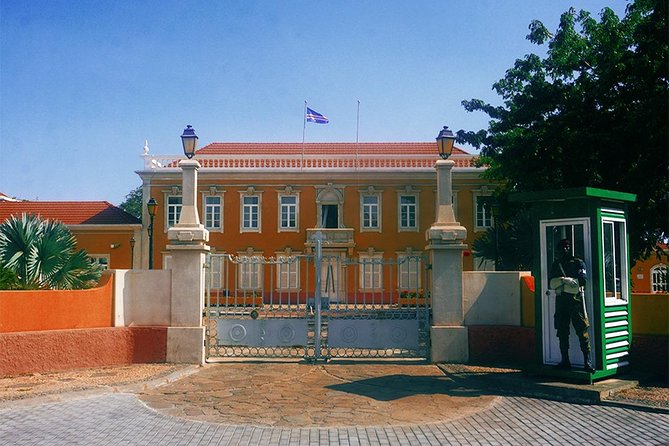
Your morning begins in Praia with pickup, then you move into the historical center around Plateau. The walk includes areas tied to Praia’s civic life—Jaime Mota Military Barracks, the Presidential Palace area, and Alexandre Albuquerque Square—before continuing toward the municipal market zone. Even if you’re not from Cape Verde, you’ll quickly notice how the city’s layout tells you where power and administration sat.
This stop is also a good way to set context before Cidade Velha. Praia isn’t the UNESCO site, but it gives you the modern “working base” for the island and helps the older layers click into place.
One practical note: the Municipal Market can be closed on Sundays. If your tour day lands on a Sunday, you’ll still walk the same civic streets, but the market-focused time may be less active, so don’t assume every day includes a full market buzz.
Mercado de Sucupira: fruit colors, daily life, and quick browsing
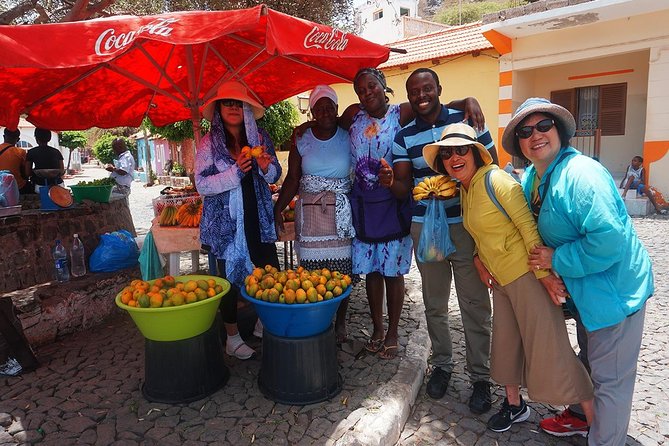
Next comes Mercado de Sucupira, where you’re not just looking at stalls from a distance. You get time to meet locals and see a mix of fruits and vegetables, which is where everyday life shows up fast—no museum label needed. After that, you have time at the market’s bigger souvenir side, so you can switch between practical food sights and gift-shopping.
I like this stop because it’s not staged. Markets like this function as social hubs, which makes your time feel more grounded than “look, photo, move on.” It’s also one of the better chances on a short tour to pick up small items that are actually useful on the trip, like snacks you can carry or low-key souvenirs.
If you’re sensitive to heat, pace yourself here. It can be a busy, sun-forward environment, so plan to slow down for photos and keep your water handy.
Cidade Velha UNESCO: fortress, cathedral ruins, and the hard parts

The heart of the tour is Cidade Velha, a UNESCO World Heritage site and often described as the first city built by Europeans in sub-Saharan Africa. Arriving here gives you a different rhythm immediately—stone, slopes, and heritage sites that feel like they’ve been waiting for your attention.
Your guided walking time includes São Filipe Fortress viewpoints, ruins connected to the old European-built cathedral, the former slave market area, and the famous Rua Banana neighborhood. Even when you only have minutes at each spot, the sequence matters: fortress to religious ruins to the former slave-market area gives you a storyline you can hold in your head.
This part is also where you’ll likely notice that the tour’s framing can tilt toward European-era structures and timelines. That’s not automatically wrong—Cidade Velha is physically tied to that history—but if you want deeper African history and voices, ask your guide directly at the first major stop. A good guide can often expand the context beyond the site walls if you prompt them with thoughtful questions.
Planning for São Filipe Fortress: the one paid entrance
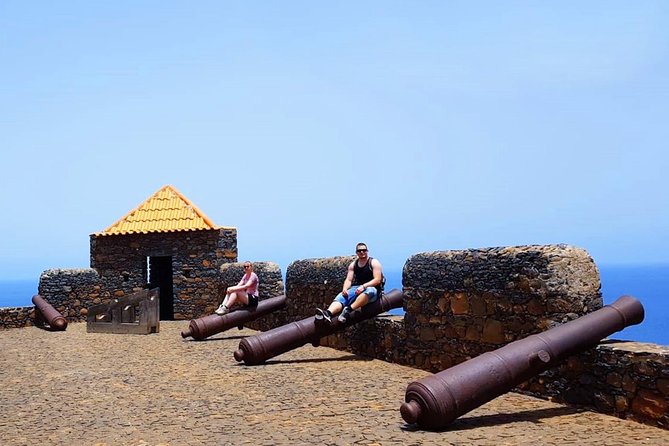
São Filipe Fortress is a big highlight for the area’s defense story. It was built in 1587 to help defend the city against pirate attacks, and the setting gives you a sense of why control of the shoreline mattered. It’s also the one place where you should expect an extra cost.
The tour lists a €5 per person fortress entrance fee that is not included. If you’re budgeting tightly, set aside that amount so you’re not surprised on the ground. Also note the fortress can be closed on holidays, so if your dates line up with public holidays, your guide may adjust how much fortress time you actually get.
Because this is only a half-day, how you spend the paid minutes matters. If your main goal is the views and fort walls, go for the full fortress time; if you prefer the storytelling and the street-level history, you might focus on the ruins and nearby areas first and treat the fortress as a shorter visit.
Se Catedral ruins and Pelourinho: seeing the layers close up
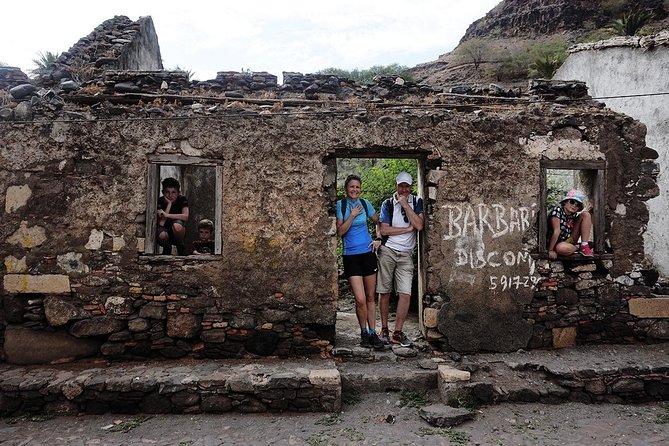
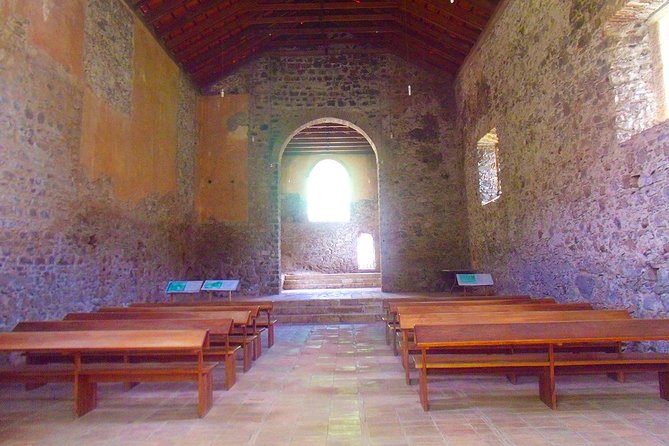
After the fortress area, the route moves to Se Catedral ruins. This is described as the ruins of the first sub-Saharan African cathedral, and it’s linked with the country’s only cathedral designation in that context. Even in partial ruins form, the location gives a strong sense of how religious power was expressed through architecture and settlement life.
You then pass Pelourinho, described as a former slave market and a symbol of municipal power. This is heavy material, but it’s important to include on a short tour because it connects the city’s economic system to its built environment. The guide’s commentary is where this portion can either stay flat or become meaningful, so lean in and ask what you should look for in the space.
I like that these stops are short but specific. You don’t get stuck waiting around, and the route keeps moving so you can compare spaces: fortress for defense, cathedral ruins for institutional authority, Pelourinho for the human reality of commerce and control.
Rua Banana: thatched houses, fishermen, and the human scale
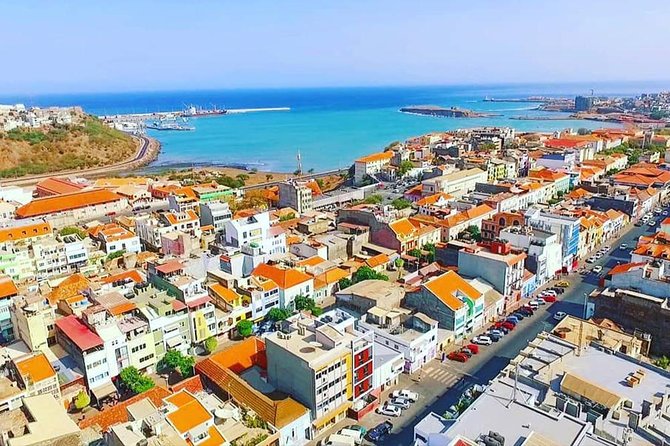
The last Cidade Velha highlight is Rua Banana, where you’ll see the famous traditional houses with thatched roofs. It’s one of those streets where the architecture feels like it’s carrying stories even without a long speech. You’re also guided through time here with a chance to meet local fishermen, which gives the street a living quality beyond photos.
This is a great place to slow down. You have around 20 minutes in the neighborhood, so you’ll want to pick what to focus on—doorways, textures, the shoreline feel, or small moments with people. If you’re the type who likes to buy one or two meaningful souvenirs rather than many random items, this stop tends to fit that style well.
If you’re traveling with someone who wants history only, Rua Banana can be the release valve. It gives you a human-scale look at how heritage still supports daily life.
Praia return: keep your energy for the rest of your trip
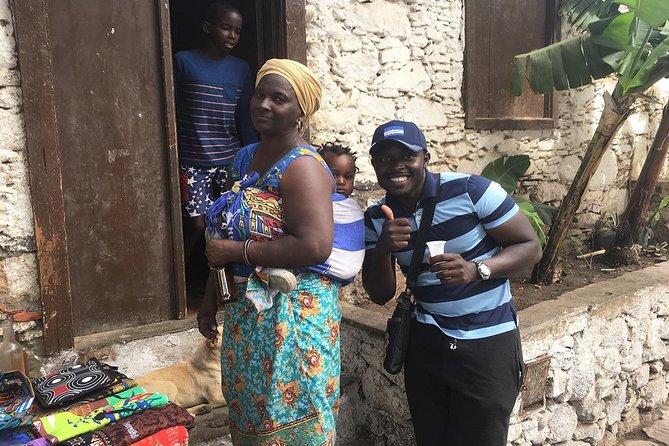
After Rua Banana, you circle back toward Praia and end with drop-off at your accommodation. The tour time is tight, so I suggest planning something light afterward—maybe a slow lunch or an afternoon stroll—rather than stacking another big activity right away.
The biggest benefit of returning to Praia the same morning is flexibility. If you want to explore Praia’s own neighborhoods later or you need downtime before dinner, this tour leaves room for it. It’s a smart choice when you only have a short time on Santiago.
How the guide makes (or breaks) the experience
A tour like this lives or dies by pacing and interpretation, and the guide quality seems to be a major strength. I’m seeing a clear pattern: guides like Elton bring humor and real preparation, and they often make room for photos and short breaks. One example from guides here includes a quick break with BBQ chicken at a park stop, which turned a history walk into a more relaxed morning.
Other guide names that show up strongly include Ivana and Alex, both described as friendly, flexible, and easy to talk with. Alfonso and Admilson are also credited for making the trip go smoothly and feel memorable. When a guide is comfortable, you’ll feel it in the small things: extra time for pictures, a willingness to answer questions, and a group pace that doesn’t steamroll you.
One more practical point: bring curiosity. If you care about African history balance, ask for it early and keep asking as the route moves into cathedral and Pelourinho territory. With the right guide, the story can broaden fast even within a short time window.
Who this Santiago tour is best for
This is a strong pick for people who want a guided highlight route in one morning. If you’re visiting Cape Verde for the first time and you want the UNESCO experience at Cidade Velha without renting a car or arranging complicated logistics, this format makes sense.
It’s also a good match for anyone traveling solo or as a couple who appreciates small-group attention. With a maximum of 8 people, you’ll likely feel more included than on larger bus-style tours.
If you hate walking, this might be tough—but the tour does describe only a small amount of walking. Comfortable shoes and sunscreen still matter, because you’ll be on your feet across multiple short stops in heat.
If you want a pure archaeology-style day with long site stays, this may feel fast. The schedule works best when you treat it as an overview: see the key sites, understand the story, then decide what you want to return to later.
Should you book this Best of Praia & Cidade Velha tour?
Yes, you should strongly consider booking if your goal is a high-impact morning on Santiago: Praia’s civic landmarks, market life, and the UNESCO heart of Cidade Velha all in one go. The price feels fair for what’s included—especially because so many stops have free entry and you get transport plus a guide.
I’d hold off or go in with expectations if African history balance is your top priority. The route is physically tied to European-built structures, so you may need to steer the conversation with targeted questions. Also budget the €5 São Filipe Fortress fee, and remember the market and fortress can close on certain days.
If you want a morning that combines heritage with real local texture—fruit at Mercado de Sucupira and thatched houses on Rua Banana—this is one of the more practical ways to do it.
FAQ
What time does the tour start?
The tour starts at 8:30 am.
How long is the tour?
It runs about 4 hours.
Is pickup included?
Yes. Pickup and drop-off at your accommodation in Praia are included.
What’s included in the price?
The price includes transportation, a tour guide, and liability insurance. Most listed admissions are free during the tour.
What entrance fees are not included?
São Filipe Fortress has an entrance fee of €5 per person that is not included.
Is there a lot of walking?
There is a small amount of walking, spread across multiple stops.
Is the group size small?
Yes. This tour has a maximum of 8 travelers.
Are all attractions open every day?
Not always. The Municipal Market is closed on Sundays, and the Fortress may be closed on holidays.
Can I cancel for a full refund?
Yes. You can cancel up to 24 hours before the experience start time for a full refund.
You Might Also Enjoy
 Full-Day Tour of Kursunlu Waterfalls, Aspendos, and Ancient Ruins of Side From Alanya
 Private Tour of the Belvedere Palace with an Art Historian: “Pictures of Austrian Identities”. Art & History Tour with Skip-the-line Tickets
 St. Nicholas Abbey Heritage Great House and Rum Distillery Tour
 Colosseum & Ancient Rome Private: Women History Guided Tour