Bologna hides its art in plain sight. This walk-led tour turns the streets of Bologna into a history lesson, with art, architecture, and food heritage woven into each stop led by Riccardo Bacchi. You’ll start right at Piazza Maggiore and move through major landmarks and quieter corners without losing the thread.
I especially like the way the guide connects visual details to real stories, from the four speaking corners to the big sundial at San Petronio. I also like that you don’t just look in silence; you get a clear sense of why these places mattered, plus tastings that fit the city’s food culture.
One thing to consider: it’s a fast-paced, talk-heavy route. If you prefer slow museum time or lots of sitting, you may want breaks between stops.
In This Review
- Key Highlights to Know Before You Go
- Why Bologna’s Art Walk Feels Like a City Reset
- Meeting at Piazza Maggiore: The Easiest Starting Line
- Piazza Maggiore: The Square That Teaches You How Bologna Thinks
- Palazzo d’Accursio: Frescoes, Chapel, and a Staircase Built for Horsemen
- San Petronio: The Biggest Sundial and Church Art That Actually Means Something
- Archiginnasio di Bologna: Oldest University Power to Wooden Anatomy Theater
- Quadrilatero: A Market Labyrinth That Explains Bologna’s Everyday Life
- Santo Stefano Complex: From Roman Foundations to Monks’ Cells
- Santa Maria della Vita: Niccolò Dell’Arca and Terracotta Motion
- Asinelli and Garisenda Views, Then Finestrella: Bologna’s Towers and Textile Waterways
- The 13th-Century House With Wooden Pillars and Palazzo Comunale’s Ceremonial Splendor
- Tastings: How Food Fits the Art and Architecture Story
- Price and Value: Is $175.36 Worth It for 3 to 4 Hours?
- Who This Tour Suits Best (and Who Might Prefer a Different Plan)
- Should You Book This Bologna Art-and-Tastings Walk?
- FAQ
- How long is the Bologna historical art walking tour?
- Is the tour offered in English?
- Are admission tickets included for the major sites?
- What’s the group size?
- Where does the tour start and end?
- Can I get a refund if I need to cancel?
Key Highlights to Know Before You Go
- A small group feel with a maximum of 25 people, so questions stay easy
- Art and architecture explained street-level, not just from guidebook facts
- San Petronio + Archiginnasio entry included, two of Bologna’s most meaningful interior stops
- Santo Stefano’s layered complex ties Roman origins to later spiritual life
- Food tastings included as part of the cultural story (often with local favorites)
- Signature views of Asinelli and Garisenda towers from street level
Why Bologna’s Art Walk Feels Like a City Reset
Bologna is one of those Italian cities where the best stuff is often one alley turn away from where you expected it. This tour gives you a structure: you start at the social heart of town, then work through the layers—medieval civic power, university life, church art, and the market economy that still shapes daily life.
The big win is how you leave each stop with a mental picture, not just photos. Piazza Maggiore becomes more than a pretty square when you learn what the city’s symbols were signaling. Churches stop feeling like similar interiors when you’re guided to specific artworks and architectural ideas—terracotta sculpture techniques, sundial engineering, and the purpose-built university rooms.
For me, the sweet spot is the balance: major sites get covered, but you’re also sent to the parts that usually don’t make the top-ten lists. And since the tour runs about 3 to 4 hours, it’s a great first-day activity. It helps you understand where things are and why they’re where they are.
Meeting at Piazza Maggiore: The Easiest Starting Line
You meet at Bar Vittorio Emanuele, Piazza Maggiore 1, and the tour returns to the same meeting point. That matters in a practical way: you can plan the rest of your day around it, and you won’t be stuck navigating Bologna with tired feet and a half-charged phone.
The group is capped at 25, and the pacing stays active. Plan on comfortable walking shoes—Bologna has uneven stone and lots of narrow lanes. Also, bring a light layer if the day is breezy; church and palace interiors can feel cooler than the street.
The tour is offered in English, and you use a mobile ticket, which is convenient if you don’t want to manage printed passes. Add in the near-public-transport location, and getting there is usually painless.
Piazza Maggiore: The Square That Teaches You How Bologna Thinks
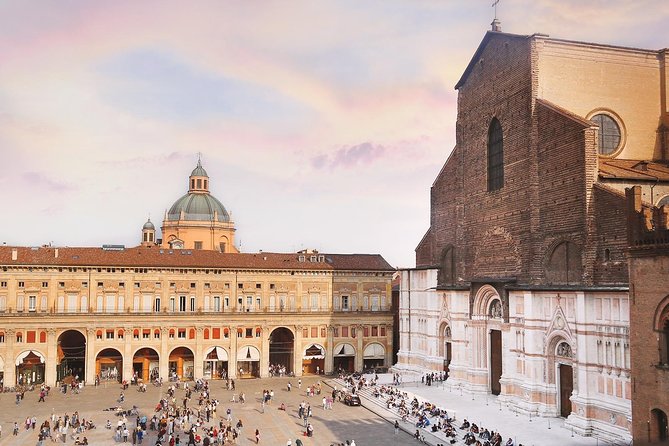
You begin at Piazza Maggiore, Bologna’s main square, where the architecture does political storytelling. The medieval buildings around you set the tone for what the city valued: civic identity, commerce, and public display.
Two details make this start feel different from a basic city tour. First are the four speaking corners—stone features that tie the square to public life and messaging. Second is the Renaissance fountain of Neptune, which you see here not just as decoration, but as a symbol of power and myth-making.
You also get pointed to the idea of the textile market secrets tied to the square. That’s key for Bologna, because the city’s cultural strength has always been connected to crafts and trade. If you like understanding why a place looks the way it does, Piazza Maggiore sets you up for the rest of the walk.
Palazzo d’Accursio: Frescoes, Chapel, and a Staircase Built for Horsemen
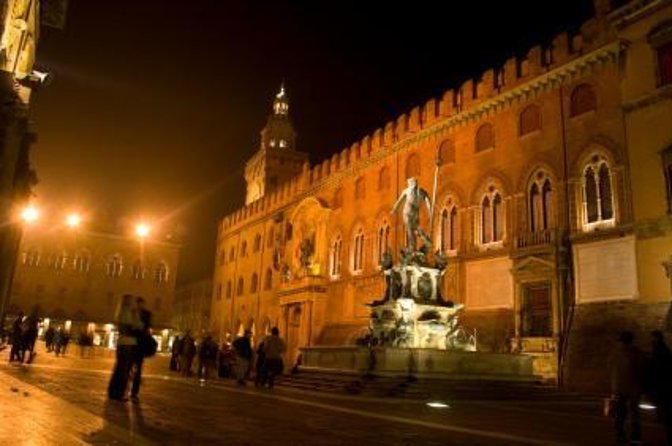
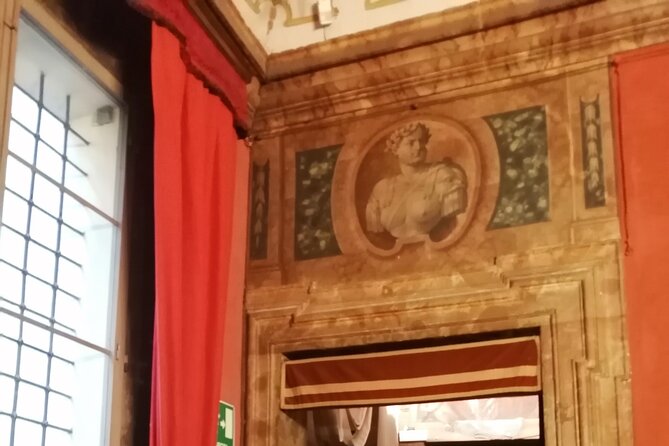
Next you head to Palazzo d’Accursio, where noble rooms and art aren’t background noise—they’re the main idea. The walk-through focuses on standout areas such as frescoes and a private chapel of the bishop, plus the kind of ceremonial spaces people built when civic authority was on full display.
One highlight here is the big stairs for horses by Bramante. Even if you’ve never studied Renaissance architecture, seeing how movement and status were designed into a building makes the story click. It’s not only pretty. It’s functional theater.
The tour also calls attention to a notable artwork described as the earthquake’s virgin by Francesco Francia, plus additional rooms such as the room of the seniors. These stops help you see that palaces in Bologna are layered—politics, religion, and art all occupying the same shell.
San Petronio: The Biggest Sundial and Church Art That Actually Means Something
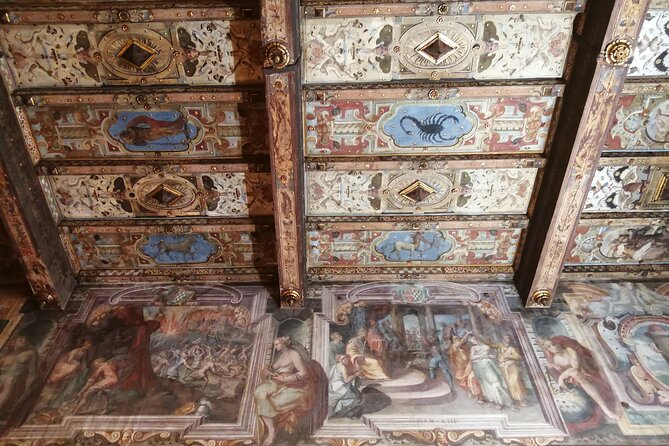
At Basilica di San Petronio, you get the kind of detail that makes an interior visit feel personal. This church is famous for having the biggest sundial in the world, and the guide uses that to explain how science and faith shared space in the city’s mindset.
You’re also shown specific art highlights, including medieval frescos in the Cappella Bolognini, plus the four ancient crosses. The tour mentions famous paintings associated with Parmigianino and Lorenzo Costa, which helps you connect names you might’ve heard to the actual visual setting.
What makes this stop valuable is the way you’re steered toward what to notice. A church can look impressive but still feel abstract. Here, you’re guided to the elements that reveal planning and meaning—how the building communicates, how art gets positioned, and how time and symbolism were built into stone.
Archiginnasio di Bologna: Oldest University Power to Wooden Anatomy Theater
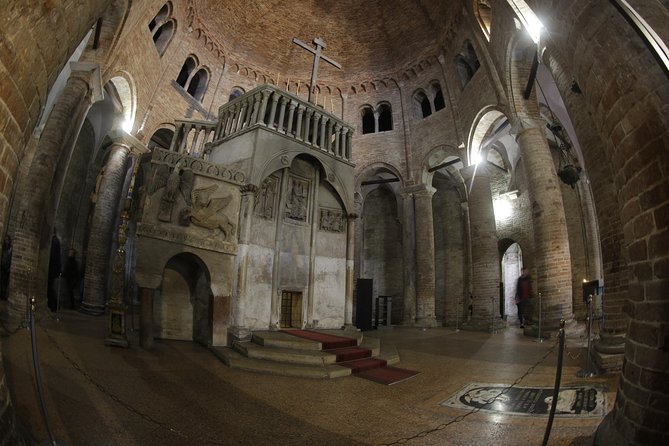
After that, you step into Archiginnasio di Bologna, tied to the oldest university in Europe. This is one of the reasons the tour feels different from a standard church circuit. You’re not only looking at art—you’re seeing the physical side of learning.
You’ll get time in the Renaissance palace areas, including a huge collection of coats of arms. That instantly tells you this was an institution with reach. The tour also points out the “secret powerful medicine” angle, which helps explain why university spaces weren’t just classrooms—they were political and scientific centers too.
The interior highlights include the wooden anatomical theatre. Seeing how anatomy was taught in a physical space makes the history feel real. You’ll also visit the Stabat Mater room, described as holding precious books such as Leonardo da Vinci’s Flights of the birds, plus the long hall for books and ancient codes.
This stop rewards curiosity. If you like the intersection of art, science, and education, you’ll likely feel like your brain just got a workout in the best way.
Quadrilatero: A Market Labyrinth That Explains Bologna’s Everyday Life
Once you’re out of the major civic and church buildings, you enter the rhythm of daily commerce at Quadrilatero. This is where the city’s art heritage shows up as food culture and local craft patterns.
The tour describes Quadrilatero as a medieval market labyrinth, full of stalls and old food shops, with ancient coats of arms and evidence of the guilds. That’s not random decoration. It’s the visual trace of who controlled trade, how communities formed, and why certain streets mattered.
This stop is short, so don’t treat it like a full food market shopping trip. Instead, use it to reset your focus. Look at the shopfronts, note how dense the lanes are, and remember that Bologna’s “history” isn’t only in museums—it’s also in how the city still organizes commerce.
Santo Stefano Complex: From Roman Foundations to Monks’ Cells
At Santuario di Santo Stefano, you get a rare “history stacked in one place” experience. The tour frames it as a complex of churches that covers a long arc, from a Roman temple on a natural spring to later religious life.
One of the most interesting points is the mention of a Dante Alighieri cloister, with cells associated with monks. Even if you don’t know every medieval name, the guide’s direction helps you read the space: the complex is a timeline you can walk through.
There’s also mention of architectural details with capitals headed by animals, which gives you an artistic hook to focus on. These are the kinds of details that make you realize why Bologna is such a rewarding city for people who enjoy careful looking.
Santa Maria della Vita: Niccolò Dell’Arca and Terracotta Motion
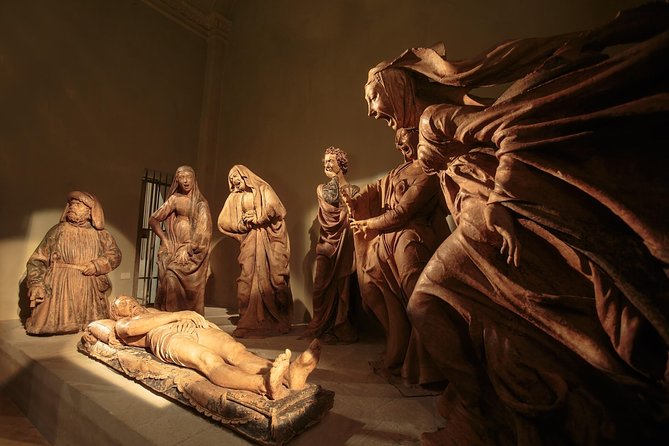
Next comes Chiesa di Santa Maria della Vita, where the tour spotlights a specific artist and a specific kind of artistry. You’ll see the terracotta masterpiece sculptured in 1470 by Niccolò Dell’Arca, and the guide points to the way it communicates emotions and movement.
This is a stop that often converts skeptics. Terracotta can sound humble next to marble and oil paintings, but the sculpture here is described as an incredible interpretation of motion and feeling—almost like the figures are communicating with you.
If you’ve ever wished church art explained itself better, this is that kind of moment. You learn what to watch for, not just where to stand for a photo.
Asinelli and Garisenda Views, Then Finestrella: Bologna’s Towers and Textile Waterways
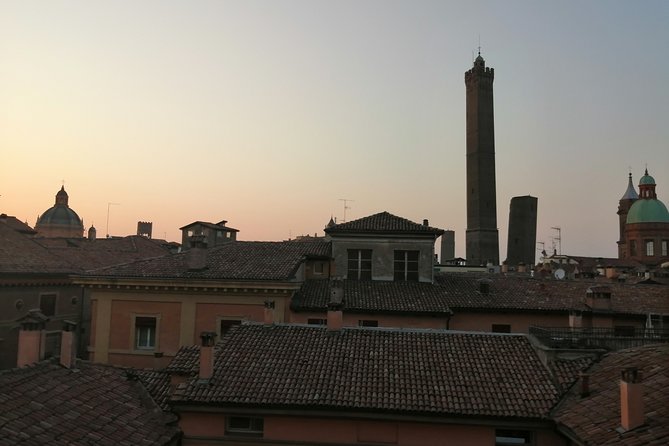
Part of the walk includes a street-level view of Bologna’s two famous towers: Asinelli (98 meters tall) and the leaning Garisenda. You don’t need a tower climb to understand why these landmarks became symbols. The angles and framing from street level do most of the work.
Then you reach Finestrella, described as a rare medieval canal design connected to supplying silk and hemp textiles manufacture, and noted as UNESCO heritage. This is where your earlier market and craft context pays off. Water wasn’t just for everyday convenience—it supported production.
The short time here works well because it’s visual. You see how Bologna’s industry shaped its city design, and then you move on instead of overthinking it.
The 13th-Century House With Wooden Pillars and Palazzo Comunale’s Ceremonial Splendor
The route also includes a surviving example of a 13th-century house with original wooden pillars, one of those quiet “how did this remain?” moments that make you feel like you found something yourself.
From there, you visit Palazzo Comunale, where the focus shifts to the decorative and ceremonial side of city power. The tour points out Renaissance and Baroque ceilings, plus frescoes and sculptures. You’ll also hear about Bramante staircases for horsemen, which ties back to the earlier palace stop and reinforces that Bologna’s official architecture was built for show as much as for function.
This pairing—old wooden structure, then a palace of grand ceilings—shows Bologna’s range. It’s not only a city of churches. It’s a city of civic theater.
Tastings: How Food Fits the Art and Architecture Story
The tour name includes tastings, and one of the standout review details is that the guide has provided food like a rice cake made from a medieval recipe, along with a sample of local wine. That kind of tasting works best when it’s tied to what you’re seeing, and this tour does that.
Why it matters: Bologna’s art and architecture evolved alongside trade and craft. When you taste something tied to older recipes, you’re not just eating. You’re stepping into the city’s everyday history.
Just be flexible with your expectations. The tour doesn’t market itself as a full meal. Think of tastings as a cultural signature: small, purposeful, and best enjoyed while you’re still thinking about the places you just visited.
Price and Value: Is $175.36 Worth It for 3 to 4 Hours?
At $175.36 per person, the price is not a budget impulse buy. But it can still feel fair, mainly because you’re paying for two things: expert guiding through multiple major interiors and the time saved by having a structured route.
You also get value from the mix of included admissions and free-access stops. Entry is noted as included at San Petronio and Archiginnasio di Bologna, and also at Chiesa di Santa Maria della Vita. Others are listed as free entry, like Piazza Maggiore and the market areas, so you aren’t paying over and over.
Add in the small group limit of 25, the English delivery, and the guide’s ability to tailor the tour to interests. In several accounts, the guide is described as adjusting the experience to what people want to focus on and offering follow-up ideas after the walk. That kind of added guidance can be worth real money in a city where “what to do next” is the hardest part.
Who This Tour Suits Best (and Who Might Prefer a Different Plan)
This tour fits best if you:
- want a guided overview of Bologna art and architecture without bouncing between places on your own
- like when a guide points out specific details you’d miss (speaking corners, sundial aspects, anatomical theatre context)
- enjoy churches, palaces, and university-era history more than just scenic wandering
- want tastings as part of the story, not a separate food tour
You might want to choose something slower if you:
- hate fast-paced walking with lots of standing in interiors
- prefer to read quietly on your own rather than listen for a full few hours
Should You Book This Bologna Art-and-Tastings Walk?
If your goal is to understand Bologna quickly and thoughtfully, I’d say this is a strong pick. You’re set up for the big icons—Piazza Maggiore, San Petronio, Archiginnasio, Santo Stefano—while also getting attention to the details that make the city feel specific and lived-in. And with Riccardo Bacchi leading the route, the experience leans story-driven, with art and city life connected instead of treated as separate topics.
If you’re the type who enjoys being shown what to notice, book it. If you want a slow, mostly self-guided stroll with minimal talking, you might feel rushed.
FAQ
How long is the Bologna historical art walking tour?
It lasts about 3 to 4 hours.
Is the tour offered in English?
Yes, it’s offered in English.
Are admission tickets included for the major sites?
Some stops are listed as free entry, while others have admission included, including San Petronio, Archiginnasio di Bologna, and Santa Maria della Vita.
What’s the group size?
The tour has a maximum of 25 travelers.
Where does the tour start and end?
It starts at Bar Vittorio Emanuele in Piazza Maggiore, and it ends back at the same meeting point.
Can I get a refund if I need to cancel?
Yes. Cancellation is free up to 24 hours in advance for a full refund. If you cancel less than 24 hours before the start time, the amount paid is not refunded.