REVIEW · CANDOLIM
Candolim: Heritage Walk of Fort Aguada Port and Jail Complex
Book on GetYourGuide →Operated by Make It Happen · Bookable on GetYourGuide
Fort Aguada feels different when it comes with prison stories. In just 1 hour, you get Portuguese-style architecture, sea views, and the less-talked-about side of Goa’s fight for freedom through an English live guide. I love that you’re not stuck only looking at walls from the outside, and I love the rare access to places like the chapel, freshwater spring, kitchens, and jail cells.
One thing to consider: this is a walking trail inside the fort complex with no vehicles, and timing can get hot if you’re there around midday.
In This Review
- Key highlights you should not miss
- Fort Aguada’s best story lives in the lower fort
- Meet at the Lower Fort ticket counter, then start walking
- Stop by Stop: what you’ll see and why it matters
- Enter through the Portuguese defensive story
- The repurposed prison complex: Salazar’s decision in real space
- Panoramic seaside views that you’ll remember
- Exclusive access: chapel, freshwater spring, and the former kitchens
- The prison cells: where the stories turn heavy
- Guides make or break this kind of walk
- Price and value: $10 for history you can actually see
- Practical tips so the hour feels easy
- Who should book this heritage walk?
- Should you book this Fort Aguada Heritage Walk?
- FAQ
- How long is the heritage walk at Fort Aguada?
- What’s included in the $10 per person price?
- Are there any vehicles used inside the fort complex?
- Do they offer pickup and drop-off?
- What language is the tour guide?
- Is cancellation possible if my plans change?
Key highlights you should not miss

- Portuguese-style fort architecture that still reads clearly in the details as you walk
- Goa’s liberation movement stories, including the people most visitors never hear about
- Exclusive access to the chapel, freshwater spring, former kitchens, and prison cells
- Panoramic seaside views from the fort, with a quick payoff for your time
- Guides who bring context, with English tours and a strong focus on colonial battles
- A small, focused format in a private group for a smoother experience
Fort Aguada’s best story lives in the lower fort

Fort Aguada is famous for its role as a defensive stronghold, but this heritage walk keeps your attention in one specific place: the Lower Fort port and jail complex. That choice matters, because it shifts the experience from postcard sightseeing to something more human. You’ll hear about why the Portuguese built and defended this fortress, and how it later became part of the Portuguese effort to contain Goan resistance.
I also like that the tour frames Goa’s history as something contested and close-up. You’ll learn about conflicts involving European powers like the Dutch and the Marathas, plus battles between Indian kingdoms and the Portuguese empire over control of the fortress. It’s not just dates and names. It’s cause-and-effect, told while you’re standing in the spaces where those decisions played out.
And yes, there are big views of the coastline too. You don’t have to choose between “pretty” and “meaningful” here. You can get both, fast.
Meet at the Lower Fort ticket counter, then start walking

The walk begins at the ticket counter of the Aguad Port & Jail Complex Heritage Walk. From there, you move through the fort on foot—no vehicles inside the monument complex. That makes the pace feel tight and efficient, but it also means you should wear shoes you’re comfortable in for a real walk.
Because the tour is 1 hour, you should expect a steady rhythm. This isn’t a sit-and-stare museum tour. You’ll keep moving, listen, and look closely as you go. It’s a good setup if you want history without committing a whole half day.
It’s also a private group experience, which usually helps the guide slow down when questions come up. The tours run in English, so you won’t be juggling translation or losing the thread.
Stop by Stop: what you’ll see and why it matters

Enter through the Portuguese defensive story
You start by getting oriented to Fort Aguada as a strategically designed defense structure. The guide ties the fortress’s Portuguese-era purpose to the bigger pressures of the time—threats that came from beyond Goa’s borders, including the Dutch and the Marathas.
What I like about this opening is how it sets up the later twist. Once you understand why the Portuguese wanted strong walls and control, the repurposing of the lower fort into a prison complex doesn’t feel random. It feels like the next step in a system of power.
The repurposed prison complex: Salazar’s decision in real space
One of the most gripping parts of the walk is the story of how the Portuguese dictator Antonio Salazar chose to repurpose the lower fort into a prison complex for convicted freedom fighters. You’re not just hearing an abstract political decision. You’re hearing it while walking through a space designed for confinement.
This is where the guide’s storytelling quality really affects your experience. In English tours, the best guides make the history understandable without turning it into a textbook. From the guide names that have been praised—Niranjan, Yashashvi, and Veron Franco—you can see a pattern: strong storytelling that connects dictatorship, religion, and colonialism to everyday consequences.
Panoramic seaside views that you’ll remember
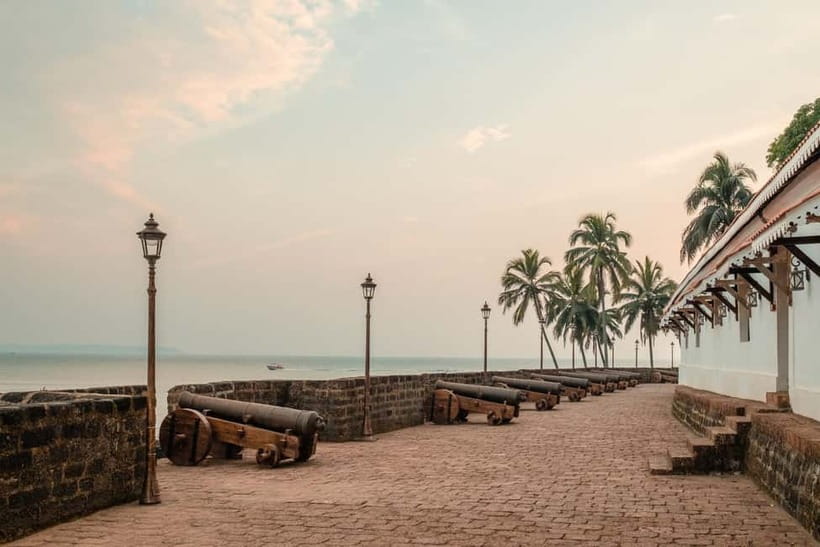
Fort Aguada has you looking out over the sea, and those views give you a mental map. They help you understand why the fortress mattered strategically in the first place. Seeing the coastline while the guide explains defense decisions makes the story “stick.”
Quick practical note: if your visit is around midday, the air can feel intense. One guide-led timing was described as very hot around 12:00, so plan for sun. Bring water and use sun protection.
Exclusive access: chapel, freshwater spring, and the former kitchens
Here’s the major value piece: you don’t just get to look at the fort. You get access to specific areas that aren’t generally open to everyone.
- The chapel: This part shifts the tone from pure military function to something more personal. Places like chapels often show how religion and colonial control overlapped in daily life.
- The freshwater spring: Access to water is not a small detail inside fort architecture. Hearing about a freshwater spring in the lower complex gives you a realistic picture of how a fortress had to function beyond walls and weapons.
- Former kitchens: Kitchens are one of those overlooked spaces that makes history feel less distant. Even without a “living quarters” tour, kitchens help explain what life in a prison system might have involved operationally.
This exclusive access is exactly why the tour earns its spot on a tight Goa itinerary. You see the architecture, yes. But you also see the supporting rooms that give the fortress texture.
The prison cells: where the stories turn heavy
Then you reach the prison cells—described as dingy—and that’s the emotional center of the walk. The guide shares gripping tales of battles and resistance, including the larger conflict between Indian kingdoms and the Portuguese empire for control of the fortress.
This isn’t the kind of stop where you want to rush your listening. If you’re the type who enjoys historical context, take your time mentally even if the tour moves forward on schedule. The goal here isn’t comfort. It’s understanding.
If you want light sightseeing only, you might find this section emotionally intense. But if you’re okay with somber history, the effect is strong because you’re standing inside the same kind of environment that held those freedom fighters.
Guides make or break this kind of walk

For a short, 1-hour tour, the guide’s voice matters a lot. The praised guides here have a common trait: they cover a lot of ground without losing clarity.
A few guide names that stood out in English tours include Niranjan, Yashashvi, and Veron Franco. One especially noted guide approach was covering dictators, religion, and colonialism in a way that left you feeling more informed about Goa and how the prison complex fit into the bigger picture.
If you can choose or request a guide, it’s worth asking. A great guide will help you connect what you’re seeing (chapel, spring, kitchens, cells) to the political story the guide is telling.
Price and value: $10 for history you can actually see

At $10 per person for a 1-hour guided heritage walk, the price can feel like a bargain once you understand what’s included. You get:
- A heritage walk led by a local storyteller
- Entry ticket to Fort Aguada monument
- Exclusive access to areas such as the freshwater spring, kitchens, and prison cells
Some visitors have specifically called out that the entrance fee for foreigners (around 400 rupees) is included, which strengthens the value argument. Even if you’re paying for monument access anyway, this tour packages it with guided storytelling and areas most people don’t get to visit.
Also, you’re paying for time with a guide—not just entry. In a place like this, the interpretation is half the product. Without a guide, you might walk through and notice architecture. With a guide, you notice meaning.
Practical tips so the hour feels easy

A few things will make your walk smoother:
- Wear closed-toe shoes since it’s a walking trail inside the fort complex.
- Bring sun protection. No umbrellas or hats are provided, and one timing was described as very hot.
- If you use a face mask or sanitizer as personal preference, bring your own. Those items aren’t provided.
- Plan to keep your focus. The tour is short, and the story depends on you listening while moving.
If you’re traveling in Goa with a tight schedule, this is a smart pick because it’s not a half-day commitment. You get a lot of context in a small block of time.
Who should book this heritage walk?

This tour is a great fit if you:
- Want Portuguese-era architecture with real historical context
- Prefer guided storytelling over reading plaques
- Like historical sites that explain political conflict in plain terms
- Appreciate exclusive access, especially to spaces like chapel, spring, kitchens, and prison cells
It may not be your best choice if you:
- Want a purely cheerful, casual sightseeing walk
- Don’t handle prison-and-conflict history comfortably
- Are expecting vehicle-based comfort inside the monument complex
Should you book this Fort Aguada Heritage Walk?

Yes, I’d book it if you’re in Candolim or staying nearby and you want Fort Aguada to mean more than views. The exclusive access to the chapel, freshwater spring, former kitchens, and prison cells is the standout value, and the short 1-hour format makes it easy to fit into a Goa day.
Book it especially if you appreciate guides who can connect architecture to the real political story—battles, repression, and the liberation movement—without turning it into a lecture.
If you’re sensitive to heavy history, just go in prepared for a somber tone in the jail section. For the right mood, this is one of the most memorable ways to experience Fort Aguada.
FAQ
How long is the heritage walk at Fort Aguada?
The tour lasts 1 hour.
What’s included in the $10 per person price?
You get a heritage walk led by a local storyteller, an entry ticket to the Fort Aguada monument, and exclusive access to the freshwater spring, kitchens, and prison cells.
Are there any vehicles used inside the fort complex?
No. This is a walking trail, and no vehicles are used inside the monument complex.
Do they offer pickup and drop-off?
No. Pickup and drop are not included.
What language is the tour guide?
The tour guide is English.
Is cancellation possible if my plans change?
Yes. You can cancel up to 24 hours in advance for a full refund.