REVIEW · MTSKHETA
Day trip to ancient history-Mtskheta,Gori,Uplistsikhe
Book on GetYourGuide →Operated by Argo Travels Georgia · Bookable on GetYourGuide
A day trip where ancient stone tells you how Georgia learned to look at the world. I love the way this route moves from Jvari’s huge viewpoint to Uplistsikhe’s rock city without feeling rushed. I also like that the guides (people like Levani, Misha, and George) can work in both English and Russian while keeping the group engaged. One possible drawback: the day is long enough that the lunch break may feel like more time than you expect.
You’re starting in Old Tbilisi (right by the I LOVE TBILISI spot on Ovanes Tumaniani St), then heading out into Shida Kartli. The pace is generally smooth, with photo stops and guided time built in, plus water included. Just be aware this trip is not meant for everyone, especially if you have heart problems or epilepsy.
In This Review
- Key things I’d plan around
- Your day trip to ancient Georgia: what it feels like
- Meeting at Old Tbilisi and timing over 8 hours
- Jvari Monastery: the first view you’ll remember
- Gori: the Stalin house museum and the armored carriage
- Uplistsikhe cave city: priests, slaves, and rock-cut rooms
- Svetitskhoveli Cathedral: the heart of the Georgian church
- Mtskheta’s route and the small stops you’ll actually use
- Lunch reality: good food, but plan for the time
- Price and value: is $25 fair for 8 hours?
- Who should book this trip (and who should skip it)
- Should you book this day trip?
- FAQ
- What is the duration of this trip?
- How much does it cost?
- Where do I meet the group?
- What’s included in the price?
- Is lunch included?
- Are museum entry tickets included?
- What languages is the guide available in?
- Which places are visited during the day?
- Is the tour suitable for everyone?
- Is cancellation allowed?
Key things I’d plan around
- Jvari first: You get a major view of Mtskheta early, when the light and timing often work in your favor.
- Stalin context in Gori: You’ll see his birth house and the armored carriage with a guide who explains the details.
- Uplistsikhe cave city: Expect dramatic rock-cut spaces and a walk through a site connected to the first millennium BC.
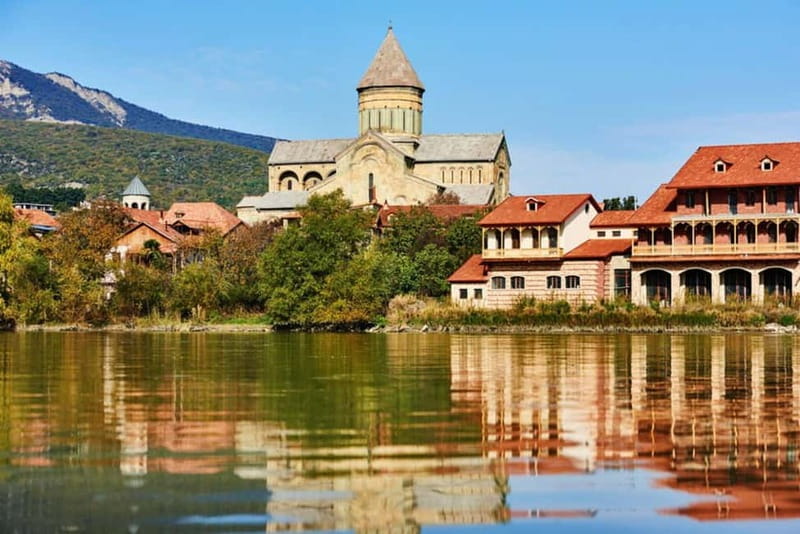
- Svetitskhoveli Cathedral focus: This stop is treated like the spiritual heart of the Georgian church.
- Food and small tastings: Wine, wine ice cream, local sweets, and souvenirs can break up the driving time.
- A guide who adapts: The tour team is known for punctuality and for factoring in guest wishes.
Your day trip to ancient Georgia: what it feels like
This is one of those day tours where the drive actually helps the story. You start in and around Mtskheta (one of Georgia’s key historic centers), then you head to Gori for a sharply different chapter, and finally you end up in Uplistsikhe—an entire town carved into rock. By the time you reach Svetitskhoveli, you’re not just looking at churches and ruins. You’re seeing how power, faith, and survival shaped the same region over centuries.
The best part is that the day has clear anchors. Each stop has a reason you’re there and a guide-led walkthrough, not just time to wander. And because the tour includes transport plus an English-speaking guide, you’re not solving logistics between sites. That’s where a lot of “one-day history” trips quietly lose value.
Meeting at Old Tbilisi and timing over 8 hours
You meet at 21 Ovanes Tumaniani St, in the heart of Old Tbilisi, at the I LOVE TBILISI area. The tour returns to the same place at the end of the day, so you’re not dealing with separate pickup points or getting stranded across town.
Duration is 8 hours, and the stops are spaced to keep momentum. The schedule includes breaks for photos and walking, guided tours at each site, and scenic viewpoints along the way. This matters because long day trips usually fail in one of two ways: either you’re trapped in the bus too long, or you’re let loose without structure. This route tries to stay in the sweet spot.
Also, you get mineral water (0.5l per person) included. It’s a small thing, but in Georgia’s warm months it can be the difference between enjoying the stops and feeling annoyed at the basic lack of hydration.
Jvari Monastery: the first view you’ll remember
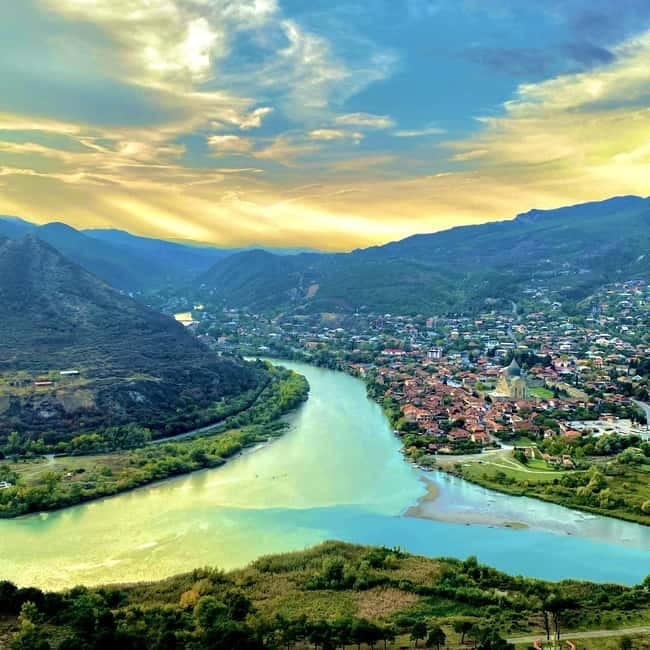
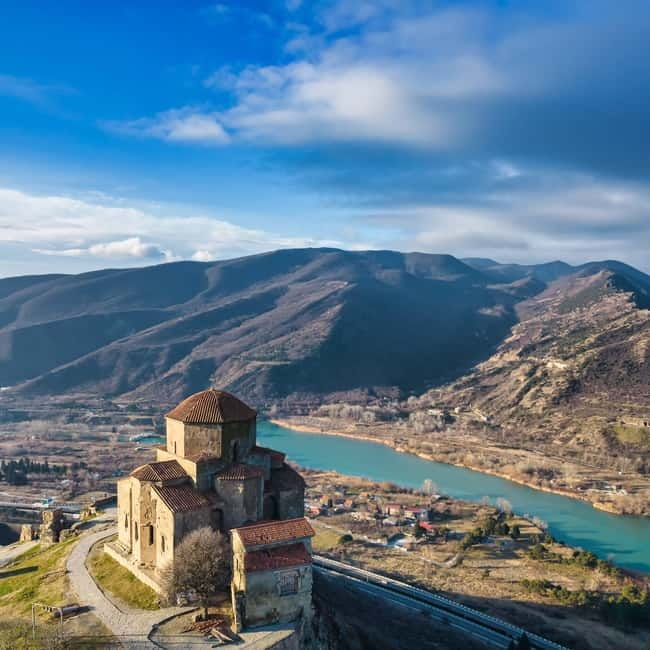
The tour’s first major stop is Jvari—a monastery temple from the 6th to 7th centuries. Even if you’re not a “monuments person,” this is the part that gets people to stop talking and just look. The temple sits above the city and gives you a sweeping view over Mtskheta, the ancient capital of Georgia.
What I like here is the contrast. You start the day with the deep history of the church, but you end the stop with a practical reward: a clear sense of geography. From above, you understand why these places were built where they were—because visibility was power, and because the landscape mattered.
Time-wise, you should expect around 1.5 hours including breaks, photos, coffee time, and the guided visit. That pacing is good: enough time to take in the view without feeling like you’re rushing through the details.
Gori: the Stalin house museum and the armored carriage
After Jvari, the route shifts into Gori, a smaller provincial city that’s known internationally for Joseph Stalin (Dzhugashvili). This isn’t a casual stop. It’s a museum day, and the guide leads you through the key pieces.
You’ll visit Stalin’s house-museum, including the house where he was born, plus the armored carriage. A museum guide explains details from his life, which is exactly what you want for a figure like this—context helps you separate facts from propaganda and guesswork.
This stop is listed for about 2 hours, with a photo stop and sightseeing time alongside the guided museum experience. One practical consideration: museum-heavy segments can feel emotionally heavy. If you’re sensitive to political history, plan to take quiet breaks when you need them and don’t force yourself to “power through” every room.
Uplistsikhe cave city: priests, slaves, and rock-cut rooms
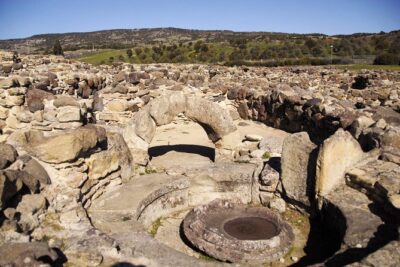
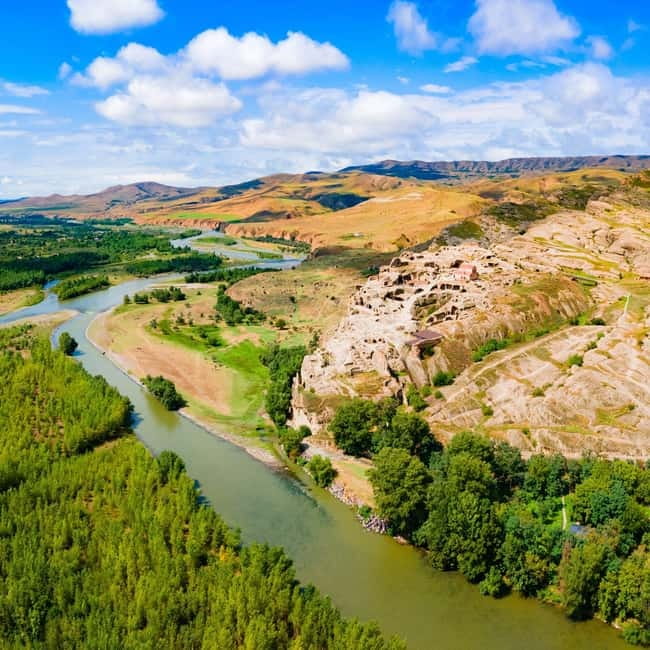
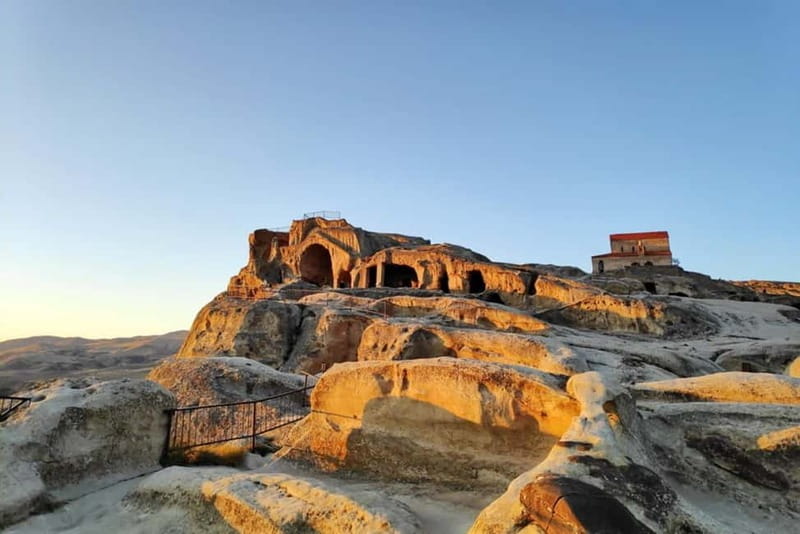
Then comes the part that most people remember for its sheer physical drama: Uplistsikhe. The site is described as a city connected to priests and slaves, with roots going back to the first millennium BC. Even the way people describe it sounds dramatic for a reason: it’s essentially a stone city shaped by caves and rock-cut spaces.
You’ll spend about 3 hours here, with guided sightseeing and walking time. The grotto-like spaces are carved into the rock, and the structures can feel like the landscape itself has been turned into architecture. It’s not trying to be pretty. It’s trying to survive—and that bluntness is part of the attraction.
Is it extreme like Vardzia? One review compares it and suggests it’s less extreme than that cave city. That’s good news if you want cave/cavern history without the most punishing terrain. Still, you should expect uneven ground, steps, and walking during the visit. If you have mobility limits, think carefully before choosing this day.
Svetitskhoveli Cathedral: the heart of the Georgian church
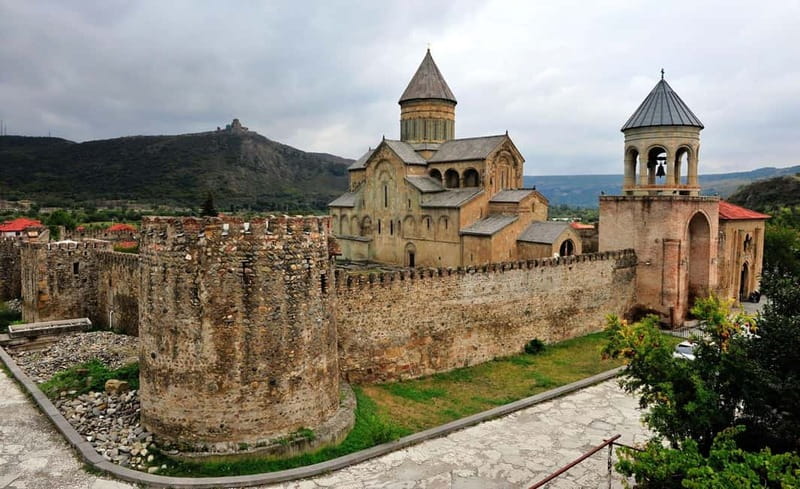
After rock-cut history, you move into church history. The tour visits Svetitskhoveli Cathedral, described as the second largest temple in Georgia and long treated as the heart of the Georgian church, with that role continuing to this day.
This is a stop where the guided explanation really matters. Without context, large cathedrals can blur together. With it, you understand why this one matters so much to Georgian identity and religious life.
Time here is about 1.5 hours, including a break, photo stop, and guided visit. If you care about religious architecture, you’ll enjoy the chance to see a key Georgian site in a single-day format. If you’re more into viewpoints and ruins, plan for the cathedral to be your “calm, focused” moment after the intensity of Uplistsikhe.
Mtskheta’s route and the small stops you’ll actually use
The day doesn’t only run on big-ticket monuments. It also includes smaller moments that make the tour feel more like living travel instead of a checklist.
Along the way, you may have opportunities to taste wine, try wine ice cream, and sample local sweets. There are also souvenir chances during the route. I like this approach because you get more than architecture—you get food culture in the areas you’re visiting.
There’s also an extra sightseeing/spirits-related stop listed around 1 hour near the end (before returning to Tbilisi). If you’re trying to travel smarter with limited time, these smaller tastings and brief scenic pauses are exactly where a tour like this can outperform DIY travel.
Lunch reality: good food, but plan for the time
Lunch is clearly part of the day. The tour narrative says you’ll be welcomed with a delicious lunch at a cozy restaurant. That said, lunch expenses are not included, so you should budget separately.
The only caution I’d give: the lunch stop can eat more time than you expect when you’re excited to keep moving. If you tend to get impatient waiting, treat lunch as a reset, not as free time to squeeze in extra sightseeing. Bring a little patience and you’ll enjoy it more.
Price and value: is $25 fair for 8 hours?
At $25 per person, this is strong value if you’re spending the day efficiently. You’re getting transport services, an English-speaking guide, and mineral water. You’re also getting multiple high-signal stops—Jvari, Gori’s major Stalin sites, Uplistsikhe, and Svetitskhoveli—within a structured 8-hour day.
The trade-off is what’s not included: lunch expenses and museum entry tickets. So your real spending total will be a bit higher than $25 once you add those. Still, the guide-led museum time and the multi-site routing are the part you’d struggle to replicate easily on your own without careful planning.
Who should book this trip (and who should skip it)
This tour makes sense if you want:
- A guided day that hits several major historic stops without the mental load
- A mix of viewpoints, museum time, cave city walking, and a standout cathedral
- English or Russian guide support (the tour runs with those languages)
I’d be cautious or skip if:
- You have heart problems or epilepsy, since the tour is listed as not suitable for these conditions
- You hate walking on uneven or rocky terrain (Uplistsikhe includes walk time)
Should you book this day trip?
I’d book it if you want one day to cover ancient Georgia in a way that feels organized and guided, not chaotic. The tour’s biggest strengths are practical: punctual, professional service, a guide who keeps the group engaged in English or Russian, and a route that builds from viewpoint to museum to cave city to cathedral.
The only reason to hesitate is time sensitivity around meals. If your schedule is tight and lunch breaks stress you out, plan for that upfront. Otherwise, this is a very efficient way to see Mtskheta’s spiritual center, Gori’s political history, and Uplistsikhe’s rock-carved past all in the same 8-hour window.
FAQ
What is the duration of this trip?
The tour lasts 8 hours.
How much does it cost?
It costs $25 per person.
Where do I meet the group?
You meet at 21 Ovanes Tumaniani St in Old Tbilisi, at the I LOVE TBILISI area.
What’s included in the price?
Transport, an English-speaking guide, and mineral water (0.5l per person) are included.
Is lunch included?
No. Lunch expenses are not included.
Are museum entry tickets included?
No. Museum entry tickets are not included.
What languages is the guide available in?
The tour is offered with a live guide in English and Russian.
Which places are visited during the day?
The day includes Jvari, Gori (Stalin house-museum and armored carriage), Uplistsikhe, and Svetitskhoveli Cathedral, with additional scenic and tasting stops on the way back.
Is the tour suitable for everyone?
It’s listed as not suitable for people with heart problems or epilepsy.
Is cancellation allowed?
Yes, free cancellation up to 24 hours in advance is offered for a full refund.