REVIEW · ALEXANDRIA
Discover the Islamic Heritage of Egypt Day Tour
Book on Viator →Operated by Travel2Egypt · Bookable on Viator
A single day can still feel like a time machine. This Islamic heritage route in Cairo links major stops tied to the Citadel of Saladin, two masterful medieval mosques, and Mamluk-era burial complexes. It’s a focused 6-hour plan that makes Islamic architecture easy to understand without needing a textbook.
I like the practical flow: hotel pickup and return by AC private car or van means you spend less energy on logistics and more on the buildings. I also like the mix of landmarks with different functions—fortress-and-mosque, grand dynastic religion, and royal tomb architecture—so the day has real variety instead of repeating similar scenery.
One thing to keep in mind: entrance fees aren’t included for two of the four main stops (Cairo Citadel and the Mamluk tombs complex). So you’ll want to budget extra on top of the $71 price to avoid surprise costs at the gates.
In This Review
- Key highlights at a glance
- A day in Cairo’s Islamic line of power
- Cairo Citadel and Mosque of Mohamed Ali: the fortress viewpoint
- Sultan Hassan Mosque: the dome built over a tomb
- Al-Rifai Mosque: Khoshiar Hanem’s royal chapter
- Mamluk tombs in Cairo: funerary complexes with names
- The 6-hour schedule: how the day actually paces out
- Price and ticket reality for $71
- Comfort and logistics: pickup, AC, and small-group movement
- What to expect inside these mosques and complexes
- Best fit: who this tour works for
- Should you book this Islamic heritage day tour?
- FAQ
- What is the duration of the tour?
- Where does the tour take place?
- How much does the tour cost?
- Is pickup from my hotel included?
- Are entrance fees included?
- What transportation is provided?
- Is there an English-speaking guide?
- Is a mobile ticket provided?
- How many people are in the group?
- What is the cancellation policy?
Key highlights at a glance
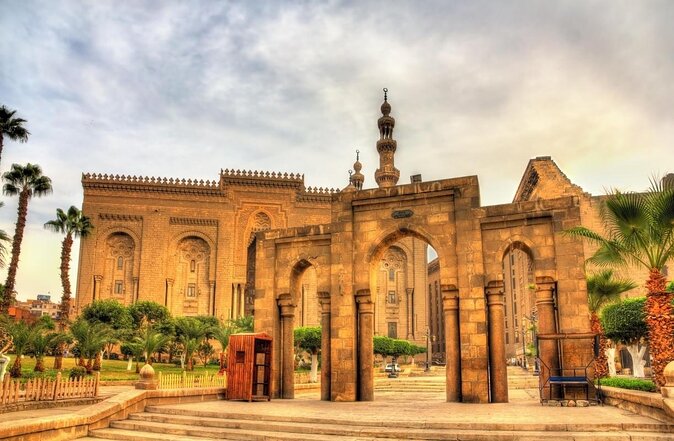
- Four major architecture stops in about 6 hours: Citadel, Sultan Hassan, Al-Rifai, then Mamluk tombs
- Hotel pickup and return with an AC private car or van, plus a bottled water for each person
- Small group size (max 12) for a smoother pace inside crowded sites
- Tickets included for two mosques (Sultan Hassan and Al-Rifai), which helps control your total cost
- English-speaking guide to connect details like tomb locations and dynasties to what you see
A day in Cairo’s Islamic line of power
Egypt is where Islam spread early and flourished for centuries, and Cairo’s skyline shows it in stone. This day tour is built to move through that story step by step, from the Citadel area (big-picture power and defense) into religious architecture tied to rulers, and ending in Mamluk-era funerary complexes that treat death like statecraft.
What I like about this approach is that it doesn’t try to cover everything. Instead, it gives you a set of “anchors” you can remember: one fortress-mosque complex, two landmark mosques with very specific tomb associations, and one larger burial-site area packed with named complexes. That makes it easier to spot patterns—how domes, courtyards, and decoration were used to project authority.
Cairo Citadel and Mosque of Mohamed Ali: the fortress viewpoint
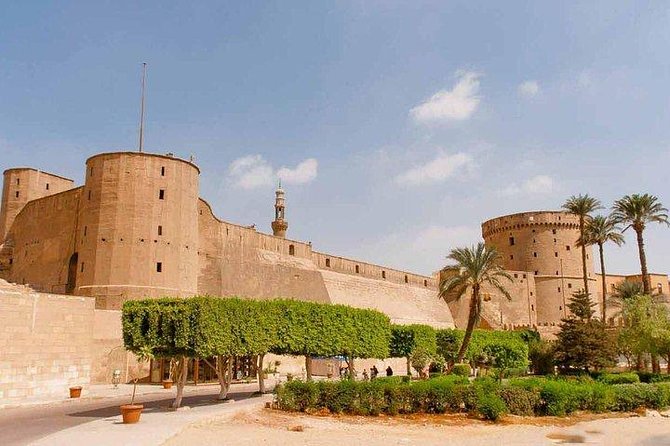
Your first stop is the Cairo Citadel, constructed in 1176 by Saladin El Ayouby. Even if you only spend about 1 hour 30 minutes here, the Citadel gives you a strong sense of why rulers built like this: control the city from a high, defensible point, then place major religious structures inside the same power zone.
Inside the Citadel area, you’ll see the Mosque of Mohamed Ali (along with other structures such as the military museum). The actual Citadel itself is described as remarkable in structure, and that matters because you’re not just looking at one pretty building—you’re reading the planning. This is the kind of stop where a guide helps you connect what you’re seeing to the big idea: security and legitimacy built into the same site.
A practical note: because the Citadel admission ticket isn’t included, you’ll want to plan for that cost at the start. If you’re the type who likes to know totals before you go, this is the moment to do it.
Sultan Hassan Mosque: the dome built over a tomb
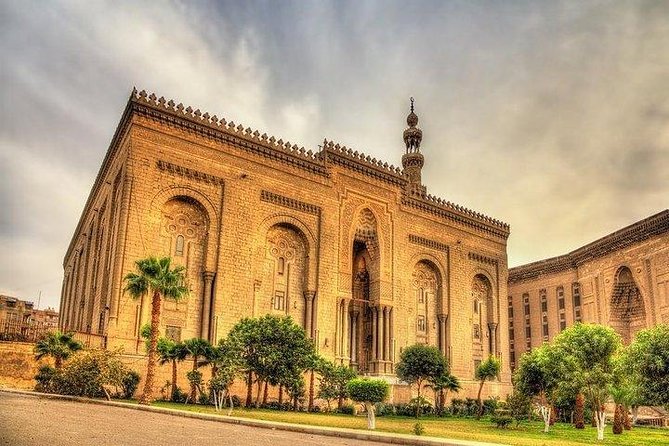
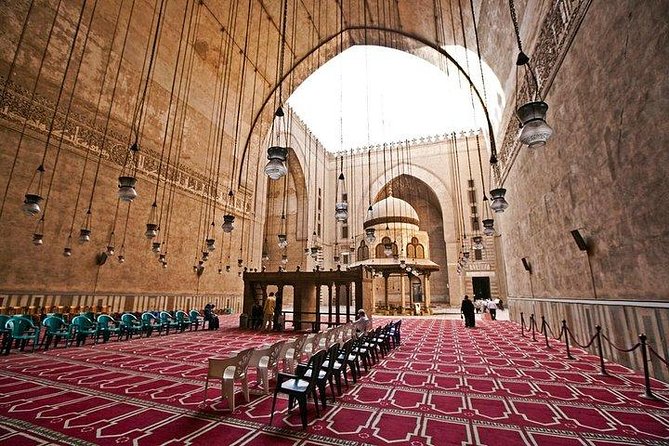
Next up is Sultan Hassan Mosque, one of the signature medieval monuments in Cairo. It was constructed in the middle of the 14th century, and the standout detail here is the ornamented dome placed over the tomb of Sultan Hassan, the establisher of the complex.
In plain terms, this is a mosque designed around a focal point: the tomb isn’t hidden in some corner—it’s tied directly to the architecture. When you see that dome and understand what it’s covering, the building stops being just decorative and starts reading as a statement about rank, memory, and authority.
This stop is about 1 hour, and the timing works well. It’s long enough to take in the main elements without feeling rushed, especially if you use your guide’s explanations to orient yourself quickly.
The other good news for value: admission is included for this stop. That means you pay the tour price and (for this part) you don’t have to add another ticket line item.
Al-Rifai Mosque: Khoshiar Hanem’s royal chapter
After Sultan Hassan, you’ll go to Al-Rifai Mosque, established by Khoshiar Hanem, the mother of Khedive Ismail. One of the details that makes Al-Rifai different is that the mosque has been open to the public since the beginning of the 20th century, even though it’s tied to royal history.
Here’s the key architectural and historical function: it contains the tombs of Egypt’s royal family of Mohamed Ali. Like Sultan Hassan, it’s not just a religious building—it’s also a carefully designed container for dynastic remembrance.
The stop is about 1 hour, and it can feel similar to Sultan Hassan at first glance because both are major mosque complexes with strong design presence. But Al-Rifai’s huge size and decorations are what make it feel like more than a neighbor copy. You get a chance to compare two landmark styles side by side in the same day.
And again, the money side helps: admission is included here too. If you’re watching costs, this is part of what makes the tour price feel more fair than it might at first look.
Mamluk tombs in Cairo: funerary complexes with names
Your last stop is the Mosque and Tombs of the Mamluks, mostly established at the beginning of the 14th century. This is a longer visit at 2 hours, and it’s the kind of stop where time helps. When a site contains multiple complexes, you need a little breathing room to register what belongs to which building.
This area includes several named complexes, including:
- Mosque of Qaitbey
- Complex of Sultan Ashraf Baresbay
- Complex of Faraj Ibn Barquq
The concept here is funerary architecture, and that changes your mindset. Instead of thinking only about worship spaces, you start noticing the way buildings memorialize power. Domes, tomb structures, and decorative design serve a different purpose than a straightforward mosque plan. It’s still beautiful, but the reason behind the design is different—and your guide can make that distinction clear.
One downside for budgeting: admission for the Mamluk tombs complex is not included. So the day has two included-ticket stops (Sultan Hassan and Al-Rifai) and two not-included stops (Citadel and Mamluk tombs). That pattern is the practical “math” of this tour.
The 6-hour schedule: how the day actually paces out
On paper, the day looks nicely structured: about 1h30 at the Citadel, 1h at Sultan Hassan, 1h at Al-Rifai, and 2h at the Mamluk tombs. In real life, the feel depends on transit time, but the pacing is designed to avoid the classic Cairo problem—getting you stuck so long in one place that the rest of the itinerary becomes a blur.
This matters because the value of this tour is the contrasts. If you arrive tired or rushed, it becomes harder to notice what each stop is really “about” (fortress, dynastic mosque, royal tomb mosque, Mamluk funerary complexes). The guide and the small group size help keep the movement orderly.
Group size is capped at 12, which usually means you’re not playing crowd volleyball around doorways and arches. It also helps inside sites where guides need time to get everyone back together.
Price and ticket reality for $71
The tour price is $71.00 per person, and the total value depends on what you pay at the sites. Here’s the clearest breakdown based on what’s included:
- Included transport + guide + water (hotel pickup/return, AC private vehicle, English-speaking guide, bottled water)
- Tickets included for Sultan Hassan Mosque and Al-Rifai Mosque
- Tickets not included for Cairo Citadel and the Mamluk tombs complex
That mix is fairly common in architecture tours, but it changes the best way to think about the price. I see this as a tour that controls costs in two important places, while leaving two ticket buys for the major fortress-and-burial areas.
If you’re the type who hates surprise fees, I’d treat this as: pay the tour price, then add a planning buffer for the Citadel and Mamluk tombs admissions.
The good news: you won’t be juggling the entire day yourself. Pickup and return are included, so the $71 is not only for walking around; it’s for getting you between the sites with a guide and a driver.
Comfort and logistics: pickup, AC, and small-group movement
Logistics can make or break a sightseeing day, and this one gives you the basics right:
- Pickup from your hotel and return
- AC private car or van
- Tour guides certified and safe drivers
- Mobile ticket (less hassle when it’s time to check in)
- One bottle of water per traveler
The “small group” cap of 12 is especially important in Cairo. It helps the guide keep a rhythm for explanations, photos, and re-gathering at entrances. And because the schedule is tight, having a dedicated vehicle means you don’t waste time guessing which route to take or trying to haggle for transport mid-day.
One more practical detail: it says “near public transportation.” That’s not something you’ll rely on if pickup is working, but it can be a comfort if your hotel has an unusual location.
What to expect inside these mosques and complexes
This is an architecture-focused day, so the best results come from your attitude. Go looking for structure: domes, tomb placement, courtyards, and how decoration signals power and permanence.
Since this day includes multiple mosque complexes and a burial-site area, expect that rules for dress and behavior will matter. Even without getting overly strict, I recommend dressing for respectful visits—covered shoulders and legs, and comfortable shoes because you’ll be standing and walking through active heritage spaces.
Photography can be a factor in any mosque environment. If there are restrictions at a specific stop, it’s usually about respect and flow more than anything. A guide helps you handle this without awkward guessing.
Best fit: who this tour works for
This tour is a great match if you want:
- a day of Islamic monuments in Cairo without turning it into a marathon
- a route that connects architecture to the people and tombs behind it
- guided context so you’re not just staring at pretty domes without understanding why they’re there
It also suits first-time visitors to Cairo who want the “big anchor sites” rather than chasing a long list of smaller stops.
If you prefer totally independent exploring with zero structure, this may feel a bit scripted. But if you like a plan that keeps you moving and explains what you’re seeing, it’s a strong choice.
Should you book this Islamic heritage day tour?
I’d book it if you want a focused, high-impact overview of Cairo’s Islamic monuments with hotel pickup, AC transport, an English-speaking guide, and a small group. The included admissions at Sultan Hassan and Al-Rifai make the price feel more reasonable, and the itinerary is built around clear “anchor” sites rather than random stops.
I’d think twice if you’re very cost-sensitive and don’t want to pay additional entrance fees at the Citadel and the Mamluk tombs. Also, like many exterior-heavy sightseeing plans, it relies on weather—if conditions are poor, you may need to adjust dates.
If that all sounds okay, this is an efficient way to get real architectural context for Egypt’s Islamic legacy in a single day.
FAQ
What is the duration of the tour?
The tour lasts about 6 hours.
Where does the tour take place?
The tour is in Alexandria, Egypt, with the sightseeing stops in Cairo.
How much does the tour cost?
It costs $71.00 per person.
Is pickup from my hotel included?
Yes. Pickup from your hotel and return are included.
Are entrance fees included?
Entrance fees are not included for Cairo Citadel and the Mamluk tombs complex. Admission is included for Sultan Hassan Mosque and Al-Rifai Mosque.
What transportation is provided?
An AC private car or van is provided for transfers.
Is there an English-speaking guide?
Yes. The tour includes a highly qualified English-speaking tour guide.
Is a mobile ticket provided?
Yes. A mobile ticket is included.
How many people are in the group?
The tour has a maximum of 12 travelers.
What is the cancellation policy?
You can cancel for a full refund if you cancel at least 24 hours before the experience’s start time. The experience may also be rescheduled or refunded if weather is poor.