REVIEW · KAUNAS
From Vilnius: Guided Jewish Heritage Day Trip to Kaunas
Book on GetYourGuide →Operated by Baltia tour · Bookable on GetYourGuide
Kaunas history hits different when you walk with care. This private Jewish Heritage day trip from Vilnius strings together Kaunas Synagogue, ghetto sites in Vilijampolė, and the Ninth Fort museum, all with hotel pickup and a live English guide.
What I like most is the way the guide adjusts to you—if you’re tracing family connections or you want a slower (or faster) rhythm, the plan can shift.
I also love the mix of places that tell different parts of the story. You’ll see functioning Jewish community life at Kaunas Synagogue, then move into the evidence-heavy sites tied to the Holocaust and later Soviet repression, including cemeteries and the Ninth Fort collections.
One thing to consider: the day can feel packed. With multiple cemetery and memorial stops plus museum time, you may want to ask for a lighter version if you’re not up for a lot of walking and emotional weight in one go.
In This Review
- Key takeaways before you go
- A private Jewish heritage day trip that starts at your door
- The Vilnius to Kaunas journey includes Ziezmariai and a renovated synagogue stop
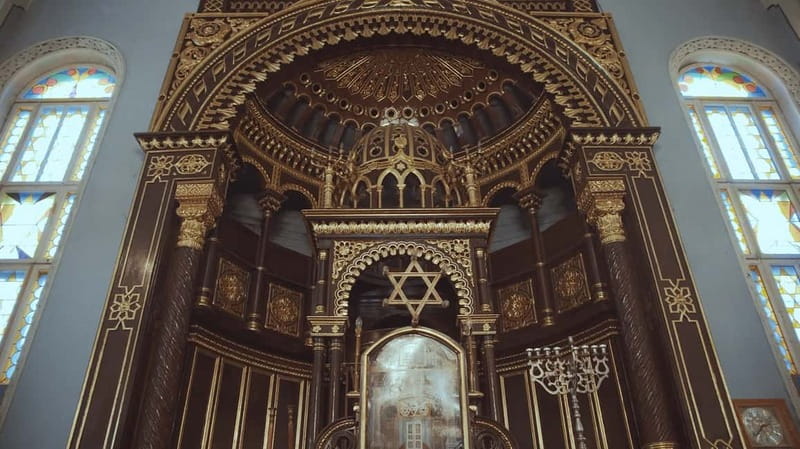
- Kaunas Synagogue: one of the two operating choral synagogues in Lithuania
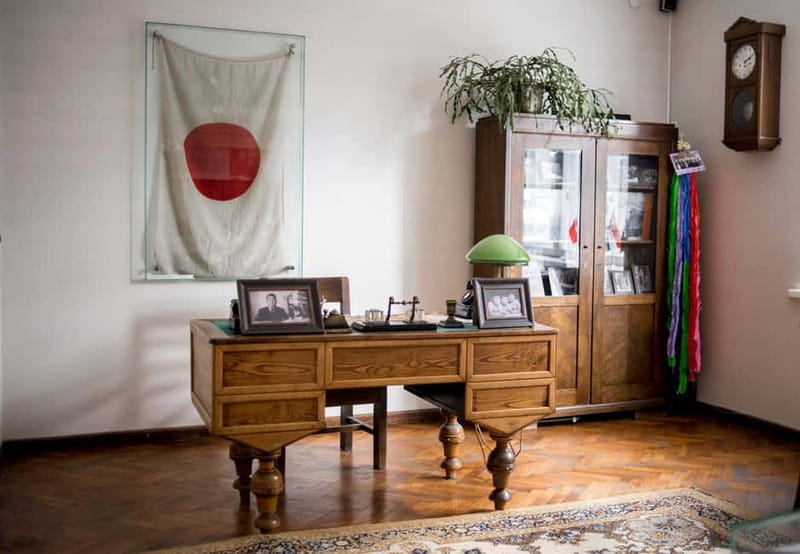
- Sugihara House-Museum at the former Japanese consulate: a different angle in Kaunas
- Vilijampolė and the Kovno Ghetto: understanding the geography of confinement
- Cemetery stops: Vilijampolė’s oldest Jewish cemetery and the living presence at Aleksotas
- Ninth Fort museum: Soviet atrocities and Nazi genocide in one site
- What the flexible schedule means for you in real life
- Price and value: $259 for up to 2 in a private, door-to-door format
- Food, walking, and timing: how to plan your day without getting worn out
- Who should book this Kaunas heritage day trip from Vilnius
- Should you book it
- FAQ
- Where does the tour start and end?
- How long is the day trip?
- Is this a private tour?
- What language is the guide?
- Are admission tickets included?
- What sites are included in the Kaunas portion of the tour?
- Is the tour wheelchair accessible?
Key takeaways before you go
- Private door-to-door pickup from your Vilnius hotel saves time and stress on a long day.
- Ziezmariai stop adds a small-town shtetl feel with a renovated synagogue before you reach Kaunas.
- Kaunas Synagogue is one of two operating choral synagogues in Lithuania; entry is donation-based.
- Vilijampolė and the Kovno Ghetto give the historical geography of where Jews were kept under Nazi rule.
- Aleksotas Jewish Cemetery is described as the only active Jewish cemetery around Kaunas today.
- Ninth Fort museum covers both Soviet atrocities and Nazi genocide—heavy, but important.
A private Jewish heritage day trip that starts at your door
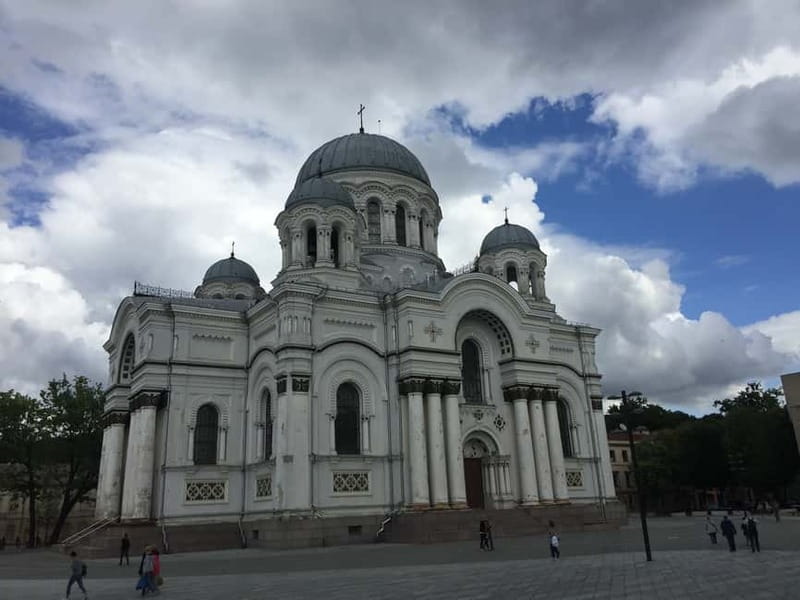
This is not a bus tour with a crowd. It’s a private group format that starts and ends at your hotel in Vilnius, with a driver-guide handling the logistics and a live guide in English doing the talking. That structure matters on a day like this, because you’re moving through places that demand attention, not rushing.
The route runs from Vilnius to Kaunas County and back in about 8 hours, with the day shaped by your pace and even the weather. That flexibility is one reason the experience can feel personal rather than scripted.
If you’re traveling with family-history goals, the setup helps. One guide approach that really comes through is a question-first style: you’re not just hearing facts—you’re steering what gets emphasized, which is especially valuable when you’re trying to locate meaningful sites for your own story.
The Vilnius to Kaunas journey includes Ziezmariai and a renovated synagogue stop
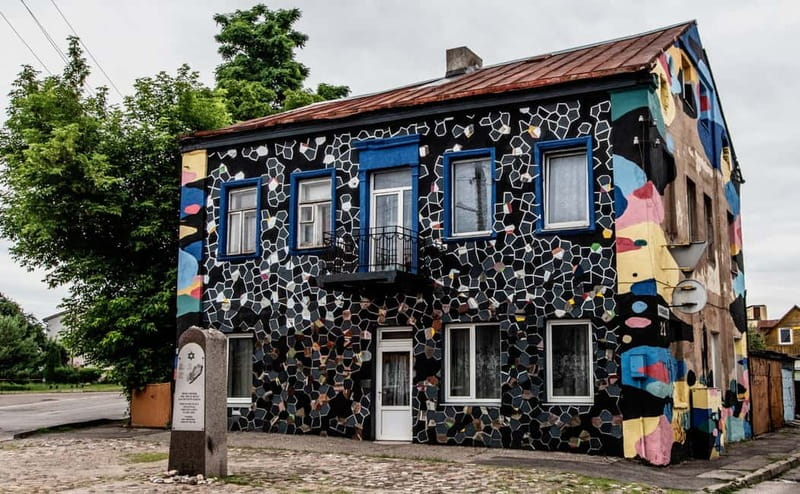
You don’t head straight to Kaunas. On the way, you make a stop in Ziezmariai, a small Jewish shtetl where there’s a renovated synagogue to visit.
That short detour does two helpful things. First, it gives you a sense of what Jewish community life could look like outside the big-city story. Second, it eases you into the day’s heavier themes before you reach the more intense Kaunas memorial sites.
Timing here is practical: this is described as a stop before continuing on to Kaunas, and the exact sequence can shift based on client needs and conditions. If you’re hungry, there’s even room for smart adjustments—some guides have started the day with a quick Jewish ghetto-area meal in Vilnius so you’re fueled for the long sit-and-walk rhythm ahead.
Kaunas Synagogue: one of the two operating choral synagogues in Lithuania
Kaunas Synagogue is a major anchor stop because it’s not only a monument—it’s tied to ongoing Jewish religious life. The experience notes it as one of two operating choral synagogues in Lithuania, and admission is based on donations.
When a tour includes an operating synagogue, you feel the difference. You’re not only looking at where history happened—you’re standing in a place where tradition continues. That can make the rest of the day hit with extra clarity, because you can compare living community spaces to the later spaces of confinement and loss.
Practical tip: since you pay by donation here rather than a fixed ticket price, plan on bringing whatever amount feels appropriate to you (and keep your expectations flexible about timing). If you’re planning religious remembrances or family prayers, tell your guide early so they can help you time the stop well.
Sugihara House-Museum at the former Japanese consulate: a different angle in Kaunas
After the synagogue, you’ll have a visit tied to the Sugihara House-Museum, located at the former Japanese consulate in Kaunas. Admission is not included, so you’ll need to pay your ticket on your side.
Even without turning this into a separate theme park, the inclusion of Sugihara House does something smart for your brain. Holocaust-focused days can become emotionally one-note. Adding a museum connected to rescue-related history helps balance the emotional load without sanding off the reality of what came before and after.
This is also one of the stops where an attentive guide can help you read what you’re seeing. You can expect the visit to be explained within the wider Lithuanian Jewish heritage context, and you’ll get a clearer sense of how different parts of history connect—not just what happened, but how the record is presented and preserved.
Vilijampolė and the Kovno Ghetto: understanding the geography of confinement
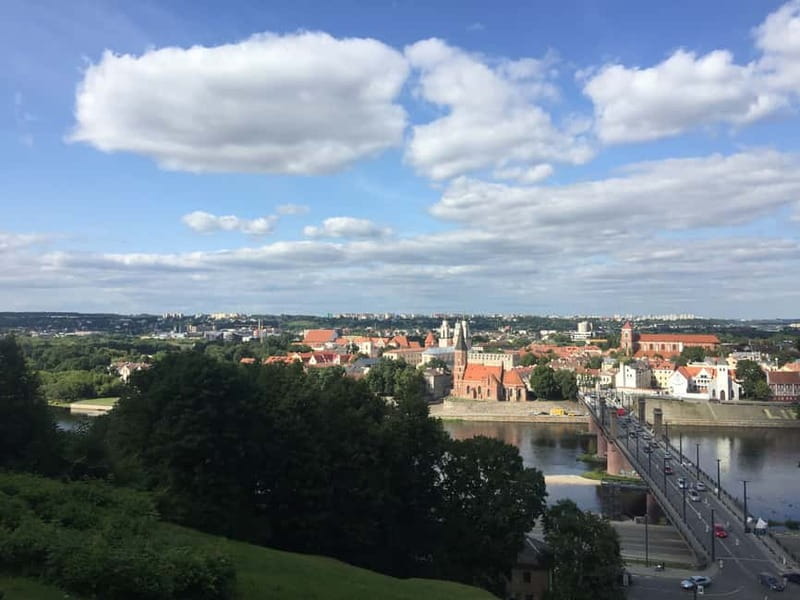
The tour includes visits that map directly to the Kovno Ghetto, which was created by Nazi Germany in Kaunas. Jews were kept in Vilijampolė, and your route includes cemetery sites in that same area, so the story isn’t abstract.
This is one of the most important parts of the experience because it turns a named place into a real landscape. When you walk through the areas tied to confinement and follow it with burial grounds, the emotional impact can be more focused. It also makes it easier to grasp why cemeteries are not just sad stops—they’re part of the historical record.
Expect the guide to connect dots between the ghetto geography and what you’re seeing in the burial sites. And because the itinerary sequence is flexible, you might not always visit everything in a fixed order; your guide can adjust based on your needs and what will work best in the moment.
Cemetery stops: Vilijampolė’s oldest Jewish cemetery and the living presence at Aleksotas
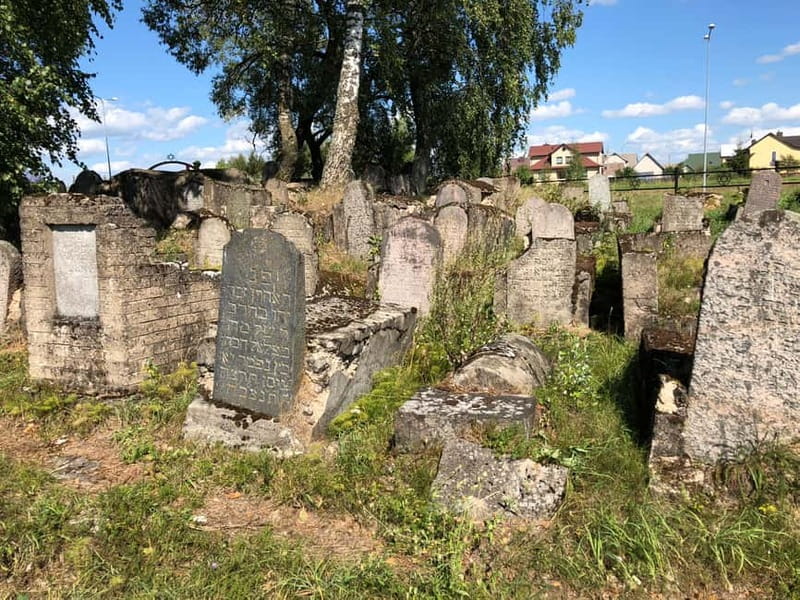
You’ll visit two different cemetery-related sites around Kaunas, and the contrast is striking.
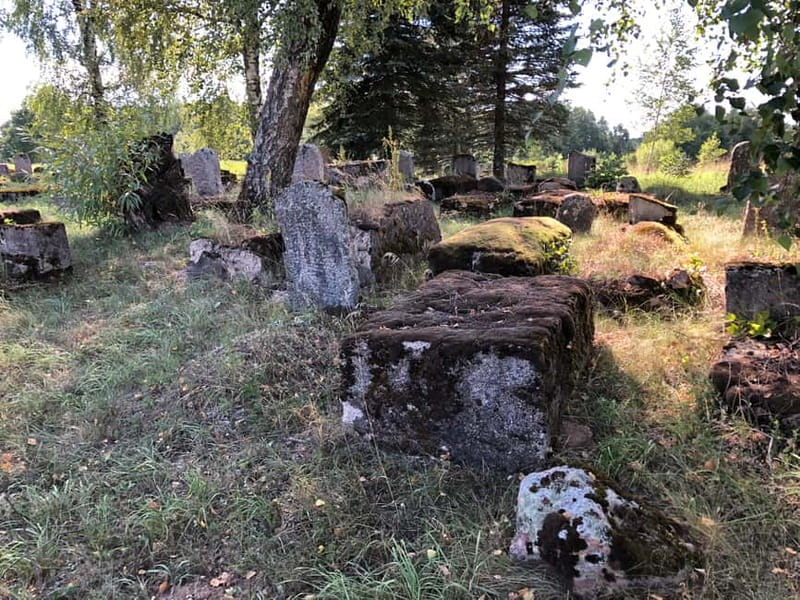
First is the oldest Jewish cemetery in Vilijampolė, described as having been destroyed by Soviet authorities after World War II. Visiting here can feel like standing in a place where history was not only tragic, but deliberately interrupted.
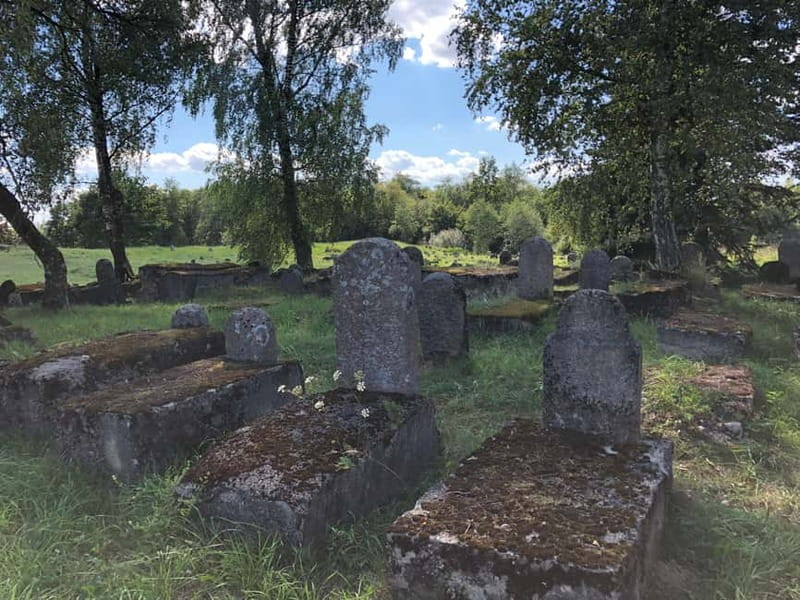
Second is the Aleksotas Jewish Cemetery, described as the only active Jewish cemetery around Kaunas today. That word active matters. It’s not only a memorial landscape; it’s a current one, tied to ongoing remembrance.
This pair of cemetery visits creates a clear emotional arc: loss and destruction, followed by continuity. A guide who’s good at tone-management helps a lot here. The best versions of this tour are the ones that balance the sad parts of the day with stops that bring life back into the picture—synagogue time, and other context stops like Sugihara House.
One consideration: cemetery days can get heavy fast. If you know you want fewer cemetery hours, say so before you start. In at least one version of this experience, the schedule has been adjusted to include the town center instead of one of the cemetery visits, which shows the plan can be modified.
Ninth Fort museum: Soviet atrocities and Nazi genocide in one site
The final major historical anchor is the Ninth Fort museum. This stop focuses on collections of historical artifacts related both to Soviet atrocities and the Nazi genocide. Admission is again not included, so you’ll cover your museum ticket separately.
If you’re trying to understand Lithuanian twentieth-century history beyond a single narrative, this is the stop. The site is described as carrying evidence related to both major systems of terror, which helps explain why these histories aren’t tidy. You can’t reduce the period to one villain and one timeline.
Also, museums at this kind of site usually benefit from a guide who can explain what you’re looking at without rushing the emotional content. Guides on these tours are noted for being respectful and for handling the Holocaust topic with care, including being responsive to questions. If you’re the kind of person who wants to ask, this is where that matters most.
Practical pacing note: the Ninth Fort museum can take meaningful time within the 8-hour window. If your day feels too full, this is the first place you might consider asking for extra attention or, depending on your needs, slightly tighter time inside. Your guide can help you find the balance.
What the flexible schedule means for you in real life
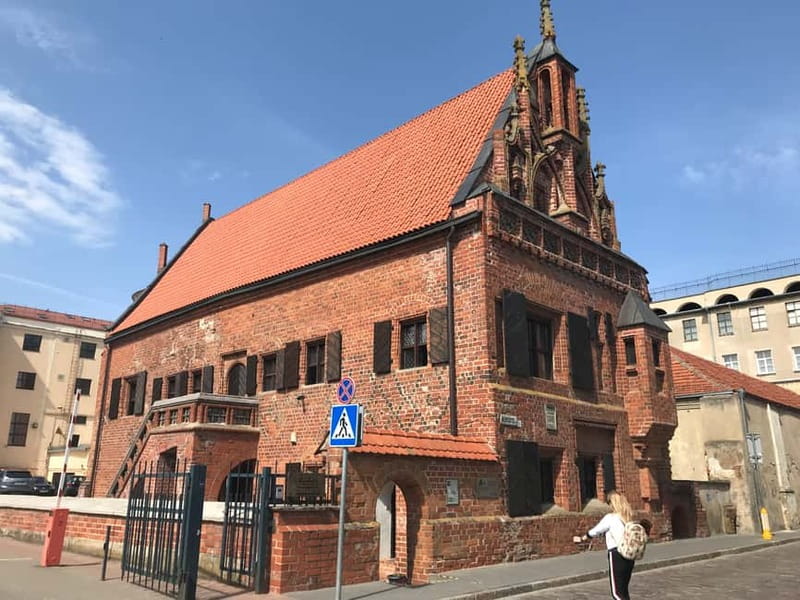
The itinerary is described as flexible, with the sequence of visits adjustable based on your needs and weather conditions. That’s not a small detail. On heritage and memorial tours, the “right” order can depend on what you came for.
Here are the most useful ways flexibility can show up:
- If you want to move faster through outdoor areas, your guide can reorder stops within the day’s framework.
- If you want to slow down for prayer moments or family-specific questions, the tour can adapt.
- If a specific stop feels like too much in one sitting, your guide may re-balance the day—like swapping one cemetery visit for more time in the town center.
This adaptability also supports people doing family heritage research. One version of the day is described as focusing on visiting a synagogue connected to the family’s worship, plus a remembrance stop tied to family burial. Even if your priorities differ, you’ll generally have better results when you tell your guide early what matters most.
Price and value: $259 for up to 2 in a private, door-to-door format
At $259 per group up to 2, this is priced as a private-day experience rather than a per-person ticket deal. That sounds high until you compare what’s included.
You get hotel pickup and drop-off plus a driver-guide for the day, and you’re on a live English tour. Since admission tickets and food are not included, you should expect to pay those add-ons separately. But you’re still buying something important: time with a guide, and time without crowds.
For couples or small groups, the value can be strong because you’re not splitting attention among many people. And because the schedule is flexible, you’re less likely to feel trapped inside a rigid checklist.
The tradeoff is also real: because it’s private, it’s only cost-effective when at least two people are sharing the group price, or when you place a high value on direct, tailored guidance over splitting the cost with strangers.
Food, walking, and timing: how to plan your day without getting worn out
Food and drinks aren’t included, so you’ll want to plan for at least one real meal break, especially if you’ll be moving between several emotionally heavy sites.
The good news is that the tour can start with a practical stop in Vilnius if you’re hungry, such as a beigel place in the Jewish ghetto area. Even if you don’t choose that exact option, the tour’s flexibility should let you handle timing in a way that doesn’t leave you lightheaded or cranky.
Also, this day is made of places that usually require walking and time on your feet. Cemeteries and fort museums aren’t “quick in and out” stops. If you’re sensitive to long durations, tell the guide early and ask how to pace it.
Who should book this Kaunas heritage day trip from Vilnius
This tour is a strong fit if:
- You want a private guide and don’t want to feel like you’re being rushed.
- You’re interested in Jewish heritage in Lithuania, including synagogues, ghetto geography, cemeteries, and a major memorial museum.
- You care about respectful, careful explanations of Holocaust-era history.
- You want a day built around your priorities, not only a fixed schedule.
It might be less ideal if:
- You prefer short, light days. This one covers very serious ground across multiple sites.
- You’re worried about a dense itinerary. If that’s you, ask the guide to simplify cemetery time or adjust the order.
Should you book it
I’d book it if you value a guide who can match the day to your needs and keep the tone respectful while still covering the key sites: Kaunas Synagogue, ghetto geography in Vilijampolė, cemetery contrast with Aleksotas, and the evidence-heavy Ninth Fort museum. The door-to-door pickup and private format make the logistics easy, and the flexibility helps you avoid the rigid-feeling “tick-box” experience.
But if you’re easily overwhelmed by a lot of memorial space in one day, go in with a plan: tell the guide you want a lighter rhythm, and expect to pay attention to pacing rather than trying to see everything.
FAQ
Where does the tour start and end?
The tour starts and finishes at your hotel in Vilnius, with hotel pickup and drop-off included.
How long is the day trip?
The duration is listed as 8 hours.
Is this a private tour?
Yes. It’s a private group experience (priced per group up to 2).
What language is the guide?
The live tour guide is in English.
Are admission tickets included?
No. Admission tickets are not included. Some entries are donation-based, and museum admissions require tickets paid by the guest.
What sites are included in the Kaunas portion of the tour?
The listed sites are Kaunas Synagogue, Sugihara House-Museum, the oldest Jewish cemetery in Vilijampolė, Aleksotas Jewish Cemetery, and the Ninth Fort museum. The Kovno Ghetto area in Vilijampolė is also part of the route.
Is the tour wheelchair accessible?
Yes, it’s listed as wheelchair accessible.