REVIEW · GYEONGJU
Gyeongju: UNESCO Heritage Tour Including Bulguksa Temple
Book on GetYourGuide →Operated by Busan Tourism Center · Bookable on GetYourGuide
Silla royalty, stone by stone. This 8-hour Gyeongju tour strings together Korea’s best-known UNESCO sites, starting with old-world villages and moving through royal tombs, an ancient observatory, and the peaceful temple complex at Bulguksa. You also get Seokguram Grotto plus an end-of-day finish at Wolji Pond for calmer views.
Two things I like a lot: the hotel pickup and air-conditioned van make the long, spread-out day feel easy, and the guided storytelling turns each site into something you can actually picture and understand. There’s also a proper sit-down lunch included, so you’re not scrambling between stops.
One possible drawback: the schedule is full. If you’re starting late or traffic runs long, the day can feel tight, and you may not have time for every final stop.
In This Review
- Key highlights to look for
- A one-day Silla masterclass: what this UNESCO route really does
- Pickup from Busan or Gyeongju: the comfort factor you’ll feel
- Gyochon Village hanok walk: noble homes, craft, and local drink
- Daereungwon Tomb Complex: royal mounds and the famous horse painting
- Cheomseongdae observatory: stone science from Queen Seondeok’s era
- Bulguksa Temple: pagodas, stone bridges, and UNESCO-level calm
- Seokguram Grotto: the granite Buddha and the guardian carvings
- Wolji Pond at Donggung Palace: ending with reflections, not crowds
- Lunch and the $189 value: where the money actually goes
- What to expect from the guide and group size
- Who this UNESCO Gyeongju tour is best for
- Should you book this UNESCO Heritage Tour of Gyeongju?
- FAQ
- How long is the Gyeongju UNESCO Heritage tour?
- What is the meeting and pickup area for this tour?
- Is lunch included?
- Does the tour include entrance fees?
- Is the tour guide English-speaking?
- What sites will be covered during the day?
- Are there small-group or private options?
- Is bottled water provided?
- What is the cancellation policy?
- Can I reserve now and pay later?
Key highlights to look for
- Bulguksa + Seokguram as a UNESCO one-two
- Daereungwon Tomb Complex: Cheonmachong and Hwangnamdaechong
- Cheomseongdae, Asia’s oldest existing astronomical observatory
- Gyochon’s hanok streets and the House of the Gyeongju Choi Clan
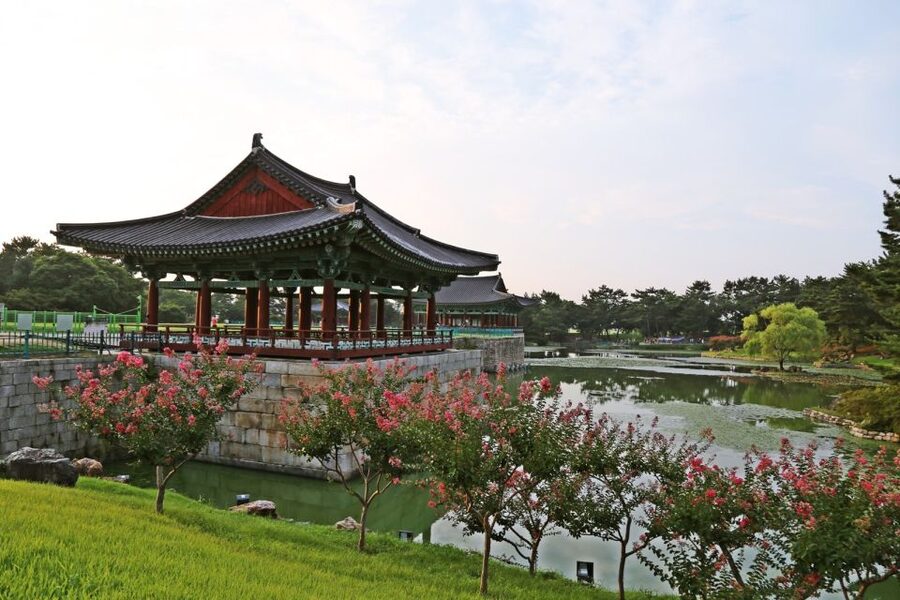
- Wolji Pond views in the late day light
- Small-group vibe with English guides like Sue, Steve, Jade, and Chris
A one-day Silla masterclass: what this UNESCO route really does
Gyeongju is often called the museum without walls. That phrase isn’t hype. The city feels like it’s built around monuments, tombs, temples, and old cultural spaces that just keep showing up as you drive from place to place.
This tour works because it hits different “ways of seeing” Korea in one day. You’ll walk traditional architecture at the hanok village. You’ll move through royal burial landscapes. You’ll look at how Silla-era science left a stone marker in time at Cheomseongdae. Then you’ll shift into Buddhist sacred spaces with Bulguksa and Seokguram. Finally, you end at Wolji Pond, where the day quiets down and you can take photos without rushing to the next checkpoint.
If you want a day that feels like real cultural orientation, this is the kind of plan that helps you understand what you’re looking at. Not just seeing. Making sense of it.
You can also read our reviews of more historical tours in Gyeongju
Pickup from Busan or Gyeongju: the comfort factor you’ll feel
I appreciate tours that stop pretending “getting there” is part of the fun. Here, the value starts before you even leave the hotel. You get hotel pickup and drop-off in Busan or Gyeongju, using an air-conditioned van with a live English guide.
The sites are not clustered in one walkable neighborhood. They’re spread across Gyeongju, and that’s exactly why the van matters. You’ll spend your energy on the sights, not on buses, transfers, and wrong turns.
One detail I’d treat as a practical plus: several guides and drivers on this kind of day trip are good at keeping the group together. In plain terms, they help you avoid that classic “wait, where did everyone go?” moment—especially around places where lines or photo spots can cause small bottlenecks.
Gyochon Village hanok walk: noble homes, craft, and local drink
Your first cultural hit is the Gyochon Village area, a traditional hanok village that preserves historic Korean architecture. This is where you shift from driving to walking slowly—along alleys that feel made for lingering.
At the House of the Gyeongju Choi Clan, you get a closer look at heritage and craftsmanship. It’s the kind of stop where you start noticing details: the layout, how the space is organized, and how everyday life was shaped by status, family, and region.
There’s also a food-and-drink angle if you want it. The tour description notes that you may have a chance to try Gyeongju Gyodong Beopju when available. Don’t assume it’s guaranteed every day, but it’s the kind of local taste that turns a history walk into a more personal memory.
Practical note: hanok village walking is usually comfortable, but you’ll still want good shoes, because stone paths and uneven surfaces come with the territory.
Daereungwon Tomb Complex: royal mounds and the famous horse painting
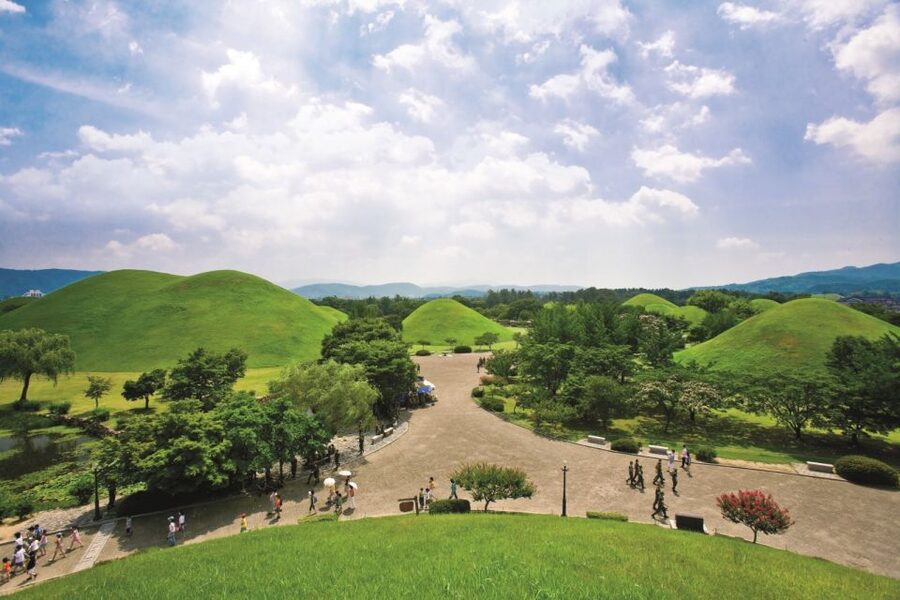
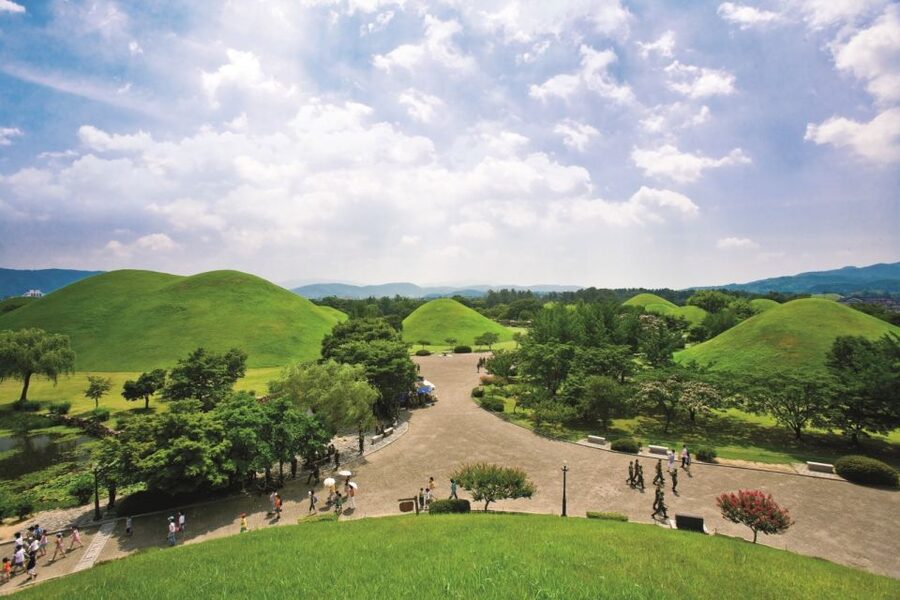
Then you move into the Daereungwon Tomb Complex, where the Silla kings and aristocrats are marked by grassy burial mounds. The setting is gentle and open, which makes it easier to walk without feeling like you’re trapped in a museum room.
Two named highlights matter here:
- Cheonmachong, known for the ancient horse painting discovered there
- Hwangnamdaechong, one of the larger and more elegant tombs from the era
These aren’t just big shapes in a field. The guide’s job is to connect what you see on the ground to what the tombs represented in Silla society—status, power, and the way the dynasty translated belief into landscape.
What I like about this stop is that it gives you a “reset” after the village. You’ve been looking at human-made home life. Now you’re looking at a royal legacy written into geography. The contrast helps the day feel more complete instead of repetitive.
Cheomseongdae observatory: stone science from Queen Seondeok’s era
Next comes Cheomseongdae, often described as the oldest existing astronomical observatory in Asia. It’s a small structure compared to temples, but don’t let the size trick you. This is one of the clearest ways to understand that Silla culture wasn’t only about spirituality and status. It also cared about how time worked—how the sky could guide decisions.
The tower was built during the reign of Queen Seondeok, and the point of the visit is to see a rare, surviving piece of scientific infrastructure from that era.
A 30-minute guided visit is exactly right here. Cheomseongdae is not a “spend all day here” stop. The guide can explain the context fast, then you can spend a short window studying the stone tower and getting a feel for why it became such an iconic landmark.
Bulguksa Temple: pagodas, stone bridges, and UNESCO-level calm
Bulguksa is the centerpiece most people picture when they think UNESCO in Korea, and this tour treats it like a true highlight, with a guided visit of about 1 hour.
What makes Bulguksa special is the mix of architecture and atmosphere. You’ll be walking through stone bridges, quiet courtyards, and the famous pagodas. Two pagodas you’ll hear about are:
- Dabotap
- Seokgatap
The design aims for harmony, and that shows up in the way paths lead you from one focal point to the next. It also helps that the temple setting slows the pace of the whole day. After tomb mounds and observatory stonework, it’s a different type of attention—more reflective, less “look and move.”
Small drawback to consider: it can be popular. On busier days, plan to focus on the guide’s timing and don’t fight the crowd for photos. Let the group flow. You’ll get better shots by staying patient than by chasing angles.
Seokguram Grotto: the granite Buddha and the guardian carvings
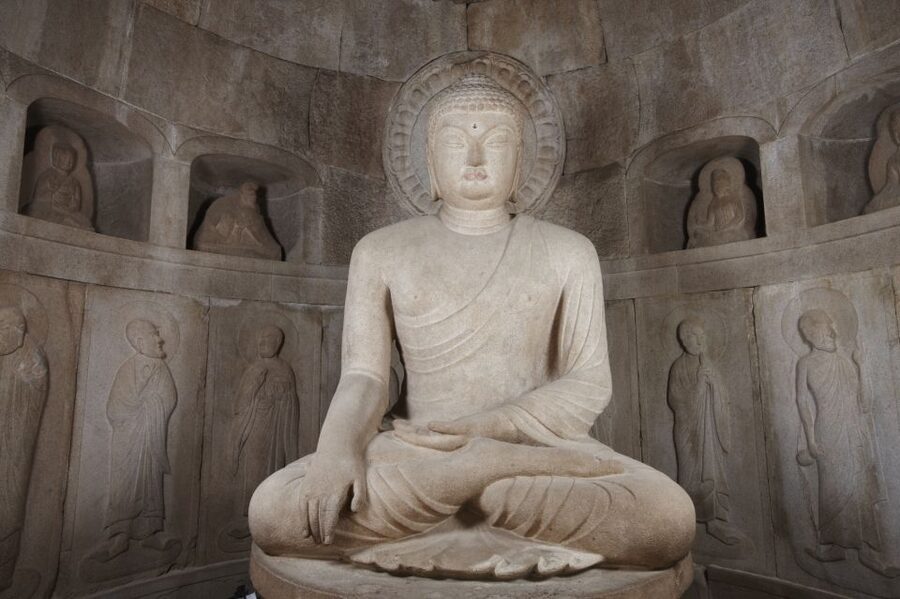
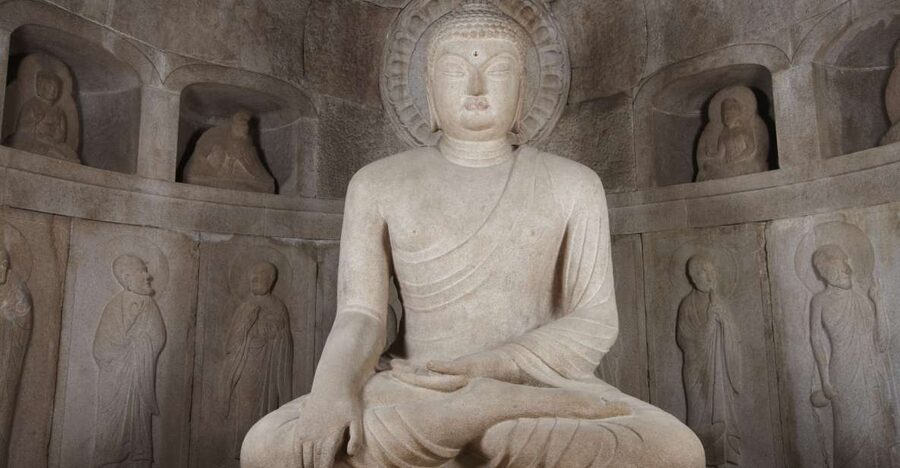
Then you head up to Seokguram Grotto on Tohamsan Mountain, with another guided hour. This is one of those places where the art direction is basically built into the rock.
You’ll see a striking granite Buddha statue surrounded by intricately carved guardian figures. The grotto is famous not just for its religious symbolism, but for the craft and engineering it took to create a stable, enduring stone sanctuary.
In practical terms, Seokguram is also a great place for snacks. One detail I took from guest experiences is that there are food stalls outside where you can pick up local treats sold by the ladies right near the entrance area. It’s a fun way to make the stop feel more local rather than strictly museum-like.
If your legs are tired by this stage, pace yourself. The day is structured with longish guided blocks, so you’ll benefit from steady walking rather than sprinting to every photo spot.
Wolji Pond at Donggung Palace: ending with reflections, not crowds
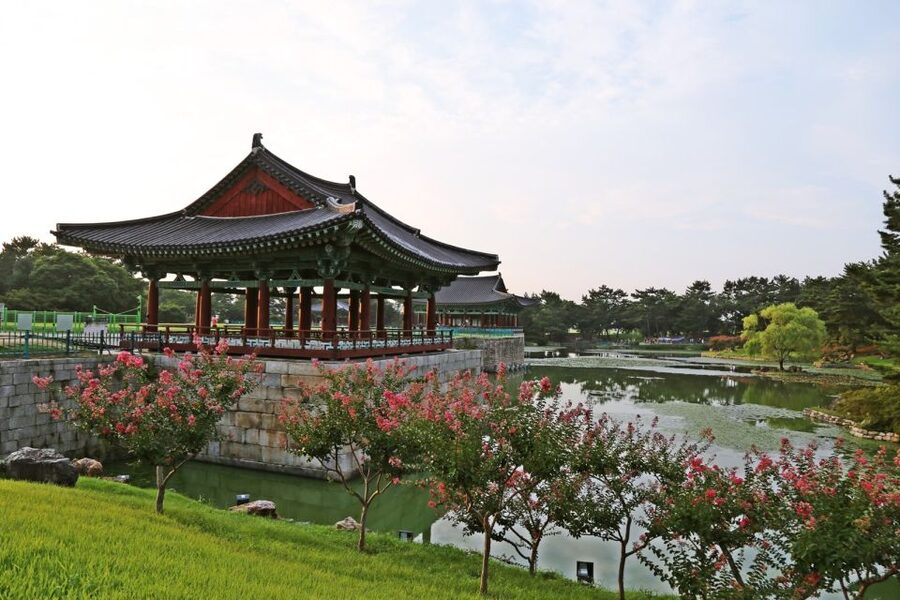
To close out the day, you’ll visit Wolji Pond as part of the Donggung Palace site. This part tends to feel like a reset.
The tour describes a palace garden built during the reign of King Munmu, with pavilions and trees reflected in calm water. Wolji Pond is especially picturesque at dusk, so if your schedule runs on time, the lighting shift is a real payoff.
This is a smart final stop. By the time you reach Wolji Pond, you’ve already absorbed the big UNESCO architecture hits (Bulguksa and Seokguram). Ending here gives you an open-air, slower moment to process the day and take photos without constantly moving.
Lunch and the $189 value: where the money actually goes
The price is $189 per person for an 8-hour experience, and what you get matters more than the number.
Here’s what’s included:
- hotel pickup and drop-off in Busan or Gyeongju
- an English live guide
- an air-conditioned van
- lunch
- a bottle of water
- all entrance fees
When I evaluate value, I think about time plus friction. A day like this from Busan or Gyeongju can be a logistics puzzle if you go on your own. You’d need transport between widely spaced sites and a way to understand what you’re seeing fast enough to enjoy it.
This tour essentially solves that. You’re paying for coordination, interpretation, and access so you can focus on the sights rather than building an itinerary.
One more reality check: at least one guest felt the price was high for a basic style tour. That’s fair if you’re comparing it to the cheapest possible shared transport option. But if you want an easy one-day UNESCO hit with a guide and included admission and lunch, it’s harder to argue the math is way off. It’s a “pay for convenience” kind of day, and in this case, the convenience is real.
What to expect from the guide and group size
This tour runs with a live English guide and works well for private or small groups (the exact size depends on the booking). That’s a practical advantage for a day packed with stops. Smaller groups generally move faster between viewpoints and ask better questions, instead of waiting while everyone catches up.
You might meet guides such as Sue, Steve, Jade, or Chris, who have all been mentioned by name in customer experiences. Drivers are also part of the quality story. Some days, the driver helps with photos and keeping people from drifting off in busy areas.
Also worth knowing: guides may adjust pacing for on-the-ground conditions like crowd levels. One guest noted how a guide navigated crowds during a Korean holiday. That kind of flexibility is exactly what you want on a day where timing affects photo opportunities.
Who this UNESCO Gyeongju tour is best for
I’d recommend this tour if you:
- want a first-time orientation to Gyeongju without spending days planning
- care about UNESCO sites and want guided context, not just photo stops
- prefer comfortable transport over figuring out intercity logistics
- like history told through specific places like Cheonmachong and Bulguksa’s pagodas
It also fits well for couples and small groups. If you’re traveling with family, the walking pace through tomb landscapes and temple paths is usually manageable, but you’ll still want sturdy shoes and a calm attitude about time.
If you hate guided schedules and want total freedom, you might feel boxed in. This is a structured day built to cover major sites efficiently.
Should you book this UNESCO Heritage Tour of Gyeongju?
If your goal is to see the key UNESCO highlights of Gyeongju in one focused day, I think it’s a strong booking. The combination of Bulguksa + Seokguram and the “in-between stops” (Daereungwon, Cheomseongdae, Gyochon, and Wolji Pond) makes the day feel like more than a checklist. You get temples, tomb culture, and even a touch of Silla-era science.
Book it if you want convenience and interpretation packaged together. Skip it if you’re trying to minimize cost at all odds, because some people do feel the price is on the high side for a basic format.
My practical advice: if you can, start your day early and stay flexible. This route rewards good pacing, not last-minute sprinting.
FAQ
How long is the Gyeongju UNESCO Heritage tour?
The duration is 8 hours.
What is the meeting and pickup area for this tour?
Pickup is available from Busan or Gyeongju (hotel pickup and drop-off are included).
Is lunch included?
Yes, lunch is included.
Does the tour include entrance fees?
Yes, all entrance fees are included.
Is the tour guide English-speaking?
Yes, the live tour guide is English.
What sites will be covered during the day?
The tour includes Bulguksa Temple, Seokguram Grotto, the Daereungwon Tomb Complex, Donggung Palace & Wolji Pond, Cheomseongdae, and Gyeongju Gyochon Traditional Village.
Are there small-group or private options?
Yes, private or small groups are available.
Is bottled water provided?
Yes, a bottle of water is included.
What is the cancellation policy?
You can cancel up to 24 hours in advance for a full refund.
Can I reserve now and pay later?
Yes, there is a reserve now & pay later option.