REVIEW · TURKEY
Full-Day Private Guided Jewish Heritage Tour in Istanbul
Book on Viator →Operated by Travel Concierge Turkey & Cyprus · Bookable on Viator
A day in Istanbul that starts in synagogues. The best part is the way Zerrin ties together centuries of Jewish life through the neighborhoods you see and the prayers you hear about, not just dates on a wall. I especially loved stopping at Ahrida Synagogue, with its boat-shaped tevah and the rare detail about Sabbatai Zevi.
My second big win is how smoothly the tour blends built heritage with community geography, from Balat’s backstreets to today’s Neve Shalom. One drawback to plan around: synagogue access is appointment- and schedule-driven, so this tour runs Monday through Thursday only.
Key highlights at a glance
- Ahrida Synagogue’s boat-shaped tevah and the unusual Sabbatai Zevi connection
- Balat on the Golden Horn, where the Jewish quarter story still shapes the streets
- Neve Shalom, Istanbul’s major Sephardic synagogue built in the early 1950s
- Turkish Jews museum focused on Jewish-Muslim intermingling and everyday traditions
- Galata Tower and Karaköy’s active Ashkenazi synagogue, plus the Kamondo Stairs
In This Review
- A private Jewish Heritage day with Zerrin’s history lens
- Stop 1: Ahrida Synagogue and the boat-shaped tevah
- Stop 2: Yambol Synagogue and the reality of synagogue access
- Balat on the Golden Horn: where old Jewish streets still hold clues
- Stop 3: Neve Shalom and modern Sephardic Istanbul
- Stop 4: The Quincentennial Foundation Museum of Turkish Jews
- Stop 5: Galata Tower for views and a sense of place
- Stop 6: The Ashkenazi Synagogue near Galata Tower (appointment-only)
- Stop 7: Kamondo Stairs and a touch of architectural joy
- What the $899 per group actually covers (and why it can be worth it)
- Timing and day rules you should plan around
- Who this tour fits best
- Should you book this Jewish Heritage tour in Istanbul?
- FAQ
- What days does the tour run?
- How big is the group, and is it private?
- What language is the tour offered in?
- Is hotel pickup included?
- What’s included in the price, and what costs extra?
- Which synagogue needs appointments?
- What happens if weather is bad or you cancel?
A private Jewish Heritage day with Zerrin’s history lens
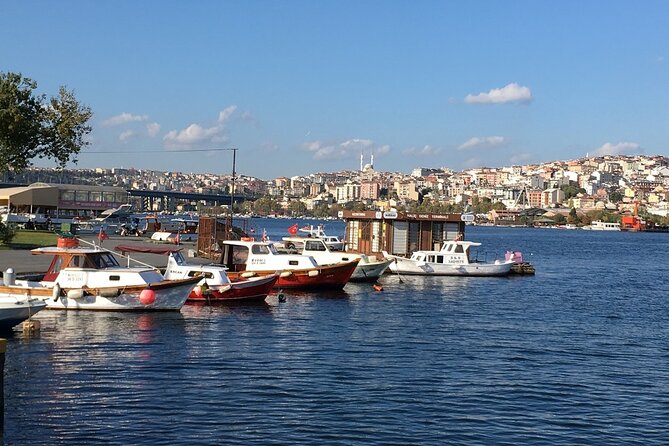
This tour is built for people who like context. Not just big sights, but how Jewish communities in Istanbul fit into the city’s wider Ottoman and modern story. You’ll spend a long day in a tight, well-planned arc: synagogues first, then the neighborhoods that shaped them, then museums and viewpoints that help you understand where everything sits.
I like that it’s private for up to 6 people, and you’re in your own minivan with a driver plus parking. That matters in Istanbul, where time gets eaten by traffic and where the right stop can be a few streets away from the next one.
Stop 1: Ahrida Synagogue and the boat-shaped tevah
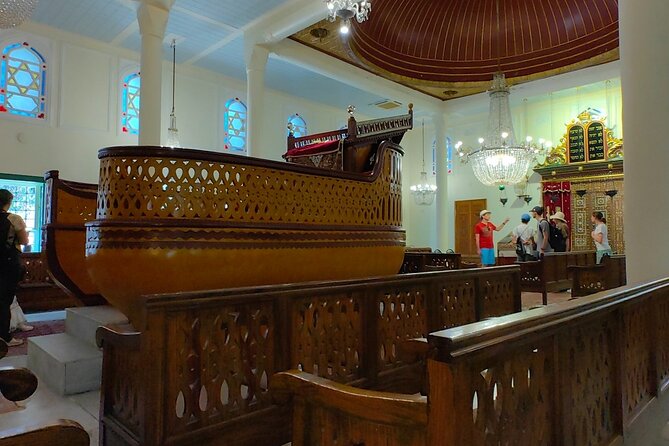
Ahrida Synagogue is one of those places where architecture becomes history. The building traces back to the Romaniotes, the Greek-speaking Jewish community linked to Ohrid (Ahrid) in what is now North Macedonia. The dates you’ll hear are early—built from the 1430s era—when this was still the Ottoman world.
The detail that makes Ahrida unforgettable is the boat-shaped tevah. In many places you’ll see a different form, but here the reading platform has that distinctive curve. It’s an easy visual anchor while your guide explains how different Jewish groups in Istanbul influenced one another over time.
There’s also a striking footnote: it’s said to be the only synagogue in Istanbul where Sabbatai Zevi prayed. Even if you only catch the highlights, you’ll leave with a better sense of why this synagogue is treated as a landmark.
What to watch for: the Ahrida ticket is not included, so factor that into your budget and timing. Plan to spend the full hour here, because the flow depends on your guide’s storytelling pace.
Stop 2: Yambol Synagogue and the reality of synagogue access
Next comes Yanbol Synagogue, also known by the Bulgarian name “Bulgarian Synagogue.” This one points you to migration patterns inside the Jewish world of the Ottoman period. Sephardi Jews reportedly moved from Yambol to Istanbul in the 15th century, and the synagogue building is dated to the 18th century.
The structure you see today isn’t exactly the original. Repairs at the end of the 19th century changed it, and that’s part of the story too: places of worship adapt as communities shift.
Here’s the practical truth you’ll want to know before you go: Yanbol Synagogue is only open for Shabbat services, due to a decrease in the Jewish community in the area. So while you’ll get the historical context, expect that you may not get the same type of visit experience as you do at synagogues that are open for touring.
How this stop pays off: even without long time inside, it helps you understand why “heritage” is not always open for casual walking-and-looking. Community size and security considerations shape access.
Balat on the Golden Horn: where old Jewish streets still hold clues
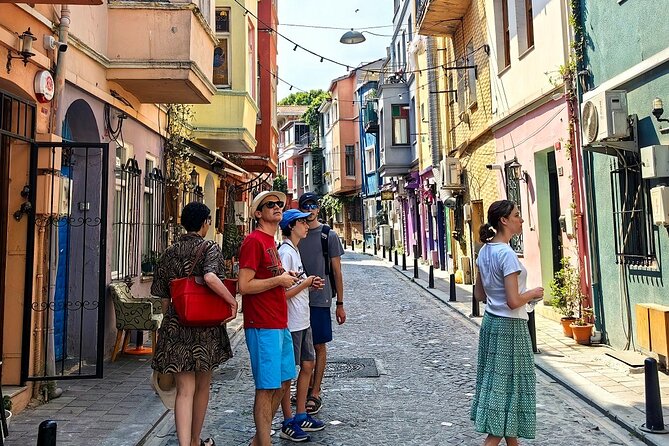
Balat is the neighborhood break that makes the whole day click. It sits on the European side of Istanbul along the western shore of the Golden Horn. Historically, it was a center of the Jewish community, and walking its back streets gives you a sense for how life unfolded around local institutions.
The streets here are lined with small stone terraced houses in two or three storeys, plus a few larger mansions. Many of the houses have been repainted in bright colors, so you’ll see a mix of charm and historical interpretation layered on top of each other.
Two hours in Balat is a smart chunk of time. It’s long enough to slow down, notice the street pattern, and learn what to look for beyond the postcards. Your guide can point out how a place’s Jewish past connects to today’s look without turning it into a theme park.
A small consideration: wear shoes that handle uneven sidewalks. Balat is the kind of walking that feels easy until the cobbles remind you it’s still Istanbul.
Stop 3: Neve Shalom and modern Sephardic Istanbul
Neve Shalom is the central and largest Sephardic synagogue in Istanbul, and the stop changes the mood. Here, you’re not just hearing about older arrivals; you’re seeing how later community growth shaped new construction.
You’ll learn that it was built in response to an increase in the Jewish population in Istanbul’s old Galata neighborhood in the late 1930s. The story includes a 1949 event: a Jewish primary school was torn down to make way for the synagogue, with construction finishing in 1951.
That detail hits hard in a good way. It reminds you that buildings are tied to real institutions, not abstract symbolism.
In day-to-day terms, Neve Shalom is open for services on Shabbat and High Holidays, plus life-cycle events like bar mitzvahs, funerals, and weddings. So your visit isn’t just about architecture. It’s also about a living rhythm of community moments.
Tip for your visit: treat this stop as both a lesson and a pause. You’ll have enough going on after museums and viewpoints that it helps to reset here.
Stop 4: The Quincentennial Foundation Museum of Turkish Jews
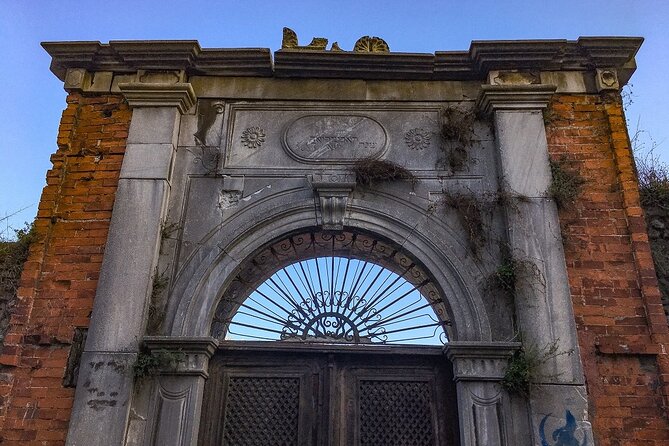
The museum stop is where the day stops feeling like a walking tour and starts feeling like a guided understanding of culture. The Quincentennial Foundation Museum of Turkish Jews focuses on how Jewish and Muslim Turks intermingled, and it brings traditions of Turkish Jews into focus through ethnographic items.
You’ll also see historical accounts tracing the Jewish odyssey from Spain to Turkey. That broad arc matters because Istanbul wasn’t a single story. It was different waves, different languages, and different ways communities adapted.
This museum is often described as different from what many Western visitors expect from “Jewish history museums.” The emphasis is not only on big events. It’s on daily life, traditions, and the overlap between communities in the Ottoman setting and beyond.
Time check: plan for about 1 hour 30 minutes. It’s an ideal length if you want substance without turning the day into a classroom.
Stop 5: Galata Tower for views and a sense of place
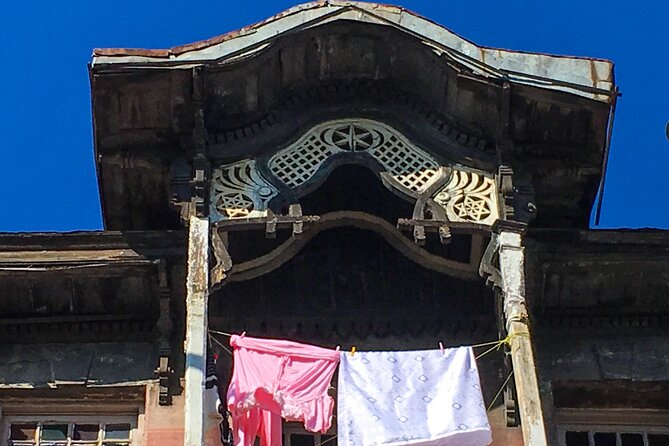
After museum time, you’ll move into the visual geography around Beyoğlu. Galata Tower is an old Genoese watchtower built at the highest point of the former Walls of Galata district. The walls are lost now, but the tower remains, and it’s become a symbol of the area and of Istanbul as seen from this side of town.
The tower is now used as an exhibition space and a museum connected to the Tourism Ministry. The main value here is perspective. When you can look out over the city and connect the neighborhoods you’ve walked with the water and hills, the story becomes easier to hold in your head.
Practical note: tower admission is not included, so it’s one of those “budget plus timing” items. Since the tower can be hit or miss for time depending on your day’s pacing, the private format helps you avoid feeling rushed.
Stop 6: The Ashkenazi Synagogue near Galata Tower (appointment-only)
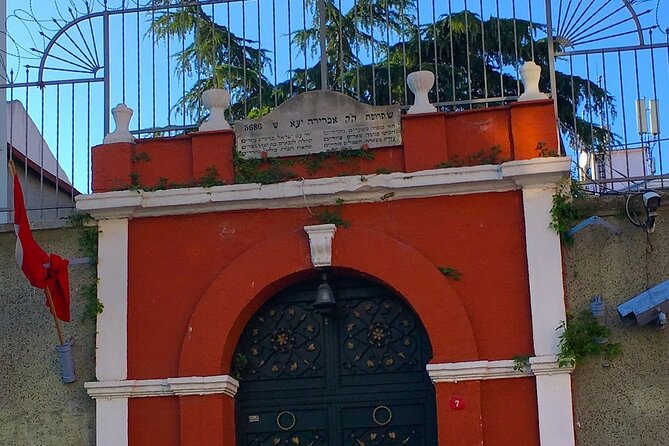
Right near Galata Tower in Karaköy is the Ashkenazi Synagogue. This is an important detail stop because it’s the only currently active Ashkenazi synagogue in Istanbul that’s open to visits and prayers.
The background is specific: it was founded by Jews of Austrian origin in 1900. It’s also the last remaining synagogue from a total of three built by Ashkenazim, and you’ll hear that Ashkenazim make up about 4 percent of Turkey’s Jewish population.
Here’s the access rule that shapes your expectations: visits to this synagogue are possible during weekday mornings only, and they require appointments.
Your guide will handle the practical side, but you should still know that this is not a casual stop you walk into on any day. That’s one reason the tour schedule is restricted to Monday through Thursday.
Stop 7: Kamondo Stairs and a touch of architectural joy
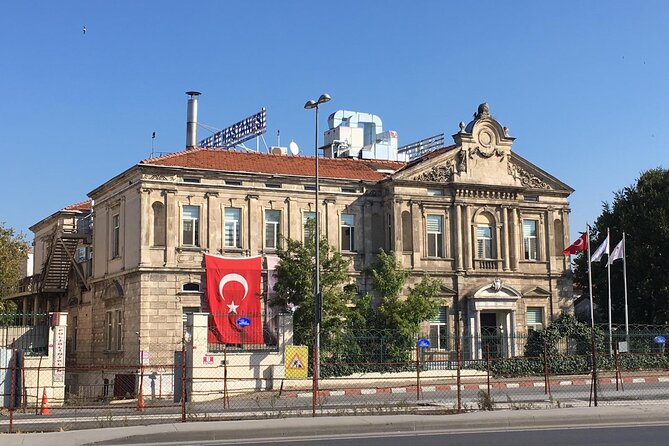
The final stretch takes you to Kamondo Stairs. This is a short visit—about 45 minutes—but it’s one of the memorable visual breaks in the day.
These stairs are often described as Gaudí-esque in feel, and they were built by the Kamondo family in the 1860s for their kids to reach school. So, it’s not a monumental monument. It’s a lived-in solution that became beautiful over time.
Why I like it: after synagogues and museums, Kamondo Stairs give you a calmer, more human scale of history. It’s family life, not only communal institutions. And in Istanbul, where every neighborhood has layers, those small architectural stories matter.
What the $899 per group actually covers (and why it can be worth it)
This is priced at $899 per group for up to 6 people, with a 7-hour day and professional guiding. That price can feel steep until you break down what you’re buying.
You’re not just paying for someone to read facts. You’re paying for:
- a private minivan with a driver and parking, which saves time and stress
- guidance that connects synagogues to neighborhoods, not just isolated stops
- scheduled access dynamics where appointments matter, especially for the Ashkenazi synagogue
Also, most of the major sites you’ll see do not bundle admission costs into the tour price. You pay separate entry fees for places like Ahrida Synagogue, the museums, and Galata Tower.
Based on the fee listings provided, you should budget for separate admissions such as:
- Ahrida Synagogue (listed amounts appear as $16 per person in one place, and $25 per person in another note)
- Jewish Museum of Turkish Jews / Quincentennial museum (listed as 15 EUR per person and also $4.60 per person)
- Galata Tower (listed as 30 EUR per person and also $13.40 per person)
- Kamondo Stairs and Balat are listed as free admissions
Because those admission figures are shown in multiple ways in the provided information, I’d treat them as approximate planning numbers and confirm the exact amount with your booking details.
If you’re traveling as a small group (rather than a couple where you might feel the cost more), private guiding tends to become better value fast—especially on a day where opening hours and appointment windows matter.
Timing and day rules you should plan around
This tour runs Monday through Thursday, with operating hours listed as 9:00 AM to 4:00 PM. The reason is practical: due to Shabbat, synagogues don’t offer appointments for visits on Fridays, Saturdays, and Sundays.
That rule affects who this tour suits best. If your Istanbul dates already include one of those days, you’ll need to shift your plans or choose a different option.
The tour is about 7 hours total, and the stop durations are built like a rhythm: longer blocks where walking makes sense (Balat), medium stops for museum and major landmarks, and shorter stops where the “story per minute” stays high.
Good to know: pickup is offered from city center hotels, and you’ll be near public transportation. Service animals are allowed.
Who this tour fits best
This is a strong fit if you want to connect the dots between places. If you like explanations that make synagogue architecture, migration stories, and neighborhood patterns feel linked, you’ll enjoy this.
It also works well if you’re traveling with kids or mixed ages, since the guide can adjust pace. The tour’s structure supports both a history-heavy day and a calmer one, depending on what you want from your time.
If you’re the kind of traveler who only cares about quick photo stops, you might feel the day is too story-driven. This tour is about understanding what you’re looking at.
Should you book this Jewish Heritage tour in Istanbul?
Book it if:
- you want a private day and you care about the how and why behind each site
- you’re available Monday through Thursday
- you prefer guided context over self-navigation, especially with appointment-only access
Consider another plan if:
- your schedule forces you into a Friday–Sunday visit window
- you don’t want to handle add-on admission costs on top of the base price
- you prefer casual, unstructured exploring with minimal stops
If your goal is one of the most meaningful ways to see Istanbul through Jewish heritage—synagogues, neighborhoods, and a museum that treats culture as lived experience—this is a smart choice. And having Zerrin’s storytelling style guiding the day makes it feel less like a checklist and more like a coherent map of the city.
FAQ
What days does the tour run?
This tour is available Monday through Thursday. It is not scheduled for Friday, Saturday, or Sunday.
How big is the group, and is it private?
It is a private tour/activity. Only your group participates, with a maximum of up to 6 people.
What language is the tour offered in?
The tour is offered in English.
Is hotel pickup included?
Yes. Pickup is offered from hotels in city center.
What’s included in the price, and what costs extra?
Included: professional guidance, a private minivan with driver, and parking. Not included: lunch and all drinks/meal costs, plus admission fees for sites like Ahrida Synagogue, the Quincentennial Foundation Museum of Turkish Jews, and Galata Tower (separate entrance/ticket costs are listed).
Which synagogue needs appointments?
The Ashkenazi Synagogue near Galata Tower in Karaköy requires appointments, and visits are only during weekday mornings.
What happens if weather is bad or you cancel?
The experience requires good weather. If canceled due to poor weather, you’ll be offered a different date or a full refund. Cancellations are non-refundable and cannot be changed for any reason.