REVIEW · KANAZAWA
Gokayama and Shirakawago (UNESCO Heritage) Small Group(Max 9)
Book on Viator →Operated by Kanazawa Tours · Bookable on Viator
Mountain villages beat big-bus crowds. This small-group Kanazawa trip sends you to Suganuma and Shirakawago with less rush, plus a stop at the Iwase Family house that many standard Shirakawago days skip. I like the relaxed pacing of a max 9-person group, and I like that the guide brings the story behind the villages instead of just pointing out buildings. One heads-up: it starts early at 8:00am and bottled water isn’t included.
You’ll spend about 6 hours 30 minutes together, starting and ending at 7-Eleven by JR Kanazawa Station. You get admission tickets for the key spots, a sit-down lunch, and group photos shared after the tour. Best of all, this route is built for people who want rural Japan beyond the most crowded photo spots, while still seeing the UNESCO highlight at Shirakawago.
In This Review
- Key things I’d look forward to
- Why this Kanazawa day trip feels different than the usual Shirakawago route
- Meeting at 7-Eleven by JR Kanazawa Station (and why the start time matters)
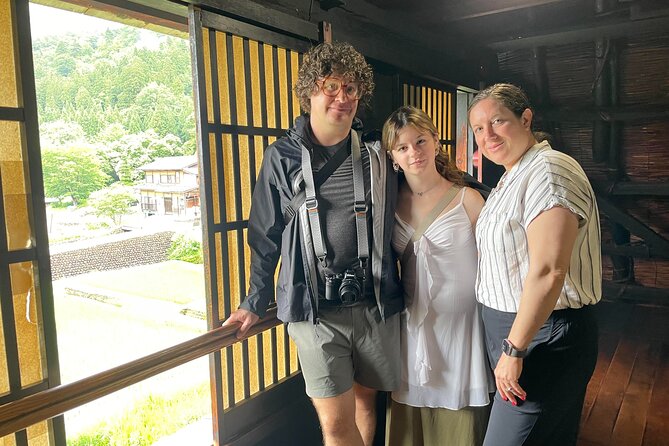
- Stop 1: Suganuma Gassho Community (where the day slows down)
- Stop 2: Iwase Family house (the original-condition factor)
- Stop 3: UNESCO Shirakawago village (getting the UNESCO view without losing your day)
- The guide experience: humor, English, and story you can actually use
- Lunch included: a small “value win” that helps your whole day
- Mobile ticket + what to expect for a smooth check-in
- Price and value: what $65.15 gets you in real terms
- Weather matters: you plan for mountain Japan, not an indoor museum day
- Who should book this tour (and who might want a different fit)
- Should you book this tour?
- FAQ
- What time does the tour start, and where do we meet?
- How long is the tour?
- What stops are included?
- What’s included in the price?
- Is bottled water included?
- How big is the group?
- What if the weather is poor?
- Is there free cancellation?
Key things I’d look forward to
- Max 9 people means you can hear the guide and move at a human pace
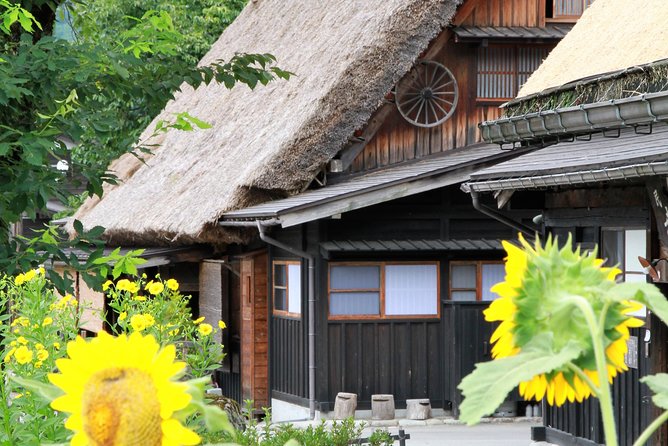
- Suganuma + Iwase House gives you a fuller Gokayama/Gassho day than many shortcuts
- UNESCO Shirakawago still gets its due, with time to actually walk and look
- Admission tickets + lunch included, so fewer little money-and-time hassles
- Mobile ticket makes check-in simpler once you’ve found the meeting point
Why this Kanazawa day trip feels different than the usual Shirakawago route
This is one of those day trips where the structure matters. With a small group, the day doesn’t feel like a factory line. You’re not stuck waiting for a dozen other people to get their perfect angle on one doorway. Instead, you get the freedom to slow down when something catches your eye—textures, village layout, or just everyday scenes that make these places feel lived-in.
The other big difference is the stop at the Iwase Family house. A lot of Shirakawago-focused plans steer you toward the main UNESCO area and move on fast. Here, you also get a look at a family home that stays in its original condition, which helps you connect the dots between the villages and the people who once lived there.
The final piece is the balance: you still visit the UNESCO village of Shirakawago, but you do it as part of a broader day in Gokayama. That makes the whole experience feel more like a region, not a single photo stop.
You can also read our reviews of more historical tours in Kanazawa

Meeting at 7-Eleven by JR Kanazawa Station (and why the start time matters)
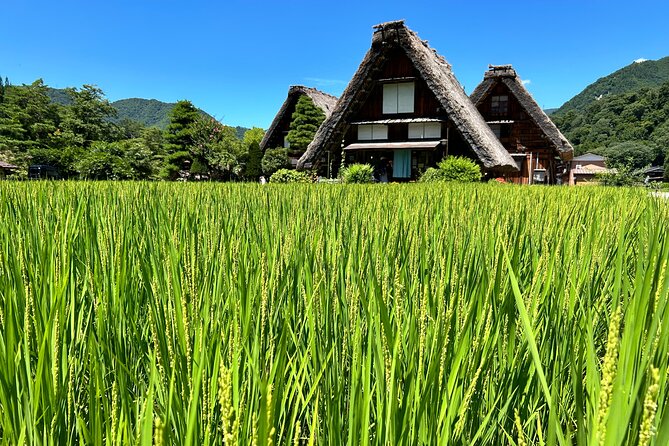
The tour starts at 7-Eleven, JR Kanazawa Station. That’s a practical choice: it’s a familiar meeting point and it’s near public transportation. The start time is 8:00am, so plan to be there a bit early—Japan runs on time, and you’ll want a calm minute to get your mobile ticket ready.
You’ll end back at the same meeting point. That matters because you don’t have to figure out trains, transfers, or schedules after a full day of walking and looking.
One small logistics note: bottled water isn’t included. It’s not a deal-breaker, but I’d bring a bottle with you so you’re not searching for it mid-route.
Stop 1: Suganuma Gassho Community (where the day slows down)
Your first stop is Suganuma Gassho Community, with about 1 hour on site and an admission ticket included. This is a smart opener. Starting here gives you the feeling of being in a real mountain village before you move on to the more famous UNESCO area.
In a small group, this kind of early village visit has a hidden advantage: you get better control over your time. You can pause, walk a little, and settle into the place without feeling rushed. And since the tour is designed to avoid the worst crowds, Suganuma often feels more like a lived neighborhood than a check-the-box stop.
What to do with your hour: don’t treat it like a sprint. I’d use the first few minutes to get your bearings—then slow down for the parts that feel most “ordinary.” Those are usually the moments that make the scene stick with you later.
Stop 2: Iwase Family house (the original-condition factor)
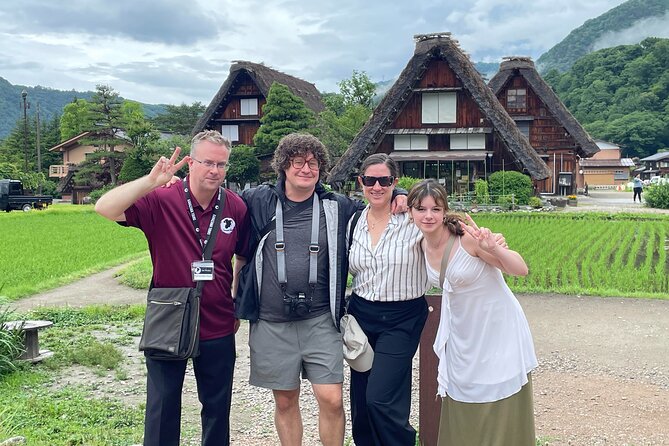
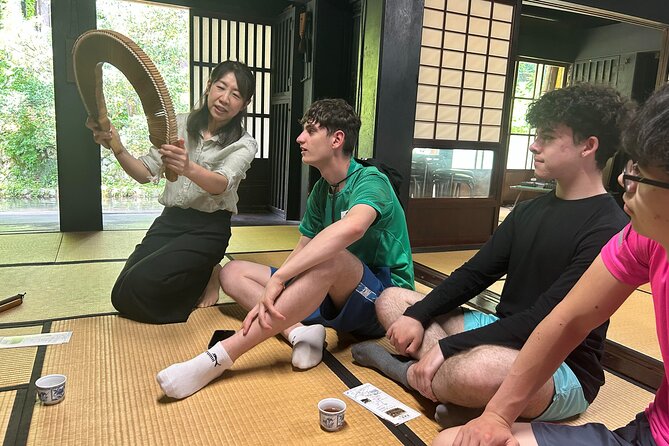
Next up is the Iwase Family stop—about 45 minutes, and yes, the admission ticket is included. The key detail here is that the house remains intact and in its original condition. That’s a big deal for how you experience the place.
When a site keeps its original condition, you get more than a visual. You get a stronger sense of what the space was meant to be: how the rooms are arranged, how the home functions as a home (not a showroom), and how the past is still present in the structure.
This stop is also where the tour’s “beyond the crowds” pitch turns real. Even when Shirakawago is busy, this kind of house visit tends to feel calmer because it’s smaller, more focused, and easier to take in with your guide talking you through what you’re seeing.
Practical move: in just 45 minutes, you won’t see everything. Choose what you care about—layout, materials, or the atmosphere of the space—and let that be enough.
Stop 3: UNESCO Shirakawago village (getting the UNESCO view without losing your day)
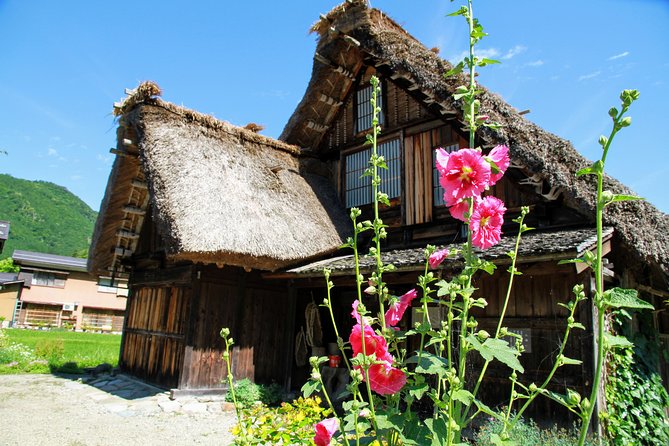
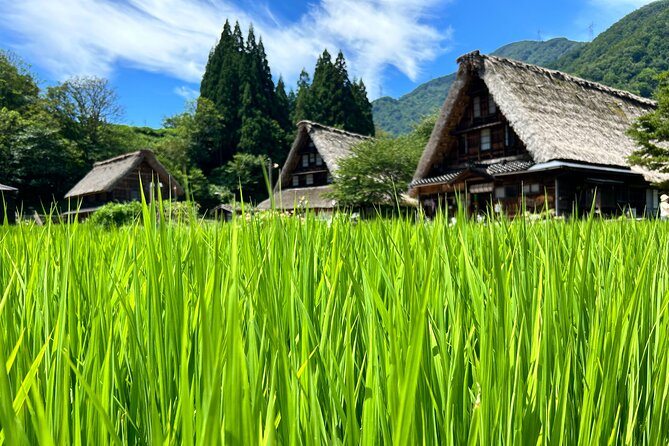
The last major stop is Shirakawago, the UNESCO village, with about 1 hour 30 minutes and an admission ticket included. This is your big-name finale, and it’s long enough to do more than look from one spot.
In a perfect world, you’d visit UNESCO sites slowly in multiple chunks. A day trip can’t do that. But the pacing here helps. You’ve already built context with Suganuma and the Iwase house, so Shirakawago isn’t starting from zero. You’re more likely to notice the details your brain usually misses when you’re rushing.
You’ll also get a lot from timing. By the time you reach Shirakawago, you’ve had a structured day already. That means you can focus on walking, reading what you can, and checking out the village scenes at a reasonable rhythm—not a sprint.
If you’re someone who hates waiting, the small-group format keeps you from feeling like you’re stuck behind a crowd surge every time you move 20 feet.
The guide experience: humor, English, and story you can actually use
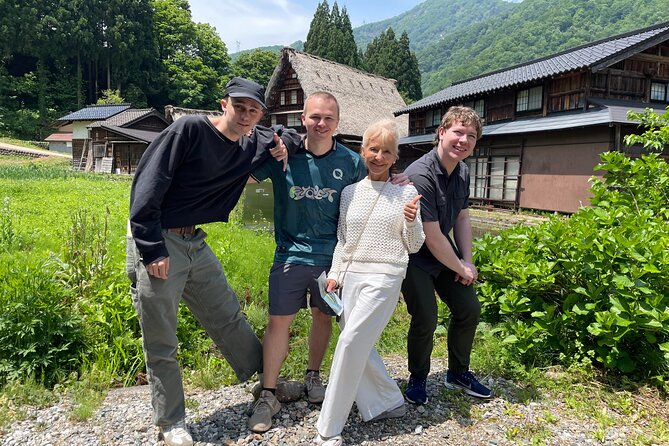
A day trip like this lives or dies on the guide. This one is led by a professional certified guide, and the guide’s job is more than logistics.
Based on how the company’s guides are described, you can expect English support from people like Mr. Masahiro, plus strong on-the-ground explanations from guides such as Takeshi. Another guide you might encounter is Kumiko Mitsuhata, who’s nicknamed Ku. People have also praised Nozomi Kondo and Sachiko for making time feel meaningful, not rushed.
That matters because rural sites can be easy to misread if you’re just taking photos. When a guide gives the right context, you stop seeing random buildings and start seeing how the village life connects across stops.
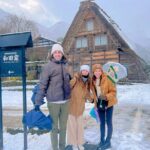
Also, this tour includes group photos shared after the tour. It’s not just a nice extra. It reduces the pressure on you to keep pulling out your phone at every angle. You can enjoy the walk and still have memories captured.
Lunch included: a small “value win” that helps your whole day
Lunch is included. That sounds simple, but on a day trip it can be the difference between a smooth plan and a stressful scramble.
Because lunch is already built in, you’re less likely to lose time hunting for a meal during the tight middle of the day. It also makes the day feel more complete. You’re not spending your “look at villages” energy worrying about where you’ll eat.
One thing I do suggest: since bottled water isn’t included, consider buying water near the meeting point or having a bottle ready before you leave Kanazawa.
Mobile ticket + what to expect for a smooth check-in
The tour uses a mobile ticket. That’s convenient if you’re traveling with a phone and don’t want paper. Just make sure your screen brightness and battery are up to the task.
The good part is that the meeting point is easy to find: 7-Eleven by JR Kanazawa Station. If you arrive early, you can get situated, check your ticket, and avoid the last-minute stress that can happen on morning departures.
Price and value: what $65.15 gets you in real terms
The price is $65.15 per person. It’s not “cheap,” but it’s not just paying for a ride. Here’s where the value math works:
- Admission tickets are included for the houses and locations you visit
- Lunch is included
- You get a professional certified guide and group photos
- The group is limited to max 9, which usually means a better pace and better guide interaction
Also, it’s commonly booked about 7 days in advance on average. That suggests the tour stays in demand, likely because people like the balance: UNESCO Shirakawago plus less-crowded rural time.
If you’re trying to compare costs, the key question isn’t just the headline price. It’s whether you’d pay separately for entrance fees, guide time, and meals while also managing your own transportation plans. This package bundles those pieces into one set day.
Weather matters: you plan for mountain Japan, not an indoor museum day
The experience requires good weather. If it’s canceled due to poor weather, you’ll be offered a different date or a full refund.
I’d treat this as normal for rural mountain areas. If you’re traveling in seasons where conditions can change quickly, keep flexibility in your schedule. That way, you don’t get stuck trying to fit a rescheduled day into a packed itinerary.
Who should book this tour (and who might want a different fit)
This tour fits you if:
- You want rural Japan in one day without feeling like you’re stuck in a crowd
- You care about seeing more than just Shirakawago
- You like guided context, not just wandering
- You appreciate a plan with lunch and admissions handled
It might be less ideal if:
- You hate early starts and prefer later mornings
- You need lots of personal free time with no structure (this is a guided, timed itinerary)
- You strongly prefer bottled water to be included in every outing
On the positive side, the tour notes that service animals are allowed, and the start point is near public transportation, which helps with practical planning.
Should you book this tour?
I’d book it if you want the best shot at a calmer, more human day in Gokayama and Shirakawago. The combination of Suganuma + Iwase Family + UNESCO Shirakawago, plus admission tickets, lunch, and group-photo sharing, is a strong value bundle. And the max 9-person size is the kind of detail that quietly improves everything—hearing the guide, moving at your own pace, and actually enjoying the walk.
If your schedule is tight and you don’t like morning departures, consider whether an early 8:00am start will stress you out. Otherwise, this is the kind of day trip that leaves you with a real sense of place, not just a list of stops.
FAQ
What time does the tour start, and where do we meet?
It starts at 8:00am at 7-Eleven JR Kanazawa Station.
How long is the tour?
The duration is about 6 hours 30 minutes.
What stops are included?
You’ll visit Suganuma Gassho Community, the Iwase Family house, and Shirakawago.
What’s included in the price?
The tour includes a professional certified guide, entrance fees to the houses and locations, lunch, and group photos shared after the tour.
Is bottled water included?
No, bottled water isn’t included.
How big is the group?
The group size is limited to maximum 9 travelers.
What if the weather is poor?
The experience requires good weather. If it’s canceled due to poor weather, you’ll be offered a different date or a full refund.
Is there free cancellation?
Yes. You can cancel for a full refund if you cancel at least 24 hours before the experience’s start time.