REVIEW · KUSADASI
Ancient Ephesus and Pamukkale Tour from-to Kusadasi or Selcuk
Book on Viator →Operated by Tour Altinkum Travel · Bookable on Viator
Two UNESCO stops in one long day. You get private door-to-door pickup plus time with Ephesus and Pamukkale under the same guide plan, which saves you from the usual hassle of stitching bus schedules together. My favorite part is how the route turns both sites into photo moments, from the Library of Celsus views to Pamukkale’s white terraces. The one thing to plan for: entrance fees are extra, and the time at each site is set, so you may feel a bit time-pressured.
Here’s the deal: you start around 8:00 am, then spend roughly 2 hours in Ancient Ephesus and about 3 hours across Hierapolis and Pamukkale before returning. You’ll also get a proper break with lunch at a local restaurant. It’s a strong value if you want a focused highlights tour with a licensed guide, but it’s not a slow, wander-for-hours type of day.
In This Review
- Key highlights worth your attention
- A 14-hour power day from Kusadasi or Selcuk
- Pickup, transport, and what private really changes
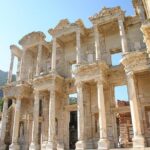
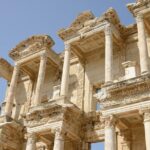
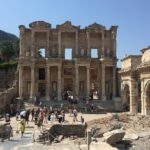
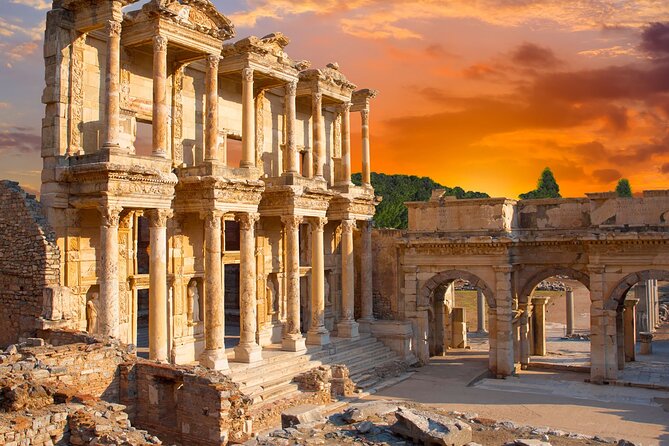
- Ancient Ephesus: St. Paul’s footsteps and the Library of Celsus
- Hierapolis and Pamukkale: the 35°C terraces and sunken columns
- Lunch in a local restaurant: fuel for a long day
- Price and value: what $280 covers, and what you’ll pay separately
- Guides like Serge, Izik/Isik, and Ali can shape the day
- Time limits: where you’ll feel rushed, and how to handle it
- Who should book this Ephesus and Pamukkale day tour
- Should you book this tour?
Key highlights worth your attention
- Private, door-to-door transfers from Kusadasi or Selcuk, using an air-conditioned non-smoking vehicle
- Skip-the-line help: your guide carries pre-paid tickets for each site to reduce queue time
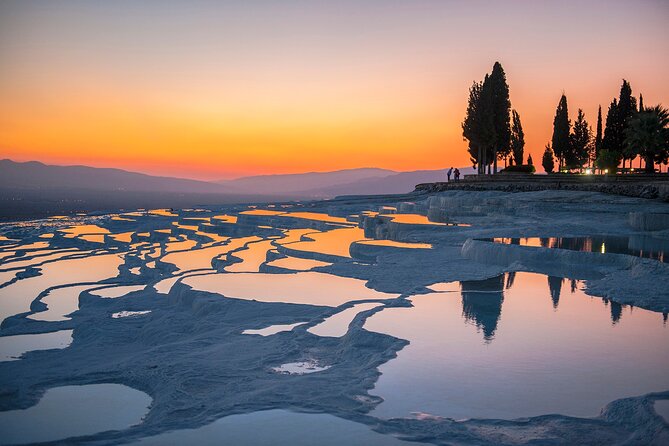
- Real Pamukkale science: hot spring water forms terraces at about 35°C with calcium bicarbonate
- Photo-friendly stops: think sunken columns, the Library of Celsus angle, and travertine textures
- Licensed guide with room to ask questions, from St. Paul’s Ephesus context to Hierapolis ruins
A 14-hour power day from Kusadasi or Selcuk
This is a full-day run, about 14 hours total, designed to stack two of Turkey’s biggest UNESCO sites into one outing. That means you should treat it like a marathon with great rewards, not a relaxed half-day. The upside is obvious: you don’t lose the day fighting transfers or deciding what to cut.
You’ll start in the morning, with meeting in Kusadasi or your guide’s pickup point if you’re staying in Selcuk. Then the day flows in two blocks: Ephesus first, followed by Hierapolis and Pamukkale. In practice, this makes the day easier to understand. You get one ancient-city dose, then one natural-spa dose.
You can also read our reviews of more tours and experiences in Kusadasi.
Pickup, transport, and what private really changes
The tour’s structure is built around convenience. Pickup is offered from Kusadasi or Selcuk hotels, and you travel by air-conditioned non-smoking vehicle. If you’ve ever tried to do Ephesus and Pamukkale on your own in a day, you know the real cost is time and stress, not just money. This tour tackles that head-on.
Private also changes the feel of the day. You’re not squeezed into a mass rhythm. You can ask your guide to point out the key angles you care about—like where to aim for the Library of Celsus views—without the constant shuffle of a big group. And because it’s your group only, the pace is easier to manage.
One more practical detail: the tour uses a mobile ticket, and you should get confirmation at booking time. It’s a small thing, but on long days it helps you spend less time hunting for documents.
Ancient Ephesus: St. Paul’s footsteps and the Library of Celsus
Ephesus is the kind of place where you feel like the stones already know your questions. This tour spends about 2 hours in the ancient city, so it’s not every street and corner—but it is the core highlights that make the site click fast.
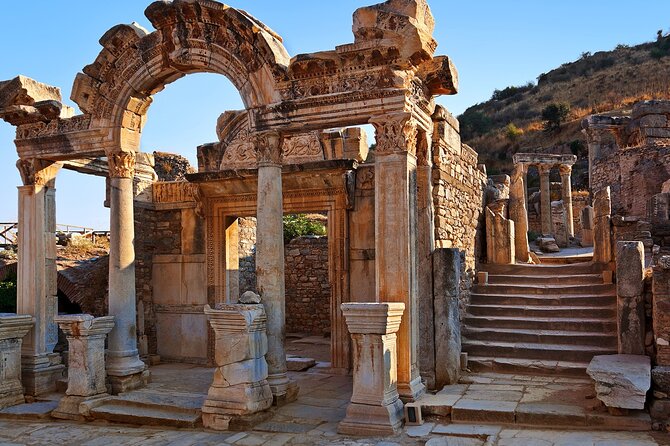
You’ll follow the story tied to St. Paul’s footsteps, then shift into the scale of Ephesus. The tour frames it as one of the world’s great ancient trading hubs, including the giant harbor and the idea that Ephesus connected East and West. There’s also a strong emphasis on how big it once was, described here as the second-largest city on the planet after Rome in the 1st century AD, with over 250,000 residents.
What makes this stop especially worthwhile is the focus on sights that act like anchors in your memory:
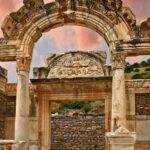
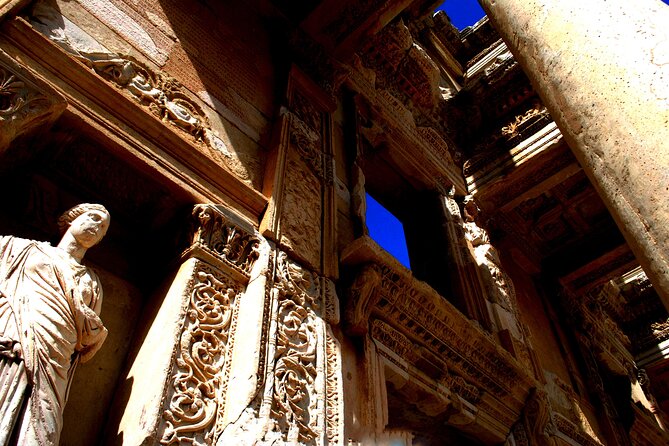
- The Library of Celsus picture point is a must because it helps you understand the city’s design, not just its ruins.
- The Temple of Artemis gets mention because it sets the religious and cultural context for why Ephesus mattered.
Also, the guide plan helps here. Your guide is set up with pre-paid skip-the-line tickets for the site, and that can save real time. In ancient sites, delays can eat up the best light and your energy. Skip-the-line doesn’t make Ephesus faster by magic, but it protects the hours you actually came for.
A fair consideration: two hours goes fast, especially if you love photos or you like to read details in a slow way. Ephesus is huge, and this is a highlights tour, not a full deep walk.
Hierapolis and Pamukkale: the 35°C terraces and sunken columns
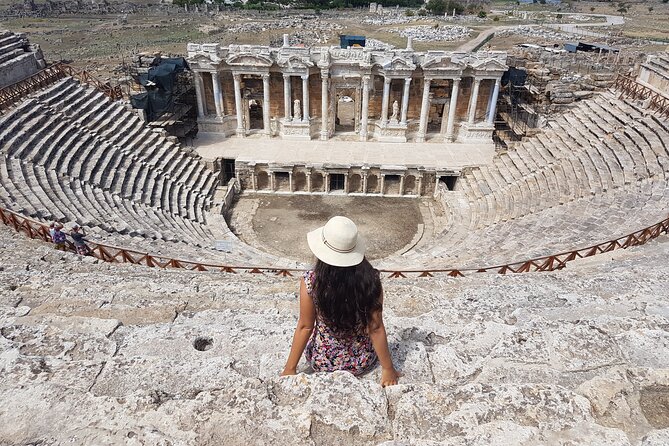
Then comes the part that makes people book the whole day: Pamukkale. The tour pairs it with Hierapolis, which is smart. Pamukkale is the spectacle, but Hierapolis is what gives the area its Greco-Roman layer.
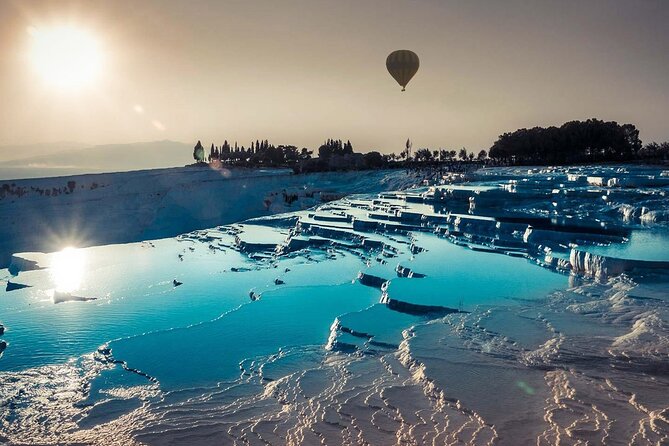
Pamukkale’s big idea is simple and weird in the best way. The terraces were formed by warm spring water flowing over time. The tour’s information puts the water at around 35°C, and specifically calls out calcium bicarbonate, which is part of why you get that dramatic white buildup. The tour also frames Pamukkale as an early “spa on earth,” because in history people traveled long distances believing in healing powers.
In the field, Pamukkale can feel like walking through a natural sculpture. The tour is built for that, including time for the photo moments people really care about: travertine surfaces and the sense of stepping across these layered pools. If you’re into details, the best way to enjoy Pamukkale is to slow down for a few minutes and just watch how the white textures change with your angle.
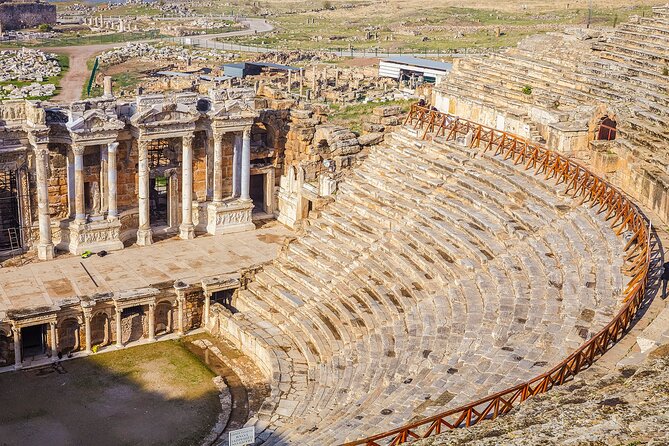
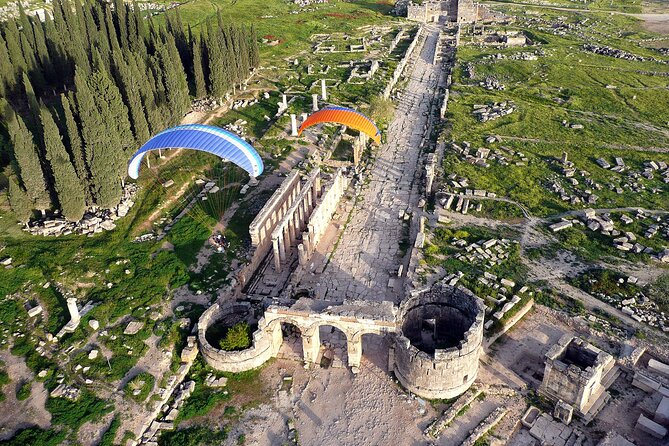
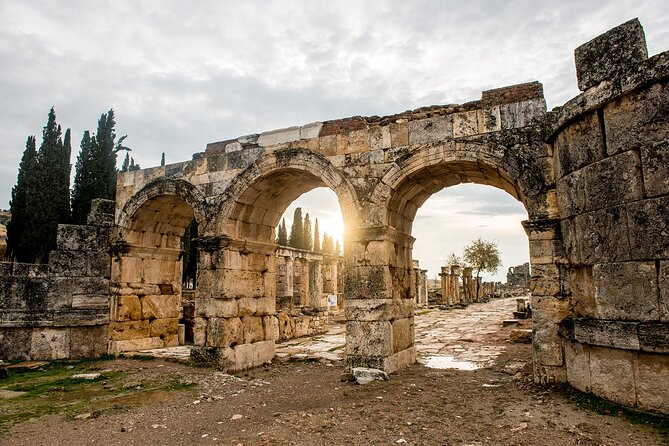
The Hierapolis portion matters too. The tour includes Greco-Roman remains, including sunken column views that help you see that this wasn’t just a spa area—it was also a city with impressive architecture and public spaces.
One consideration that matters for planning: the tour experience can be affected by site conditions. In past experiences shared with the operator, one common note was that parts of Pamukkale were under renovation, which can limit how you experience the pool area. You might not get the exact same open-view photo setups depending on timing, so keep expectations flexible.
Lunch in a local restaurant: fuel for a long day
Between ruins and terraces, you get lunch in a local restaurant. This is included, which is a real value bump on a long day like this—especially since the tour explicitly lists that beverages with meals are not included.
What I like about this arrangement is that it helps you reset. After walking Ephesus, you’re ready for a break that isn’t another snack run. And because the tour keeps lunch as part of the plan, you’re less likely to lose time to finding food.
If you’re someone who spends your travel budget on experiences more than on meals, this is still a good trade. You’re paying for the guide, the transport, and the time with two major sites; lunch being included keeps the day from turning into a set of extra purchases every stop.
Price and value: what $280 covers, and what you’ll pay separately
At $280 per person, you’re paying for the structure: a private, licensed-guide experience, a full day of transport, and included lunch. Entrance fees are the key extra cost. The tour makes it clear that you’ll cover admission for Ancient Ephesus and Hierapolis & Pamukkale separately.
Here’s how I think about the value:
- If you’re comparing to the cost of doing this independently—tickets plus transportation plus guide time—this price starts to make sense because the biggest expense is not just admissions. It’s getting the timing right and avoiding wasted hours.
- If you’re a fast walker and don’t care about explanations much, you might feel the price is paying for a service you don’t use. But if you want context—St. Paul’s connection, what to notice at Library of Celsus, how Hierapolis and Pamukkale fit together—the guide time can be worth it.
Also, the tour uses skip-the-line assistance via pre-paid tickets handled by your guide. Even though you still pay entrance fees, the queue-time advantage can be a hidden cost saver.
One small cost-planning detail: the entrance fee you use can be paid to your guide in cash in Dollars, Euro, or Turkish lira. If you hate carrying cash while traveling, plan ahead before your day starts.
Guides like Serge, Izik/Isik, and Ali can shape the day
This is where the tour can feel different from a standard sightseeing route. The guide quality matters most on a day like this because you only get a limited time on each site.
Some guide names you might be paired with include Serge, Izik/Isik, and Ali. In previous experiences, Serge was praised for being punctual and professional and for delivering the key historical points clearly. Izik/Isik was noted for being very patient and for explaining Turkey’s story in a way that made the ruins easier to place. Ali was singled out for being helpful and kind, including adjusting the pace to accommodate picture-focused requests.
Also, one useful practical tip that’s worth remembering: on Pamukkale, your guide may recommend using the mineral in the area to help scrub skin. That’s not required, but if it’s your kind of travel detail, it can add to the Pamukkale experience beyond photos.
Time limits: where you’ll feel rushed, and how to handle it
The itinerary sets clear time blocks: around 2 hours in Ephesus, about 3 hours for Hierapolis plus Pamukkale. That pacing works if you love highlights and big moments, but it can feel short if you want long pauses, slow photo editing, or extra time in the thermal pool area.
A note that comes up in experiences with this route: some people wished they had more time in Pamukkale, especially when pool access felt limited due to renovation. If that’s your main goal, I’d treat Pamukkale as the priority and be ready for the idea that Ephesus will be “best-of” rather than “finish the whole city.”
My practical advice: don’t try to do every angle. Pick a few “must photograph” spots—like the Library of Celsus viewpoint and your favorite travertine terraces—and then leave room to just be there.
Who should book this Ephesus and Pamukkale day tour
This tour fits best if you:
- Want two major UNESCO experiences in one day without the planning headache
- Prefer a private guide so you can ask questions and get pointed advice
- Care about the story behind the sites, not just their location
- Like the idea of having included lunch and transport, so you can focus on sightseeing
It may be less ideal if you:
- Want to spend most of the day in Pamukkale and you hate time limits
- Want entrance fees included in the base price
- Are planning a super tight schedule and can’t handle a long day
Should you book this tour?
Book it if you want a smart highlights day that combines Ancient Ephesus and Pamukkale with private guidance, transport, and lunch, and you’re comfortable paying entrance fees separately. The skip-the-line setup and door-to-door pickup make it feel efficient, especially for first-timers who want their day to run clean.
Skip it or consider a slower plan if your top priority is maximum time at Pamukkale’s pools or you know you’ll be upset if the pool area is partially affected by renovations. Otherwise, this is one of those days where the schedule is tight, but the payoff is big.