REVIEW · KHAJURAHO
Guided Private tour of Khajuraho World Heritage site over 2 days
Book on Viator →Operated by 5 Senses Walks · Bookable on Viator
Khajuraho hits hard on day one. This 2-day private tour takes you through the UNESCO-listed temple complex and its famous stone carvings, including the clearly adult, Kamasutra-inspired scenes. It’s run in a way that keeps the focus on the art and meaning—Hindu and Jain temples, step-by-step, without the usual scramble.
I especially like two things: the private setup with pickup and a clean car, plus the way the guide brings the monuments to life. Reviews specifically highlight guide Anurag as a real “explain-it-like-you-want-to-know” presence—answering questions and helping you notice the details in the carvings rather than just looking at them.
One consideration: you’re paying for a private, all-in style route, and it’s priced at $400 per person. Also, in 2 days you won’t see all 22 temples in the wider Khajuraho group—this route focuses on key sites—so if you want the full sweep, you’ll need more time or a broader itinerary.
In This Review
- Key highlights from this 2-day Khajuraho plan
- Khajuraho temples in two days: what you’ll actually cover
- Private car and guide: why this tour format works
- Day 1: Javari, Chausath Yogini, Kandariya Mahadev, Lakshmana
- Javari Temple: the “high pedestal” attention grabber
- Chausath Yogini Temple: 64 shrines, one big idea
- Kandariya Mahadev Temple: Chandela ambition after destruction
- Lakshmana Temple: the Vaikuntha idol with three heads
- Day 2: Varaha, Dulhadev, Parshwanath Jain, and Jagdamba
- Varaha Temple: Vishnu’s boar form carved in stone
- Dulhadev Temple: Shiva as a bridegroom
- Bhagawan Parshwanath Digambar Jain Mandir: Jain motifs you can spot
- Devi Jagdamba Temple: Parvati and a pyramidal roof
- How to look at the Kamasutra-style carvings (without getting stuck)
- Timing and comfort: what a 9:00 am start really means
- Price and value: does $400 per person make sense?
- Who this tour is best for (and who should consider other options)
- Should you book this Khajuraho private tour?
- FAQ
- FAQ
- What is the duration of the Khajuraho private tour?
- What does the tour cost?
- What time does the tour start?
- Is pickup offered?
- Is this a private tour?
- Are temple admission tickets included?
- What temples are included over the two days?
- Will I receive a ticket on my phone?
- How many days in advance do I need to cancel for a full refund?
- Is there any discount for larger groups?
Key highlights from this 2-day Khajuraho plan
- UNESCO World Heritage temples in a tight two-day route (tickets included).
- A private car with hotel pickup so you lose less time to logistics.
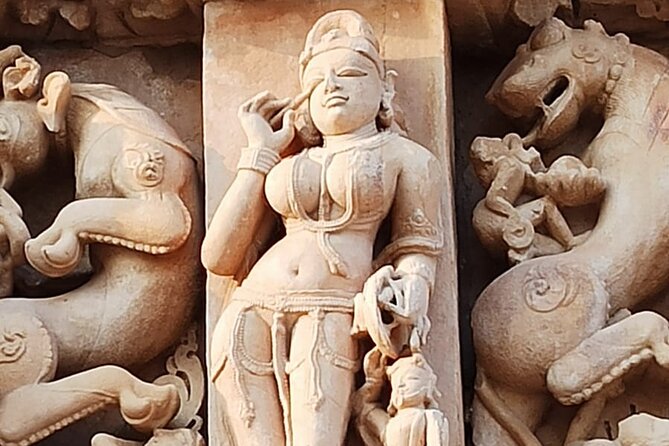
- Guide-led viewing of the famous erotic stonework and what it’s communicating.
- A mix of Hindu temples and a Jain stop, not just one religious style.
- Temples spaced for about 1.5 hours each, so you’re not rushing through details.
- A tour operator that emphasizes local guides and local businesses.
Khajuraho temples in two days: what you’ll actually cover
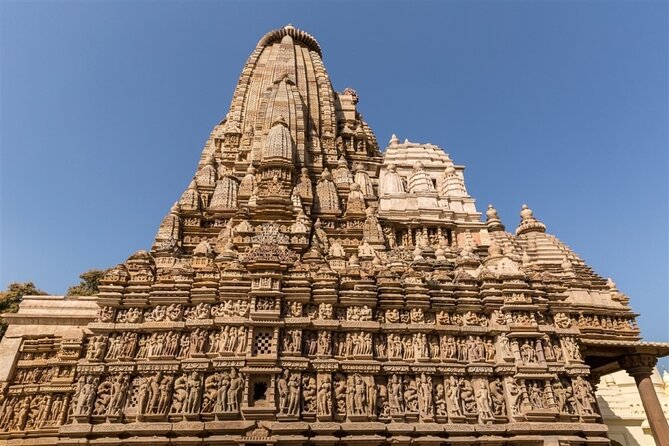
Khajuraho is one of those places where the buildings feel like a museum you can walk through—but with the museum under construction in real time. The UNESCO listing covers the medieval temple complex with 22 temples, and this tour targets many of the best-known highlights across Hindu and Jain traditions.
The rhythm is simple: start after breakfast, visit a cluster of temples on Day 1, then return for another focused circuit on Day 2. Each stop is set for about 1 hour 30 minutes, which is long enough to see carvings properly and still keep the day comfortable.
The tour also keeps paperwork light. You’ll get a mobile ticket, and admission is included for the temple visits, which helps you avoid extra desk time on-site.
You can also read our reviews of more guided tours in Khajuraho
Private car and guide: why this tour format works
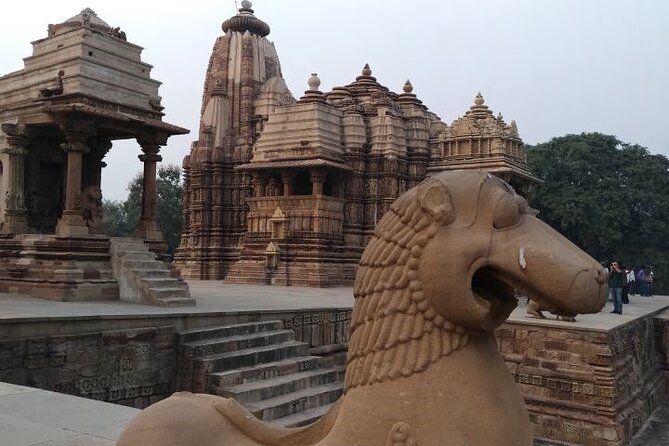
A private guide is more than a luxury here. Khajuraho’s carvings can look overwhelming at first—animals, myth figures, geometric patterns, and those famously explicit scenes. A guide helps you aim your eyes and connect the images to the temple’s religious setting and the ideas of the era.
The big practical win is the pickup-and-drive setup. Reviews mention a private car sent to the hotel lobby and a clean vehicle, with a driver who was friendly and careful. That matters because temple days go smoother when you’re not negotiating transport, waiting, or trying to keep pace with multiple moving parts.
And yes, the guide name Anurag comes up in multiple reviews. The common theme is that he doesn’t just point; he explains. If you like art with context—what you’re looking at, why it’s there, and how the stories fit—you’ll get more from your time.
Day 1: Javari, Chausath Yogini, Kandariya Mahadev, Lakshmana
Day 1 is the “learn the language of the place” portion. You’ll start with two UNESCO-listed temples and then move into the Chandela-era masterpieces that make Khajuraho famous.
Javari Temple: the “high pedestal” attention grabber
You begin at the Javari Temple, described as a Hindu temple on a high pedestal. That elevated position is more than dramatic staging. It forces you to look at the whole structure first—exteriors and interiors—before you start hunting for smaller details.
If you’re the type who likes architecture, this is a good opener. The temple’s appeal is tied to its artistic work on both outside surfaces and inside elements, so you get a full “view” rather than a quick exterior photo moment.
Chausath Yogini Temple: 64 shrines, one big idea
Next is the Chausath Yogini Temple, connected to yoginis—female figures associated with yoga or spiritual teaching. The standout feature is the 64 different shrines, with one shrine per yogini and a central shrine that’s the largest.
This stop teaches you a useful way to look: instead of treating the carvings as scattered decoration, you can track how the temple organizes devotion through repeated forms. It’s easier to “read” once you understand that the layout is doing spiritual work.
Kandariya Mahadev Temple: Chandela ambition after destruction
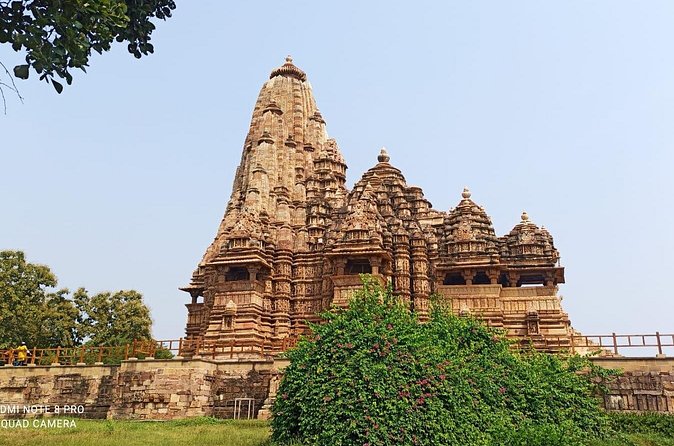
Then you reach the famous Kandariya Mahadev Temple. It was designed and built by Chandela King Vidyadhara in the early 11th century. The story component matters here: it was built after a period when Gazni Mahmud invaded and destroyed the region.
Practically, this is one of those temples where you want to slow down. You’ll spend time on the entrance area and the main attraction zone, which sets up the bigger sculptural intensity deeper in the complex. If you enjoy origin stories—who built it and what changed afterward—this stop gives you that context.
Lakshmana Temple: the Vaikuntha idol with three heads
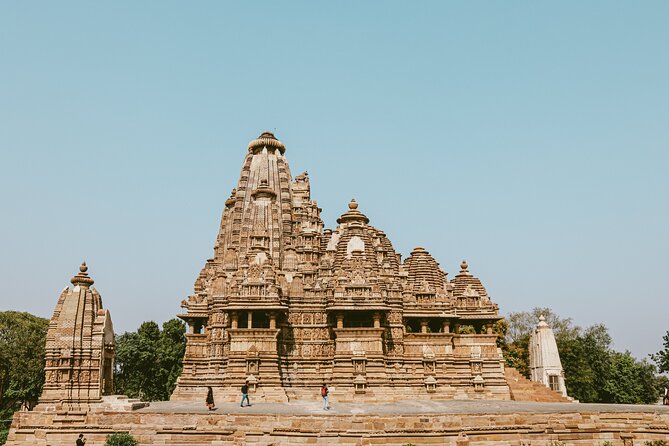
Day 1 ends at the Lakshmana Temple, built by Chandela ruler Yashovarman in the 10th century. The main idol here is Lord Vaikuntha, and the distinctive detail is an idol described as having three heads and four arms.
This is where the guide really earns their paycheck. Specific, physical features like the three heads help you see the iconography rather than just the stone surface. If you want your visit to feel like meaning, not just a photo safari, this is the payoff stop.
Day 2: Varaha, Dulhadev, Parshwanath Jain, and Jagdamba
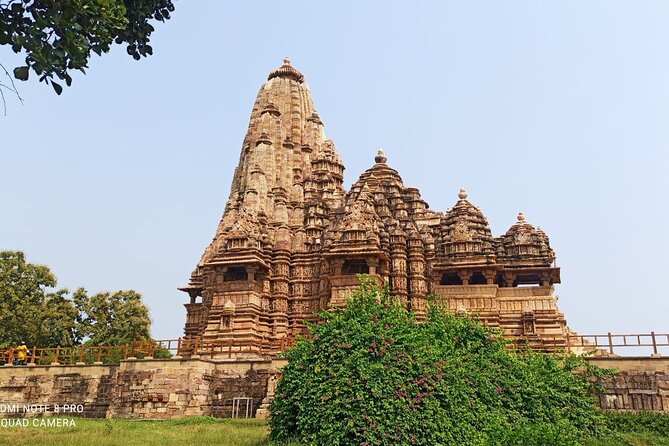
Day 2 shifts from the core Hindu set to a broader view of the complex’s religious diversity. You’ll also keep the same stop length, so the second day doesn’t feel like a rushed repeat.
Varaha Temple: Vishnu’s boar form carved in stone
The Varaha Temple is next. Varaha is described as an incarnation of Vishnu with a boar head on a human body, and four arms. The description also points out that the body is filled with carvings, which is exactly the kind of feature where a guide helps you understand what you’re seeing.
This stop is a good example of why you don’t want to “just walk through.” The more carvings a body contains, the more helpful it is to know what to notice first—otherwise your eyes move too fast to catch the pattern.
Dulhadev Temple: Shiva as a bridegroom
Then comes the Dulhadev Temple, devoted to Shiva depicted as a bridegroom. The name wordplay is part of the story: the idea of dulha (bridegroom) links to the temple’s name and local form.
The tour info also places this temple on the banks of the Khodar River, and it’s described as the last temple built in the whole group. That built-order detail makes the stop feel different—like the group’s story has an ending, not just a collection of monuments.
Bhagawan Parshwanath Digambar Jain Mandir: Jain motifs you can spot
Next is the Bhagawan Parshwanath Digambar Jain Mandir, built by Chandela ruler Dhanga in the early 10th century. Jain motifs appear on the walls, including male and female figures, Gemini, trees, flowers, and references to Ganga and Yamuna.
This is a great contrast moment. If your brain is tuned to Hindu iconography on Day 1, this stop teaches you to look for different symbolism and themes. And because it’s still part of the same UNESCO complex, it feels like one coherent story told through different faith expressions.
Devi Jagdamba Temple: Parvati and a pyramidal roof
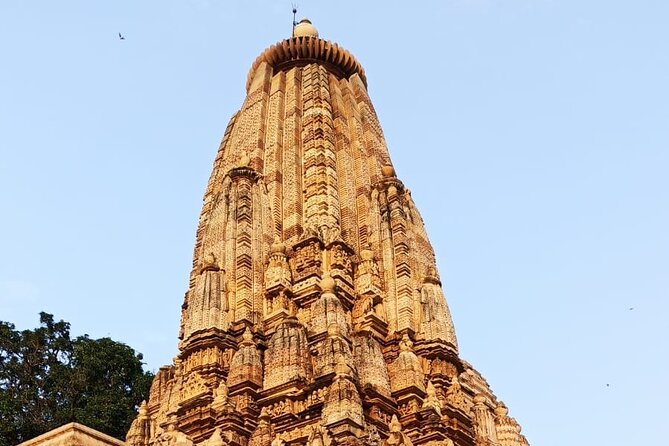
Day 2 closes with Devi Jagdamba Temple, dedicated to Goddess Parvati. The temple’s roof is described as intricately designed and pyramidal, and the walls include imaginative beasts and myth-related renditions.
This final stop is where I’d expect your eyes to be less confused than at the beginning. By now you’ve learned how the stone can carry narrative, symbolism, and devotion at the same time.
How to look at the Kamasutra-style carvings (without getting stuck)
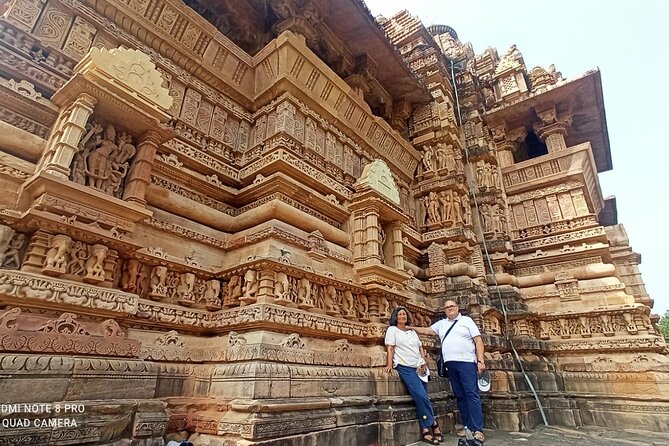
Khajuraho’s fame often starts and ends with the erotic scenes. But the better way to enjoy them is to treat them as part of a broader visual language: religion, symbolism, storytelling, and craft skill all at once.
This tour’s structure helps you do that. Instead of dropping you in front of explicit stonework and letting you interpret it alone, the guide’s role—especially with Anurag highlighted in reviews—helps connect the “Kamasutra etched in stone” element to the rest of the temple art.
Practical mindset tip: don’t only search for the explicit scenes. Use them as one entry point, then train your eyes on the surrounding motifs: figures, patterns, and how the sculptors filled spaces with meaning. When you do that, the carvings stop feeling random and start feeling intentional.
Timing and comfort: what a 9:00 am start really means
The tour starts at 9:00 am from the meeting point. That early start is useful in practice. Temples feel calmer when you’re not arriving mid-day at peak crowds, and it gives you enough daylight to keep the second day strong.
Each temple stop is about 1 hour 30 minutes, which is a good compromise. Short enough to keep your energy up, long enough that you can circle back and catch details you missed the first time—especially if the carvings are dense.
Comfort-wise, the private car and pickup help you keep the day from turning into a transportation puzzle. Reviews mention a clean car and safe driving. When you’re spending most of your day standing, looking, and walking between monuments, that kind of basic comfort matters more than people expect.
Price and value: does $400 per person make sense?
At $400 per person, this is not a budget day trip. You’re paying for a private experience with pickup, a guide, admission included at each stop, and a structured two-day route.
So where’s the value? It comes down to three things:
- Time efficiency. You’re not spending your day figuring things out. That’s a real savings, especially with a set start time and fixed stop durations.
- Depth. The guide support changes what you get from the temples. Without that, Khajuraho can feel like a long list of carvings. With it, the carvings become information.
- All-in feel. Admission tickets are included, and you get mobile ticketing. Less admin during the trip means more mental energy for the art.
If you’re traveling as a couple or a small group, this can feel more reasonable because private access spreads out the cost. If you’re solo, you’ll likely feel the price more—then it’s worth asking yourself whether you’re the type who wants context and pacing rather than independent temple hopping.
Who this tour is best for (and who should consider other options)
This private, two-day route works best for you if:
- You want a guided art and meaning experience, not a quick check-the-box visit.
- You’re curious about Hindu and Jain temple iconography in the same UNESCO complex.
- You’d like a guide who can handle questions and point out details, especially around the famous erotic stonework.
It may be less ideal if:
- You’re trying to see every single temple in the wider group. This route focuses on major stops, not a full 22-temple sweep.
- You prefer complete independence and you’re happy reading temples without a guide-led explanation.
Should you book this Khajuraho private tour?
I’d say book it if you want Khajuraho to feel like a guided “reading,” not like a sprint. The combination of private transport, admission included, and a guide like Anurag who helps you understand the carvings is a strong match for people who care about what they’re seeing.
If you’re cost-sensitive or you want to spend extra days hunting down every temple beyond this route, you might look for a longer or more expansive itinerary. But for a focused two-day experience that respects your time and keeps you in the right temples, this one is a solid choice.
FAQ
FAQ
What is the duration of the Khajuraho private tour?
It runs for about 2 days.
What does the tour cost?
The price is $400.00 per person.
What time does the tour start?
The start time is 9:00 am.
Is pickup offered?
Yes, pickup is offered, and the tour includes a private car to pick you up from your hotel area.
Is this a private tour?
Yes. It’s listed as a private tour/activity, meaning only your group will participate.
Are temple admission tickets included?
Yes. Admission Ticket Included is shown for each temple stop.
What temples are included over the two days?
Day 1 includes Javari Temple, Chausath Yogini Temple, Kandariya Mahadev Temple, and Lakshmana Temple. Day 2 includes Varaha Temple, Dulhadev Temple, Bhagawan Parshwanath Digambar Jain Mandir, and Devi Jagdamba Temple.
Will I receive a ticket on my phone?
Yes. The tour includes a mobile ticket.
How many days in advance do I need to cancel for a full refund?
You can cancel up to 3 days in advance for a full refund.
Is there any discount for larger groups?
Yes. The tour lists group discounts.