REVIEW · RIO DE JANEIRO
Rio: Olympic Boulevard, Museum of Tomorrow & History Tour
Book on GetYourGuide →Operated by C2RIO TOURS & TRAVEL · Bookable on GetYourGuide
Rio moves fast, and this tour keeps up. You get a tight loop through Downtown Rio’s key landmarks plus a major modern stop at the Museum of Tomorrow. Two things I really like: you start with the Valongo Wharf story, then you end with a proper sit-down moment at Confeitaria Colombo.
I also like how the route mixes big visuals (Eduardo Kobra’s mural, the Rio 2016 cauldron, the Museum of Tomorrow’s structure) with real context from the guide. One drawback to keep in mind: this is a walking tour with hotel pickup in the South Zone, so timing can feel rushed on busy mornings, and you’ll want to be alert around bus/van logistics if your group is combined with others.
In This Review
- Quick Take: What Makes This Tour Worth Your Time
- Downtown Rio in Four Hours: How the Route Actually Works
- Valongo Wharf and the African Influence Story: A Strong Start
- Eduardo Kobra’s Mural and the Olympic Boulevard Walk: Big Color, Clear Themes
- Museum of Tomorrow: Futuristic Design and What You’re Meant to Think About
- Monastery of Saint Benedict: The Baroque Interior Surprise
- Olympic Cauldron, Praça XV, and the History Stops That Add Meaning
- Confeitaria Colombo: A Proper Rio Café Finish (and What to Order)
- Price and Value: Why $67 Can Make Sense Here
- Group Size, Pickup, and Logistics: The Things to Get Right
- Guides and Languages: What to Expect From the Commentary
- Who This Tour Fits Best (and Who Might Not Love It)
- Should You Book It? My Decision Guide
- FAQ
- How long is the Rio Olympic Boulevard, Museum of Tomorrow & History Tour?
- Where do hotel pickups happen?
- What time does pickup usually start?
- Is Museum of Tomorrow entry included?
- Is Confeitaria Colombo included, and is it open every day?
- Do I need to speak Portuguese to join?
Quick Take: What Makes This Tour Worth Your Time
- Valongo Wharf first: you begin with African influence in Rio, not just photo stops.
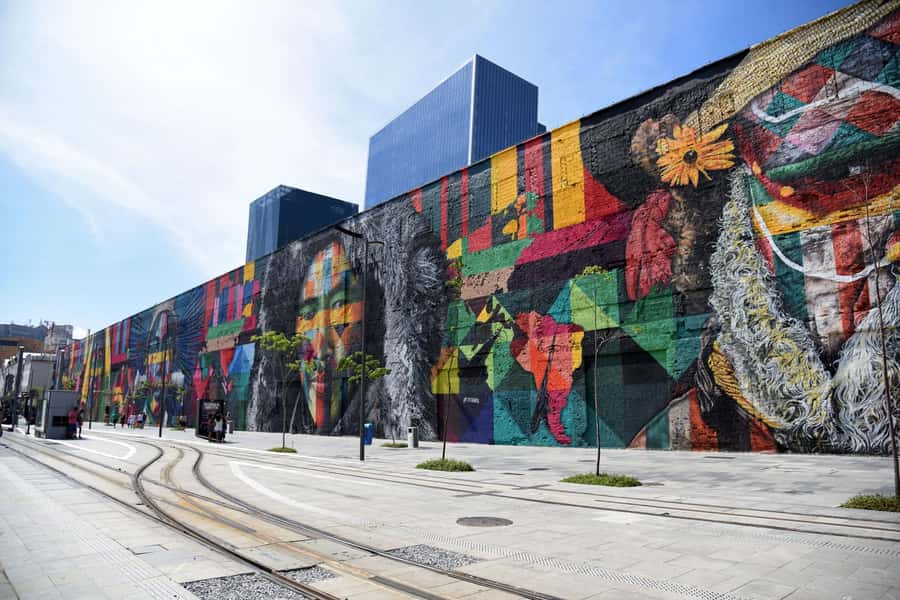
- Eduardo Kobra mural: large-scale street art with clear themes of different ethnic groups.
- Museum of Tomorrow included: you’re paying for entry inside the tour price, not adding it later.
- Baroque contrast at Saint Benedict: simple exterior, gold interior—great for slow looking.
- Café finale at Confeitaria Colombo: art nouveau details, plus optional snacks/desserts you can choose on your schedule.
- Small-group feel (max 19): easier pacing for a 4-hour Downtown route.
Downtown Rio in Four Hours: How the Route Actually Works
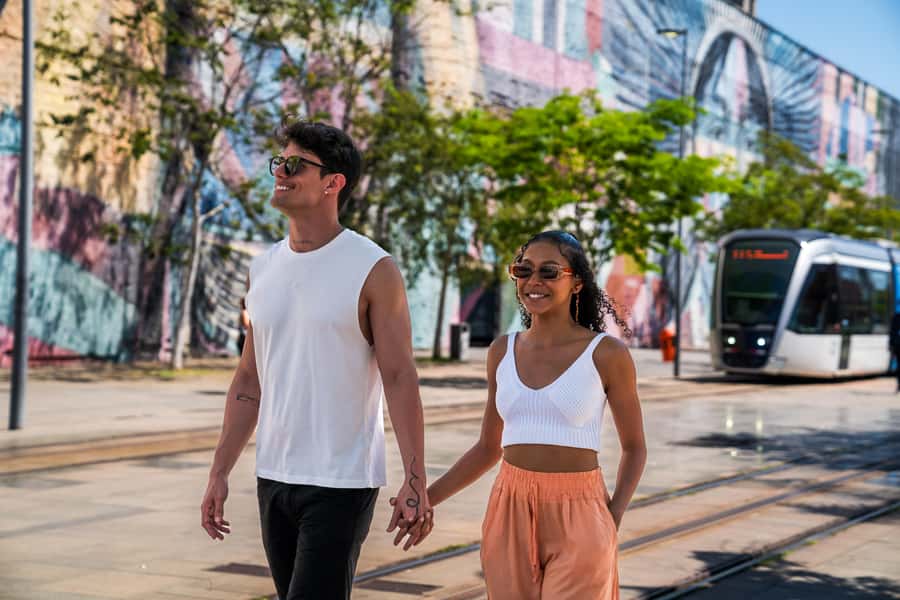
This is a half-day tour designed to move you around Rio’s most story-rich parts without you needing to plan a route. You start with pickup from hotels in Rio’s South Zone (Copacabana, Ipanema, Leblon, Leme), generally between 8:10 AM and 8:55 AM, and the tour runs about 4 hours in total.
The pacing is part walking, part transit by a comfortable air-conditioned van. That matters because Downtown streets can be hectic, and the guide is handling the route so you can focus on seeing what you came for.
You can also read our reviews of more historical tours in Rio De Janeiro



Valongo Wharf and the African Influence Story: A Strong Start
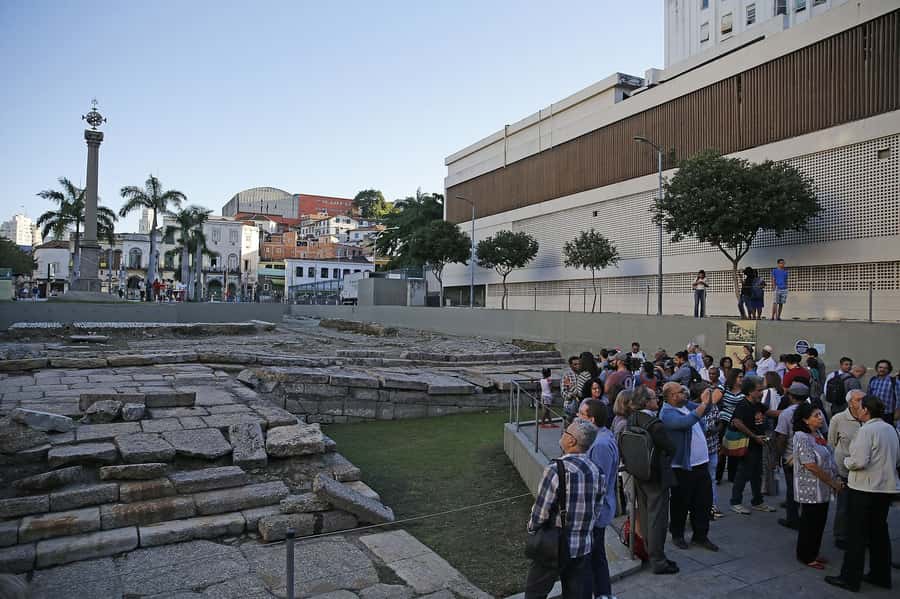
The tour kicks off at Valongo Wharf, which is highlighted as the newest UNESCO World Heritage site in Rio. This is a smart opening because it frames Rio’s later neighborhoods with an important past—especially the African influence in Brazil.
You’re not just standing near a marker. The point of starting here is to help you understand why Downtown’s history matters, before the tour shifts into murals, futuristic architecture, and other eye-catching sights. If you like tours that teach you how to read the city, this start sets the tone.
Eduardo Kobra’s Mural and the Olympic Boulevard Walk: Big Color, Clear Themes
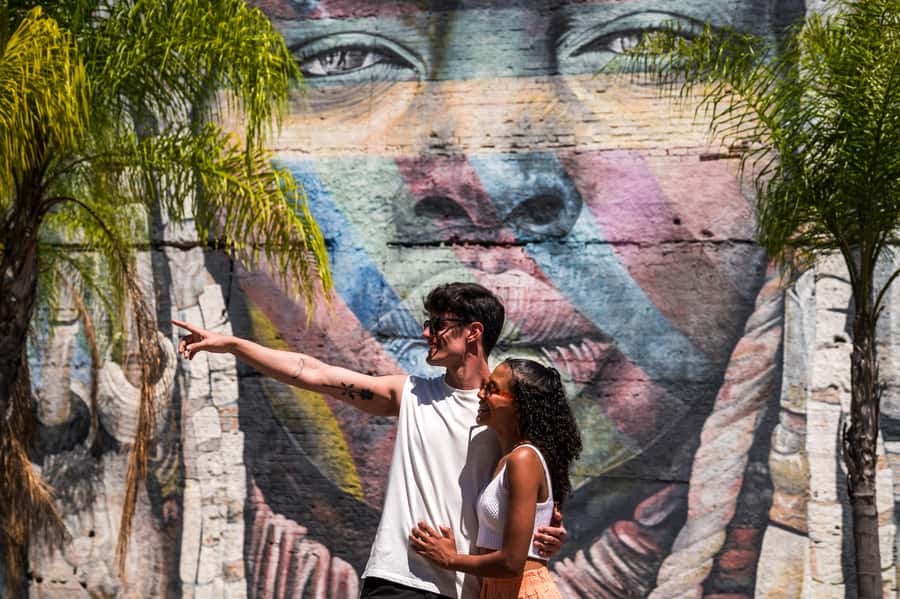
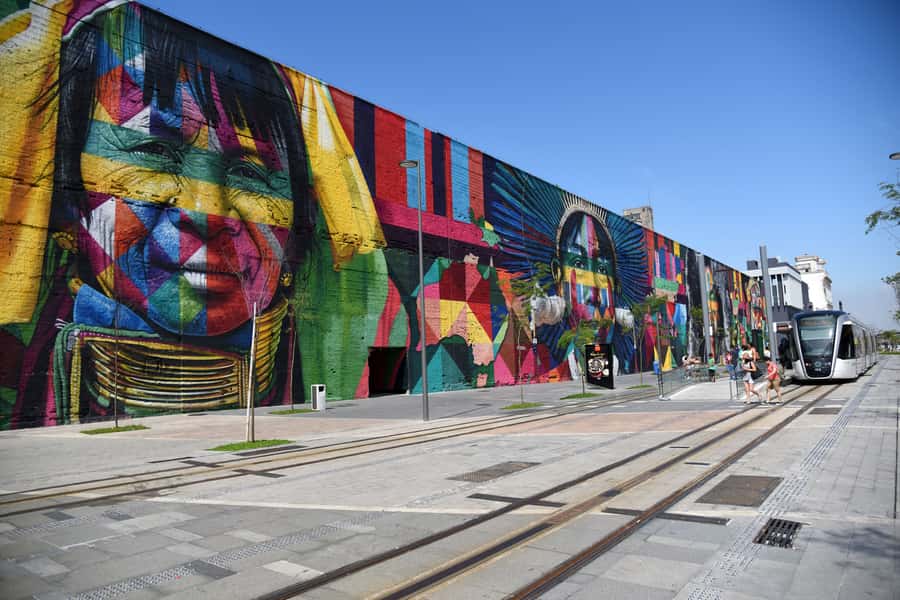
Next you’ll see Eduardo Kobra’s mural, described as one of the largest graffiti murals in the world. The theme is organized around five ethnic groups, set into a colorful geometric background. Even if you’re not usually into street art, this one is visually readable, and it’s a quick win for photos.
After the mural stop, you walk along Olympic Boulevard toward the Museum of Tomorrow. This stretch is useful because it links the modern visual language of Rio—sports-era design, public-space scale, and city branding—with what you’ll soon experience inside the museum.
Museum of Tomorrow: Futuristic Design and What You’re Meant to Think About
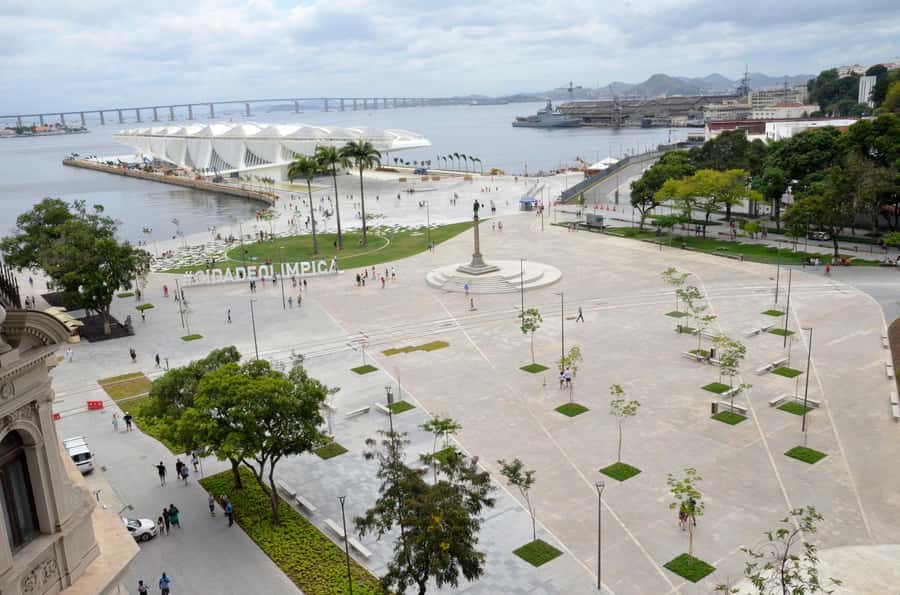
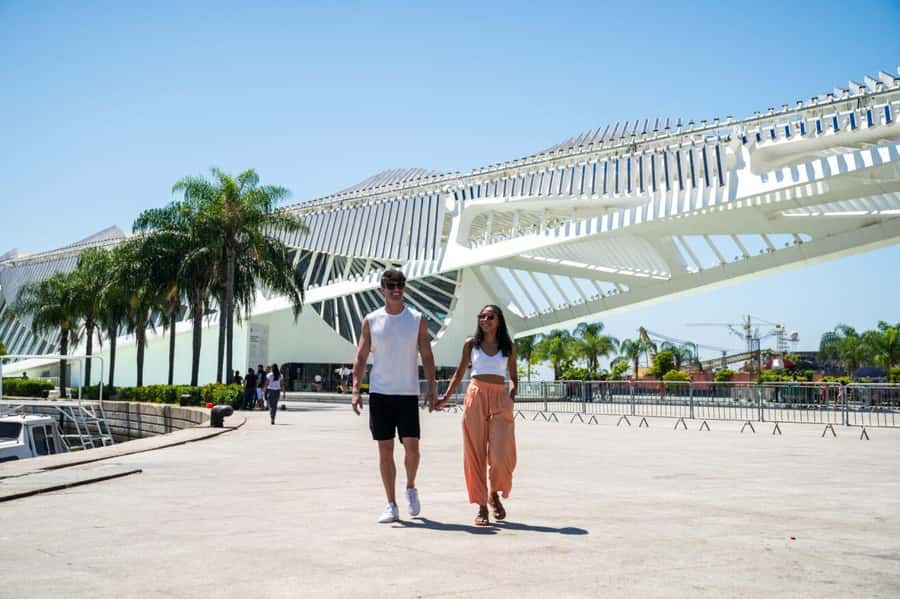
The Museum of Tomorrow is the centerpiece stop, including admission in the tour price. It’s billed as the most visited museum in Brazil, and even outside the galleries, the architecture is part of the experience—modern, technological, and built to feel like it’s talking to the future.
This museum is not just about showing futuristic machines. The emphasis is on questioning and thinking about possible futures for the planet and for humankind. That’s a good match if you like museums that push ideas instead of only presenting facts.
Practical tip: plan to move at your own pace once you’re inside. The tour structure gives you time to explore the museum, and you’ll get more out of it if you slow down for the key exhibits rather than trying to speed-run everything.
Monastery of Saint Benedict: The Baroque Interior Surprise
Then the tour pulls you into the past at the Monastery of Saint Benedict. The contrast is the headline: a simple exterior on the outside, but an interior covered in golden ornaments linked to the Baroque period.
This stop works well after the Museum of Tomorrow. You’re essentially flipping the lens—future materials and ideas on one side, ornate religious art on the other. If you enjoy architecture and religious art, this is one of the more satisfying “pause and look” moments on the route.
Olympic Cauldron, Praça XV, and the History Stops That Add Meaning
Along the way you’ll also see the Rio 2016 Olympic Cauldron, created by American artist Anthony Howe. The reflective, kinetic-sphere concept is meant to be a reminder of the Games, and it’s a good waypoint for thinking about how Rio stages global events in public space.
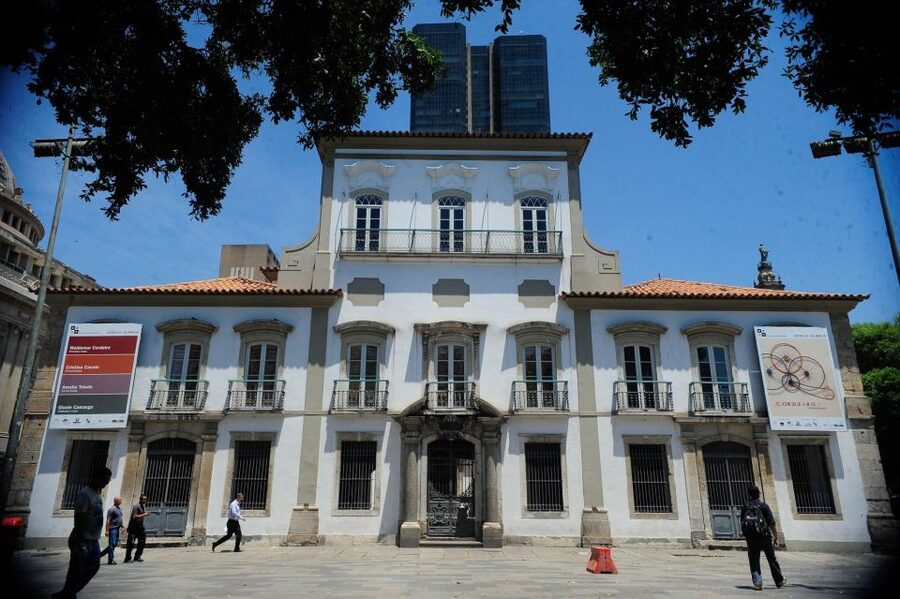
At Praça XV, you’ll observe one of the former headquarters of the Brazilian empire and learn about important facts connected to that area. The value here is the framing. Without a guide, you might treat these as separate sights. With the tour, you get a thread that ties Downtown together.
Confeitaria Colombo: A Proper Rio Café Finish (and What to Order)
Your last stop is Confeitaria Colombo, one of the tour’s big “finish strong” moments. It’s noted as one of the must-see cafés around the world, and it’s famous for its opulent décor: art nouveau details, large stained glass, tiles, and mirrors imported from France, Portugal, and Belgium.
The tour doesn’t include food, but it does set you up to choose what you want. You can try classic Brazilian snacks like coxinha de frango (the little chicken thigh) or end with desserts like brigadeiro.
Important timing note: Confeitaria Colombo is closed on Sundays. If you’re traveling on a Sunday, confirm what the tour does instead before you book.
Price and Value: Why $67 Can Make Sense Here
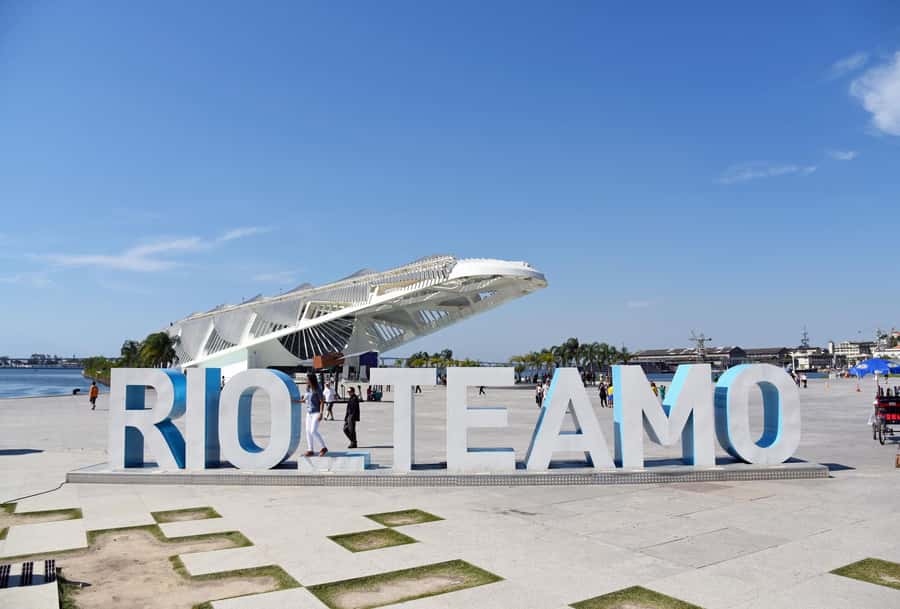
At $67 per person for a 4-hour guided experience, the value comes from what’s bundled. Your ticket to the Museum of Tomorrow is included, along with all taxes and handling fees, plus a professional guide with live commentary in English, Spanish, and Portuguese.
You also get hotel pickup and drop-off from South Zone hotels (Copacabana, Ipanema, Leblon, Leme) and a comfortable air-conditioned van for transport. For many visitors, that’s the real time-saver. Downtown can be a puzzle without local help, and paying for guided logistics often ends up cheaper than figuring out museum entry plus transit plus guide time separately.
Group Size, Pickup, and Logistics: The Things to Get Right
This tour uses a maximum group size of 19. That matters because it keeps the experience from feeling like a cattle call while you’re walking and moving through museum entry points.
Still, the morning starts with pickup, so you’ll want to be ready early. Pickup is before the activity start time, and the provider tells you the pickup hotel (especially if you’re staying in a hostel or B&B).
Also, this tour runs rain or shine, so wear shoes that handle damp pavement. And since the route involves a moderate amount of walking, I’d treat comfortable shoes as non-negotiable, not optional.
One caution from past experiences shared by other guests: occasionally, guides can have trouble with directions or timing, and if the transport is shared with multiple groups, drop-offs can get messy. You can reduce risk by double-checking your pickup details, standing ready when the van arrives, and staying organized with your phone and meeting cues.
Guides and Languages: What to Expect From the Commentary
The tour includes a professional guide with live commentary in English, Spanish, and Portuguese, so you shouldn’t feel stuck if you’re not fluent in local language.
From the guide styles that have come up in recent feedback, two patterns show what tends to work well:
- Some guides are praised for being friendly and adapting the museum portion so you can explore at your own pace, like Emma.
- Others are praised for a strong history focus and clear explanations, like Pedro.
Names like Marilia and Gabriela also appear in lower ratings, tied to issues like rushing, difficulty finding locations, or van drop-off confusion. That doesn’t mean every day runs the same, but it does suggest you should be more careful about timing and meeting points.
Who This Tour Fits Best (and Who Might Not Love It)
This tour is a great match if you want a structured, guided way to understand Rio’s Downtown—especially if you like mixing big visuals with historical context. It’s also a strong choice if you want the Museum of Tomorrow without having to plan entry and routing yourself.
It may not be ideal if you dislike walking or if you get stressed by tight schedules. The tour is short enough to be manageable, but it’s still a city walk with multiple stops.
Children policies are also pretty specific: unaccompanied minors aren’t allowed. Children must be accompanied by an adult, and kids under 5 go free if they don’t occupy a seat.
Should You Book It? My Decision Guide
Book this tour if you want:
- Museum of Tomorrow ticket included plus guided learning
- A Downtown route that starts with Valongo Wharf and African influence
- High-impact visuals like the Kobra mural and the Olympic Cauldron
- A finish at a famous Rio café like Confeitaria Colombo
Think twice if:
- You’re very sensitive to schedule slippage and prefer totally self-paced touring
- You’re traveling on a Sunday, because Confeitaria Colombo is closed, and you’ll want clarity on the alternative plan
If you’re deciding between doing only museum time or only photo stops, this one is designed to blend both. You’ll come away with more context than most quick city tours—and you’ll still have plenty of iconic images to bring home.
FAQ
How long is the Rio Olympic Boulevard, Museum of Tomorrow & History Tour?
It lasts about 4 hours.
Where do hotel pickups happen?
Pickup and drop-off are available from hotels in Rio’s South Zone, including Copacabana, Ipanema, Leblon, and Leme.
What time does pickup usually start?
Pickup is scheduled between 8:10 AM and 8:55 AM. You should confirm your exact pickup time with the tour provider.
Is Museum of Tomorrow entry included?
Yes. Tickets to the Museum of Tomorrow are included in the tour price.
Is Confeitaria Colombo included, and is it open every day?
Confeitaria Colombo is included as the final stop, but food and drinks are not included (you buy what you want there). It is closed on Sundays.
Do I need to speak Portuguese to join?
No. The guide provides live commentary in English, Spanish, and Portuguese.