REVIEW · HYDERABAD
Heritage & Cultural Walk of Hyderabad (2 Hours Guided Walking Tour)
Book on Viator →Operated by Yo Tours Goa · Bookable on Viator
Charminar in two hours is doable. I like that this Old City walk ties together market streets and Hyderabad’s best-known landmarks, with a guide who explains daily life, not just facts.
I’m also a fan of the small group size (max 15), because the pace stays human and you can ask questions without feeling rushed. English and Hindi storytelling helps a lot if you’re trying to make sense of what you’re seeing.
The trade-off is simple: it’s still a walk, and you’ll want good weather. There’s no hotel pickup, no bottled water included, and no breakfast—so plan to arrive ready to walk from the start point.
In This Review
- Key highlights you’ll actually feel during the walk
- Two Hours In Hyderabad’s Old City: who this walk really suits
- Starting at Salar Jung Museum: your first look at the Old City streets
- Charminar (built 1591): why this stop is more than a photo moment
- Mecca Masjid and Indo-Islamic design: seeing worship space as architecture
- Chowmahalla Palace entrance finish: ending near a strong next step
- Price and value: what $13.71 gets you (and what it doesn’t)
- Group size, guide quality, and how to get the most out of the stories
- Weather and comfort: the part you shouldn’t ignore
- Should you book the Heritage & Cultural Walk of Hyderabad?
- FAQ
- What is the duration of the Heritage & Cultural Walk of Hyderabad?
- How much does the tour cost?
- Where do I meet for the tour and where does it end?
- What is included in the tour?
- What’s not included?
- What happens if the weather is poor?
Key highlights you’ll actually feel during the walk
- Salar Jung Museum start puts you near one of the city’s landmark cultural hubs before you enter the Old City lanes
- Market + monument mix: you won’t just “view,” you’ll see how streets, shops, and worship spaces connect
- Charminar (built 1591) gets time and context, not a two-second stop
- Mecca Masjid (Indo-Islamic design) is explained as part of Hyderabad’s identity and architecture
- Chowmahalla Palace finish gives you an easy landing point for what to do next
- English/Hindi guidance plus local money-saving tips help your day run smoother
Two Hours In Hyderabad’s Old City: who this walk really suits
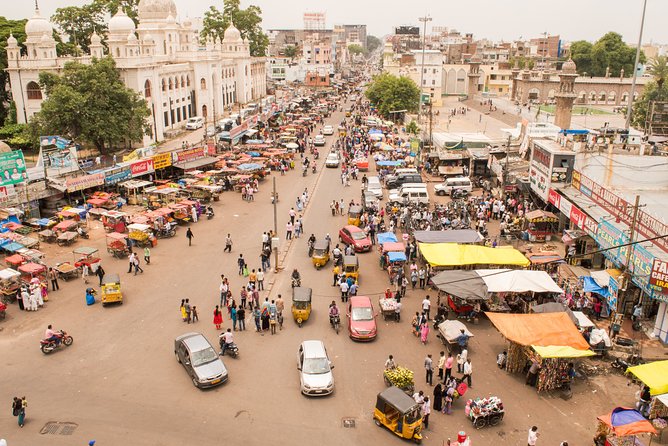
If you’ve got limited time and you want the city’s big symbols plus the surrounding street-life, this is a smart way to spend two hours. You start near Salar Jung Museum, then move into the Old City’s market area—where you’ll see everyday Hyderabad, not just a postcard.
This tour works especially well for first-time visitors who feel like they’d otherwise be stuck taking taxis from one monument to the next. Here, the route is built around walking. That means you get “in-between” moments: shopfronts, craft vendors, and the way people use streets around religious and civic buildings.
A small-group setup helps too. With a maximum of 15 people, your guide can keep the story moving and correct misunderstandings as you go—useful in a place where architecture and neighborhood boundaries can look confusing from a distance.
The downside is also obvious: you’re outside, you’re walking, and you’ll want shoes that can handle uneven sidewalks and curb cuts. It’s not a sit-and-stare tour.
You can also read our reviews of more walking tours in Hyderabad

Starting at Salar Jung Museum: your first look at the Old City streets
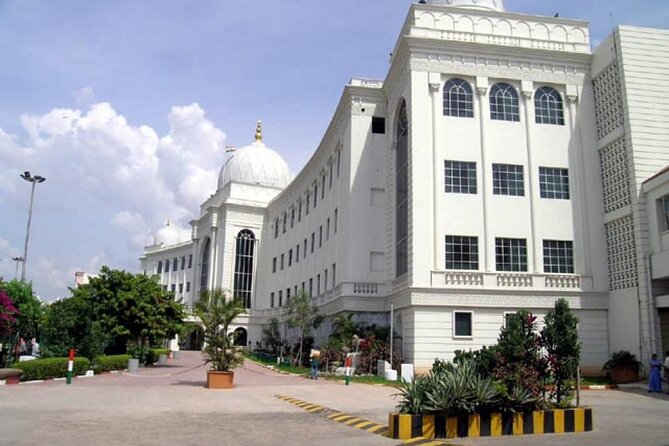
The meeting point is at Salar Jung Museum (Darulshifa, Hyderabad, Telangana 500002), with the tour beginning at that area. From there, you head into the market zone.
This opening stretch matters more than it sounds. You’re transitioning from a museum/cultural setting into a working neighborhood. That early shift helps you understand why Charminar and the major mosques aren’t isolated “things to visit.” They sit inside a living web of commerce, community, and daily routines.
During this portion, you’ll pass through a cluster of Old City commerce—eateries, craft vendors, and apparel stalls—so you get a sense of how the street economy functions. If you’ve been to big malls, you’ll feel the contrast right away. If you haven’t, you’ll learn quickly that the Old City experience is about watching how people move, bargain, and choose where to eat or shop.
Two practical tips for this part:
- Keep a little patience for crowds. Market areas can get tight fast, especially around major landmarks.
- If you’re sensitive to strong smells from street food, take it slow and don’t feel pressured to sample anything right away. You can always come back later with a calmer plan.
Charminar (built 1591): why this stop is more than a photo moment
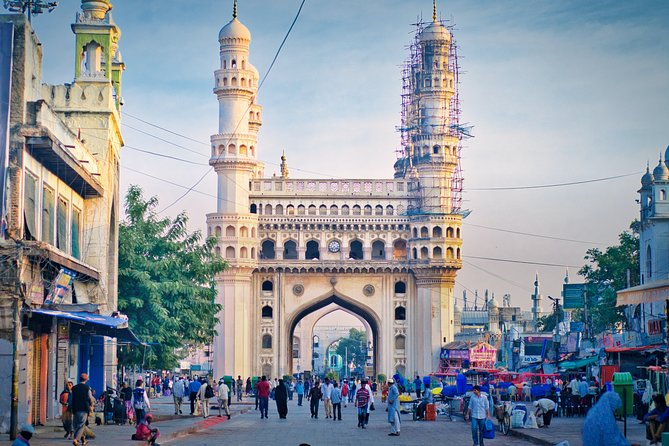
Charminar is the headline, and it’s not hard to see why. It’s a monument and mosque constructed in 1591, and it’s globally recognized as a symbol of Hyderabad.
What makes this stop valuable on a guided walk is that you’re not just handed a view and moved along. The tour frames Charminar as a piece of city identity—where architecture, religion, and the surrounding urban fabric all connect.
You’ll also notice how the area changes around it. Near Charminar, the streets tend to feel more structured around foot traffic and local routines tied to worship and visits. That’s the point: in Old Hyderabad, buildings don’t just sit in space—they organize movement and social life.
If you’re hoping to photograph, build in a little time for positioning. People often gather around major entrances and open courtyards, so the best angle may require waiting a few minutes as foot traffic shifts.
One more practical note: since the tour is only about 2 hours, you won’t get endless time at every landmark. Use your guide’s stories to decide what you want to look at longer—rooflines, arches, surrounding streets, or entry areas.
Mecca Masjid and Indo-Islamic design: seeing worship space as architecture
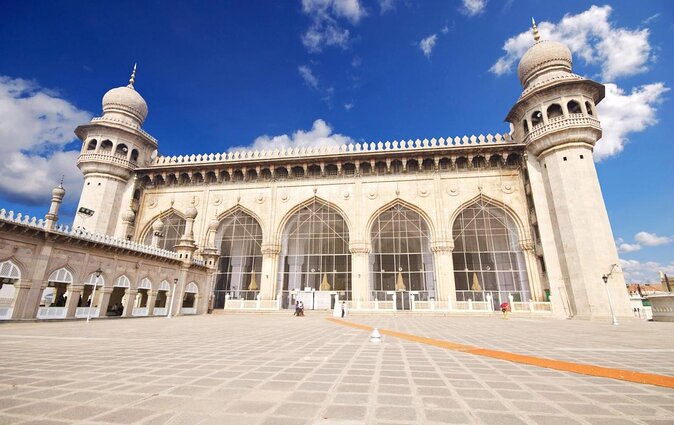
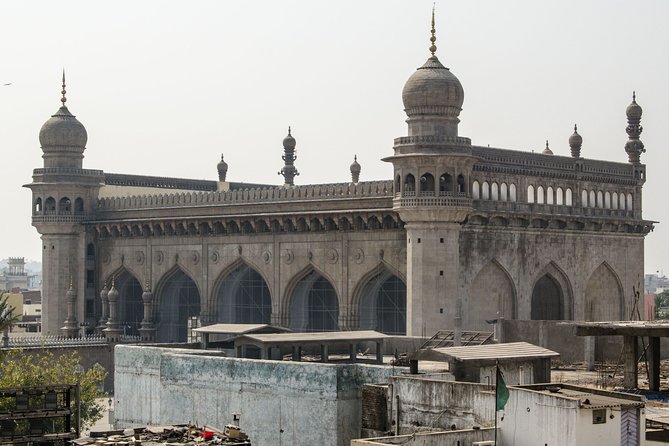
Next comes Mecca Masjid, described as having Indo-Islamic architecture and considered one of the largest mosques in India. Even if you’ve read basic descriptions before, walking through the area with a guide changes the feel. You start to look at the structure like a designed space, not only a spiritual one.
This stop is also helpful for first-time visitors because it adds context. The guide’s storytelling focuses on what you’re seeing and how it fits Hyderabad’s cultural identity. In other words, you’re not just hearing a lecture—you’re connecting architectural features to the life around them.
Indo-Islamic architecture can look intimidating at first glance because details stack up: arches, shapes, and surfaces that reflect both local and Islamic influences. With a guide pointing out what to notice, the design becomes easier to decode, and you can appreciate the building without needing an art history degree.
Practical expectation: mosque areas often involve respectful behavior and follow local rules. Keep your voice down, dress appropriately, and pay attention to any instructions from your guide on how to move through the space.
Chowmahalla Palace entrance finish: ending near a strong next step
Your tour ends at the Chowmahalla Palace ticket counter (Palace Bay-West, Khilwat, Hyderabad, Telangana 500002). Finishing here is smart because it’s not a random stop in the middle of nowhere. It’s a recognizable destination where you can decide your next move.
Chowmahalla Palace is a good way to continue your day if you’re still hungry for history or want to stretch the experience beyond the walking route. Even if you don’t immediately buy a ticket for what’s inside, being near that entrance means you can regroup, take photos, and plan dinner nearby.
You’ll also have a natural time buffer. Since your guided part is roughly two hours, you’ll still have energy left to keep exploring—without committing yourself to a full-day tour.
You can also read our reviews of more guided tours in Hyderabad

Price and value: what $13.71 gets you (and what it doesn’t)
At $13.71 per person for a 2-hour guided walk, the price is positioned as an affordable way to get structure and context. You’re paying for a trained English/Hindi guide and storytelling that helps you understand what you’d otherwise miss wandering on your own.
Here’s the value logic that makes this work:
- You get context: major landmarks are explained, not just pointed at.
- You get street-level orientation: markets and surrounding areas show up as part of the story.
- You get local tips: recommendations to save money and explore the best of the city.
What you don’t get (and you should plan for):
- No hotel pickup/drop
- No air-conditioned vehicle (obvious, because it’s walking, but it matters for planning)
- No bottled water
- No breakfast
So, treat this like an efficient “morning or afternoon orientation walk.” Bring your own water, wear comfortable shoes, and eat before or after depending on your timing. If you’re doing this as your first activity in Hyderabad, you’ll likely find it easier to navigate afterward—because you’ll have seen the main landmarks inside the rhythm of the Old City.
Group size, guide quality, and how to get the most out of the stories
The tour runs with a maximum of 15 travelers, which keeps the experience personal. That matters because the Old City can be visually busy—many streets, many signs, many entrances. A smaller group means your guide has a better chance to slow down when questions pop up.
Your guide is listed as a friendly storyteller who can speak English & Hindi. That bilingual ability is a real advantage if you’re traveling with someone who’s more comfortable in one language than the other.
One guide name you may hear in connection with this tour is Alok. In feedback, Alok was praised for excellent English and strong site knowledge, and there was even a mention of a tea-and-snack pause during the walk. That doesn’t mean every guide will do the same thing, but it’s a good signal that the experience can feel thoughtful rather than rushed.
How you can maximize this:
- Ask one “why does it matter?” question at each major stop. Charminar and Mecca Masjid are easier to understand when you know what role they play in the city.
- Pay attention to your guide’s money-saving tips. These tours often add practical suggestions for where to eat or how to avoid overspending.
Weather and comfort: the part you shouldn’t ignore
This experience requires good weather. That’s not just fine print. A two-hour walking tour in hot sun or sudden rain changes everything—how long you’ll want to linger, how easily you’ll take photos, and how comfortable your route feels.
Even if you can handle walking, plan smart:
- Wear breathable layers and shoes you trust.
- Carry water since it isn’t included.
- If you’re sensitive to heat, consider doing this earlier in the day.
Also, the tour is described as near public transportation, which can help if you want an easy way to reach the start point without hunting for parking.
Should you book the Heritage & Cultural Walk of Hyderabad?
I’d book it if you want a guided path through Hyderabad’s Old City that hits Charminar, Mecca Masjid, and ends at Chowmahalla Palace—all in about two hours. It’s a good value at $13.71 because you’re buying guidance, context, and local tips, not just walking to landmarks.
Skip (or think twice) if you dislike outdoor walking, need hotel pickup, or expect bottled water to be included. This tour assumes you’ll arrive ready, walk comfortably, and do some of your own “day logistics” planning—like bringing water and making it to Salar Jung Museum to start.
If you’re flexible and want your first day in Hyderabad to feel organized, this is one of the easiest ways to get your bearings fast.
FAQ
What is the duration of the Heritage & Cultural Walk of Hyderabad?
The tour lasts about 2 hours.
How much does the tour cost?
The price is $13.71 per person.
Where do I meet for the tour and where does it end?
It starts at Salar Jung Museum, Darulshifa, Hyderabad, and ends at the Chowmahalla Palace ticket counter (Palace Bay-West, Khilwat, Hyderabad).
What is included in the tour?
It includes a highly trained, friendly storyteller/guide who speaks English & Hindi, plus local tips and recommendations.
What’s not included?
Hotel pickup and drop, air-conditioned vehicle, bottled water, and breakfast are not included.
What happens if the weather is poor?
This experience requires good weather. If it’s canceled due to poor weather, you’ll be offered a different date or a full refund.