REVIEW · PARATY
Historical Tour with Cachaça Tasting – BY PARATY TOURS
Book on Viator →Operated by Paraty Tours · Bookable on Viator
Stone streets tell stories fast. This Paraty tour mixes guided wandering through the UNESCO historic center with a hands-on cachaça tasting in a local cachaçaria.
I especially like the way the guide links Paraty’s architecture to the lives behind it, from parish churches to spaces tied to colonial-era communities. The other big win is the drink part: you don’t just sip. You learn how craft cachaça is made and what to look for in the flavors.
One thing to plan for: entrance fees at churches, the museum, and other stops are not included, so your real on-the-ground cost may be a bit higher, especially if you want to go inside every site.
In This Review
- Key highlights you’ll feel right away
- Why Paraty’s church walk pairs perfectly with cachaça
- Meeting point and timing: an evening stroll that stays manageable
- Centro Histórico: getting your bearings in UNESCO territory
- Stop-by-stop: the church circuit that tells more than one kind of story
- First Church of Our Lady of the Remedies
- Capela Nossa Senhora das Dores (Capelinha)
- Church of Our Lady of the Rosary and Saint Benedict
- Igreja de Santa Rita (today’s Museum of Sacred Art)
- Religious Arts Museum and Casa da Cultura: context and culture beyond the main landmarks
- Paraty Religious Arts Museum
- Casa da Cultura de Paraty
- The cachaça moment: how the tasting fits the history theme
- Price and value: $11 can feel like a steal if you plan the fees
- Who should book this Paraty tour (and who should skip it)
- Should you book this tour? My take
- FAQ
- Where does the tour start?
- What time does the tour start?
- How long is the tour?
- Is this tour a walking tour?
- How many people are in the group?
- Are entrance fees included for the church and museum stops?
- What is the main activity besides the historic walk?
- What weather conditions does the tour require?
- How far in advance should I book?
- What is the cancellation policy?
Key highlights you’ll feel right away
- A small group cap of 20 keeps the tour from turning into a shuffle
- Four church-focused stops plus museum time make this more than a quick walk
- The Church tied to enslaved people is part of the route, adding an important layer to the story
- Cachaça tasting in an authentic cachaçaria includes the production process, not just the pour
- Paraty Religious Arts Museum broadens the day beyond one religion or one style of worship
- Casa da Cultura de Paraty adds cultural displays to balance all the stone and faith sites
Why Paraty’s church walk pairs perfectly with cachaça
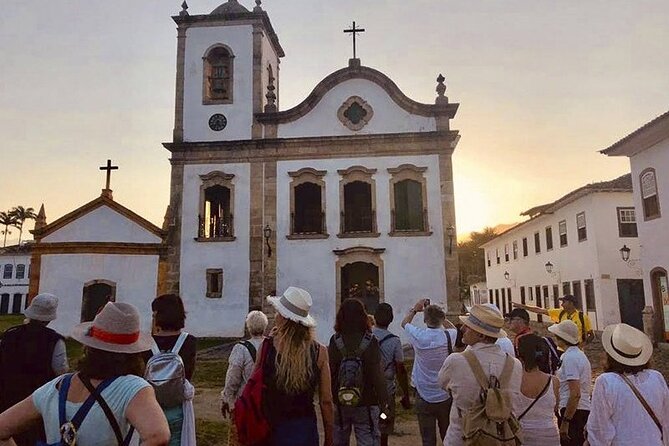
This is a simple idea that works. You spend about two hours in Paraty’s historic core on a guided walk, then you slow down for something tasty and distinctly local: craft cachaça.
The tour’s strength is pacing. The streets give you the big picture—colonial-era layout, landmark placement, and the look of the buildings—while the church and museum stops give you the details you’d miss if you just wandered on your own. Then the cachaça tasting lands like a cultural exhale: you’re learning and observing, and then you get to taste.
If you like history but also want something fun at the end, this hits that sweet spot.
Meeting point and timing: an evening stroll that stays manageable
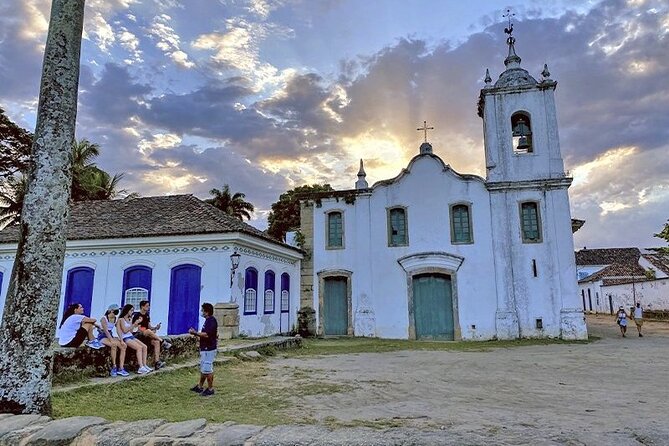
You’ll start at Paraty Tours at Av. Roberto Silveira, 479 in the Centro area. The tour begins at 5:30 pm and runs for about 2 hours.
It’s a walk through the historic center, so the day is built for moving at a human pace. The stop times are short and specific—often around 10 minutes per site—so you won’t spend the whole experience stuck in a line or staring at one façade for too long.
Good news for planning: the activity is near public transportation, so it’s easier to fit into a wider Paraty day without complicated logistics.
Centro Histórico: getting your bearings in UNESCO territory
The first stop is Paraty’s Centro Histórico, where the guide sets the scene for how the town looks and why it looks that way. You’ll move through stone streets and colonial architecture, with the guide explaining symbols and building details tied to historical moments in Brazil.
This is more than pretty streets. For me, the value of the opening segment is orientation. Once you understand the “why” behind what you’re seeing—how landmarks relate to the town—you can walk the area later on your own with better context.
Expect a pleasant guided walk aimed at all ages, with stories and architectural explanations from the guide (an Embratur guide, as listed).
Stop-by-stop: the church circuit that tells more than one kind of story
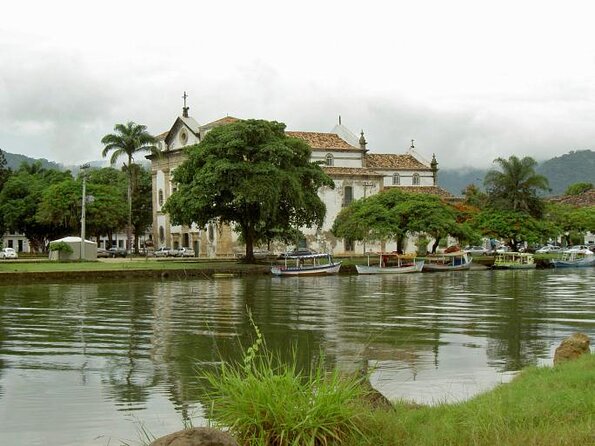
The route includes four church-related stops, each with a different focus. Some are about the history of particular parishes. One is directly connected to colonial-era realities tied to enslaved people. That balance is exactly why this part of the tour works.
Also note the consistent theme: visitation fees are not included at these stops. So if you want to go inside every church and museum space listed, budget extra.
First Church of Our Lady of the Remedies
This stop is centered on the parish church’s history. You get a guided look at why this church matters in the local religious and community timeline—useful if you’ve ever wondered why certain buildings are treated as anchors in old towns.
Time is brief (about 10 minutes), so treat it as a focused introduction rather than a long visit.
Capela Nossa Senhora das Dores (Capelinha)
Next comes the Capela Nossa Senhora das Dores, often referred to locally as the Capelinha. The guide explains the history behind it and helps you connect what you’re looking at to how the town’s religious life developed.
Again, plan for a quick, guided overview with possible extra costs if you choose to pay any entry fee.
Church of Our Lady of the Rosary and Saint Benedict
This one adds an important historical layer. You’ll learn about the church’s connection to enslaved people during colonial times.
If you’re the type who likes your history with context—not just architecture—this is likely to be one of the most memorable moments. It’s also a good reminder that these buildings were part of real social structures, not just decorative landmarks.
Igreja de Santa Rita (today’s Museum of Sacred Art)
The stop at Igreja de Santa Rita is tied to the story of what is described as the city’s first church. Today, that church is the Museum of Sacred Art.
This is a nice pairing: you get the origin story of the site, and then you’re pointed toward the museum use that keeps the place active.
If you’re museum-minded, this is one of the logical places to consider paying the entrance fee, since it’s explicitly linked to the church and its past.
Religious Arts Museum and Casa da Cultura: context and culture beyond the main landmarks
After the churches, the tour shifts from individual faith sites to broader cultural interpretation.
Paraty Religious Arts Museum
At the Paraty Religious Arts Museum, the guide focuses on the history of the religions that exist in Paraty today. You also spend a short block of time appreciating different images with a lot of history.
What I like about this stop is that it frames religious art as part of cultural history, not just museum objects. Even with the short visit time (about 15 minutes), it gives you a “big picture” lens that complements the church-specific storytelling earlier in the route.
Casa da Cultura de Paraty
Finally, you reach Casa da Cultura de Paraty, where you learn about the history of the cultural center and have time to see different cultural displays.
This part balances the tour. The experience starts with stone and faith landmarks, then it ends with the idea that Paraty’s culture isn’t frozen in the past. It’s presented now through ongoing displays and community spaces.
The cachaça moment: how the tasting fits the history theme
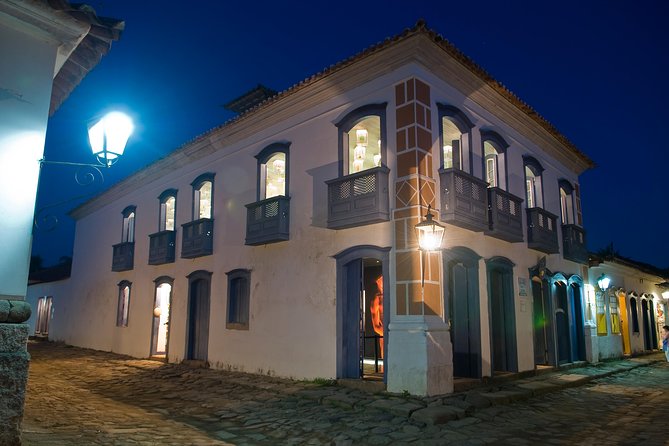
After the heritage walk, you celebrate with a craft cachaça tasting at an authentic cachaçaria. The tasting includes learning about the production process and the nuances of the beverage.
This is the part I’d recommend you approach with curiosity, not just thirst. When the guide explains how cachaça is made, you can taste with more attention—what’s noticeable, what changes, and what makes the local style feel distinct.
Also, this stop fits the whole structure of the tour. You’ve been learning how Paraty’s past shows up in churches and town buildings. Now you see another kind of heritage: how local tradition becomes a drink you can actually experience.
Price and value: $11 can feel like a steal if you plan the fees
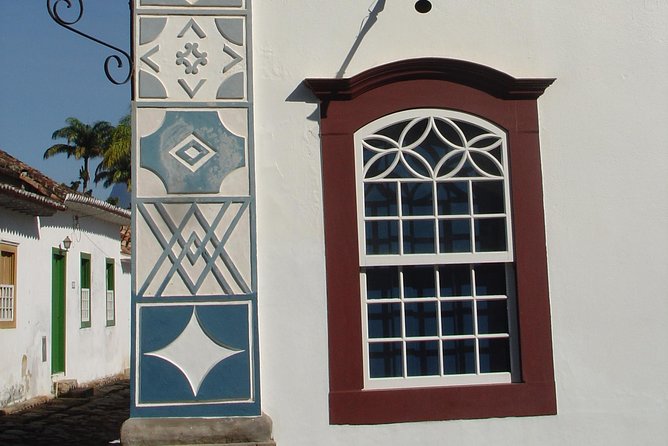
The listed price is $11.00 per person for about 2 hours. For a guided walk that includes multiple landmark stops plus a cachaça tasting, that’s strong value—especially because the group size is capped at 20.
Two practical value notes:
- Visitation fees are not included for the churches and museum-related stops mentioned. If you pay entrances on top of the tour price, the total cost rises.
- The route includes several different sites, not just one photo-friendly street. You’re getting variety: church history, religious arts context, and a cultural center stop.
Also, the tour is described as requiring good weather, and the guide role is emphasized as specialized. If Paraty is rainy, plan on the possibility of weather-based rescheduling or refund options, depending on the operator’s decision.
And if you care about track record: this experience has a 4.9 rating and 98% recommendation based on 40 reviews. One feedback highlight that really matters here is praise for how well the guide knows the historic center and how smoothly the stories connect to what you’re walking past.
Who should book this Paraty tour (and who should skip it)
This is a great fit if you want:
- a guided overview of Paraty’s historic center that’s easy to complete in about two hours
- a church-and-culture route that doesn’t skip the darker, colonial-era context
- a guided craft cachaça tasting where you learn the process, not just drink
It’s also a good choice if you’re mixing interests—history plus food—without wanting a full-day commitment.
You might choose a different tour if you prefer long museum time or you’re hoping for an all-in-one price with no extra entrance fees.
Should you book this tour? My take
Yes, I’d book it if you want a guided, efficient way to understand Paraty’s historic center and then cap it with a real taste of local culture. The cachaça tasting is integrated into the same story you’re hearing on the streets, not treated like an afterthought.
Just go in with eyes open about the two things that can affect your cost and comfort: entrance fees are not included, and the tour needs good weather. If you can handle those, this one looks like a smart value for the time you spend.
FAQ
Where does the tour start?
It starts at Paraty Tours, Av. Roberto Silveira, 479 – Centro, Paraty – RJ, 23970-000, Brazil.
What time does the tour start?
The tour starts at 5:30 pm.
How long is the tour?
It lasts about 2 hours (approx.).
Is this tour a walking tour?
Yes. It’s described as a city tour through the historic center, with a pleasant guided walk and short visits at stops.
How many people are in the group?
The tour has a maximum of 20 travelers.
Are entrance fees included for the church and museum stops?
No. Visitation fees are listed as not included for the stops.
What is the main activity besides the historic walk?
After the heritage walk, you’ll do a craft cachaça tasting at an authentic cachaçaria, including the production process and tasting notes.
What weather conditions does the tour require?
The experience requires good weather.
How far in advance should I book?
On average, it’s booked about 21 days in advance.
What is the cancellation policy?
Free cancellation is available. You can cancel up to 24 hours before the experience start time for a full refund; within 24 hours, there’s no refund.