REVIEW · TEL AVIV
Jerusalem World Heritage Private Tour
Book on Viator →Operated by Zelkind Bible Land Tours · Bookable on Viator
Jerusalem hides in plain sight. This private Old City tour is built for people who want to see the big religious landmarks without getting swallowed by the narrow lanes, because a guide keeps you moving at your pace through the Old City quarters in one day. I especially like that the route is designed to cover major stops across different faiths, so the day feels like a coherent story instead of a series of random photos. One catch to plan around: Temple Mount access is not possible on Fri and Sat, so the day’s flow can change depending on when you go.
I also like the human touch built into the setup. With Zelkind Bible Land Tours, you get a professional guide plus a driver, and pickup and drop-off at your Jerusalem hotel means you lose less time to logistics. Guides such as Levi Zelkind have been praised for a mix of direct, clear explanations and a good sense of humor, which helps when the history and symbolism get heavy.
Expect a full day: roughly 7 to 8 hours starting at 9:00 am, and most major stops come with free admission as listed. Food and drinks are not included, so you’ll want to plan for water and a quick bite so you don’t run low halfway through the walking.
In This Review
- Key highlights worth knowing before you go
- Why the Old City maze makes a private guide worth it
- Price and logistics: what you really get for $1,049 per group
- Starting at Jaffa Gate: early Ottoman architecture and quick orientation
- Jewish Quarter and the Western Wall: where multiple time periods overlap
- Temple Mount and Haram al-Sharif views: beauty with a real schedule limit
- Muslim Quarter souks and local shops: the Old City as daily life
- Christian Quarter (Muristan) and Muristan streets: architecture mixed with people
- Via Dolorosa to Holy Sepulchre: walking the footsteps, managing the crowd energy
- Mount Zion and King David’s Tomb: finishing on the south hill
- How the day stays flexible when your interests pull you off script
- What to wear and how to pace yourself (moderate fitness helps)
- Should you book this private Old City tour?
- FAQ
- How long is the Jerusalem World Heritage Private Tour?
- What is the price and group size limit?
- Is hotel pickup and drop-off included?
- Does the tour include admission tickets?
- Is food and drinks included?
- What time does the tour start?
- Can you visit Temple Mount every day?
- Is this a private tour for only my group?
- Is free cancellation available?
Key highlights worth knowing before you go
- Private, small-group style service (up to 4 people) means you get attention and flexibility, not a headset scramble.
- All four Old City quarters in one day helps you understand the geography instead of just ticking off sites.
- Hotel pickup and drop-off saves energy, especially on a day packed with short stops and moving streets.
- Western Wall and Temple Mount viewpoints anchor the tour in the places most people come to see.
- Church of the Holy Sepulchre and Via Dolorosa give you the most layered, moving parts of the Old City experience.
- Free admission listed for the stops keeps the day’s costs easier to predict.
Why the Old City maze makes a private guide worth it
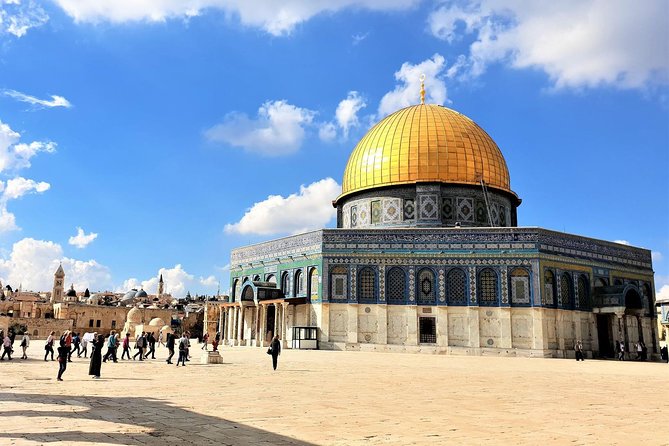
Old City Jerusalem can be beautiful and stressful at the same time. The streets narrow quickly, turns appear suddenly, and it’s easy to miss the entrances you’re aiming for. A guide matters here because you’re not just collecting monuments; you’re learning the connections between neighborhoods and holy sites.
On this tour, the whole point is getting you from one landmark to the next without the mental tax of constant map-checking. That’s especially helpful if you’re visiting for the first time and you want the day to feel organized rather than chaotic. The private format also means you can slow down for something that grabs you, then move on when you want to keep momentum.
You can also read our reviews of more private tours in Tel Aviv
Price and logistics: what you really get for $1,049 per group

The price is $1,049 per group for up to four people, which changes the math fast depending on your headcount. If you come as two people, it’s still a premium experience, but you’ll feel the value most when you compare it to booking separate services or wasting time figuring things out on your own. With four people in the group, it works out to about $262 per person, which suddenly feels more reasonable for a private day with both guide and vehicle.
What you’re paying for is not just access to sites. You’re paying for time-saving transportation, a guide who can connect the dots across the quarters, and the ability to move as a unit through very tight areas. Also, the listed admissions for each stop are free, so you’re not adding extra ticket costs on top of the package.
A practical note: the schedule is full, so you should be ready for short walks, crowds at key sites, and stop-start movement. If you dislike structured days, you may find this tour “active.” If you enjoy packed days with a plan, you’ll probably like the energy.
Starting at Jaffa Gate: early Ottoman architecture and quick orientation
The tour begins at Jaffa Gate at 9:00 am. It’s a smart first move because Jaffa Gate functions as a major entrance, and it gives you a strong sense of where the Old City starts and how to re-orient later.
Jaffa Gate is described as an early Ottoman architecture masterpiece, and that matters because it frames your day historically. You’re not only looking at ancient sites; you’re also seeing how later eras shaped the walls and entrances people still use today. The stop is short, but the value is big: you get your bearings fast and you finish the day in the same general area.
If you’re prone to getting turned around, this first orientation stop is exactly what you want.
Jewish Quarter and the Western Wall: where multiple time periods overlap

From Jaffa Gate you move into the Jewish Quarter. The tour highlights the neighborhood’s modern history too, including destruction during the 1948 period and reconstruction beginning in 1967. That context helps you understand why Jerusalem’s layers aren’t just ancient; they’re also political, modern, and visible in the streets.
It also points you toward archaeological remnants tied to earlier periods, including what has been found dating to the First Temple and earlier Byzantine times. Even if you’re not an archaeology person, this is one of the most useful ways to travel here: learn that different eras sit on top of each other, and then you start reading the place with your eyes instead of your imagination.
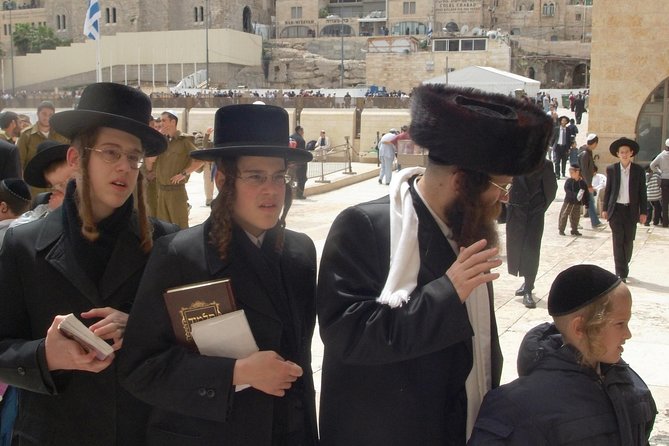
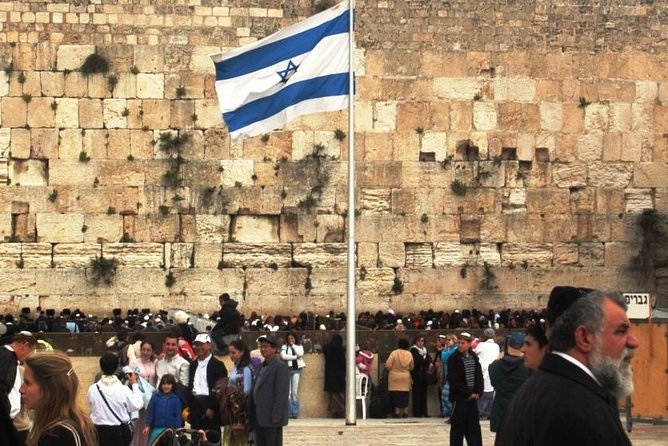
Next up is the Western Wall. The tour describes it as the last remnant of the Jewish Temple and the most important place for Jewish people around the world. It also notes its significance for Christians. This is one of those stops where the meaning is immediate. You don’t need a long lecture to understand that people come here to pray, to be part of a living tradition, and to connect to their own family stories.
The stop is about 30 minutes, which is just enough time to look closely, notice the rhythm, and still keep your day on track.
Temple Mount and Haram al-Sharif views: beauty with a real schedule limit
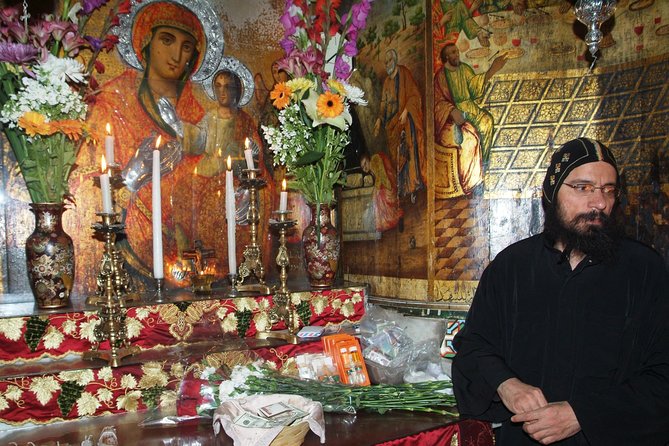
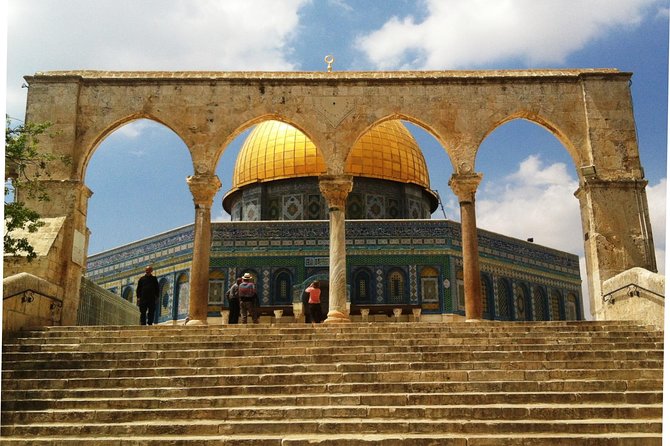
Temple Mount is the kind of place that feels bigger than the photos. It’s called El Haram Al Sharif by Muslims, and the tour frames it as the traditional location where the Jerusalem Temple stood, plus a place associated with Islamic tradition about Prophet Muhammad ascending to meet Allah.
Even if you already know the names Dome of the Rock and Al-Aqsa, seeing them as part of the sacred complex is different. The tour includes viewing these two key mosques, and the listed time gives you room to take in the scale and the details without feeling rushed.
Here’s the big planning issue: Temple Mount visits are not possible on Friday and Saturday. If your trip lands on those days, you should expect the tour to have to adjust. Because the Temple Mount is a centerpiece stop, that change can affect the flow of the day more than you might think.
If your dates include Fri/Sat, consider whether you’re okay with a partial version of the Mount experience. If you’re not, you may want to shift to another day so you don’t spend the morning wondering what’s off-limits.
Muslim Quarter souks and local shops: the Old City as daily life
After Temple Mount, you head into the Muslim Quarter, described as mostly built in the XIV century. This is where Jerusalem starts to feel like a working neighborhood instead of a museum. You’ll pass through the kind of lanes where people shop, eat, and live, not just visit.
The highlight here is the souks, small shops, and local restaurants. That combination is valuable because it keeps the day grounded. You’re not only learning about holy sites; you’re also watching how the Old City functions today, which helps the religious landmarks make more sense in context.
The stop runs about an hour. That’s enough time to wander without turning into a full-on shopping spree. If you love artisan goods and snacks, you’ll likely use the time well. If you prefer a more direct route, a private guide can keep you from losing time to stalls that weren’t on your mental list.
Christian Quarter (Muristan) and Muristan streets: architecture mixed with people
Next is the Christian Quarter, also known as Muristan. The tour description emphasizes a colorful mixture of architectural styles, cultures, and people. That’s exactly what you experience when you move through this area: signs, languages, and building details shift street by street.
This is also one of the neighborhoods where you can feel how Jerusalem’s faith communities share space. Even on a day focused on major landmarks, Muristan makes it clear that the Old City isn’t divided into silent zones. People share the same street corners, and different traditions sit side by side.
You’ll spend about an hour here. That’s a good amount of time for taking in the general feel, finding the right streets for Via Dolorosa, and not feeling like you’re racing.
Via Dolorosa to Holy Sepulchre: walking the footsteps, managing the crowd energy
Via Dolorosa, the way of the Cross, runs through the heart of the Muslim neighborhood. The tour frames it as a route that creates a unique atmosphere because cultures overlap along the way. That sounds abstract until you’re walking it: the street is alive with everyday motion, while the religious meaning is layered through the sites and stop points you pass.
The Via Dolorosa segment is about an hour on the plan. It’s long enough to feel the route rather than just skim it. Still, go in with realistic expectations. This is a popular corridor, and a private guide can help you keep your footing and focus rather than getting swept into a crowd flow.
Then you reach the Church of the Holy Sepulchre. This stop is about an hour and includes visiting and exploring the church. It’s one of Jerusalem’s most emotionally intense sites because it’s both a pilgrimage magnet and a complex space with many moving parts.
If you get sensory overload easily, take breaks at side areas and let your guide know you want a calmer route inside. If you handle intensity well, this is the kind of stop where the time can slip away because there’s so much to see.
Mount Zion and King David’s Tomb: finishing on the south hill
After the Old City’s most crowded corridors, the tour moves toward Mount Zion. The plan gives you about an hour here, described as one of Jerusalem’s most exciting places. That word can mean different things, but in practice it often relates to the feeling of being higher up, looking across parts of the city, and ending the day with a different mood than the street-level quarters.
Then you have a short visit to King David’s Tomb, around 15 minutes. It’s a quick stop, but it completes the arc of the day by linking back to traditional burial associations connected with King David.
Finishing here is helpful because you end with a sense of closure rather than returning only to the busiest entrances. And since the day started near Jaffa Gate, it also keeps navigation logical.
How the day stays flexible when your interests pull you off script
One of the best parts of a private tour is the ability to shift slightly within the day. You don’t have to run on rails. If one quarter clicks for you, you can linger. If you’re more interested in religious symbolism than street life, you can spend more time where the guide’s explanations focus.
Levi Zelkind and other guides associated with Zelkind Bible Land Tours have been praised for humor and for telling stories in a clear way that people can talk back to. That tone helps when you’re dealing with complex topics where you want facts but also human context.
You still have a schedule and a route, but you aren’t trapped in a one-size-fits-all script.
What to wear and how to pace yourself (moderate fitness helps)
The tour notes a moderate physical fitness level requirement. That makes sense for Old City travel: even if each stop is timed, you’ll still be walking, climbing small steps, and moving through narrow streets.
Wear comfortable shoes with grip. Bring a hat or sunscreen if you’re going during warmer months. If you run cold easily, bring a layer, since churches and shaded alleys can feel cooler than you expect.
Also plan for a day without included food and drinks. You may want to stop for water before you start feeling thirsty. Even if you love big sightseeing days, hydration is what keeps the “amazing Jerusalem” feeling instead of turning it into “why am I tired.”
Should you book this private Old City tour?
Book it if you want an organized, one-day sweep of Jerusalem’s most central sacred landmarks without the stress of navigating the maze. It’s a good fit for small groups who value a guide’s context—especially if you care about understanding the connections between Jewish, Muslim, and Christian sites in the same geographic space.
Skip or rethink if Temple Mount access matters most to you and your travel dates fall on Friday or Saturday. That schedule limitation can take a major element off the table.
If you’re looking for a practical balance of structure and human guidance, this is one of the cleaner options. The price is high, but the mix of private service, time-saving pickup/drop-off, and free admissions listed for key stops can make it feel like good value for up to four people.
FAQ
How long is the Jerusalem World Heritage Private Tour?
It runs about 7 to 8 hours.
What is the price and group size limit?
The price is $1,049 per group, and the tour is for up to 4 people.
Is hotel pickup and drop-off included?
Yes. Pickup is offered, with convenient pickup and drop-off at your Jerusalem hotel.
Does the tour include admission tickets?
The stop list indicates admission tickets are free for the included sites.
Is food and drinks included?
No. Food and drinks are not included.
What time does the tour start?
The start time is 9:00 am.
Can you visit Temple Mount every day?
No. Visit of the Temple Mount is not possible on Friday and Saturday.
Is this a private tour for only my group?
Yes. It is a private tour/activity, and only your group will participate.
Is free cancellation available?
Yes. You can cancel up to 24 hours in advance for a full refund.