REVIEW · ALBEROBELLO AND LOCOROTONDO
Historical Tour of Rural Park with 3 Apulian Wines Tasting
Book on Viator →Operated by Masseria Spina Resort · Bookable on Viator
A rural park tour beats a normal wine stop. You get a guided walk through Masseria Spina’s historic spaces, from rupestrian remains to working craft areas, then you slow down for a sommelier-led tasting of three Apulian wines. I also like that the pacing keeps the setting calm and readable, not rushed. One thing to weigh: it’s an outdoor historic site with animals around, so if you’re allergic, plan ahead.
This experience runs about 2 hours and keeps the group to a maximum of 25, which helps you actually hear the guide and ask questions. On some tours, guides like Maria Lucia have stood out for strong English and clear context, and the wine side can be led by a sommelier such as Davide. If you want lots of free time to wander on your own, you’ll feel a bit guided the whole way.
In This Review
- Key things to know before you go
- Why Masseria Spina works so well in 2 hours
- Rupestrian settlement, necropolis, and the Minor Church: the human layer first
- Spina Piccola fortified tower and its internal citrus grove: defense with roots
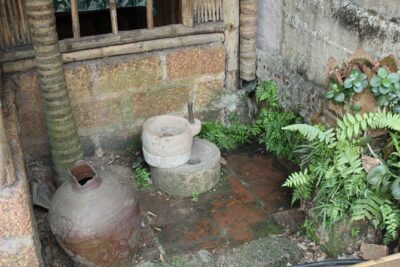
- Underground olive press and dye-works: the working side of the masseria
- Masseria Spina Grande, the red main structure, and the Baroque church
- The 3 Apulian wines tasting: what the sommelier helps you notice
- Practical info: meeting point, time, walking comfort, and the cat question
- Price and value: why $50.61 can make sense here
- Who should book this tour (and who might not love it)
- Should you book the Rural Park tour with 3 Apulian wines?
- FAQ
- How long is the Masseria Spina rural park tour and wine tasting?
- Where does the tour start, and where does it end?
- Is the ticket mobile?
- Will children or under-18 guests be served wine?
- What’s the maximum group size?
- Can I cancel for a full refund?
Key things to know before you go
- Rural historic stops you can actually picture: fortified tower, underground olive press, and dye-works are all part of the route.
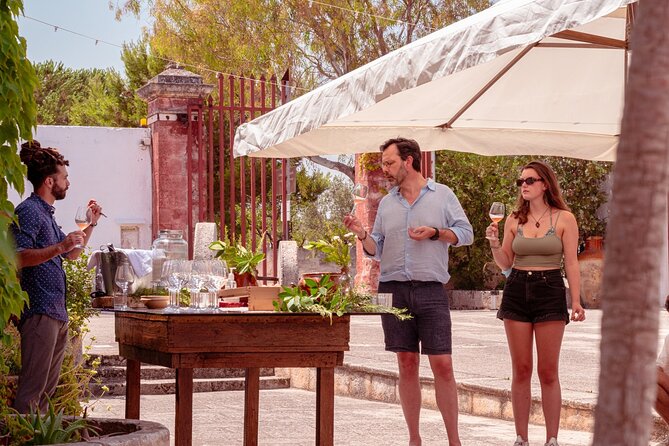
- Three wine labels, chosen from their cellar: you don’t just taste; the sommelier explains what to pay attention to.
- A salty welcome accompanies the tasting: it helps you handle wine comfortably during the experience.
- Limited group size (25 max): better for questions and for hearing details in a quiet setting.
- Possible cat issue for allergies: one review specifically warns cats are around tables and under them.
- Alcohol policy for minors: if you’re under 18, no alcoholic drinks are served.
Why Masseria Spina works so well in 2 hours
Masseria Spina isn’t just scenery or a pretty photo stop. The tour is designed like a guided story of how people lived, defended themselves, worked the land, and processed food and materials in Apulia.
You’ll move through a sequence that feels logical: first the older layers of settlement and sacred spaces, then defense and farming, then the underground and craft areas that made the masseria function. That structure matters, because it turns “old buildings” into understanding. You leave knowing what each place did, not just that it’s historic.
And then the wine tasting fits the theme. After walking through olive press and dye-works, you taste Apulian wines with an explanation of what makes them tick. It’s a neat pairing of place and flavor, and it’s one reason this experience is popular with people who like context, not just cocktails.
Rupestrian settlement, necropolis, and the Minor Church: the human layer first
The route starts with the rupestrian settlement, which is one of those features that makes you slow down. You’re stepping into a kind of early living and carving tradition where rock and life overlap. It helps you understand why rural Apulia has so many structures that feel both practical and spiritual.
From there, you head to the necropolis, where the mood shifts. A necropolis isn’t meant for quick gawking. In a tour like this, it’s more about grasping what the site tells you about the community and how people related to death, memory, and place.
Then you’ll visit the Minor Church. Even without getting lost in art history trivia, churches in these settings help you connect the dots: rural life wasn’t only work and defense. It had rituals, beliefs, and a shared rhythm.
Practical note: this is a historic park. Paths and footing can be uneven, so wear shoes you trust for walking in outdoor conditions.
Spina Piccola fortified tower and its internal citrus grove: defense with roots
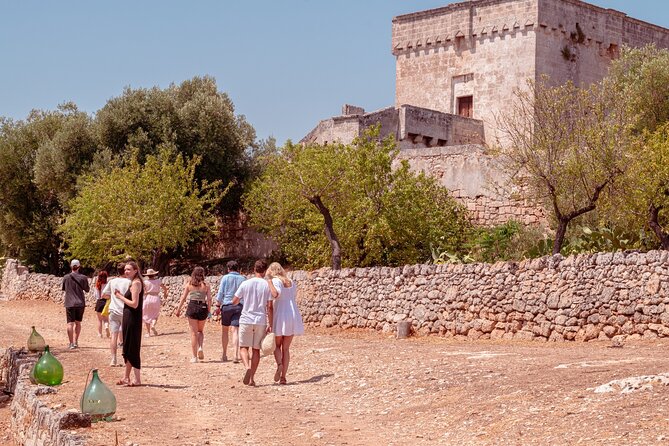
Next comes the Spina Piccola Fortified Tower, described as the first fortified structure. That detail isn’t fluff. Fortified towers in masserie weren’t just dramatic architecture. They signaled protection, control, and a way of reducing risk in rural life.
What I like here is the pairing: the tower connects you to a world of security, then you see an internal citrus grove. That grove is the “how people kept living inside the walls” part of the story. You can almost picture the balance: defend the place, but also grow food and keep daily life going.
If you enjoy agriculture and how land use shaped architecture, this stop is a highlight. Even if you only catch the basics, you’ll come away with a clearer sense of why these masserie were built where they were.
Underground olive press and dye-works: the working side of the masseria
One of the most memorable parts is the turn toward production. You’ll visit the ancient underground olive press, a stop that makes the word rural feel very literal.
Olive pressing wasn’t casual. It was seasonal work that had to happen on time, and doing it underground helped manage the space and conditions needed for the process. When a guide points out how the area functioned, the whole masseria stops being a museum and becomes a workplace.
Then there are the dye-works. This is the kind of detail that can get overlooked on other tours, but it matters. If oil kept people fed and supplied, dye-work points to textiles, trade value, and the broader economy of the region.
If you like tours that explain how everyday survival and local craft connected, don’t rush these stops. Slow down, listen for what the guide highlights, and look for how the spaces are shaped for use.
Masseria Spina Grande, the red main structure, and the Baroque church
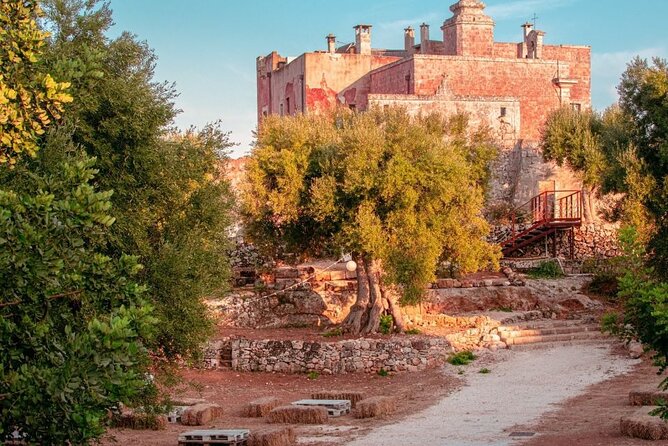
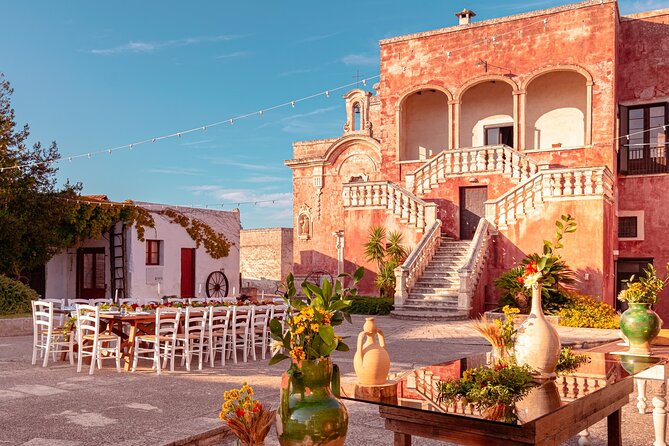
As the tour builds, you’ll reach the external facade of Masseria Spina Grande, then the majestic main structure with its defining red colour. That red isn’t just aesthetic. It helps orient you in the complex and marks the central presence of the estate.
From there, you’ll also see the Baroque Church of the Immaculate Conception. Baroque churches in places like this often feel different from the simpler structures earlier on. The contrast helps your brain separate time periods and purposes: defense and work spaces one moment, then the ceremonial and expressive side of rural culture.
This portion is where the tour earns its “historic” label in a practical way. You’re not only seeing parts of the complex—you’re learning the logic of the compound: sacred spaces for belief, strong buildings for power, and working areas for production.
The 3 Apulian wines tasting: what the sommelier helps you notice
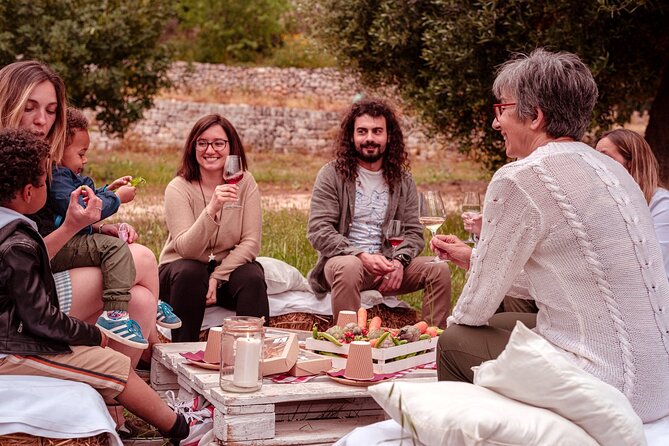
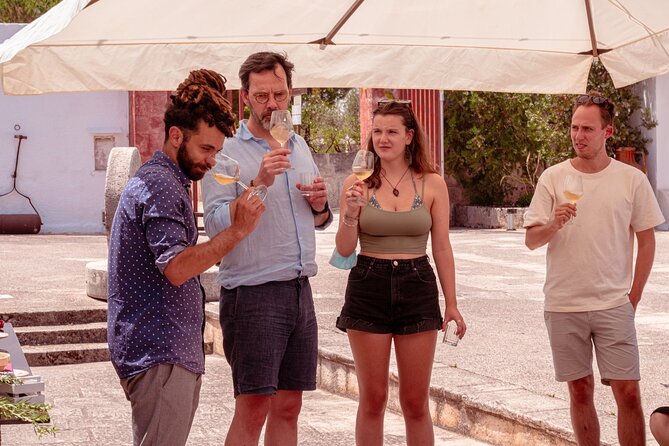
After walking the park, you’ll transition to tasting. The wines are three Apulian labels selected from their wine cellar, guided by a sommelier. The tasting is designed to teach you how to read a wine, not just whether you like it.
The guide will walk you through the key features that make up a wine. You’ll likely be prompted to notice things like aroma, structure, and how the flavors change as you taste. You’ll also get a salty welcome alongside the wine, which is a smart touch if you want the tasting to feel comfortable rather than tipsy and rushed.
Two practical points I’d keep in mind:
- If you’re the type who worries about “tasting fluency,” relax. The sommelier’s role here is to help you follow along.
- If you’re under 18, no alcoholic drinks will be served, so the tasting experience follows that policy.
If you’re a wine lover, this part is your payoff. If you’re new to wine, it’s still worth doing because you’ll leave with a simple framework for what to look for next time you order by taste or by grape.
Practical info: meeting point, time, walking comfort, and the cat question
The tour starts at Parco Rurale – Historical Tour, Tasting & Experiences, Viale Aldo Moro, 27, 70043 Monopoli BA, Italy, and it ends back at the meeting point. You’ll use a mobile ticket, and it’s near public transportation, which helps if you’re combining it with time in Alberobello or Locorotondo.
It runs about 2 hours, so plan to keep your next stop close by. This is not a long hike day; it’s a focused guided experience.
Bring the basics: comfortable walking shoes and a layer you can handle for outdoor conditions. And if you have allergies, take the cat warning seriously. One review specifically mentioned cats being present around tables and under them, and that the situation mattered for someone allergic. The safest approach is to tell the staff on arrival so they can guide you on where to sit and how to manage it.
Price and value: why $50.61 can make sense here
At $50.61 per person, the value depends on what you want out of your time in Apulia. If you’re looking for a simple wine pour, this might feel priced for the storytelling. If you want a connection between history and tasting, it starts to look fair.
Here’s what you’re paying for in practical terms:
- A guided walk through multiple distinct historic areas in the Masseria Spina complex
- A sommelier-led tasting of three Apulian wines
- A salty welcome that helps the tasting feel balanced
- A group capped at 25, which usually makes for a better experience than big crowds
Also, the fact that it’s booked about 23 days in advance on average suggests demand. In other words, you’re not just buying a ticket to a random activity—you’re buying a structured, limited-capacity format that’s meant to work in a set time window.
Who should book this tour (and who might not love it)
I’d strongly consider this for:
- People who like history that’s practical and visual, not only dates and names
- Wine lovers who want explanation, not just a quick taste
- Travelers who want a calmer experience with a small group and a 2-hour time commitment
I’d think twice if:
- You have a serious allergy and cats are a problem for you. The tour seems to be in a working/rural environment where animals can appear.
- You hate guided pacing and want long, independent wandering time. This route is structured and you’ll be guided throughout.
- You’re sensitive to alcohol availability rules. Under 18, you won’t get alcoholic drinks, even though the tasting context may still be part of the experience.
Should you book the Rural Park tour with 3 Apulian wines?
Yes, if you want a single ticket that connects Masseria Spina’s working history with a guided wine tasting that teaches you how to taste.
Before you book, do two quick reality checks: confirm the meeting point timing fits your day, and if allergies are part of your planning, mention them right away because cats have been reported onsite. If those points don’t worry you, this is the kind of experience that leaves you with more than a sip and a photo. You’ll come away understanding how rural Apulia shaped both daily life and the flavors you taste.
FAQ
How long is the Masseria Spina rural park tour and wine tasting?
It lasts about 2 hours (approximately).
Where does the tour start, and where does it end?
It starts at Parco Rurale – Historical Tour, Tasting & Experiences on Viale Aldo Moro, 27 in Monopoli, and it ends back at the same meeting point.
Is the ticket mobile?
Yes, it’s listed as a mobile ticket.
Will children or under-18 guests be served wine?
No. For customers under 18, no alcoholic drinks will be served.
What’s the maximum group size?
The tour has a maximum of 25 travelers.
Can I cancel for a full refund?
Yes. You can cancel up to 24 hours in advance for a full refund.