REVIEW · SURABAYA
Majapahit Heritage Archaelogy tour via surabaya
Book on Viator →Operated by Javatouristmap · Bookable on Viator
Majapahit ruins feel close enough to touch. This Surabaya tour strings together classic candi (temples) and archaeological stops tied to the old Hindu kingdom of East Java, with time to take photos of the brickwork and village scenery along the way. I like how the route is built like a story: gateway temple, palace-area ruins, then more sacred sites that show how mixed religious life could be.
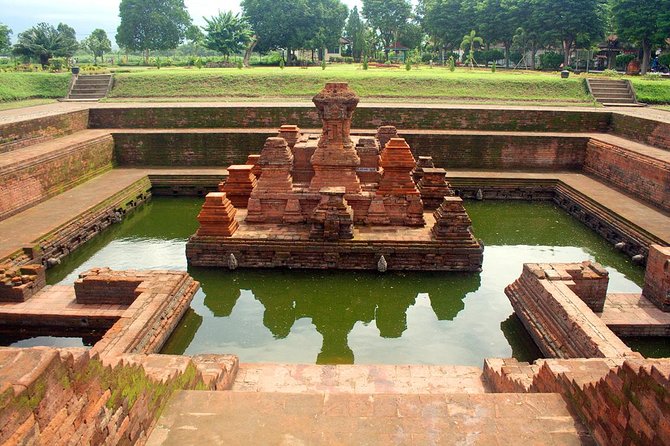
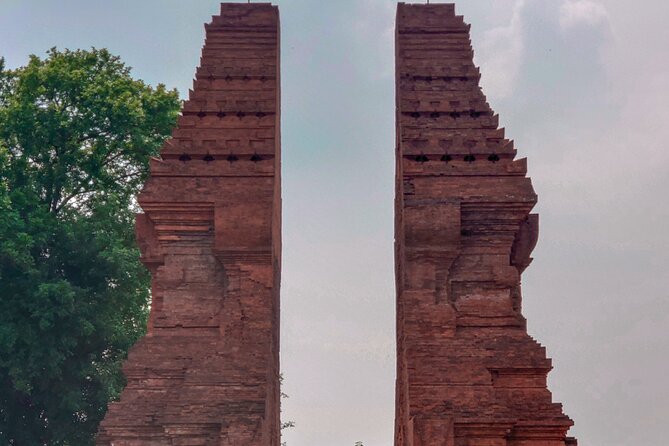
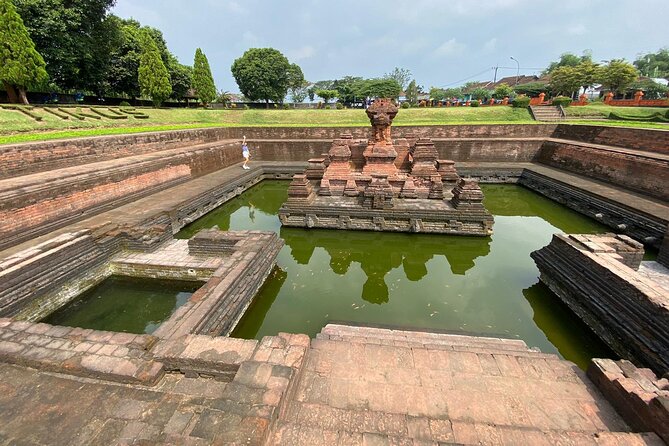
What I really liked most is the temple variety packed into a single outing. You move from the tall gateway of Candi Wringinlawang to the red-brick charm of Candi Bajangratu and the box-shaped Tikus Temple with its water pool in the middle. Each stop has its own look, so your day doesn’t feel repetitive.
One thing to consider: the highlight museum is important, but the on-site interpretation may not work equally well for English speakers. You’ll get more from the museum if you lean on your guide to explain what you’re looking at, not just the display text.
In This Review
- Key things you’ll notice on this Majapahit Heritage tour
- Why Majapahit heritage from Surabaya is such a smart day plan
- Price and what you actually get for $80
- Your route through the Majapahit capital zone
- Stop 1: Candi Wringinlawang gateway (and your first big photo moment)
- Stop 2: Trowulan archaeological site museum (the place to understand what you’re seeing)
- Stop 3: Candi Bajangratu (small temple, distinctive red-brick look)
- Stop 4: Tikus Temple (a box-shaped shrine and a holy bath idea)
- Stop 5: Candi Brahu dan Gentong (Buddhist temple form and tolerance symbolism)
- Lunch, snacks, and pacing you can actually handle
- Guides and the difference between seeing relics and understanding them
- Logistics that help (and a couple you should double-check)
- Who this tour suits best
- Should you book the Majapahit Heritage Archaeology tour via Surabaya?
- FAQ
- How long is the Majapahit Heritage Archaeology tour?
- What stops are included in the itinerary?
- Are entrance tickets included?
- Is pickup included?
- Is lunch included, and can I request a vegetarian option?
- Do I need a passport to join the tour?
Key things you’ll notice on this Majapahit Heritage tour
- A tight circuit of five Majapahit-era sites, including both Hindu and Buddhist landmarks
- Admission tickets included for each temple and the main archaeological site you visit
- Pak Barli-style guiding energy, with practical context that makes the relics feel less distant
- Traditional lunch in the middle of the day, plus snacks to keep the pace comfortable
- Red-brick architecture everywhere, so you can spot patterns across multiple temples
- Photo-friendly stops, especially at the gateway temple and open ruins areas
Why Majapahit heritage from Surabaya is such a smart day plan
Surabaya is a great base for Central and East Java history days because you can reach major archaeological areas without turning your whole trip into endless transfers. This private Majapahit Heritage Archaeology tour keeps the focus where it belongs: on the physical relics—temples, artifacts housed in a museum, and the wider Trowulan archaeological zone—rather than rushing past them.
The best part is that it’s not just a list of stops. The itinerary is paced like a guided walk through Majapahit’s world. You start at Candi Wringinlawang, a gateway connection to the old capital area, then head to the Trowulan archaeological site and museum where you can see the broader picture. After that, you continue with more temples that look distinct but share the same regional building language: red brick, simple but elegant forms, and religious symbolism.
This is also the kind of tour where your expectations matter. If you want polished interpretive panels in English on every wall, you might feel a bit under-served at the museum. But if you want to understand what you’re seeing, the guided element makes the day much more rewarding.
You can also read our reviews of more historical tours in Surabaya
Price and what you actually get for $80
At about $80 per person, the value depends on what you’d otherwise pay and how you prefer to travel.
Here’s what helps the math work:
- Transport by private vehicle (not just a bus shuttle)
- Lunch plus snacks included
- All taxes, fees, and handling charges included in the listing price
- Admission tickets included at each temple/site stop
- Mobile ticket, plus pickup offered
That’s a lot of “basic day costs” bundled together. And since it’s described as a private tour/activity, you’re typically not sharing the day with a large crowd of strangers. The timing can also feel more forgiving when your guide can adjust pacing to your group.
One practical note: the package lists accommodation as per itinerary. The day stops you’ll visit are clearly described, but accommodation details aren’t spelled out here—so if you’re booking as a package and not just a day tour, confirm exactly what the accommodation includes and where it fits.
Your route through the Majapahit capital zone
This tour runs roughly 6 to 10 hours, with each main stop given its own time window. The flow is consistent: each temple has enough time for photos and close viewing, then the day expands at Trowulan where the museum and archaeological context help you connect the dots.
Stop 1: Candi Wringinlawang gateway (and your first big photo moment)
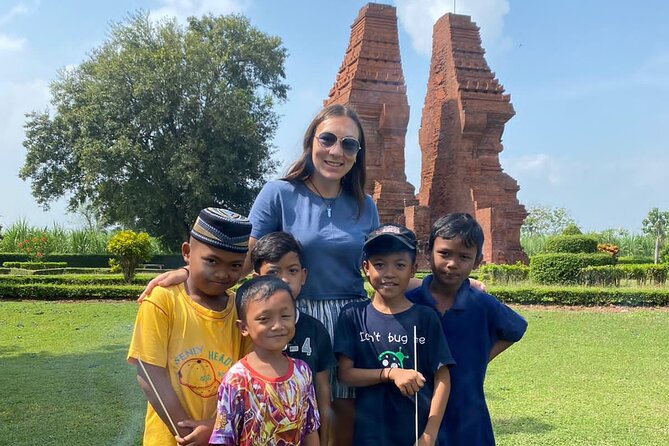
Candi Wringinlawang is one of those places that instantly tells you you’re in the right zone. It’s a gateway associated with the old capital area of Majapahit, and it rises high enough to feel monumental even when you’re just standing on the ground.
Why it works for your day:
- It’s a good first anchor point for the architecture. After you see this, the next red-brick temples feel more like variations of the same regional style.
- It’s also a strong photography stop. The height and structure make it easier to get a clear shot without needing special angles or gear.
Practical tip: wear comfortable shoes. Even when the walk feels short, you’ll likely do a mix of uneven surfaces and photo-stops that break up your rhythm.
Stop 2: Trowulan archaeological site museum (the place to understand what you’re seeing)
Trowulan is where you stop and shift from “pretty temples” to “okay, this is how people lived.” The tour includes the museum that holds many Majapahit relics and related objects—think artifacts that help explain the religious, daily-life, and cultural world behind the ruins.
This is also where you’ll feel the biggest difference in how English-speaking visitors experience the day. If you need lots of English explanation on labels and display text, you might find the museum less satisfying than the temples outside. The smart move is to treat the museum as part of a bigger story and let your guide connect the dots.
What makes this stop valuable even if the signage is limited:
- Seeing items in a museum helps you interpret the shapes you’re photographing outside.
- It gives you context for why certain temple forms matter and how the Majapahit kingdom is often described in terms of religion and culture.
Time wise: plan on about 3 hours here. That’s long enough to look carefully without feeling you’re sprinting.
Stop 3: Candi Bajangratu (small temple, distinctive red-brick look)
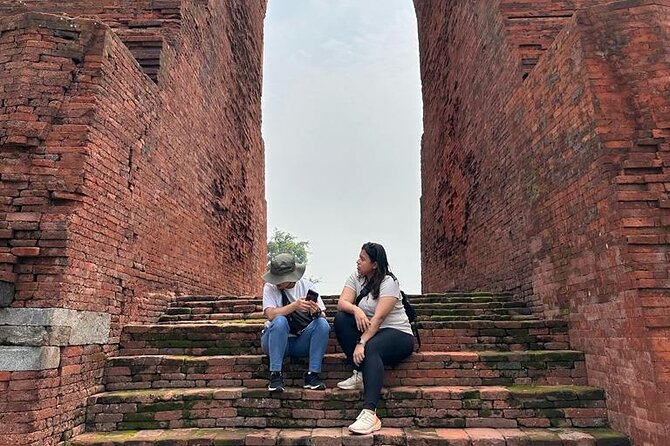
Candi Bajangratu is smaller, but it’s memorable. It’s built from red bricks, and it has an elegant shape that stands out compared to more purely gate-like structures.
I like this stop because it gives your eyes a break from the “big and tall” feeling of earlier architecture. You can slow down. You can study the proportions. And it’s a nice contrast before you go to the temple shapes that feel more unusual.
Time wise: expect about 1 hour, which is just enough to view and photograph without feeling dragged around.
Stop 4: Tikus Temple (a box-shaped shrine and a holy bath idea)
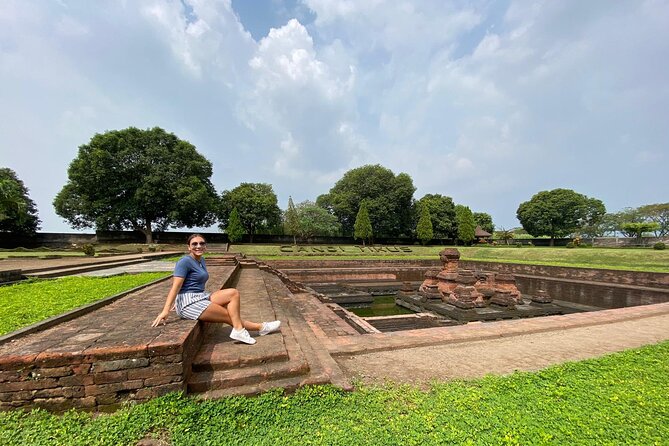
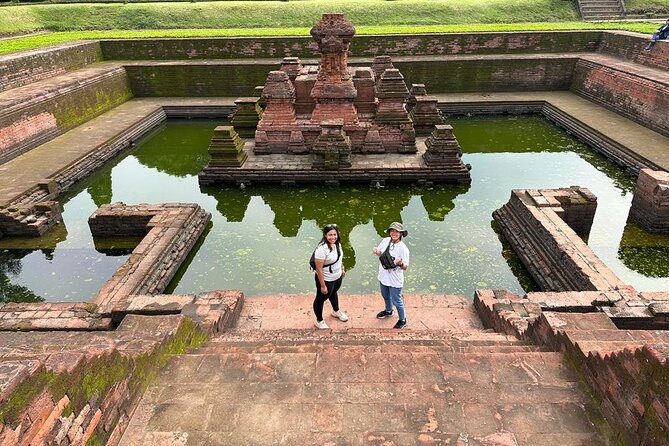
Tikus Temple is shaped like a box, and there’s a pool of water in the center area. The tour description frames it as a kind of holy Hindu bath for worship.
This is one of the stops where imagination helps. You’re looking at a physical space that was designed for ritual rather than sightseeing. Even if you don’t know the technical details of the practice, the layout makes the purpose easier to grasp: a contained area, water where it matters, and a shrine form built for ceremony.
Time wise: another 1 hour.
Practical photo note: if you’re photographing near water or within enclosed structures, watch your steps. The ground around sacred sites can be slick or uneven after rain.
Stop 5: Candi Brahu dan Gentong (Buddhist temple form and tolerance symbolism)
You end with Candi Brahu dan Gentong, described as a Buddhist temple made in the same regional red-brick style. It’s round and towers upward, which gives it a strong silhouette. The tour also frames it as a symbol of tolerance between Hindus and Buddhists in the past.
What I find useful here is that it doesn’t treat religion as a single-color theme. The day already includes Hindu-associated spaces; this stop broadens the picture. You leave with a better sense that older Java history is layered rather than split into strict categories.
Time wise: about 1 hour.
Lunch, snacks, and pacing you can actually handle
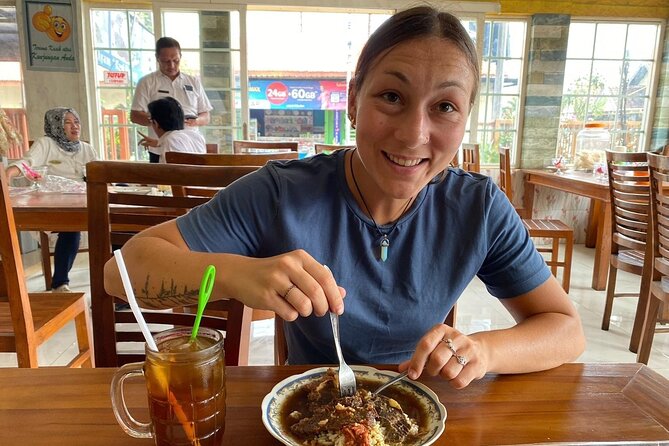
This tour includes lunch and snacks, which is huge for comfort on a long heritage day. It also makes your schedule more predictable. You won’t have to keep hunting for food between sites, and you can stay focused on the ruins.
Because the itinerary runs 6 to 10 hours, food breaks matter. Snacks help you avoid the energy crash that turns the last temple into a chore. And lunch included means you can spend your mental effort paying attention instead of negotiating prices or language while hungry.
Vegetarian option is available, but you need to request it at booking. If you have any dietary requirements, send them early so you’re not trying to fix food choices at the last minute.
Guides and the difference between seeing relics and understanding them
In the best versions of this kind of tour, your guide does the heavy lifting. In this case, the guide/driver you might get—often named Pak Barli—stands out for knowledge and a friendly, entertaining way of explaining the sites. That matters because many heritage sites are visually strong but context-light unless someone helps you interpret what you’re looking at.
Here’s the practical takeaway: ask simple questions while you’re there.
- What should I notice about the brickwork or shape here?
- How does this site connect to what we saw at Wringinlawang?
- Why does the museum collection match the temples we visited?
Even if your knowledge starts at zero, you can get a lot out of the tour by listening for the “why,” not just the “what.”
Logistics that help (and a couple you should double-check)
This is set up for convenience: pickup offered in Surabaya, a mobile ticket, and transport by private vehicle. It’s also described as near public transportation, so you can likely manage if you prefer to meet somewhere rather than rely entirely on pickup.
One consideration: this tour requires a current valid passport on the day of travel, and the booking process asks for passport details (name, number, expiry, country). That’s not a typical requirement for every heritage day in the region, so treat it as important paperwork.
Also, if you care about starting on time, do one small action: confirm your pickup time clearly before the day. The tour confirmation is said to be received at booking, but timing details are always the first thing to verify if you want a smooth start.
Who this tour suits best
This tour is a strong fit if you want:
- A heritage-focused day in Surabaya that keeps attention on Majapahit relics
- Enough structure to see the key temple circuit without planning drives between stops
- A mix of outdoor temples and an indoor museum context stop
- Lunch included so you don’t lose half your day to meal hunting
It’s especially good for first-timers in East Java archaeology who feel overwhelmed by “where do I start?” The route gives you a clear beginning-middle-end arc: gateway → context museum/site → smaller distinct temples → ritual-style architecture → a Buddhist-temple finale.
If you’re the type who only enjoys places with lots of English signage, you might find the museum part less strong than the temple stops outside. In that case, lean more on your guide and treat the museum as a reference point, not a full education text.
Should you book the Majapahit Heritage Archaeology tour via Surabaya?
I’d book it if you want a single day that feels like it’s built for understanding Majapahit through real sites, not just photos. For the price, the combination of private transport, included admissions, lunch, and snacks is genuinely practical.
I’d think twice if:
- you expect heavy English museum interpretation everywhere, or
- you don’t want to follow a structured route and prefer total freedom.
Otherwise, this is the kind of itinerary that turns a “passing interest” in Majapahit into a day you remember for the details—red-brick shapes, ritual layouts, and that Trowulan context that helps everything connect.
FAQ
How long is the Majapahit Heritage Archaeology tour?
The duration is listed as 6 to 10 hours.
What stops are included in the itinerary?
You visit Candi Wringinlawang, Trowulan archaeological site (museum), Candi Bajangratu, Tikus Temple, and Candi Brahu dan Gentong.
Are entrance tickets included?
Yes. Admission tickets are included for each listed stop.
Is pickup included?
Pickup is offered, and the tour starts and ends in Surabaya, East Java, Indonesia.
Is lunch included, and can I request a vegetarian option?
Lunch is included, and a vegetarian option is available if you advise the provider at the time of booking. You can also advise any dietary requirements in advance.
Do I need a passport to join the tour?
Yes. A current valid passport is required on the day of travel, and passport details are requested at booking.