REVIEW · NIN CROATIA
Meet and feel ancient town of Nin
Book on GetYourGuide →Operated by 3NDY · Bookable on GetYourGuide
Nin is tiny, but history is loud. This 90-minute walk through Nin, once the Roman settlement of Aenona, moves fast from early-medieval churches to major Roman remains, so you feel the layers without getting stuck in museum-only mode. I especially like the stop at St. Cross Church and the way the tour stitches together Nin’s famous names and sculptures.
One thing to keep in mind: museum tickets aren’t included, so plan for that small extra cost if the museum part is important to you.
In This Review
- Key things that make this Nin tour worth your time
- Nin’s heart-shaped island makes the walk feel effortless
- Start at the Duke Branimir statue and cross into old Nin
- St. Cross Church: the early-medieval stop you’ll remember
- Cathedral of St. Anselmo: Nin’s spiritual center in one visit
- Roman Nin (Aenona): the temple remains and a Roman house
- The museum moment: where the curator helps you connect the dots
- Branimir and Gregory of Nin: how names turn stones into stories
- After the tour: make room for Nin’s bay and sandy time
- Pacing, comfort, and who this tour fits best
- Price check: $21 is a fair value for a guided, two-era route
- My booking advice: should you do this Nin tour?
- FAQ
- How long is the Nin guided tour?
- Where do I meet for the tour?
- What is the price per person?
- Is the tour guided in English?
- Are museum tickets included?
- Is food and drink included?
- Is the tour wheelchair accessible?
- Is free cancellation available?
Key things that make this Nin tour worth your time
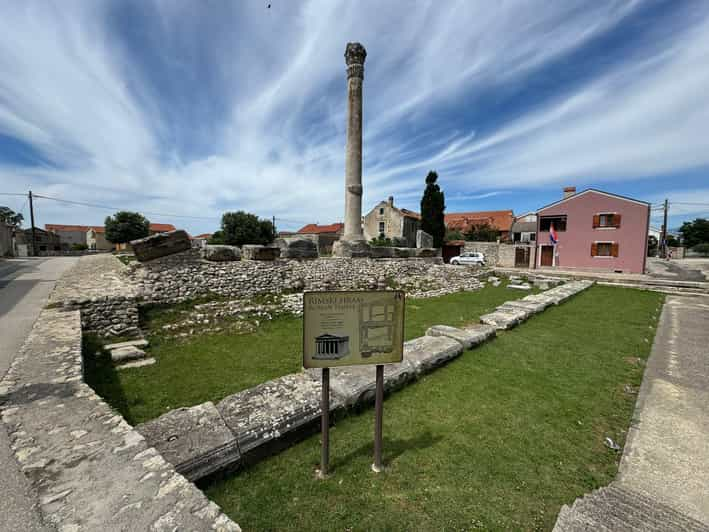
- Roman Aenona remains you can actually walk through, not just read about
- St. Cross and St. Anselmo as the early-medieval anchor points
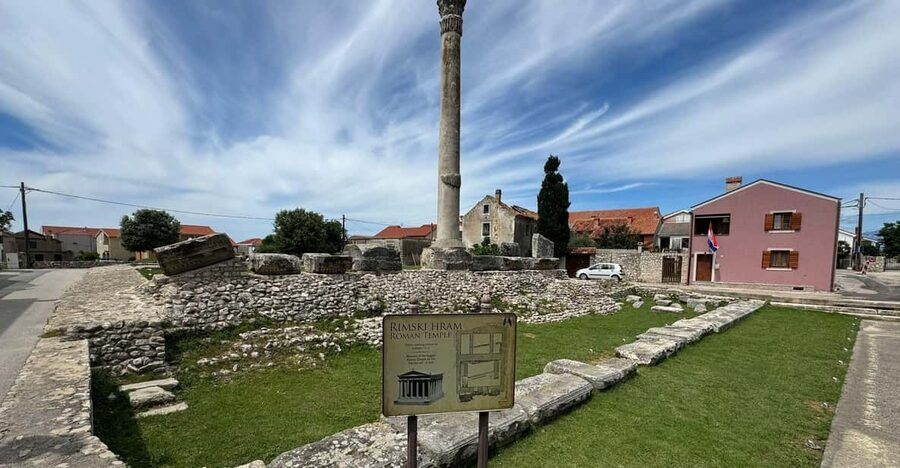
- The largest Roman temple remains on the east coast of the Adriatic in one compact route
- A curator’s input at the local museum to connect the dots between eras
- A guide-led story thread around Duke Branimir and Archbishop Gregory of Nin
- Good pacing for different ages, with strong question time (handy if you’re traveling with kids)
Nin’s heart-shaped island makes the walk feel effortless
Nin is one of those places where the setting does half the work. The old town sits on a small heart-shaped island, connected to the mainland by two bridges. That layout means you don’t need complicated directions: you just follow the route and watch the town “fold” around you.
What I like most is how the tour uses that compact shape to cover a lot of meaning. In a little more than an hour, you go from the feeling of a small Croatian town with churches tucked close together to the sense that this was once a serious Roman stop on the Adriatic.
And because Nin is considered one of Croatia’s most romantic small towns, the walk doesn’t feel like a checklist. Even if your main goal is history, you still get that slow, pretty town vibe around the edges—plus you’re close to the bay afterward if you want to linger.
Start at the Duke Branimir statue and cross into old Nin
Your meeting point is the statue of Duke Branimir by the Lower bridge. It’s a smart start: you’re oriented immediately, and the whole tour is built around moving through Nin’s most recognizable spaces from the start.
From here, you’re essentially entering a town that’s been “royal medieval” in character for a very long time—often described as the oldest charming royal medieval town in Croatia. That matters because it helps you read what you see. You’re not just looking at isolated buildings; you’re looking at a place that has stayed important, even as empires changed.
In the early going, I’d expect your guide to set the big picture: Roman Nin as Aenona, then later Nin as a smaller but spiritually packed early-medieval town with collections of churches. It’s a useful framing. Once you have the timeline in your head, the stones and names start lining up.
St. Cross Church: the early-medieval stop you’ll remember
The highlight for many people is the visit to St. Cross Church, a beautiful church that gives the early-medieval era a clear face. This is the part of the tour where Nin stops feeling like ruins scattered in space and starts feeling like a living town that kept building and re-building its identity.
What I like about starting here is that it balances the heaviness of Roman remains. Churches like this are human-scale. You can look up, take in details, and feel the rhythm of a town where smaller sites cluster close together. It also helps if you’re traveling with kids or people who get impatient with long, purely archaeological stops. The church moment is concrete and visual.
Cathedral of St. Anselmo: Nin’s spiritual center in one visit
After St. Cross, you’ll visit the local cathedral of St. Anselmo. This is one of those stops that makes the tour feel “complete” for early Nin—because it’s not only small churches. You also get the sense of a formal center of worship and community life.
Even if you’re not a church-architecture expert, the value here is how your guide connects it to what comes next. The early-medieval period isn’t presented as random after Roman times; it’s presented as a continuation of people, place, and power—just in a new chapter.
If you like learning through stories, this is where the guide’s storytelling style really matters. Expect historical names and context to be folded into what you’re looking at, so you understand why St. Anselmo belongs on your Nin itinerary.
Roman Nin (Aenona): the temple remains and a Roman house
Now you step into the Roman section of the story, and it’s one of the main reasons this tour is popular.
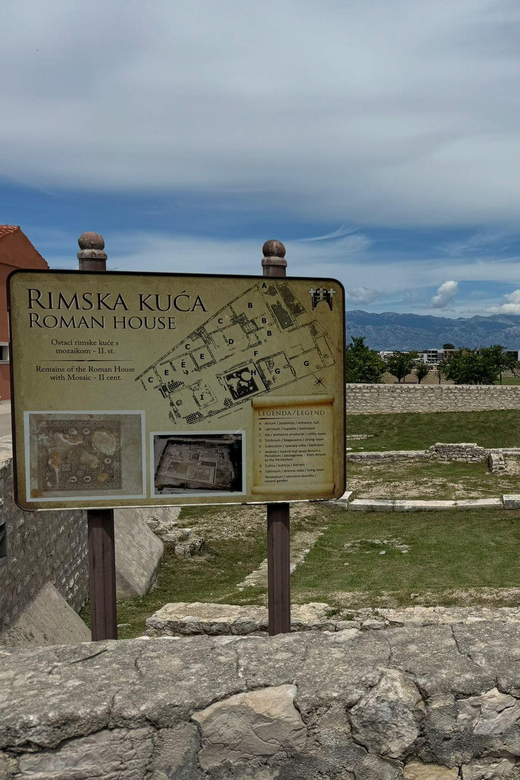
You’ll explore the remains of what’s described as the largest Roman temple on the east coast of the Adriatic, plus remains of a house used in Roman times. These aren’t distant, hard-to-imagine locations. In Nin’s compact old town footprint, Roman history becomes something you can walk past and visually process step by step.
Here’s why that matters for you: Roman sites can sometimes feel like dry facts—columns, dates, names. In a place like Nin, they can feel more real because the town layout puts everything close together. You’re not hopping across a region. You’re staying inside one small space that held multiple eras of life.
A Roman temple also changes how you think about the coast. This wasn’t only about fishing and trade; Roman Adriatic towns were about institutions, public life, and a kind of authority that leaves physical marks behind.
And the Roman house remains give you the other side of the Roman story: not public spectacle, but daily life. When your guide points out how the house would have functioned, it helps you picture Romans living in the same area you’re standing in now.
The museum moment: where the curator helps you connect the dots
The tour includes time with a curator in the local museum, which is a big value add if you want to understand what you’re seeing. A licensed walking guide can explain things on the street, but a curator can help you interpret objects and details in a more focused way.
This is also where you should remember the one catch: museum tickets aren’t included. If you want the museum component to fully land, check ahead what you’ll need to pay for museum entry. If you’re trying to keep your budget tight, you can still enjoy the outdoor stops—but the curator time is part of the tour’s personality.
Practical tip: if you’re the type who likes to ask questions (or you’re traveling with curious kids), this museum context is often where questions actually get answered in a satisfying way.
Branimir and Gregory of Nin: how names turn stones into stories
Nin is famous for sculptures tied to major historical figures, and the tour uses those names as landmarks for understanding. Your guide talks about famous sculptures of Duke Branimir and Archbishop Gregory of Nin, plus other historical sites.
I like this approach because it avoids the trap of history as a list. When you hear the name and then see the monument or the associated location, it creates a mental map. You remember where you were standing, what era it belonged to, and why it mattered.
This also supports Nin’s romantic reputation without turning it into fluff. Yes, Nin is known for romance and small-town charm. But the romance isn’t only about sunsets and photos. It’s also about continuity—how a place can keep shaping culture across centuries.
If you enjoy learning how religious and political power worked together in early Croatian history, Nin gives you enough anchors to feel oriented fast.
After the tour: make room for Nin’s bay and sandy time
Even with a 90-minute timeline, Nin gives you options afterward. The town is known for its bay with sandy beaches and a rich offer of fun possibilities.
So if you want to turn your tour into a day with momentum, consider pairing it with an easy beach break or a slow walk along the waterfront. This is especially useful if your group includes people who want history but also want downtime.
Because Nin’s old town is compact, you’re well positioned to do that without turning the whole day into commuting and transport planning.
Pacing, comfort, and who this tour fits best
This is a 90-minute walking guided tour, and the structure matters. Nin’s compact old town makes the pace feel manageable, which is why the experience works for mixed groups.
I also like that it’s described as wheelchair accessible. That doesn’t mean every stone street will feel like a smooth sidewalk, but it does mean the operator has planned the route for mobility needs to a practical level. If accessibility is important for you, it’s worth confirming any specifics before you go.
This tour is a great match if you:
- want Roman and early-medieval highlights in one short session
- prefer a guide who answers questions rather than rushing through stops
- travel with kids who need explanations tied to what they see
- like small-town history where the setting helps you absorb details
Price check: $21 is a fair value for a guided, two-era route
At $21 per person for 90 minutes, the value is strongest if you care about interpretation, not just sightseeing. You’re getting:
- a licensed walking guide
- time with a curator in the local museum
- multiple major stops (St. Cross, St. Anselmo, Roman temple remains, Roman house remains)
Museum tickets, food, and drinks are not included. That means your total day cost can rise a bit, depending on whether you plan to use the museum time.
Still, for what you’re covering in a short window, $21 feels reasonable—especially if you’re in Nin for a limited time and don’t want to piece together Roman and early-medieval sights on your own.
My booking advice: should you do this Nin tour?
Yes, you should book this tour if you want a focused introduction to Nin that hits the big story points quickly: Aenona → Roman remains → early-medieval churches → the figures behind the monuments.
Skip it only if you’re looking for a long, unguided archaeological experience or you want to control every stop with no structure at all. With just 90 minutes, it’s designed for efficiency and clarity, not for wandering for hours.
If you’re visiting Nin as a day stop, traveling with different ages, or you simply want the “important sites” explained in a way that makes sense, this one is a solid choice.
FAQ
How long is the Nin guided tour?
The tour duration is 90 minutes.
Where do I meet for the tour?
Meet at the statue of Duke Branimir by the Lower bridge.
What is the price per person?
The price is listed as $21 per person.
Is the tour guided in English?
Yes. The live tour guide is available in English and Croatian.
Are museum tickets included?
No. Museum tickets are not included.
Is food and drink included?
No. Food and drinks are not included.
Is the tour wheelchair accessible?
The activity is listed as wheelchair accessible.
Is free cancellation available?
Yes. Free cancellation is available up to 24 hours in advance for a full refund.