REVIEW · RIO DE JANEIRO
Rio Jewish Heritage Half-Day Tour
Book on GetYourGuide →Operated by CARIOCA TROPICAL TOUR OPERATOR · Bookable on GetYourGuide
A side of Rio you won’t expect. In just 3 hours, you’ll trace Jewish life across neighborhoods while seeing places tied to memory, community, and faith. The route is structured like a guided walk through Rio’s layered identity, with views and landmark architecture mixed in.
I especially like the way the tour starts at Park Itzhak Rabin, where the setting alone helps you understand why people gather in this city. I also love the stop at the Grand Temple (1932) and the Jewish Museum, because you’re not just looking at buildings—you’re learning what they meant to Rio’s Jewish community.
One thing to consider: entrances aren’t included, so you’ll pay small extra fees on-site, and some synagogue choices can vary depending on request and availability.
In This Review
- Key things I’d mark on your Rio map
- Start at Park Itzhak Rabin with Botafogo and Sugar Loaf views
- Chaim Weitzman Square and Catete’s furniture commerce connection
- Jewish Museum and the Grand Temple from 1932
- Shel Gmelut Hassidim in Botafogo and the Pedro II link
- Copacabana synagogue stops: Clube Israelita Brasileiro and Beth El
- When synagogues change: Beth Yacov and Beit Lubavitch options
- The 3-hour small-group pace, with hotel pickup that actually helps
- Price and entrance fees: how the $99 value holds up
- Who this Rio Jewish Heritage tour fits best
- Should you book this Rio Jewish Heritage Half-Day Tour?
- FAQ
- How long is the Rio Jewish Heritage Half-Day Tour?
- Does the tour include hotel pickup and drop-off?
- What is the meeting style and group size like?
- What languages are the live guides available in?
- Are entrance fees included in the price?
- What entrance fees should I expect for the Jewish Museum and the Grand Synagogue?
- Can the synagogue stops be changed based on request?
- Is kosher lunch available?
- How many people are required to book?
Key things I’d mark on your Rio map
- Park Itzhak Rabin, inaugurated by Lea and framed by Botafogo and Sugar Loaf views
- Chaim Weitzman Square and a public school named after Anne Frank
- Catete’s former Jewish-led furniture commerce district story
- Jewish Museum + Grand Temple (1932) for architecture and identity
- Synagogue Shel Gmelut Hassidim (Sephardic rite) tied to a visit from Emperor D. Pedro II
- Copacabana Jewish institutions: Clube Israelita Brasileiro and Beth El synagogue
Start at Park Itzhak Rabin with Botafogo and Sugar Loaf views
The tour kicks off at Park Yitzhak (Itzhak) Rabin, a calm starting point where the guide sets the tone before you move into downtown. It was inaugurated by Lea, his wife, and that detail matters because it turns a park stop into a story about people, not just geography. From here, you get privileged views over Botafogo beach and Sugar Loaf, which is a nice reminder: this history took place in a living city.
Practical note: this is a good spot for photos and for getting your bearings. Even if you only stay a few minutes, you’ll understand where you are in Rio—then the rest of the route makes more sense.
You can also read our reviews of more historical tours in Rio De Janeiro


Chaim Weitzman Square and Catete’s furniture commerce connection
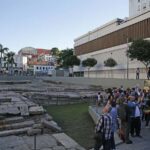
Next you head toward Downtown, with stops that feel like they’re quietly tucked into everyday Rio life. You’ll see Chaim Weitzman Square, plus a public school named after Anne Frank. That school stop works well because it shows how far memory travels—Rio isn’t just a backdrop; it’s part of how stories keep getting passed along.
Then comes Catete, and the tour gives you a specific angle: resident Jews once established a thriving furniture commerce here. I like this because it’s concrete. It’s not only about places of worship; it’s about what communities built in commerce and daily work.
If you’re the type who likes context, pay attention here. The tour’s strongest moments are when it links identity to ordinary Rio streets.
Jewish Museum and the Grand Temple from 1932
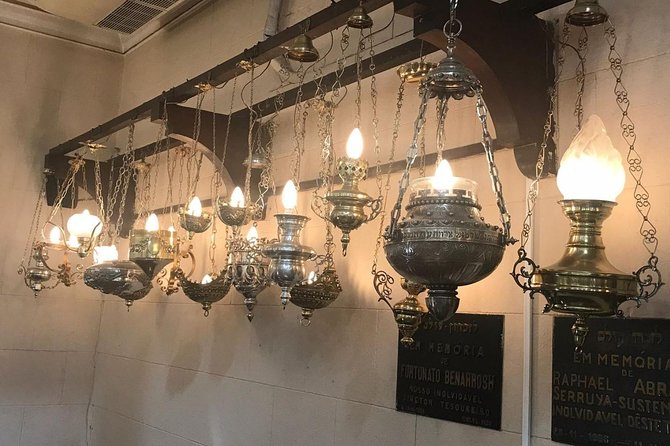
The next two stops—the Jewish Museum and the Grand Temple—are where the tour turns from neighborhood stories into real institutions. The Jewish Museum helps you make sense of what you’ve been hearing so far, and it’s also the kind of place where a guide can explain the “why” behind objects and narratives you might otherwise miss.
After that, you’ll visit the Grand Temple, a beautiful building dating to 1932. That date is a useful detail. It grounds the story in architecture that’s old enough to have survived decades of change, while still holding significance for the community.
Entrance fees are not included: the Jewish Museum is listed at USD 3.00 per person, so plan for a small extra cost here.
Shel Gmelut Hassidim in Botafogo and the Pedro II link
In Botafogo, the tour visits Synagogue Shel Gmelut Hassidim, connected to the Sephardic Jewish–Spanish rite. This stop adds a compelling historical thread: the synagogue has received the visit of Emperor D. Pedro II.
I like this moment because it shows how Jewish life in Brazil wasn’t kept in a corner of the past. A synagogue tied to a visit from such a prominent figure adds weight to what you’re learning, and it also makes the building feel more than ceremonial. It becomes part of Brazil’s broader story, not only a local religious one.
Dress matters here, so follow the tour’s guidance and keep your outfit respectful. If you’re unsure, think conservative and comfortable. You’ll be standing and walking between stops.
Copacabana synagogue stops: Clube Israelita Brasileiro and Beth El
Then the tour swings toward Copacabana, and it becomes more community-centered. You’ll visit Clube Israelita Brasileiro and the Beth El Synagogue in the area. This pairing is smart for a half-day format: clubs and synagogues together show two sides of community life—social and spiritual.
Copacabana is busy, so the contrast can be striking. One minute you’re in the tempo of a famous neighborhood; the next you’re at institutions that reflect organized Jewish community presence. I found it helpful that the tour doesn’t treat religious buildings as isolated stops.
It also helps you understand the tour’s theme: Jewish heritage in Rio isn’t one place. It’s networks of meeting points.
A few more Rio De Janeiro tours and experiences worth a look

When synagogues change: Beth Yacov and Beit Lubavitch options
There’s an important flexibility note in the tour description: Beth Yacov (Eastern-European Ashkenazi rite) and Beit Lubavitch (Orthodox Chasidic rite) in Leblon may replace other synagogues based on request and/or availability. That means you might not see exactly the same lineup as someone else, even if you book the same tour.
I consider this a plus if you care about variety. Synagogue rites are different traditions, and a swap can change what you notice—architecture, layout, and the way your guide talks through identity and practice. It’s also a practical reality for a working religious itinerary.
The 3-hour small-group pace, with hotel pickup that actually helps
This is a small-group tour with transport by air-conditioned minivan or car, plus hotel pickup and drop-off. For a half-day, that matters more than you’d think. You don’t want to spend your limited time negotiating taxis or figuring out where the stops are in relation to each other. The pickup keeps the day smooth.
The full route is designed to fit everything into the 3-hour window, so expect a brisk but not chaotic pace. The guide’s role is key here: they’ll connect the dots between parks, squares, museums, temples, and synagogues so you don’t feel like you’re hopping from one address to another.
One review highlighted that the guide Leonardo brought passion and personal context to the tour, and that matches how this type of route works best. When the guide can explain the human side of each stop, the half-day becomes more than “photos and names.”
Tour languages are Spanish and English, and it’s a live guide throughout.
Price and entrance fees: how the $99 value holds up
The price is USD 99 per person for a half-day (3 hours) experience that includes a professional guide, hotel pickup/drop-off, small-group format, and air-conditioned transport. That’s not just sightseeing; it’s guided access to multiple culturally significant places within limited time.
What’s not included is what you’d expect for an itinerary like this: entrance fees and food/drinks. In your case, the listed extra costs are:
- Jewish Museum: USD 3.00 per person
- Grand Synagogue/Grand Temple area, listed as a “Tzedakah”: USD 6.00 per person
So your budget isn’t complicated. You’re looking at a small on-site add-on for entries, and you’ll still get hotel logistics handled.
If you’re comparing options, I’d weigh this tour as a convenience + context package. You’re paying for the guide to tie the stops together, plus transport so you can focus on learning and looking rather than navigating.
Who this Rio Jewish Heritage tour fits best
This tour works best if you like:
- cultural routes with specific places and names
- short, focused walking + driving days
- learning how community life shows up in everyday city spaces
It’s also a good match if you want a structured introduction to Jewish heritage in Rio de Janeiro without committing to a full-day schedule.
I’d recommend it to couples, solo travelers, and small friend groups who want an efficient way to see multiple sites in one go. It may be less ideal if you only want long museum time or deep self-guided wandering without a set plan.
Should you book this Rio Jewish Heritage Half-Day Tour?
If you want a guided, respectful introduction to Jewish landmarks across Rio—and you like the idea of combining views, squares, museums, and synagogues into one tight route—this is a strong choice. The half-day format makes it realistic, and the guide is part of the value, not an afterthought.
I’d pass (or at least adjust expectations) if you’re trying to avoid any additional on-site costs, since entrances are extra, and you may not see every synagogue depending on availability and request. But for most people, the tradeoff is worth it: you get a coherent route in just 3 hours, starting at a viewpoint and ending in Copacabana institutions.
FAQ
How long is the Rio Jewish Heritage Half-Day Tour?
It lasts 3 hours.
Does the tour include hotel pickup and drop-off?
Yes, pickup and drop-off are included.
What is the meeting style and group size like?
It is a small-group tour.
What languages are the live guides available in?
The tour guide is available in Spanish and English.
Are entrance fees included in the price?
No. Entrance fees are not included.
What entrance fees should I expect for the Jewish Museum and the Grand Synagogue?
The Jewish Museum is listed at USD 3.00 per person, and the Grand Synagogue contribution is listed as USD 6.00 per person as a “Tzedakah.”
Can the synagogue stops be changed based on request?
Yes. Beth Yacov (Ashkenazi rite) and Beit Lubavitch (Orthodox Chasidic rite) may replace other synagogues according to client request and/or availability.
Is kosher lunch available?
Kosher lunch is available upon previous request.
How many people are required to book?
A minimum of 2 people per booking is required.