REVIEW · LJUBLJANA
Plečnik’s Ljubljana -UNESCO heritage- A walk among architect Plecnik’s creations
Book on Viator →Operated by Slovenia in colours · Bookable on Viator
One walk can explain why Ljubljana feels so thoughtfully designed. On this Plečnik-focused stroll, I love how you see his ideas move from bridge to square to theater, and how the snack tastings turn the architecture into real-life stories about locals and everyday rhythm. The route is short, central, and built for learning without rushing.
The main thing to consider is that this experience depends on good weather, since you’re outdoors through multiple stops along the river and squares.
In This Review
- Key points to know before you go
- A Walk That Makes Plečnik’s Ljubljana Click
- Your Guide, Your Pace, and Why Snacks Matter
- Tromostovje Triple Bridge: Spotting Plečnik’s Exact Impact
- Central Market to Dragon Bridge Area: Two Floors of Daily Life
- Cevljarski Most (Shoemaker’s Bridge): Lights and Columns You’ll Remember
- Congress Square (Kongresni trg): Public Space With a Memory
- Križanke Summer Theater: Plečnik’s Last Big Ljubljana Work
- National and University Library: A Masterpiece at Human Scale
- Price and Value for a 2-Hour Plečnik Walk
- Logistics That Actually Matter: Where to Meet and What to Expect
- Who Should Book This Tour (and Who Might Skip It)
- Should You Book Plečnik’s Ljubljana?
- FAQ
- How long is the tour?
- What is the tour price?
- Is pickup offered?
- What language is the tour offered in?
- Where do I meet the guide?
- Where does the tour end?
- Are admission tickets needed for the stops?
- Does the tour include snacks?
- What if the weather is bad?
- What is the cancellation policy?
Key points to know before you go
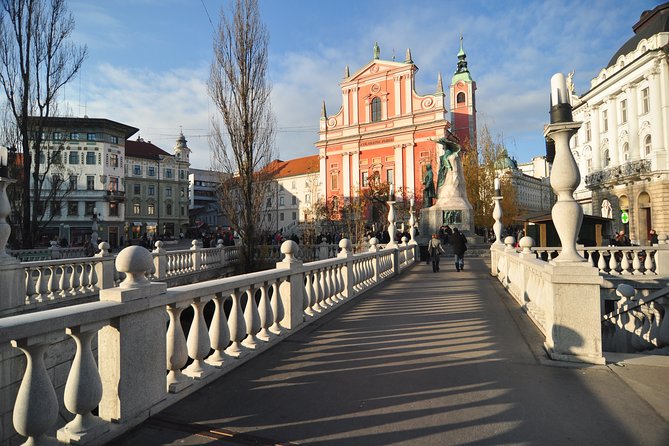
- Two of three bridges by Plečnik at Tromostovje, so you can spot his specific mark on the whole composition
- Central Market on two levels, which helps you understand how people shop and socialize there
- Cevljarski Most lights and columns, where small details are the whole point
- Kongresni trg as a stage for major events, showing how Plečnik shaped public space
- Križanke as his last big Ljubljana work, plus why it’s considered one of the best outdoor theaters
- National and University Library as a true masterpiece, not just a photo stop
A Walk That Makes Plečnik’s Ljubljana Click
If you’ve ever looked at a city and wondered how it got that way, this tour is a fast answer. Ljubljana can look gentle and easy to walk, but the bones of it are the result of clear planning and strong artistic choices. That’s what you’re chasing here: the way architect Jože Plečnik shaped daily movement and public life, not just monuments.
What I like best is that the route is compact, so the story stays coherent. You start by orienting yourself with the river crossings, then you work your way to the market, the bridges again, and into the bigger civic spaces. By the time you’re at the theater and the library, the details make sense instead of feeling random.
This is also a tour that treats the city like a lived-in place. You stop often. You look up. You listen for what’s different and why it matters. And yes, there are refreshment stops along the way—little tastings that help the city feel human, not like a textbook.
Your Guide, Your Pace, and Why Snacks Matter
This is a private group experience for up to 6 people, guided by a professional local guide. That small group size matters more than it sounds. With fewer people, you get time to ask questions—especially if someone in your group has a history, design, or architecture interest and wants to connect the dots.
One of the strongest impressions from the reviews is the guide style—especially the kind of energy that makes the city feel personal. Names that come up include Tjasa, who’s described as passionate and going above and beyond. That lines up with how this walk is set up: it’s not only what you see, it’s the explanations that connect Plečnik’s life and work to what you’re standing in front of.
The snacks are not just a break. They’re tied to learning about how residents live and eat. Expect “little tastings” along the way, plus advice on what else to do in Ljubljana or Slovenia after the tour. For many first-timers, that second part is where the value really shows.
Tromostovje Triple Bridge: Spotting Plečnik’s Exact Impact
Your first stop is Triple Bridge (Tromostovje), one of Ljubljana’s most recognized icons. Here’s the cool twist: Plečnik didn’t make all of it. Only two out of the three sections were made by him. That detail matters because it changes how you look at the bridge. You’re not just admiring a landmark. You’re learning how a city can evolve with different hands and time periods, even inside one famous sight.
At this point in the walk, you’re also doing orientation. The river crossing becomes a map reference. You’ll get the feel for how pedestrians flow between banks, which helps when you move on toward the market and farther bridges.
This is a great early stop because it’s visual and fast. Even if your group is jet-lagged, you can still latch onto the story quickly.
Central Market to Dragon Bridge Area: Two Floors of Daily Life
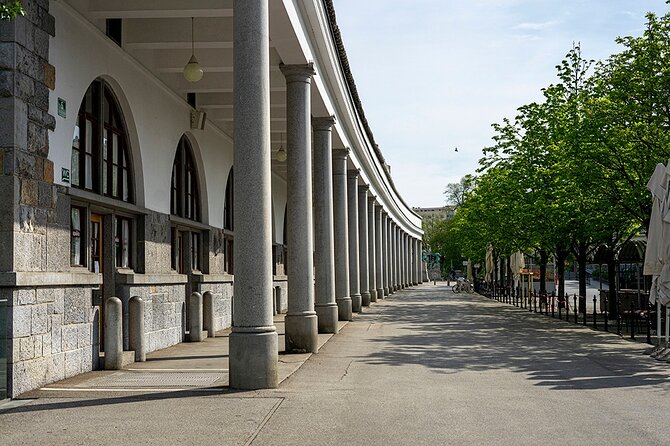
From Tromostovje, you move toward the Central Market area, stretching your walk across a corridor where Plečnik’s influence shows up in the rhythm of the spaces. This is where I love the pace: it’s not a long slog, and it’s not a quick “look and leave” either. You get enough time to notice how the design supports daily activity.
The Central Market itself is described as amazing work of Jože Plečnik, with the market spread across two levels. That layout changes how you experience it. Instead of one flat shopping hall, you see people moving across tiers and meeting at different heights. Even if you don’t buy anything, you’ll understand the function instantly.
If you like markets for the atmosphere—people-watching, smells, and small moments—this stop gives you that without derailing the architecture theme. It’s also a sensible pause point: you’re near the river, but you’re in a place built for lingering.
Cevljarski Most (Shoemaker’s Bridge): Lights and Columns You’ll Remember
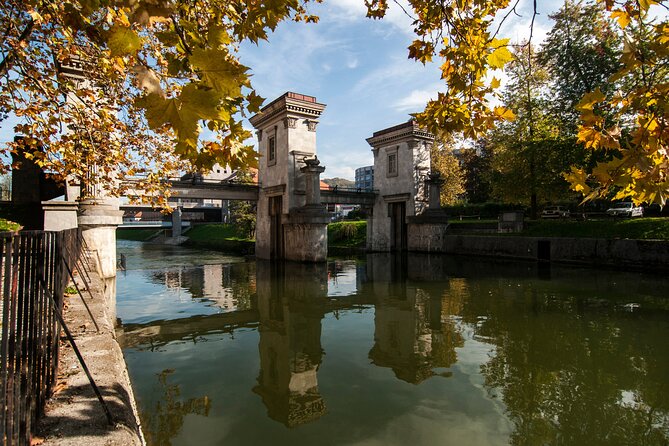
Next comes Shoemaker’s Bridge (Cevljarski Most). This bridge is compact, which makes it ideal for slow looking. The spotlight here is on Plečnik’s lights and his special columns, plus the way the bridge reads like a small square hovering over the water.
That “square over a river” description is exactly why this stop works. Bridges in many cities are simply connectors. Here, the design gives you a moment to stop mid-walk and take in the details. You’re not just crossing; you’re in a little scene.
If you tend to ignore street-level details on sightseeing days, I’d pay extra attention at this stop. It’s one of the few places in the route where the design feels decorative and purposeful at the same time. You’ll probably notice how lighting transforms the feel of a space—especially in the evenings, when bridges like this can shift from daytime practical to nighttime mood.
Congress Square (Kongresni trg): Public Space With a Memory
Then you head to Congress Square (Kongresni trg), another place where Plečnik’s work is tied to how people gather. This square was changed by Plečnik and it’s known for hosting one of the biggest events ever held in Ljubljana.
That’s a key idea: you’re not just seeing a pretty open area. You’re seeing a designed stage for crowds and ceremonies. Standing here, it’s easier to understand why squares matter in the first place. They create a default meeting point, a flexible stage, and a sense of civic identity.
This stop is shorter, but don’t let that fool you. In a tour like this, time is used like a tool. The square gives you a breath of open space after the bridge details, and it sets you up for the next major stop—where public gathering becomes performance.
Križanke Summer Theater: Plečnik’s Last Big Ljubljana Work
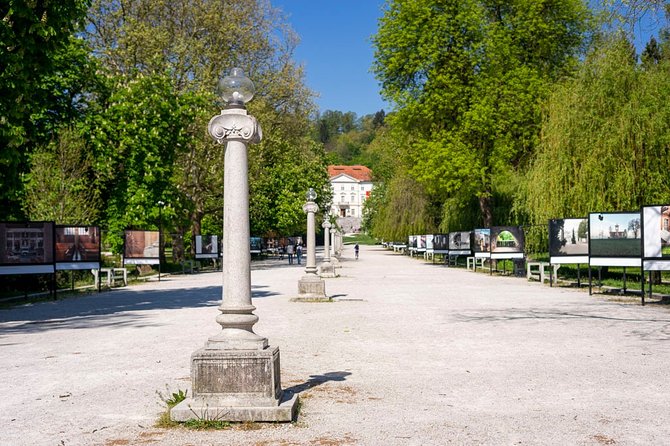
After Congress Square, you arrive at Monastery of the Holy Cross Summer Theater (Križanke Poletno Gledališče), often called simply Križanke. This is described as Plečnik’s last big work in Ljubljana, and the tour frames it that way on purpose.
Why that matters to you: if you’ve ever seen an artist’s work across different years, the late period often shows the most clarity. Here, you can look at the theater as the culmination of how he designed public space—functional for audiences, but also packed with expressive details.
The tour also notes Križanke as the best outdoor theater in Ljubljana, and it’s easy to see why. Even with just a short stop, the setting encourages you to think about how architecture performs. It shapes acoustics, viewing lines, and comfort. It also affects how events feel—more intimate than a large indoor venue, with the city itself becoming part of the show.
If you’re traveling in warm months, this is the kind of place that can make you want to plan an evening around it. Even if you’re not seeing a performance, the stop is more than a photo moment because it connects design to atmosphere.
National and University Library: A Masterpiece at Human Scale
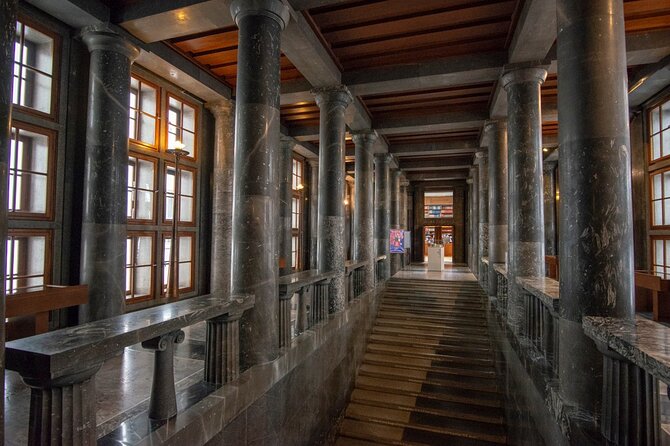
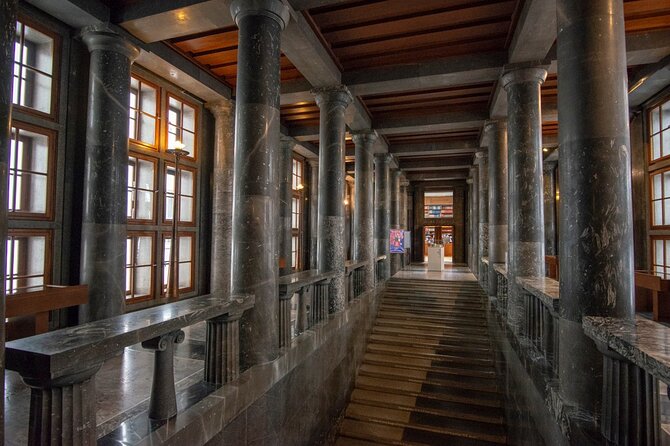
Your final stop is the National and University Library, identified as one of Plečnik’s masterpieces. This is a strong finish because libraries are about more than walls and reading rooms. They’re civic symbols. They suggest a city values knowledge, permanence, and public access.
In a walking tour like this, the trick is to avoid ending on something too abstract. Here, you finish with something that can be looked at from multiple angles and interpreted through the same lens you used earlier: how Plečnik structured space so people move, gather, and feel oriented.
You also end in the Križanke area, near the Križanke Trg francoske revolucije 1 end point. That’s convenient because you can keep exploring nearby without having to immediately jump to transit again.
Price and Value for a 2-Hour Plečnik Walk
The price is $220.41 per group (up to 6) for about 2 hours. That’s not a low-cost “just hop on a bus” type of deal, but it is a fair match for what you get: a private local guide, snacks with tastings, and a route tied to real architectural storytelling rather than a loose sightseeing loop.
Here’s the value math I’d use in your head:
- If you’re traveling as a group, the per-person cost drops quickly because it’s priced per group, not per seat.
- Admission for the stops listed is free, which helps you avoid add-on surprises.
- The guide work is the product. This kind of tour depends on interpretation: explaining what was built, what was altered, and what details to notice.
So this is best for couples, small families, and small friend groups who want structure and context. If you’re a solo traveler, it may still be worth it if you know you prefer guided learning over wandering alone—but compare it against free self-guided walking.
Logistics That Actually Matter: Where to Meet and What to Expect
You’ll start at Krekov trg, 1000 Ljubljana and the walk ends at Križanke Trg francoske revolucije 1. Pickup is offered, which is a big deal if you’re arriving in the city with limited time or you just don’t want to fuss with transit for the first meeting point.
The tour uses a mobile ticket, and you’ll receive confirmation within 48 hours of booking, subject to availability. It’s also offered in English.
This experience is noted as suitable for most travelers, with service animals allowed, and it’s near public transportation. The one non-negotiable factor is weather: it requires good weather, and if it’s canceled due to poor conditions, you’ll get an alternative date or a full refund.
Who Should Book This Tour (and Who Might Skip It)
I’d book it if you:
- want architecture explained in plain language, with specific details you can look for on your own afterward
- enjoy short, focused city walks more than all-day marathons
- like small extras like snack tastings that make the city feel lived-in
- travel in a group where splitting the group price makes sense
I’d think twice if:
- you hate outdoor walking when weather is iffy
- you prefer long free time with minimal guidance (this is structured and timed)
- your goal is purely photo stops without much explanation
Should You Book Plečnik’s Ljubljana?
Yes, if you want a smart, compact way to understand why Ljubljana feels the way it does. The route connects recognizable landmarks—bridges, market, civic squares, theater, and the library—into one story, and the guide turns details (like which bridge sections Plečnik actually built) into something you’ll remember.
Book it with confidence if you’re traveling soon and the forecast looks steady. If the weather is questionable, wait and watch because this walk is outdoors.
FAQ
How long is the tour?
It runs about 2 hours.
What is the tour price?
The price is $220.41 per group, up to 6 people.
Is pickup offered?
Yes, pickup is offered.
What language is the tour offered in?
The tour is offered in English.
Where do I meet the guide?
The meeting point is Krekov trg, 1000 Ljubljana, Slovenia.
Where does the tour end?
The tour ends at Križanke Trg francoske revolucije 1, 1000 Ljubljana, Slovenia.
Are admission tickets needed for the stops?
Admission tickets are noted as free for the listed stops.
Does the tour include snacks?
Yes. There are snacks with little tastings on the way, plus advice on what else to do.
What if the weather is bad?
The tour requires good weather. If it’s canceled due to poor weather, you’ll be offered a different date or a full refund.
What is the cancellation policy?
You can cancel for a full refund up to 24 hours before the experience starts.