REVIEW · GUANGZHOU
Foshan Cultural One Day Tour including Ancestral Temple & Nanfeng Ancient Kiln
Book on Viator →Operated by Hantang International Travel Service · Bookable on Viator
Ceramics and temples, all in one day. This private Guangzhou-to-Foshan tour is built for people who want culture with structure: you ride in comfort, get a local English-speaking guide, and hit the key Foshan stops without wasting time figuring it out.
I especially like the balance of sacred heritage and hands-on craft. You start at the Foshan Ancestral Temple, where the details are as much about local industry and community life as they are about worship. Later, you watch traditional pottery work at Nanfeng Ancient Kiln, with a chance to try the pottery wheel yourself.
One possible snag: the Shiwan Art Ceramics Market can be closed for renovations on some dates. If shopping is a big part of your plan, I’d treat this stop as a bonus rather than a guarantee.
In This Review
- Key Points You’ll Care About
- From Guangzhou to Foshan: How This Day Trip Stays Efficient
- Foshan Ancestral Temple: More Than a Pretty Building
- What to Watch For Here
- Nanfeng Ancient Kiln: Watching Ceramics Happen in Real Time
- The Best Part of This Stop
- Shiwan Art Ceramics Market: Shopping With Realistic Expectations
- Lunch and Timing: Small Details That Change Your Day
- How the Schedule Feels
- Private Guide and Private Vehicle: Why This Tour Feels Easier
- Value: Is $179 a Good Deal for This Day?
- Should You Book This Foshan Cultural One Day Tour?
- FAQ
- What is the duration of the Foshan Cultural One Day Tour?
- What time does the tour start?
- Where is the tour located?
- Is hotel pickup and drop-off included?
- Is lunch included?
- What sites does the tour visit?
- Are admission tickets included?
- Is this tour private?
- Can I cancel for a full refund?
Key Points You’ll Care About
- Private round-trip transfers from Guangzhou in an air-conditioned vehicle help you actually enjoy the day.
- Ancestral Temple’s unusual role goes beyond religion: it also served civic functions before modern administration.
- Nanfeng Ancient Kiln is still in use, so you’re seeing craft practice, not just staged history.
- Pottery wheel time gives you a real feel for the process, not only photos.
- Shiwan ceramics shopping is a straightforward way to bring home tiles, sculptures, and small craft pieces.
- Lunch is included, but if you have dietary rules, you’ll want to communicate them clearly.
From Guangzhou to Foshan: How This Day Trip Stays Efficient
Foshan is close enough to feel doable, but far enough that planning matters. This tour starts at 8:00am and runs about 8 hours, which is a good rhythm for a full day without turning it into a marathon. You also get hotel pickup and drop-off, so you avoid the stress of transportation logistics while still seeing multiple sites.
The day is practical because the attractions are grouped around Foshan’s ceramics identity. You’re not jumping randomly. You’re moving through a story: religious/civic heritage first, then the working kiln, then the commercial crafts market. That sequence helps the ceramics theme make sense as you go.
Another quiet win is the format: it’s a private tour, meaning only your group participates. Even if you’re traveling with a small group, you’re not stuck in a loud crowd. You can ask questions in real time—exactly what you want at places like the Ancestral Temple, where symbolism shows up in carvings, furnishings, and layout.
A few more Guangzhou tours and experiences worth a look

Foshan Ancestral Temple: More Than a Pretty Building
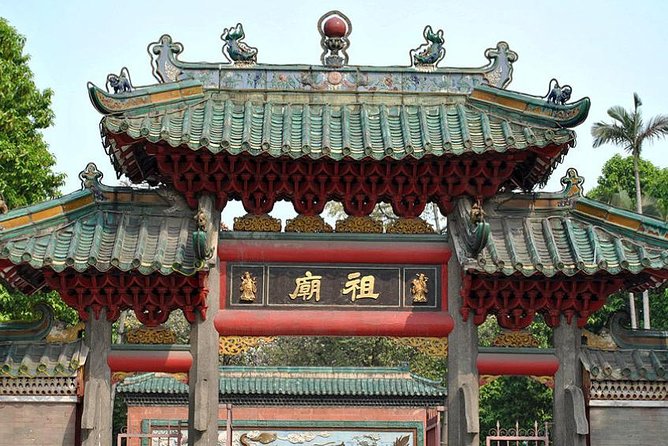
The Ancestral Temple is a centerpiece in Foshan’s heritage story. It was originally built in the 1078–1085 period for offerings to the Northern Xuantian Heavenly Emperor. Over time, it was destroyed at the end of the Yuan Dynasty and later rebuilt in 1372—which already tells you this site has survived political and historical change, not just fashion trends.
What I like most is that this temple isn’t presented as a one-note stop. Before local administrative organization existed in the Qing Dynasty, the Ancestral Temple also functioned as a place for discussing official business. That civic role is important. It helps explain why the temple feels tied to local life, not sealed off as something distant and purely religious.
As you walk around, look closely at the decorations and furnishings. The record highlights that buildings and even decorative elements were contributed by various industries, mostly locally produced. That means the temple’s look is partly a showcase of Foshan’s crafts and manufacturing spirit, which connects neatly to what you’ll see later at the kilns.
If you end up with an English-speaking guide who’s comfortable explaining what you’re seeing, this stop becomes far more satisfying. One guide name I’ve heard associated with this type of tour is Kevin, and the key is simple: you want someone who can translate religious art and local references into plain language. The temple’s meaning is in the details, and a good guide helps you notice them.
Tip for your visit: take your time with the carvings and interior elements. Even if you’re not religious, these are visual records of how people organized work, community, and belief.
What to Watch For Here
A temple is still a temple, so expect the usual: a respectful pace, some walking, and areas that may feel busy depending on the day. The tour notes a moderate amount of walking, so comfortable shoes help you enjoy the quiet corners instead of hurrying through.
Nanfeng Ancient Kiln: Watching Ceramics Happen in Real Time
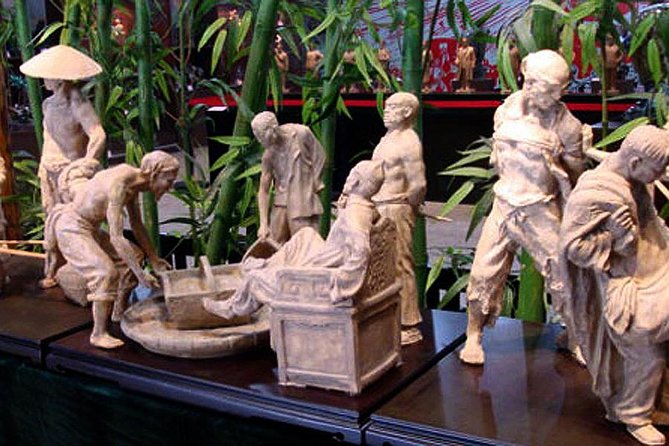
If the Ancestral Temple explains the culture around craft, Nanfeng Ancient Kiln shows the craft itself. This furnace was built between 1506 and 1521 and is listed as a Guangdong Key Cultural Relic Unit. Even better for authenticity: it’s still in use for making ceramics.
That matters because you’re not just sightseeing artifacts behind glass. You’re seeing a working environment and a tradition that’s been practiced across centuries. The background also puts Foshan ceramics on a timeline: the ceramic base formed in the Tang and Song dynasties, then reached its peak in the Ming and Qing periods.
As you’re viewing the kiln, pay attention to practical design details. The mouth faces south, and the furnace has banyan trees behind it that bring cooling wind in summer. That kind of information turns the kiln from a static relic into an engineered solution—how craft depended on climate and airflow.
During this stop, you can watch a traditional pottery demonstration. Then there’s the fun part: you may also get a chance to spin the pottery wheel. Even if you end up with a lopsided result, the experience is valuable because it shows how movement, pressure, and timing work together. It’s the fastest way to understand why good ceramics look so effortless.
Tip for your wheel time: wear clothing you’re comfortable getting a little dusty. Also, don’t overthink it. The goal is learning the motion, not producing museum-level pottery.
The Best Part of This Stop
This is where the tour earns its keep. A temple can be impressive, but pottery makes it personal. You leave with more than photos—you leave with a memory of how clay behaves.


Shiwan Art Ceramics Market: Shopping With Realistic Expectations
The Shiwan Art Ceramics Market is your chance to turn what you learned into a souvenir. This is where tiles and sculptures show up in a more consumer-friendly way, so you can compare styles and prices in one area.
The market is especially useful after the kiln stop. By then, you’ve seen how ceramics are made, so you’re better equipped to spot what you’re actually buying. You can also use this time to look for pieces that fit your life back home: smaller works that travel well, or decorative items that match your space.
That said, there’s one issue worth flagging. I’ve seen mentions that the Shiwan Art Ceramics Market may be closed for renovations on some dates. So if shopping is a must-do for you, I’d keep a flexible mindset. You can still enjoy the day even if this stop changes.
Shopping mindset that works:
- Ask about size and material, especially for items you want to keep long-term.
- Think about weight and packaging. Anything fragile needs careful handling.
- If you’re buying gifts, choose something that tells a story quickly—like a familiar style tile or a sculptural figure.
Lunch and Timing: Small Details That Change Your Day

Lunch is included as a Chinese-style meal. For many people, that’s the value sweet spot: you don’t have to plan where to eat, and you get a meal without losing half your morning to decision fatigue.
Still, this is where personal needs matter. One account I’ve heard included confusion around dietary preferences (for example, beef versus vegetarian needs). I can’t promise what will happen on every trip, but here’s the practical lesson: if you have strict dietary rules, tell your tour organizer clearly before pickup. That way, your lunch request is in the system, not improvised during the day.
Timing is also part of the meal story. Since the tour is built around three major stops plus transfers, you shouldn’t treat lunch like a long restaurant linger. It’s a reset point so you can keep moving and enjoy each site.
How the Schedule Feels
With about 2 hours at each major historical/craft stop and admissions included, the day has structure. You’ll want to be ready to go when the group moves on.
Private Guide and Private Vehicle: Why This Tour Feels Easier
This is a tour where the logistics quietly improve the experience. Pickup and drop-off are included, and you travel by a private, air-conditioned vehicle with a professional driver. That’s not a small thing in a Guangzhou-to-Foshan day—traffic and timing can easily steal energy if you’re on your own.
A knowledgeable guide (the kind who can explain why a temple served civic business and how a kiln’s design relates to airflow) changes how much you get out of each stop. Foshan ceramics has plenty of specific names and historical notes, and an English-speaking guide helps translate that into meaning you can actually remember.
The tour also uses mobile tickets, which is helpful when you’re tired and don’t want to hunt for paper vouchers. Add in included admission tickets, and you save time and decision-making.
Finally, group discounts are mentioned as a feature. That can make this more attractive if you’re traveling with friends or relatives. Since it’s private, it can feel like value rather than a solo-priced luxury.
Value: Is $179 a Good Deal for This Day?
At $179 per person, you’re paying for a whole package: private transfers, an English-speaking guide, included lunch, admissions, and the guided pottery experience. If you tried to match that quality by booking separately, you’d likely spend time and money coordinating multiple pieces—especially admissions and a guide who can explain the craft context.
Where the value is strongest:
- You want a smooth day plan without arranging transport.
- You care about ceramics enough to do more than a quick market browse.
- You want a chance to experience the pottery wheel, not just watch.
Where it’s less strong:
- If you’re only interested in shopping, the day might feel more “culture-first” than “shopping-first.”
- If you’re counting on Shiwan Art Ceramics Market shopping, accept that the day can shift if a closure happens.
Should You Book This Foshan Cultural One Day Tour?
I’d book this if you want an efficient, culture-forward Guangzhou to Foshan day that connects history, working craft, and shopping. The Ancestral Temple gives context for why Foshan’s crafts became a community identity. The Nanfeng Ancient Kiln gives you the real action—how tradition looks when it’s still used. And the Shiwan market is your chance to bring something home that fits what you learned.
Skip it or go in with caution if your main goal is a guaranteed stop at the market at a specific time. Also, if dietary needs are complicated, plan ahead and make sure your lunch requirements are clearly communicated before the day begins.
If you book, bring comfortable shoes, charge your phone for the mobile ticket, and keep your camera ready. The best moments here are the ones where craft is happening—not just the ones where craft is displayed.
FAQ
What is the duration of the Foshan Cultural One Day Tour?
It runs for about 8 hours.
What time does the tour start?
The start time is 8:00am.
Where is the tour located?
The tour is in Foshan, with pickup and drop-off from Guangzhou.
Is hotel pickup and drop-off included?
Yes, hotel pickup and drop-off are included.
Is lunch included?
Yes, a Chinese-style lunch is included.
What sites does the tour visit?
You visit Foshan Ancestral Temple, Nanfeng Ancient Kiln, and the Shiwan Art Ceramics Market.
Are admission tickets included?
Yes, admission tickets are included.
Is this tour private?
Yes, it’s private, and only your group participates.
Can I cancel for a full refund?
Yes. Free cancellation is allowed up to 24 hours before the experience’s start time for a full refund.