REVIEW · PLOVDIV
Plovdiv Walking Tour To Old Town And Ancient Roman Landmarks
Book on Viator →Bookable on Viator
Plovdiv’s past fits in one walk. This guided route strings together Roman, Ottoman-era, and early Christian landmarks in a compact area you can actually enjoy without speed-walking. You’ll start at the Ancient Stadium of Philippopolis and work your way through the pedestrian core toward Plovdiv Old Town.
I love how this tour makes big monuments feel human and walkable. Dimitar, the English-speaking guide I heard about, is praised for giving the right amount of detail while keeping the pace comfortable. I also like that so many stops are free to enter, so your money goes mainly to the guided storytelling and orientation.
One thing to plan for: not every major site is included. The Ancient Theatre of Philippopolis has an admission fee, and Roman ruins/Old Town museum entries cost extra if you choose to go in.
In This Review
- Key highlights you should care about
- Why This Plovdiv Walk Works Better Than a Haphazard Sightseeing Day
- Price and Logistics: What $31.28 Gets You (and What Costs Extra)
- The Start Point: Ancient Stadium of Philippopolis (Roman Scale, Real Atmosphere)
- Djumaya Mosque in the Pedestrian Zone (Ottoman Plovdiv in Plain Sight)
- Ancient Theatre of Philippopolis (One of the Best-Preserved in Its Category)
- Plovdiv Old Town: Renovated 19th-Century Streets (Not Just Ruins)
- Saints Constantine and Helena Church on the Fortress Wall (Early Christianity with a Strong Setting)
- Nebet Tepe Archaeological Complex (Where the City’s Layers Feel Official)
- Sveta Bogoroditsa / Uspenie Bogorodicno Church (Orthodox Plovdiv and Cathedral-Level Status)
- How the Guide Makes the Route Feel Coherent (Dimitar as a Prime Example)
- Timing and Comfort: How to Make This a Pleasant Walk
- Who Should Book This Plovdiv Walking Tour
- Should You Book This Plovdiv Walk?
- FAQ
- How long is the Plovdiv Old Town and Roman landmarks walking tour?
- What does the tour cost?
- Is the tour guided in English?
- What is the maximum group size?
- Where does the tour start and end?
- Is admission included for all stops?
- Do I need to print a ticket?
- Is the meeting point near public transportation?
- What if the weather is bad?
- Can I cancel for a full refund?
Key highlights you should care about
- English-guided route with a small group (max 10)
- Roman stadium and theatre plus Ottoman-era Djumaya Mosque
- Most stops are free, so extra costs are limited
- Old Town on the Acropolis wall, including Saints Constantine and Helena Church
- Nebet Tepe as a national-recognition archaeological complex
- Mobile ticket and easy start point near public transit
Why This Plovdiv Walk Works Better Than a Haphazard Sightseeing Day
Plovdiv can feel like three different cities stacked on top of each other: Roman remains, Orthodox churches built into the fortress story, and Ottoman-era landmarks in the center of town. This tour ties those layers together on foot, so you don’t just look at ruins—you understand where they sit and why they mattered.
You’ll also get a practical benefit: timing. The route is designed for about 2 to 3 hours, which is a sweet spot if you’re trying to see a lot but still enjoy breaks and photos. And since the group is kept to up to 10 people, it’s easier to ask questions and stay with the guide instead of getting swept along.
You can also read our reviews of more tours and experiences in Plovdiv.
Price and Logistics: What $31.28 Gets You (and What Costs Extra)
At $31.28 per person, this isn’t priced like a super-special event. It’s priced like a smart, focused city walk with a real guide. The main value is the professional English guide, plus the fact that many stops have free admission.
Where you’ll need to budget a bit:
- Ancient Theatre of Philippopolis admission is not included.
- Roman ruins and Old Town museums have an additional $2.50 per entry if you want to go inside.
For me, that still reads as good value because you’re not paying entry fees at every stop. You’re mostly paying for expert orientation—why each place is where it is, what period you’re looking at, and what to notice while you’re there.
The Start Point: Ancient Stadium of Philippopolis (Roman Scale, Real Atmosphere)
The tour begins at the Ancient Stadium of Philippopolis, a Roman stadium from the 2nd century AD. This is one of those places that instantly helps you picture Plovdiv in the Roman imperial era, not just as a modern city with old stones sprinkled around.
This stop is also a great reset for your brain. If you’re coming to Plovdiv expecting only one style of heritage, the stadium sets the tone: big public architecture, built for crowds, and preserved enough to still feel monumental. You’ll have about 10 minutes here, and that brief window is useful—enough time to take in the scale and learn the basics without dragging the whole tour.
Since the entry here is free, you can treat it as a strong opener with minimal cost risk.
Djumaya Mosque in the Pedestrian Zone (Ottoman Plovdiv in Plain Sight)
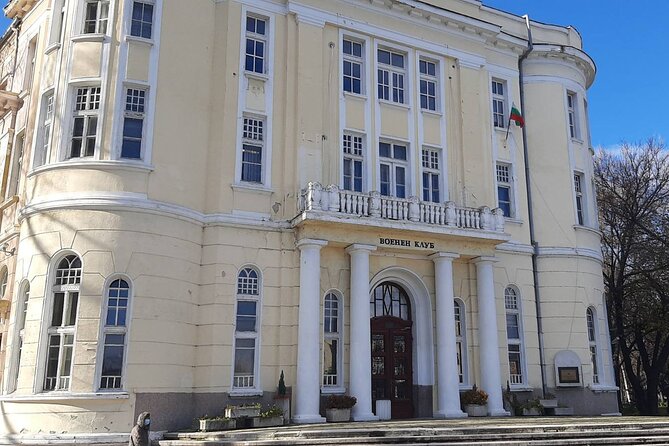
Next comes Djumaya Mosque, located in the center of today’s pedestrian zone, just west of the Old Town. The mosque’s footprint is given as 40 by 30 meters, which is a nice, concrete detail. It helps you grasp size quickly when you’re looking at it from a street-level perspective.
This is a stop that adds balance. Roman sites can dominate your attention—then suddenly you’re looking at a landmark tied to a different era and a different type of public life. In practical terms, it also helps you orient yourself through the middle of the city so the Old Town stretch later feels more logical than wandering.
Free admission means you can linger briefly if something catches your eye.
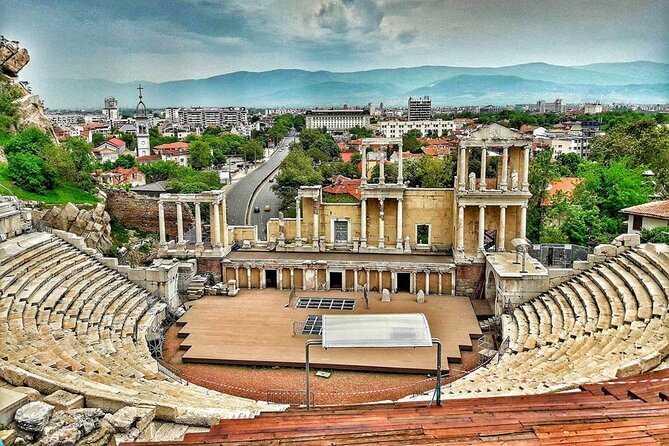
Ancient Theatre of Philippopolis (One of the Best-Preserved in Its Category)
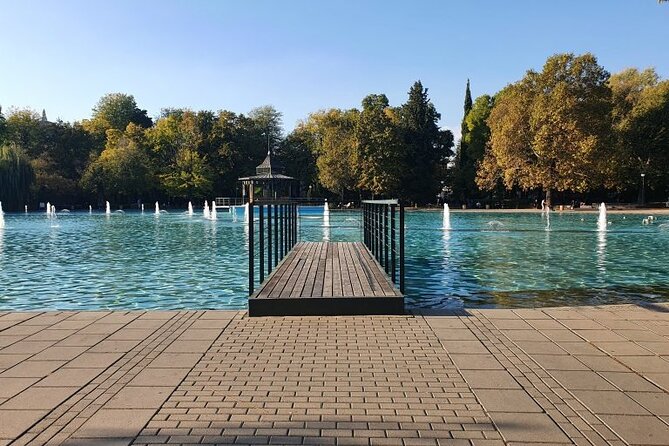
Then you reach the Ancient Theatre of Philippopolis, and this is a big reason people make the time for Plovdiv. The theatre is described as among the best preserved ancient theatres in the world, and it’s one of the main attractions in the city.
Plan for this carefully because the admission is not included. If you have a tight budget, you can still appreciate the exterior and setting, but the full payoff comes when you actually enter and experience the space as a theatre.
Why this stop is worth it: a theatre isn’t just a pile of seats. It’s built to focus sound, movement, and attention. Even with a short visit, you’ll be able to see how Roman city planning shaped everyday experiences—watching performances, gathering, and listening in a purpose-built structure.
Plovdiv Old Town: Renovated 19th-Century Streets (Not Just Ruins)
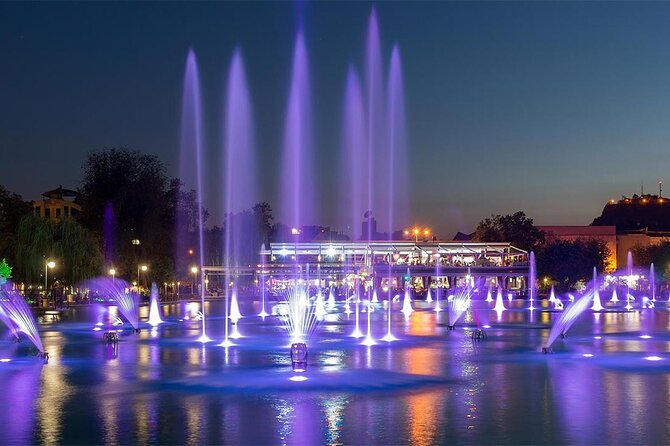
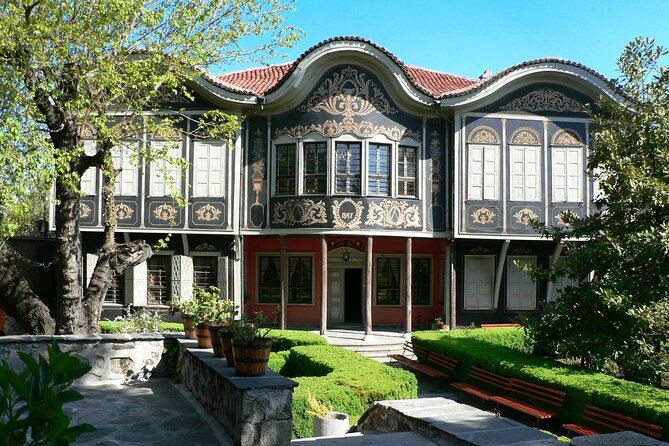
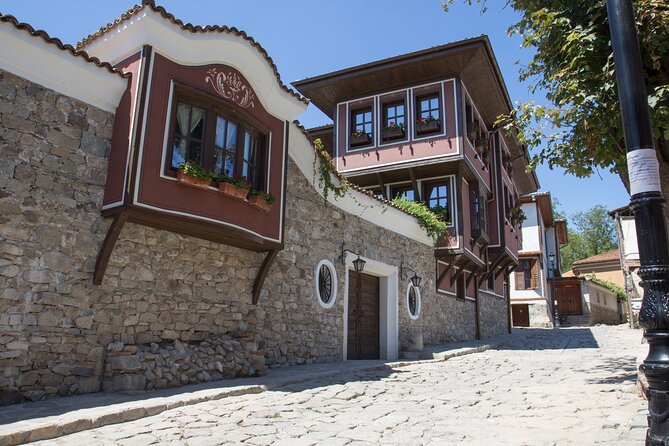
After the Roman and Islamic landmarks, you transition into Plovdiv Old Town, where the architecture is tied to the 19th century, with buildings renovated. This matters because it prevents the itinerary from becoming only a history lecture of ancient and medieval layers.
Here’s the practical appeal for you: you get a more human-scale walk. You’ll be able to slow down, take street-level photos, and enjoy the feel of the area without needing to pay another entry fee. The stop has free admission, so you can treat it as decompression time.
If you’re the type who likes to see how the past remains visible in daily life, this part is important. Plovdiv doesn’t just preserve ruins. It also shows you how later eras built around the older city structure.
Saints Constantine and Helena Church on the Fortress Wall (Early Christianity with a Strong Setting)
The tour heads to Saints Constantine and Helena Church, located on the fortress wall of the Acropolis in the center of the old part of the city. This is one of those locations where the setting is almost part of the lesson.
The church is an ancient Christian site in Plovdiv, and the fact that it sits on the fortress wall gives it extra meaning. You’re not just seeing a religious building—you’re seeing it positioned within the defensive geography of the city.
This stop is free and works well right after Old Town because it shifts your attention from street details to vertical, structural context. You’ll spend about 10 minutes, which is enough for orientation and a few good views if the light is decent.
Nebet Tepe Archaeological Complex (Where the City’s Layers Feel Official)
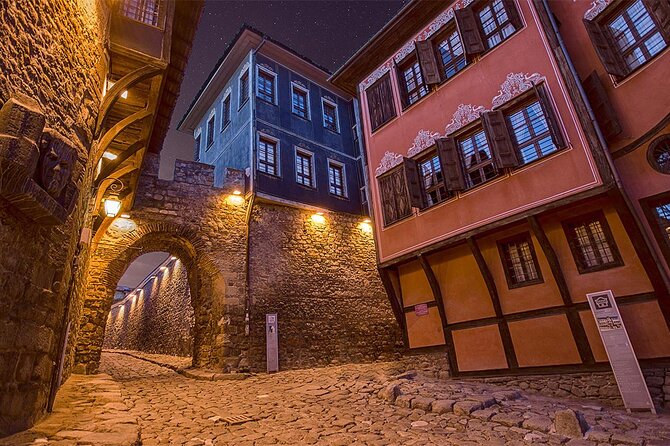
Next comes the Nebet Tepe archaeological complex. It’s recognized as a cultural monument of national importance, which signals that this area isn’t just locally interesting—it’s officially protected and valued.
You’ll have about 15 minutes here, and because admission is free, it’s an easy stop to include in your day even if you’re not sure how much archaeological detail you want. This portion works best if you enjoy piecing together the city like a layered puzzle: different eras on top of each other, different kinds of constructions, and different reasons the same ground stayed important.
If you’re curious, ask your guide what they think you’re seeing from the vantage you’re standing in—archaeology becomes much easier when you know how to read what’s in front of you.
Sveta Bogoroditsa / Uspenie Bogorodicno Church (Orthodox Plovdiv and Cathedral-Level Status)
The route finishes this cluster with Sveta Bogoroditsa (also known as Uspenie Bogorodicno), an Orthodox church in the Old Town. It’s described as a cathedral of the Plovdiv high priest of the Orthodox Church.
Even if you’re not visiting for religious reasons, this stop gives you something useful: it shows you how Plovdiv’s older city core still functions with active religious significance. That’s a key difference between ruins as museum pieces and ruins as lived-in space.
It’s free, and you’ll spend about 15 minutes. That timing is good because it gives you enough time to look closely and then move on without turning the tour into a long sit-down.
How the Guide Makes the Route Feel Coherent (Dimitar as a Prime Example)
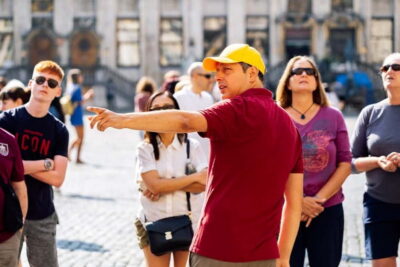
The best part of this experience is how it connects the dots. The guide is credited with delivering a large amount of information without turning the walk into a sprint. One guide named Dimitar is especially praised for being friendly and for choosing an informative pace that doesn’t leave you behind.
That said, there’s one fair warning to keep in mind. Some people want more stories—more anecdotal context that feels like you’re listening to a person rather than a reference book. If you’re that kind of learner, go in with a small strategy: ask for a legend, a personal detail about how the city thinks about these sites, or what a first-time visitor usually misses. A good guide can usually steer into that mode if you ask.
Timing and Comfort: How to Make This a Pleasant Walk
This is a walking tour, and the tour is set for about 2 to 3 hours, so you’ll want to dress for movement. Because the experience requires good weather, you should expect the organizer to reschedule or refund if conditions are poor. In other words: check the forecast, and be ready with a backup plan.
Also, you’ll be doing a mix of open-air monuments and church/mosque stops. That’s why the route works best when you show up not just curious, but ready to look up, look around, and take a few moments at each site rather than racing to the next one.
Who Should Book This Plovdiv Walking Tour
This tour is a strong fit if you want:
- Roman landmarks without getting lost in vague descriptions
- A quick overview of multiple faith periods in the same area (Roman, Ottoman, Orthodox)
- An English guide and a small group so you can ask questions
- A plan that’s roughly half a day and still feels like you covered the right core
It may be less ideal if you only want museums and indoor exhibits. The route is built around landmarks and sight-reading the city through major sites, with some optional entry costs if you decide to go inside.
Should You Book This Plovdiv Walk?
I think you should book if you’re spending limited time in Plovdiv and you want the city’s major layers in a single, sensible route. The price feels fair because so many stops are free, and you’re paying for the English guide who helps you see meaning, not just architecture.
I’d skip or at least reconsider if you hate paying small extra entry fees or you dislike guided tours that lean factual over story. In that case, go anyway only if you’re comfortable asking for more human details. If you like structure, clarity, and a well-paced route through the old core, this one is a very solid choice.
FAQ
How long is the Plovdiv Old Town and Roman landmarks walking tour?
The tour lasts about 2 to 3 hours.
What does the tour cost?
It costs $31.28 per person.
Is the tour guided in English?
Yes. The tour includes professional guide services in English.
What is the maximum group size?
The group is limited to a maximum of 10 travelers.
Where does the tour start and end?
It starts and ends at the Ancient Stadium of Philipopolis, Staria grad, Plovdiv Center, ul. Hristo G. Danov, 4000 Plovdiv, Bulgaria.
Is admission included for all stops?
Not all admissions are included. The Ancient Theatre of Philippopolis is not included, and Roman ruins and Old Town museum entries cost $2.50 per entry. Other listed stops have free admission.
Do I need to print a ticket?
No. The tour uses a mobile ticket.
Is the meeting point near public transportation?
Yes, it is near public transportation.
What if the weather is bad?
The experience requires good weather. If it’s canceled due to poor weather, you’ll be offered a different date or a full refund.
Can I cancel for a full refund?
Yes. You can cancel for a full refund up to 24 hours in advance of the experience start time.