REVIEW · ARCHAEOLOGICAL SITE OF OLYMPIA
Private Guided Tour of Ancient Olympia
Book on GetYourGuide →Operated by Gästeführerin Olympia - Tour guide Olympia · Bookable on GetYourGuide
Ancient Olympia has a way of slowing you down. This private, guided walking tour focuses on the sacred grove of Zeus and the key places that connect ancient games to the modern Olympics. I love the mix of big landmarks and close-up storytelling, especially the chance to pair the site with the Site Museum and its original Temple of Zeus sculptures. One watch-out: museum entry tickets are not included, so plan for that extra cost on arrival.
The tour lasts almost 2.5 hours on foot, and it’s designed to make sense of the sanctuary, not just point at ruins. I also like the private format up to 7 people, with an English/German/Greek live guide and a skip-the-line approach that helps when your time is tight. The only real drawback is that 2.5 hours goes fast—so if you want to linger for photos in every corner, you’ll feel a bit rushed.
In This Review
- Key things that make this tour worth your time
- Ancient Olympia’s big idea: sport, peace, and religion in one place
- Meeting at the ticket booth and what “private group” changes
- The sacred grove of Zeus: where myth becomes a walkable map
- Walking the oldest Olympic stadium (and why it still matters)
- Temple of Zeus location: a Seven Wonders stop with meaning
- The Olympic Flame spot: ancient symbolism carried forward
- The Site Museum: original statues explained, not just displayed
- How long is 1 day, really? Timing on foot and pacing
- Skip the ticket line: what it means for real-world comfort
- Price and value: $294 per group up to 7 (and what you get)
- Languages and guide style: why explanations matter here
- Who should book this tour (and who might skip it)
- Should you book this Private Guided Tour of Ancient Olympia?
- FAQ
- How long is the Private Guided Tour of Ancient Olympia?
- Where do we meet the guide?
- Is the Site Museum entry ticket included in the price?
- What is included in the tour?
- What languages are available for the live guide?
- Is this a private tour?
- Is there skip-the-line access?
- Can I cancel if my plans change?
Key things that make this tour worth your time
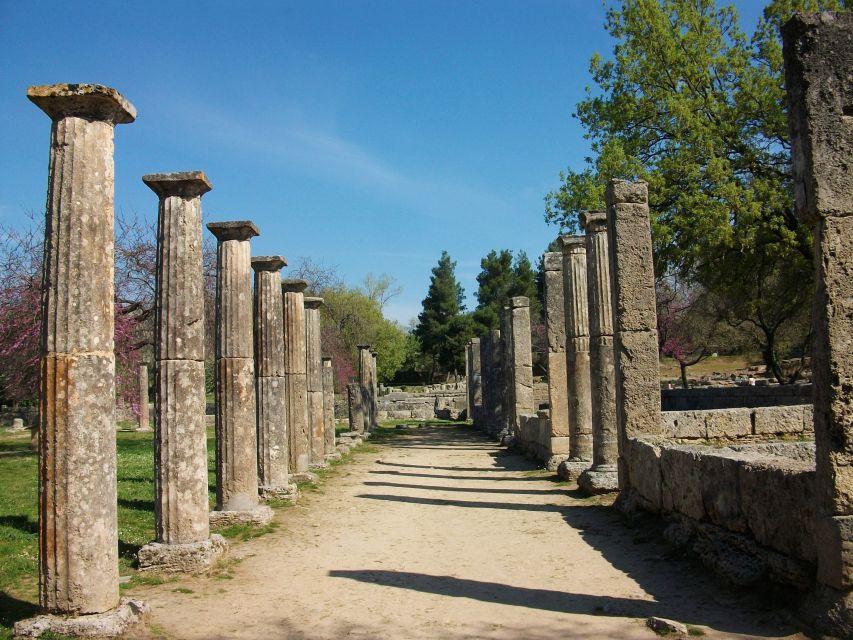
- Sacred grove of Zeus walkthrough through religious and auxiliary buildings, not a quick photo stop
- Oldest Olympic stadium on the same ground where ancient competition shaped Greek identity
- Temple of Zeus site visit tied to the Seven Wonders of the ancient world
- Modern Olympic Flame connection—the place where the Olympic Fire is lit every four years
- Site Museum with original statues from the Temple of Zeus, explained by your guide
Ancient Olympia’s big idea: sport, peace, and religion in one place
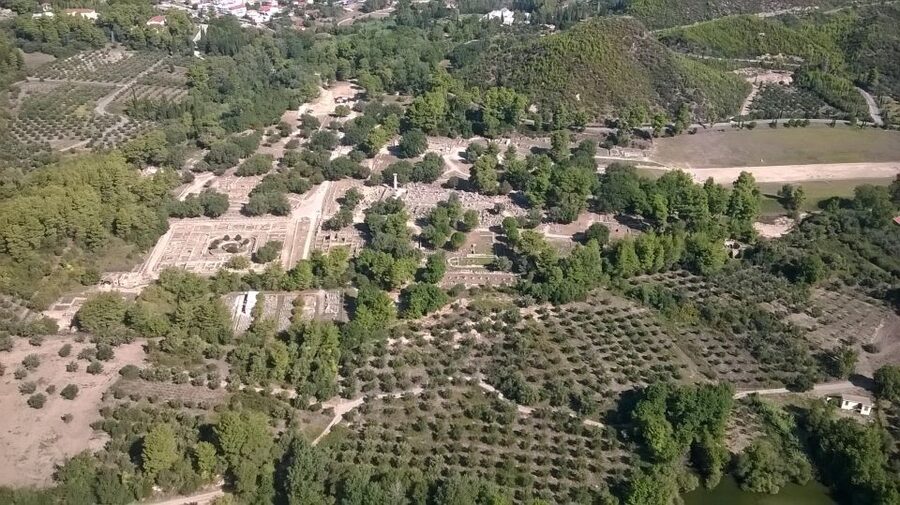
Ancient Olympia wasn’t only about athletes. It was a sanctuary where the Greeks used sport, ritual, and myth to support a bigger social message—peace and unity—especially when different city-states agreed to pause conflict for the games.
That’s why this tour feels satisfying even if you’re not a hardcore history person. You’re walking through a place where worship and competition were built into the same landscape, so the ruins don’t feel random. The guide’s job is to connect the dots: gods, heroes, rituals, and why the Greeks treated athletic excellence as something moral, not just physical.
If you like your travel meaningful and not just scenic, Olympia delivers. And if you’re here because you care about the Olympics, the symbolism goes well beyond a passing reference.
You can also read our reviews of more tours and experiences in Archaeological Site Of Olympia.
Meeting at the ticket booth and what “private group” changes
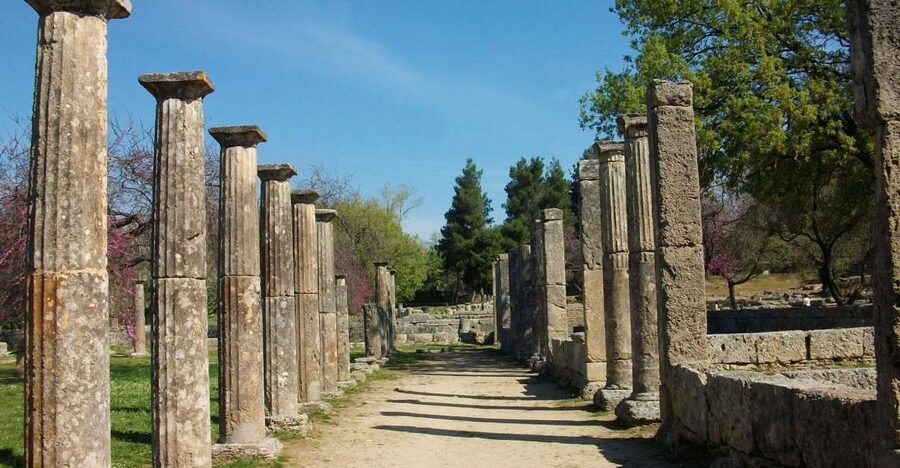
You meet at the ticket booth of the archaeological site. That matters because you’re not wandering around trying to find a meeting point after you arrive—your guide finds you right where the action begins.
This is a private group with a maximum of 7 people, which is a sweet spot. Small groups mean the guide can pace you and explain details in a way that actually lands. It also helps if your group has different interests: someone wants stadium specifics, someone else wants temple symbolism, and you can still cover all the major stops.
The tour is also offered with live guidance in English, German, and Greek. So if you want to hear the site’s meaning in a language you’re comfortable with, you can match your day to your comfort level.
The sacred grove of Zeus: where myth becomes a walkable map
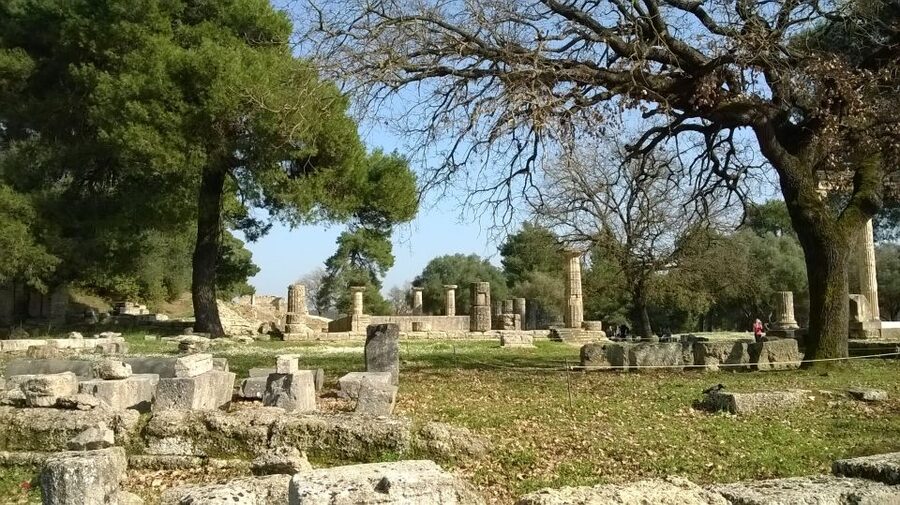
The heart of this experience is a guided walk through the sacred grove of Zeus, including the religious and auxiliary buildings. Instead of treating Olympia like a checklist of ruins, the tour uses the buildings to explain how the sanctuary functioned.
You’ll get context for how Olympia grew from a festival idea that started local to a bigger pan-Greek event over time. The sanctuary is tied to the Greek sense of harmony between body and mind—where sport and philosophy weren’t strangers. Even if the buildings look fragmentary today, your guide helps you see how they fit together as a working spiritual center.
This stop is also where you’ll feel the pace of the day. You’re moving steadily, but the guide keeps pointing out what to watch for—so you’re not just walking past rocks. If you’ve ever visited ancient sites and felt like you missed the storyline, this format helps prevent that.
Walking the oldest Olympic stadium (and why it still matters)
One major highlight is the oldest sports stadium, the historic ground of the Olympic Games. Standing where the competition began centuries ago does something to your imagination. It’s not just a backdrop; it’s the stage for an idea the ancient world took seriously: good competition, fair rules, and personal excellence.
In a guided setting, the stadium becomes more than a wide open space. Your guide frames it with the sanctuary’s values—peace, unity, and a code of behavior tied to the gods. That turns the stadium into a moral and cultural symbol, not just seating stones.
Practical tip: wear shoes you trust. Even if Olympia isn’t a steep climb day, you’ll be on uneven surfaces and across ground that can feel harsher in strong sun. If your feet are happy, the stadium moment lands harder.
Temple of Zeus location: a Seven Wonders stop with meaning
Next up is the location of the Temple of Zeus, famous as one of the Seven Wonders of the ancient world. Even though you’re not looking at the full structure the way visitors once did, the guide helps you understand why this spot carried such weight.
This is where the tour helps you avoid the common ancient-site problem: seeing big name ruins with no sense of what made them important. Your guide connects the temple to the sanctuary’s religious core and to the way Greeks expressed ideals through art and myth.
Expect to come away with a clearer picture of what kind of grandeur this temple represented. It also sets up the museum visit well, because you’ll soon see how the Temple of Zeus’s sculptures shaped the visual language of the gods.
The Olympic Flame spot: ancient symbolism carried forward
A standout highlight is the place associated with the Fire of the modern Olympics—lit every four years. That’s not just trivia. It’s a deliberate thread linking modern global sport to Olympia’s ancient identity as a sacred competition site.
When you hear how the Flame connects across time, the tour feels more than educational. It becomes personal, even if you don’t follow ancient history closely. You’re standing in a setting that still plays a role in Olympic tradition—just in a modern form.
I like this stop because it gives your brain an anchor. You can move from gods and rituals to something current without losing the plot. If you’re visiting from outside Europe and the Olympics are a big part of your identity, you’ll probably enjoy this moment most.
The Site Museum: original statues explained, not just displayed
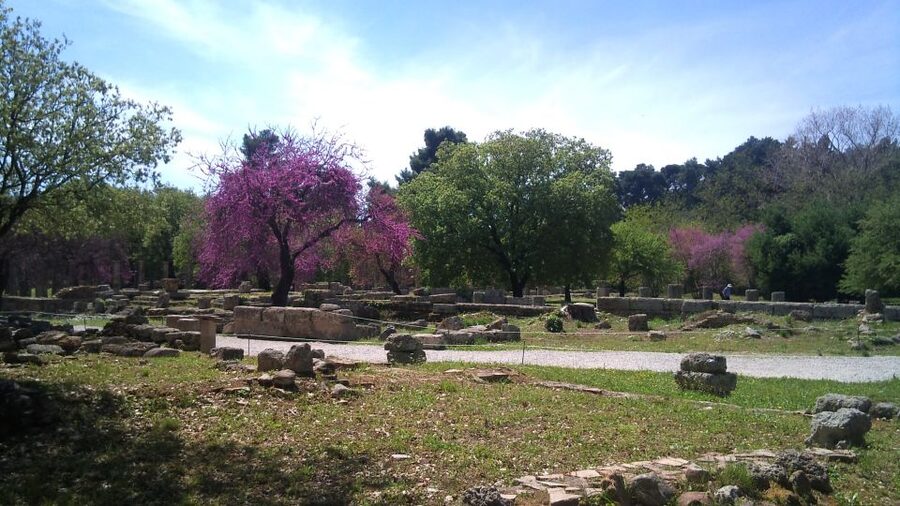
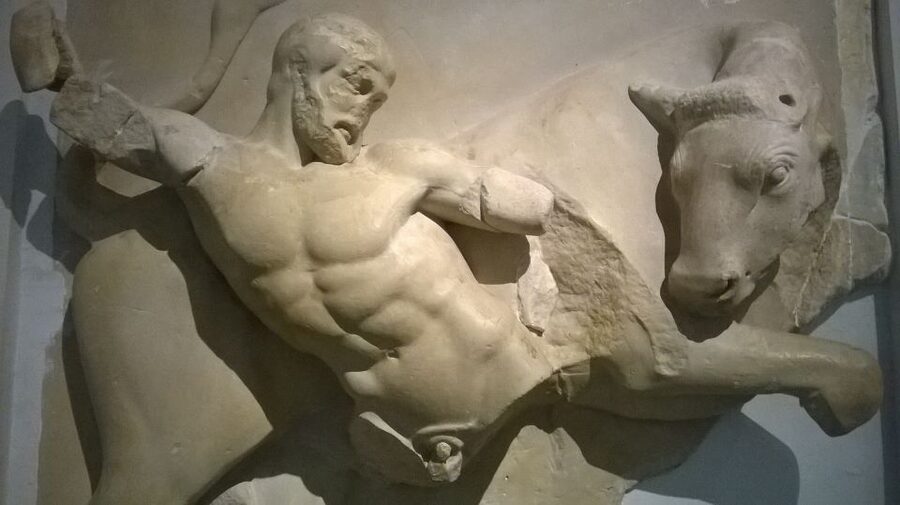
The tour includes a visit to the Site Museum with guided attention to the original statues that decorated the Temple of Zeus. This is a key part of the value because museum visits can easily become passive: you look, you read one line, you move on.
Here, your guide connects the sculptures to the ideas you heard outside. That makes a difference. Instead of treating the temple decorations as isolated artworks, you see them as part of how the ancient Greeks communicated ideals—beauty, power, divine order, and the myths attached to those figures.
A practical note: museum entry tickets are not included. The guidance is included, but the ticket itself is something you’ll need to purchase separately. Plan your timing so you’re not waiting around with your phone in hand trying to figure out what you need.
Also, expect a more controlled environment than the outdoor walking. If your group includes someone who gets tired easily, the museum portion is usually a good place to reset.
How long is 1 day, really? Timing on foot and pacing
The tour is valid for 1 day, but the experience itself is about almost 2.5 hours of guided walking through the site and museum. That time window is actually well thought out if you’re combining Olympia with other stops in the Peloponnese.
Still, understand the pacing. This is not a slow “walk and stare” day. It’s a structured walk with interpretation built in, so your guide can cover the sacred grove, the stadium, the temple location, the modern Flame connection, and then the museum.
If you have limited time—like a short shore stop on a cruise—this kind of tour is exactly the kind of plan that prevents you from missing the highlights. On the other hand, if you love spending extra time photographing every angle, you may wish you had a longer window.
Skip the ticket line: what it means for real-world comfort
The tour includes skip-the-ticket-line. In practice, that’s one less stress point on a busy day. You’ll spend more time actually experiencing Olympia and less time waiting at the entrance.
Because your meeting point is the ticket booth, it’s also easier to sync with your guide’s timing. You’re not trying to coordinate with a moving crowd across a huge site.
I’d also treat it as a comfort factor. Even if you’re excited, time spent standing in lines can drain your energy fast, especially in warmer months or bright sun.
Price and value: $294 per group up to 7 (and what you get)
The price is $294 per group for up to 7 people for a day tour. That’s the big value angle: it’s priced for group economics, not per-person pricing that spikes as soon as you buy tickets for a couple.
Here’s the simple math:
- Up to 7 people means about $42 per person (maximum group).
- Fewer people means it climbs, but it still stays competitive compared with many private guides that charge per person.
What you get for that price is the key: guided tour of the site and museum, plus skip-the-line entry assistance. The only meaningful extra cost noted is museum entry tickets. If you’re traveling with 3–7 people, this is especially strong value because everyone shares the guide time.
Also, the tour is private, so your guide can tailor explanations to your pace. That tends to matter more at Olympia than at some sites, because the place is full of layered meaning and symbolism.
Languages and guide style: why explanations matter here
The guide provides live commentary in English, German, or Greek. Language choice matters because Olympia’s best parts are interpretive. You’re walking through myth, ritual, and cultural ideals—things that don’t always read clearly just from signs.
From the tone of guide feedback associated with this experience, the guide approach is friendly and extremely detailed. In particular, the name Maria shows up in bookings as a standout guide, with praise for strong German delivery and thorough, inspiring explanations.
What I like about that kind of guidance is that you don’t feel like you’re hunting for context. The tour structure does the heavy lifting, and your guide gives you the reasons behind what you’re seeing.
Who should book this tour (and who might skip it)
This tour is a great match if you want:
- a first-time Olympia visit that still feels meaningful
- a private setting for families, couples, or a small group
- the link between ancient sport and the modern Olympic Flame
It’s also a smart choice if you’re short on time and want the major highlights covered without guesswork. The almost 2.5-hour structure plus museum stop is built for that kind of day.
You might consider another option if you want a very long, unstructured roam through Olympia. The tour is focused and time-efficient, not open-ended. And remember the museum tickets are separate, so budget a little extra.
Should you book this Private Guided Tour of Ancient Olympia?
Yes—if your priority is getting the story right while you walk the sacred grounds. The combination of sacred grove focus, oldest stadium highlight, Temple of Zeus context, Olympic Flame connection, and the Site Museum with original Temple sculptures makes this more than a quick ruin circuit.
It’s also a good value for a small group because the $294 per group setup makes the math friendlier than most private-per-person options. Just plan for the museum entry tickets and wear shoes that handle stone and uneven ground.
If you want Olympia to feel understandable and alive, book it.
FAQ
How long is the Private Guided Tour of Ancient Olympia?
It includes almost 2.5 hours of guided walking through the Ancient Olympia area, plus the museum visit.
Where do we meet the guide?
You meet at the ticket booth of the archaeological site.
Is the Site Museum entry ticket included in the price?
No. Museum entry tickets are not included, but the guided tour in the museum is included.
What is included in the tour?
You get a guided tour in the site and the museum.
What languages are available for the live guide?
The live guide is available in English, German, and Greek.
Is this a private tour?
Yes. It is a private group with up to 7 people.
Is there skip-the-line access?
Yes. The tour includes skip the ticket line.
Can I cancel if my plans change?
Yes. Free cancellation is available up to 24 hours in advance for a full refund.