REVIEW · BRUSSELS
Private Historical Tour: Highlights of Brussels
Book on Viator →Operated by Legends of Bruges Free & Private Tours · Bookable on Viator
Brussels tells its story in a walk. In this private historical tour, you connect the city’s biggest symbols and some quieter corners in about 2.5 hours. I especially like how it starts at the Grand Place first thing, then keeps the momentum with major landmarks and useful context.
Two things I’d call out right away: you get a tight overview with free entry stops (no extra ticket surprises) and you finish at Mont des Arts with a view that makes the whole route feel worth it. The main consideration is pacing: each stop is short, so if you want deep time inside any one place, this plan is more about orientation than lingering.
Even with the quick rhythm, the guides can make a difference. English-speaking guides on this tour are praised for clear Belgium explanations and humor, including names like Sebastian, Daniel, and Don, who also point out small details and off-the-beaten-path angles. You’ll want comfy shoes, because you’re covering a lot of central Brussels on foot.
In This Review
- Key highlights worth planning for
- The route: how this 2.5-hour Brussels overview actually feels
- Starting at Grand Place with a red umbrella: your orientation moment
- Comic art + Tintin vibes: why Brussels includes pop culture on a history walk
- Manneken Pis and St. Nicholas Church: the playful side plus the older spine
- La Monnaie and St. Hubert: culture and the arcade you’ll want to walk twice
- Saint-Géry Island to Royal Park: a modern-feeling pause between big monuments
- St. Michael & St. Gudula Cathedral and Royal Square: where the story turns serious
- Mont des Arts finish: why the last view matters
- Price and value: is $105.36 per person worth it?
- Guide quality is the difference-maker on this route
- What’s included (and what to plan around)
- Who this Highlights of Brussels tour suits best
- Should you book this private Highlights of Brussels tour?
- FAQ
- How long is the Private Historical Tour: Highlights of Brussels?
- Is this tour private?
- What language is the tour offered in?
- How much does the tour cost?
- Where does the tour start and where does it end?
- Is there an admission fee for the stops?
- Are food and drinks included?
- How do I get the tickets?
- Does the tour run in bad weather?
- Is there a cancellation option?
Key highlights worth planning for
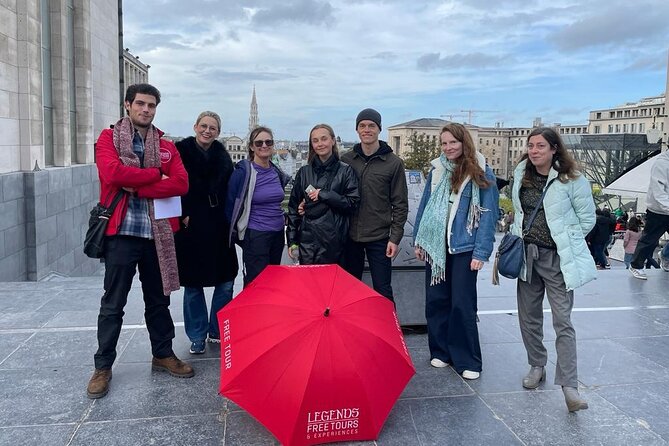
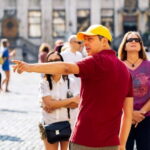
- Grand Place meeting point: your guide waits with a red umbrella in front of the city hall
- Free entry at every stop: the itinerary lists admission as free throughout
- Comics stop built into the history: a quick stop for the Comic Art Museum and the city’s mural culture
- Brabant Gothic cathedral visit: St. Michael & St. Gudula Cathedral takes you back to the 13th century
- Opera-house exterior focus: La Monnaie (Théâtre Royal de la Monnaie) adds culture and architecture
- Easy “finish line” viewpoint: Mont des Arts ends with high-up city views close to the center
The route: how this 2.5-hour Brussels overview actually feels
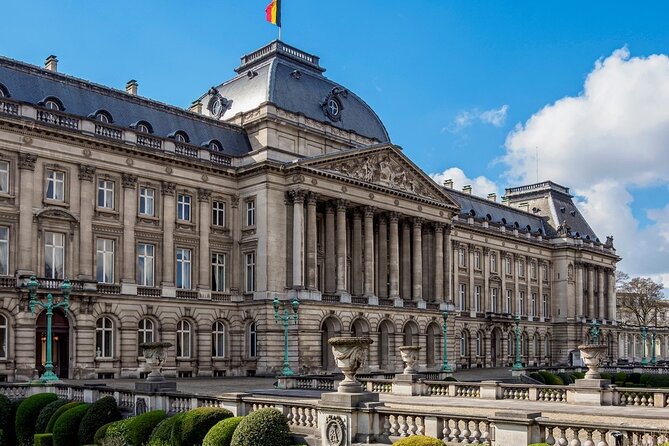
This is a private tour in central Brussels with a walking loop that hits the recognizable sights without turning the day into a marathon. The duration is listed at about 2 hours 30 minutes, and the itinerary is built from short, timed stops—usually around 10 to 15 minutes each. That means you’ll see a lot, but you won’t have hours to sit and fully explore one single place.
I like this format when my goal is simple: get my bearings fast and understand how the city connects—politics, culture, religion, and pop icons. Brussels can feel like separate worlds if you arrive cold. This tour stitches them together in one flow, starting from the big visual statement at the Grand Place and gradually expanding outward.
The tour also runs in all weather conditions, so you should dress for wind, rain, or bright sun. A private format helps here: if you’re dealing with a drizzle or need an extra photo moment, your guide can adjust the rhythm slightly as long as you still keep the full route.
You can also read our reviews of more tours and experiences in Brussels.
Starting at Grand Place with a red umbrella: your orientation moment
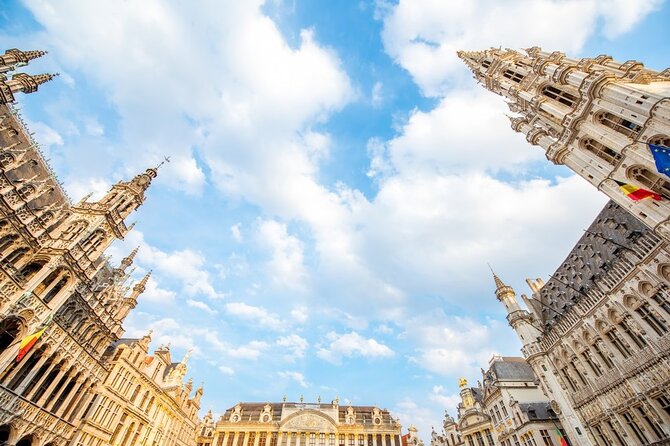
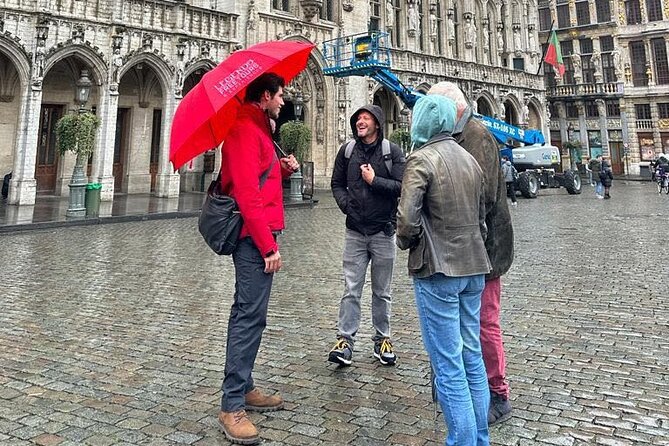
You start at Grand Place (Grote Markt), 1000 Brussel. The guide is waiting for you with a red umbrella in front of the city hall, which makes the start feel calm and organized even if you’re arriving a few minutes early.
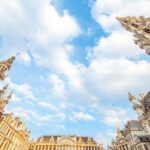
Grand Place is the perfect opening because it gives you the “Brussels power map” in one view. The UNESCO-listed square is famous for opulent guildhalls and the Town Hall, where the architectural style mixes Gothic and Baroque looks in a way that’s very Brussels. Even if you’re only stopping briefly, you’ll get the main idea: this city’s wealth and identity were built around civic pride and trading power.
Practical tip: take one minute to look up before you start moving. A quick scan of the façades tells you more than a rushed photo. If you keep that habit, every later stop will make more sense.
Comic art + Tintin vibes: why Brussels includes pop culture on a history walk
Next up is the Comic Art Museum – Brussels. Brussels has always loved telling stories with images, and comic strips are part of that identity. This stop is short, but it helps you understand why the city’s walls are covered with murals of familiar characters.
This is one of those “small” inclusions that ends up being big for the way you see the rest of the city. When you understand that comics are treated as cultural heritage here, you start noticing the details elsewhere—street-level references, playful iconography, and how the city mixes formal history with everyday fun.
If you come to Brussels expecting only palaces and churches, this stop corrects that. It gives you permission to treat the city’s modern identity as something historical too.
Manneken Pis and St. Nicholas Church: the playful side plus the older spine
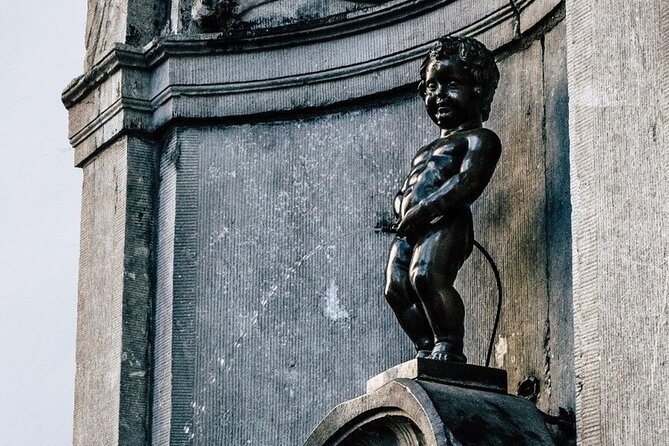
Then you hit Manneken Pis, the iconic little bronze boy. This isn’t just a photo stop; the point is what the statue represents—local tradition and long-running civic folklore. It dates back to the 17th century, so even in 10 minutes you’re connecting to the kind of history that’s more about how people live and joke than how empires rewrite maps.
After the whimsy, you pivot to St. Nicholas Church. It’s described as one of the oldest churches in Brussels, with foundations laid in the 12th century. You also learn about the idea that it once had the one and only belltower in Brussels used to show the city’s wealth and independence.
That contrast is smart. Manneken Pis is the city’s personality; St. Nicholas is the city’s long timeline. Together, they make you feel the rhythm: Brussels doesn’t only do grandeur. It also preserves meanings through odd little symbols and stubborn older structures.
La Monnaie and St. Hubert: culture and the arcade you’ll want to walk twice
The tour continues to La Monnaie – De Munt, focusing on the Théâtre Royal de la Monnaie. Even if you don’t go inside, it matters because opera houses in Europe are built like monuments. The stop is listed at 15 minutes, which usually gives you time to orient yourself, read key architectural cues, and get a sense of why performances here carry prestige.
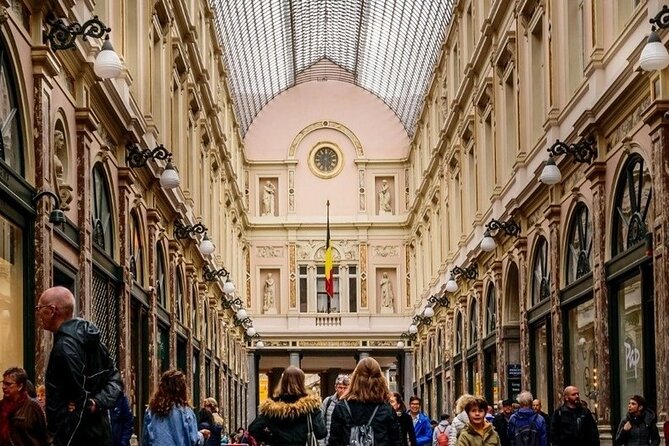
From there, you walk into Les Galeries Royales Saint-Hubert. This is one of the world’s oldest shopping galleries, and it’s not just “cute stores.” It’s also an architectural experience: a covered arcade where luxury boutiques, theaters, and cafés sit under glassy rooflines and elegant façades.
I like this stop because it gives you a breather without breaking the history thread. You get a break from open squares but still stay in the center of Brussels. If you have even a little shopping curiosity, it’s also a good moment to buy a snack or coffee. Just don’t plan a long sit-down here; the tour is timed.
Saint-Géry Island to Royal Park: a modern-feeling pause between big monuments
Next is Saint-Géry Island, a trendy district known for nightlife and cultural spaces in a former market area. The tour frames it as a change of pace—more streets to wander, more energy in the corners. With a 15-minute stop, you’ll likely get a “feel” for the area rather than a full neighborhood immersion, but that might be exactly what you need after several centuries of stops.
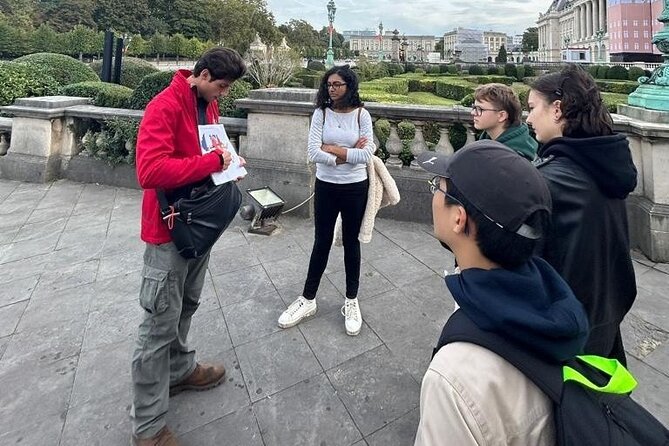
Then you move to Parc de Bruxelles (Royal Park), located between the Royal Palace and Belgian Parliament. The practical value here is simple: it gives your eyes and legs a soft reset. Even a short green space stop helps you later when you’re trying to mentally organize what you saw. You’re not only collecting sights; you’re building an internal map.
If you’re traveling with kids or anyone who gets museum-fatigue, these quieter breaks are a strong reason to pick a guided route like this. They keep the day from turning into nonstop standing.
St. Michael & St. Gudula Cathedral and Royal Square: where the story turns serious
One of the most impressive stops is St. Michael & St. Gudula Cathedral. You’re told it’s in Brabant Gothic style and connects to the 13th century, with legendary tales tied to the cathedral. It’s listed for 15 minutes, which is enough to see the scale and key elements even if you don’t go deep into every detail.
In Brussels, this kind of stop is where you start understanding “why” the city looks the way it does. Gothic churches weren’t just religious spaces; they were also statement buildings. If your guide points out what makes Brabant Gothic distinct, you’ll feel the difference immediately in the lines, proportions, and overall mood.
Then comes Rue Montagne de la Cour 2—the area around Royal Square, including the Royal Palace and the Belgian Parliament. The tour description highlights the statue of King Albert I and the neoclassical surrounding buildings.
This is a moment that makes Brussels political as well as architectural. You can go to the cathedral and learn how the city worshipped, then switch to Royal Square and see how the city governed—same center, different power.
Mont des Arts finish: why the last view matters
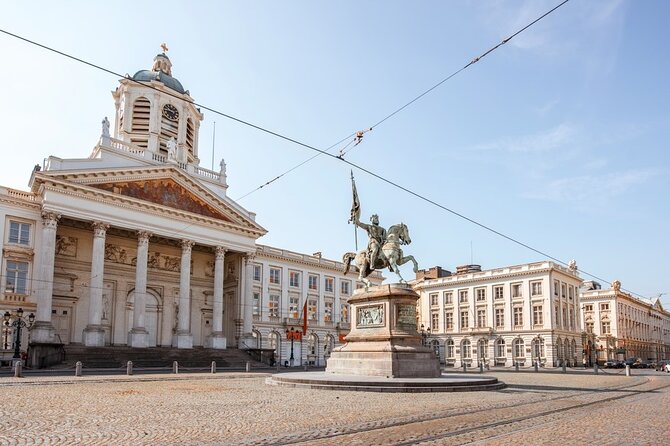
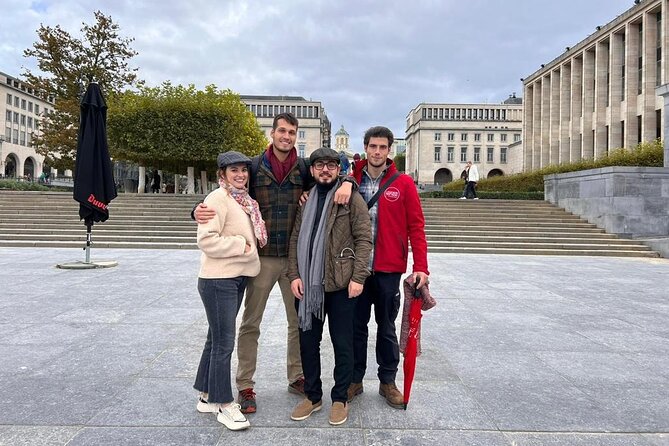
The tour ends at Mount of Arts (Mont des Arts), 1000 Brussels. It’s listed as a finish point with a beautiful view over Brussels, and the tour ends on top of the hill with a 10-minute walk from the start area.
Finishing high up is the smart move. By the time you reach Mont des Arts, you’ve already walked the main spine of sights. The view lets you reconnect them spatially: squares you saw earlier, the cathedral’s position, and how the center blocks and streets relate.
This is also where I’d use any extra camera time. It’s not just a postcard. It’s how you turn the day’s facts into a mental map you’ll remember later when you’re wandering on your own.
Price and value: is $105.36 per person worth it?
The price is listed at $105.36 per person for a private tour lasting about 2 hours 30 minutes. For many people, the value comes from two things: private pacing and a “no ticket cost” setup.
Here’s the practical part: the itinerary marks admission tickets as free at every listed stop, and the tour includes all fees and taxes. That matters because Brussels can nickel-and-dime visitors if you start adding separate entries. This plan is built to keep costs predictable while still hitting major sights.
Also, this tour is booked on average 38 days in advance, which is a small clue that it fills up. If you want this exact route with a private guide, it’s smart to reserve early rather than hoping last-minute availability works out.
If you’re traveling solo, the private aspect might feel like a bigger spend than a group bus tour. But if you want your questions answered and your guide to adapt to your interests, the private format is the whole point—and it’s the reason many people pay instead of just “doing it alone.”
Guide quality is the difference-maker on this route
This tour is only as good as the guide—because the stops are short and the “real value” is interpretation, not just location. The names that come up strongly include Sebastian, Daniel, and Don.
Sebastian is praised for being funny while explaining Belgium history clearly. Daniel is praised for being engaging and making the day feel like more than a checklist. Don is called out for spotting hidden details, taking people down narrow streets, and even explaining street slang like the term gang in context. There’s also praise for recommendations at the end—useful when you still have time in Brussels after the tour ends.
So when you book, think about what you want from your guide: clean explanations, humor, and pointers you can use next.
What’s included (and what to plan around)
The included items are straightforward: a local guide / professional guide, all fees and taxes, and the fact that it’s a private tour.
What’s not included: food and drinks, unless specified. Since the tour is timed and includes multiple central stops, you’ll want to plan a quick snack before you start or treat café breaks as optional.
Because the tour runs in all weather conditions, you’ll also want a light rain layer or umbrella plan. The itinerary is mostly outdoors and in public spaces, so you shouldn’t count on indoor time to protect you from rain.
Who this Highlights of Brussels tour suits best
This tour is a strong match if you want:
- A central Brussels overview without spending your day planning routes
- A guided connection between architecture, civic history, and cultural identity
- A one-session way to decide what to revisit later (churches, galleries, views, or museums)
It’s also good for families, as the route includes variety: square grandeur, playful statues, an opera-house stop, an arcade, a cathedral, and finally park and viewpoints.
Where it may not fit perfectly: if you want long museum time, quiet contemplation in one site, or very slow wandering, the short stop durations may feel rushed.
Should you book this private Highlights of Brussels tour?
I’d book it if your priority is getting your bearings fast and understanding Brussels beyond just landmarks. The free-entry structure, private guide, and end-of-tour view at Mont des Arts make the route feel efficient without being bare-bones.
I’d skip or supplement it if you already know Brussels well and only want one or two places in depth. This is an overview with excellent pacing, not a slow study.
My rule: if you’re spending a short time in the city, this kind of guided spine is a smart first move. It sets you up to explore the rest of Brussels with way more confidence.
FAQ
How long is the Private Historical Tour: Highlights of Brussels?
It runs for about 2 hours 30 minutes.
Is this tour private?
Yes. It’s a private tour/activity, and only your group participates.
What language is the tour offered in?
The tour is offered in English.
How much does the tour cost?
The price is listed as $105.36 per person.
Where does the tour start and where does it end?
It starts at Grand Place (Grote Markt, 1000 Brussel) and ends at Mount of the Arts (1000 Brussels).
Is there an admission fee for the stops?
The itinerary shows admission tickets as free at each stop, and all fees and taxes are included in the tour.
Are food and drinks included?
No. Food and drinks are not included unless specified.
How do I get the tickets?
A mobile ticket is included.
Does the tour run in bad weather?
Yes. It operates in all weather conditions, so dress appropriately.
Is there a cancellation option?
Free cancellation is available. You can cancel up to 24 hours in advance for a full refund.