REVIEW · ANTWERP
Private Historical Tour: Legends of Antwerp
Book on Viator →Operated by Legends of Bruges Free & Private Tours · Bookable on Viator
Antwerp loves big stories, and this tour stays in motion. In just about two hours you’ll connect the dots between the city’s Golden Age glory and the legends you’d never catch alone. I like that it’s truly private, so your guide can pace things for your group, and I also like the stop-by-stop mix of squares, lanes, and major sites. One thing to keep in mind: with this many legend-heavy highlights in a short walk, you’ll want to ask questions if you care about a specific angle of Antwerp’s past.
You start in the Grote Markt, where Antwerp’s symbols (yes, the city’s hand and giant talk) make more sense once someone explains the backdrop. You end near the Cathedral of Our Lady, after threading through medieval backstreets and landing on the printing world of Plantin-Moretus. It’s a great format if your time is limited and you want the human stories behind the stones. The main consideration is comfort: you’ll be on cobbles and will cover multiple blocks, so comfy shoes matter.
In This Review
- Key things I’d circle on your map
- A private 2-hour Antwerp story-walk (and why that timing works)
- Grote Markt: giants, the hand symbol, and Antwerp’s rise
- Het Steen: the oldest stone and the “giant” connection
- Museum Vleeshuis (Butchers Hall): guild power with a darker edge
- Carolus Borromeus Church: Baroque beauty and Rubens ties
- Farmers tower, the Meir, and the Rubens museum area: Antwerp as a city of layers
- Vlaeykensgang: the smallest street for a big medieval feeling
- Cathedral of Our Lady: finishing with legend in front of the landmark
- Plantin-Moretus: printing history that explains Antwerp’s influence
- What you’ll get from the guides (and how to use the time well)
- Value and who this tour suits best
- Should you book Legends of Antwerp?
- FAQ
- How long is the private Legends of Antwerp tour?
- Is this tour private or shared?
- Where does the tour start and where does it end?
- What’s included in the price?
- What language is the tour offered in?
- Do I need to buy admission tickets for the stops?
- Is mobile ticketing available?
- Is optional hotel pickup included?
- Can I use public transportation to get to the meeting point?
- Is service allowed on the tour?
- Can I cancel for a refund?
Key things I’d circle on your map
- Private, guided walking with only your group, so questions don’t get squeezed in at the end
- Grote Markt to Cathedral route that hits classic Antwerp landmarks without dragging
- Legends + Golden-Age context so the stories feel grounded, not random
- Small medieval streets like Vlaeykensgang that make the city feel scaled down
- Plantin-Moretus printing history for a different kind of Antwerp legacy
- English guidance with mobile tickets for a smooth start
A private 2-hour Antwerp story-walk (and why that timing works)
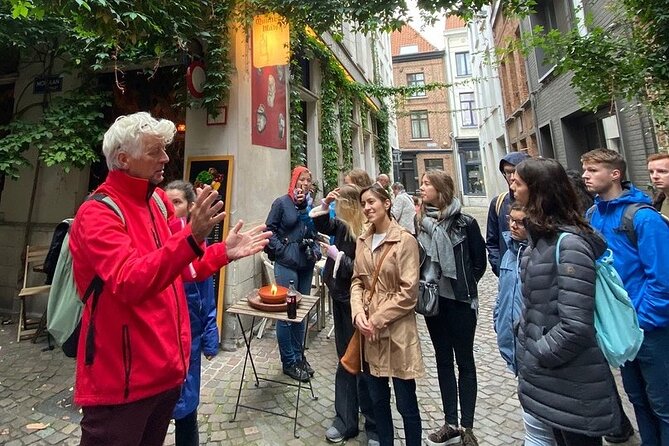
This tour is built for people who want Antwerp to make sense fast. Instead of hopping randomly between “must-sees,” you get a guided chain from the big civic heart to the church-and-lane world that formed the city’s identity.
At about 2 hours, you’re not stuck committing to a half day. That matters in Antwerp, where the best walking days can turn into “we’ll just do one more stop” days. Here, the itinerary is tight enough to keep momentum, but not so rushed that you’ll miss what you’re standing in front of.
Because it’s private, the pacing can adapt. That shows in how guides handle questions and how your group moves through busy areas around the main square. In reviews, guides like Flip of Antwerp, Luc D, Joske, and Beren get praised for making the city feel alive rather than lecturing.
One more practical note: this is a walking tour with street-level transitions. Plan for cobblestones and short stops where you’re listening more than reading signs.
Grote Markt: giants, the hand symbol, and Antwerp’s rise
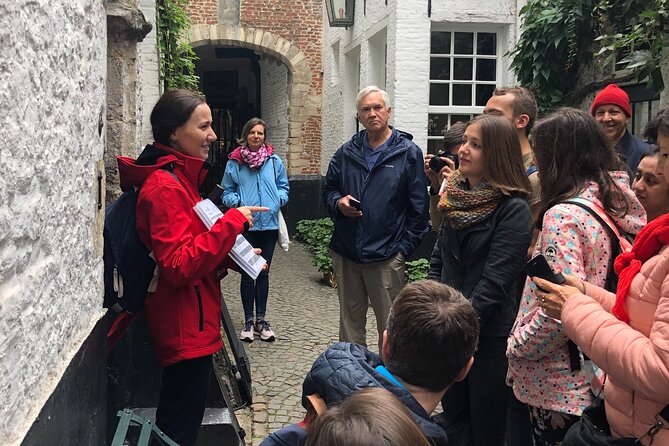
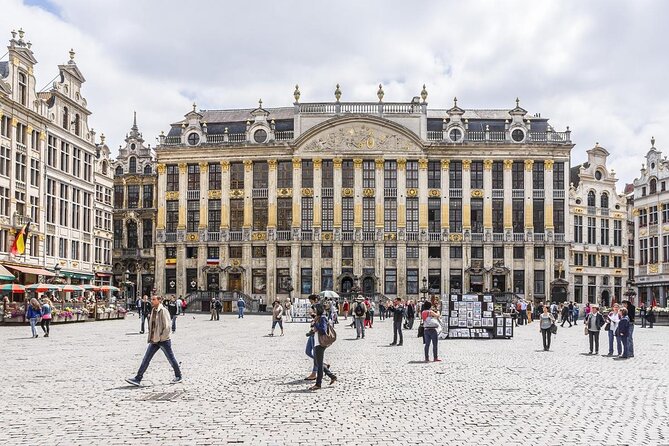
Your tour begins at Grote Markt, the city’s iconic main square. Even if you’ve seen photos, the square hits different in person. It’s the kind of place where the buildings seem to be talking to each other, and your guide’s job is to translate the chatter into story.
This is where the tour brings up Antwerp’s “city of giants” idea and the symbolism behind the hand. That’s not just trivia—it’s a way of understanding how Antwerp marketed itself and how people in different eras explained their world. When you’re standing in front of the square’s grand facades, the legends stop feeling like fun folklore and start feeling like how a city trained its identity.
You also get the big-picture arc: why Antwerp became the richest city in the 16th century in Europe, and what contributed to its later decline. The value here is balance. Antwerp’s story isn’t only about wealth and art; it’s also about shifting fortunes. A good guide helps you see that the decline wasn’t magic—it was part of broader change.
Possible drawback: because Grote Markt is where crowds gather and people wander, your “listening time” can feel short if you’re the type who reads every plaque. If you want maximum detail, ask your guide for one or two specific points before moving on.
Het Steen: the oldest stone and the “giant” connection
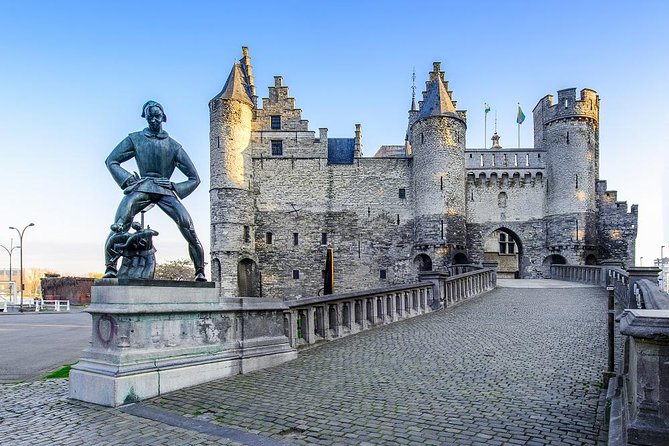
Next up is Het Steen, often described as the oldest building in Antwerp. It’s commonly called a stone castle, and it has that sturdy, river-era mood that makes it easy to imagine earlier Antwerp.
Why it matters on this tour: Het Steen isn’t just an old structure. It’s presented as a former home tied to the city’s giant stories, and it also served multiple roles over time. That gives you two benefits at once: you get the legend angle and you also get a sense of how buildings got reused as the city’s needs changed.
Even in a short stop, Het Steen works well because you can see the scale of the structure and get a feel for why it became a landmark. It’s the kind of stop that makes your later “legend” moments feel less random.
Museum Vleeshuis (Butchers Hall): guild power with a darker edge
Then you head toward Museum Vleeshuis, the Butchers Hall and the city’s oldest guild house. This is where Antwerp shows another side of its history: trade, organization, and power—plus a bit of the “don’t look away” realism that guild life could involve.
The tour frames it as a long history with often bloody associations. You don’t need gore to get the point. The message is that guilds were major engines of civic life. They weren’t just business groups; they helped shape streets, reputations, and the way Antwerp functioned.
What I like for your planning: even if you’re not an art-and-architecture-only person, this stop gives you a different lens. You’ll start seeing Antwerp as an organized machine of crafts and commerce, not just a stage for famous names.
If you’re sensitive to darker topics, you can steer the conversation. Ask your guide to focus on guild organization and urban influence rather than graphic details.
Carolus Borromeus Church: Baroque beauty and Rubens ties
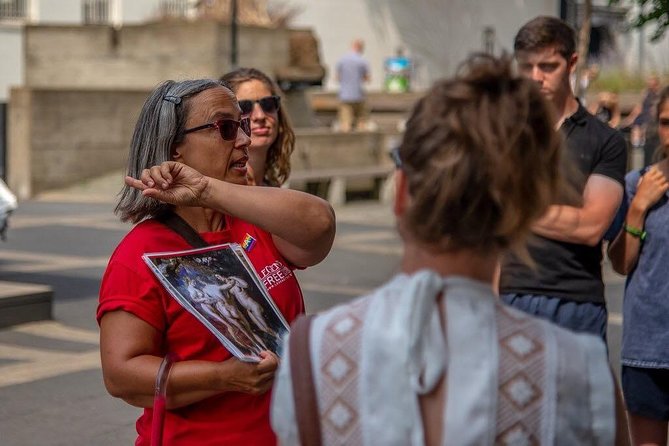
From guild power you shift into Baroque Antwerp with Carolus Borromeus Church. The tour links it to Rubens, describing it as once tied to his world—part of how Antwerp’s greatest painter lived and worked within a web of patrons, institutions, and churches.
This stop is valuable because it shows how art history sticks to places. You’re not just being told that Rubens existed; you’re guided toward the sort of cultural environment that supported him.
You also pass by places connected to Rubens’s orbit—this is where the tour includes a look toward the Rubens museum area (as you move through the city). The pacing here helps: you hear the church story, then you get Rubens in the background as you keep walking.
Practical tip: if you want to capture photos without rushing, position yourself right when your guide explains the connection. Waiting until later often means the group is already moving.
Farmers tower, the Meir, and the Rubens museum area: Antwerp as a city of layers
As you continue, you walk past the Farmers tower and along Meir, Antwerp’s well-known shopping street. That blend is part of the tour’s charm. You’re moving through modern life while your guide keeps pointing out the older “logic” beneath it.
Then you head toward the Rubens museum area, with the message that Rubens lived and worked in Antwerp his whole life. Even if you don’t go inside any additional museum during this tour, the narrative helps you connect famous art to a real street-level geography.
If you’re doing a quick Antwerp visit and want it to feel coherent, this is one of the tour’s smartest moves.
Vlaeykensgang: the smallest street for a big medieval feeling
After the main-city arteries, the tour slips into Vlaeykensgang, described as Antwerp’s smallest street. It’s exactly the kind of place that changes your sense of scale. One minute you’re in the wider city rhythm; the next you’re in a lane that feels like time got squeezed.
This stop works because it’s a break from “big names” and “grand squares.” You get a medieval throwback by walking through a narrower, more intimate space. Your guide uses the street setting to connect the medieval atmosphere to how people actually moved and lived.
Why I think it’s a highlight: this is where the tour becomes memorable in a personal way. It’s hard to forget a tiny street you had to physically navigate. It’s also the spot where you’ll notice cobbles, doorways, and the way old stone affects light and sound.
Cathedral of Our Lady: finishing with legend in front of the landmark
The tour ends at the Cathedral of Our Lady, with legendary stories tied to its long past. This is a strong finishing move. By the time you reach the cathedral, you’ve already collected the tour’s themes: city identity, guild organization, Baroque culture, and the kind of legends people used to explain themselves.
Standing in front of the cathedral gives you visual payoff. It’s a landmark that anchors the whole route. You’ll also likely appreciate that the tour ends close to the main square area, making it easy to keep exploring afterward.
A small consideration: if you’re the type who likes to linger with sketches or slow photography, the final listening block can feel “just enough” rather than long. That’s not a bad thing—it just means you should plan an extra fifteen or twenty minutes if you want more cathedral time on your own.
Plantin-Moretus: printing history that explains Antwerp’s influence
Before you fully wrap up, you reach Museum Plantin-Moretus area, with a focus on where industrial printing is described as having been born. The tour also mentions passing by the fashion quarter and fashion district, which makes the contrast fun: Antwerp is creative today, and it had an earlier creative revolution in how information got produced.
This stop matters because printing isn’t just a tech story. It changes who spreads ideas, how quickly, and what kind of cultural power cities hold. When your guide ties that to Antwerp’s wider growth, you get a sense of why Antwerp mattered beyond art alone.
Also, you get a “memory anchor.” A lot of cities have one art highlight. Antwerp has multiple layers: trade structures, religious institutions, painters, and—here—printing. That’s what makes the tour feel more than a checklist.
What you’ll get from the guides (and how to use the time well)
Guide quality is the heart of this kind of walking tour. In feedback, you see the same pattern: guides like Beren and Joske get praised for turning history into something you can almost see happening. Luc D is also singled out for being both personable and very knowledgeable in the best sense—clear enough that you’re not fighting a textbook.
That said, you’ll be in good shape if you treat this like an interactive conversation. If you have a specific interest—say, a topic you think Antwerp is known for—ask one pointed question early. The tour is compact, so your best results come from steering your guide a bit.
One more practical point: some guides ask group questions along the way. If you’d rather just listen, you can still do that—you might not get the discussion part as much.
Value and who this tour suits best
At $105.82 per person for roughly 2 hours, the best question isn’t whether it’s cheap. It’s whether you’re buying clarity and context. For me, the value comes from the structure: you cover major stops across centuries without needing to plan a route yourself.
This is also a strong pick if:
- you’re short on time and want a guided chain from main square to cathedral
- you like legends but want them tied to real places
- you’d rather walk with someone than hunt for meaning in guidebooks
- your group benefits from a private pace (kids, slower walkers, or just a small circle of friends)
It’s not the best fit if you want mostly museum time. This tour is about walking and story, and it’s built around admission being free at the listed stops. If you want paid entry into large collections, you’ll probably add that separately after the tour.
Should you book Legends of Antwerp?
I’d book it if you want Antwerp to feel understandable right away. The route is classic but not boring: giants and symbols at the Grote Markt, the old stone of Het Steen, guild life at Vleeshuis, Baroque-and-Rubens links at Carolus Borromeus Church, the medieval squeeze of Vlaeykensgang, then a legendary finish at the Cathedral of Our Lady and the printing story at Plantin-Moretus.
If your idea of a perfect trip is long, silent self-guided exploration, this might feel a bit “talk-heavy.” But if you’re in the mood for a lively, organized overview—one you can build on later—this private format is a smart use of time.
FAQ
How long is the private Legends of Antwerp tour?
The tour runs for about 2 hours.
Is this tour private or shared?
It’s a private tour/activity, meaning only your group participates.
Where does the tour start and where does it end?
It starts at Grote Markt, 2000 Antwerpen, Belgium and ends at Handschoenmarkt, 2000 Antwerpen, Belgium, near the Cathedral area.
What’s included in the price?
The tour includes a tour guide.
What language is the tour offered in?
The tour is offered in English.
Do I need to buy admission tickets for the stops?
The stops listed in the tour include Admission Ticket Free.
Is mobile ticketing available?
Yes, the tour includes a mobile ticket.
Is optional hotel pickup included?
Yes, optional hotel pickup is included for convenience.
Can I use public transportation to get to the meeting point?
Yes. The meeting point is near public transportation.
Is service allowed on the tour?
Service animals are allowed.
Can I cancel for a refund?
Yes. You can cancel for a full refund up to 24 hours in advance of the experience start time.