REVIEW · VALENCIA
Essential Valencia and World Heritage Sites (English)
Book on Viator →Operated by Turiart · Bookable on Viator
Valencia has a talent for history with legs. This 2-hour walk strings together three UNESCO World Heritage sites in the historic center, with a guide to connect the dots fast. I especially like the strong emphasis on the Lonja de la Seda plus Valencia’s living traditions, so the city feels less like a list and more like a story.
Two things I really like: first, you get a tight route built around the city’s UNESCO set, not just random landmarks. Second, guides such as Sara, Gabor, and María Eugenia are praised for clear explanations, good pacing, and using tools like tablet photos to make details easier to grasp.
One drawback to consider: the time is short, so if you want to linger in your favorite spot, you’ll probably wish you had an extra hour or two after the tour.
In This Review
- Key highlights you’ll feel right away
- Entering the UNESCO core: how this 2-hour walk stays focused
- Price and value: what $121.91 buys (and what it doesn’t)
- Meeting point at Estació del Nord and finishing near Carrer del Micalet
- Lonja de la Seda: the Silk Exchange that explains Valencia’s trading past
- Tribunal de les Aigües: an ancient water court that still matters
- Fallas UNESCO: understanding festival fire art beyond the fireworks
- Historic-center wayfinding: town hall, central market area, and major squares
- Your guide experience: Sara, Gabor, and María Eugenia set the tone
- Mobile ticket and group setup: how it affects your day
- Who should book this UNESCO Valencia walking tour?
- Should you book Essential Valencia and World Heritage Sites?
- FAQ
- What is the duration of the Essential Valencia and World Heritage Sites tour?
- Which UNESCO World Heritage sites are included in the tour?
- Is transportation included in the price?
- Where does the tour start and end?
- Is this tour private?
- What happens if the weather is poor?
Key highlights you’ll feel right away
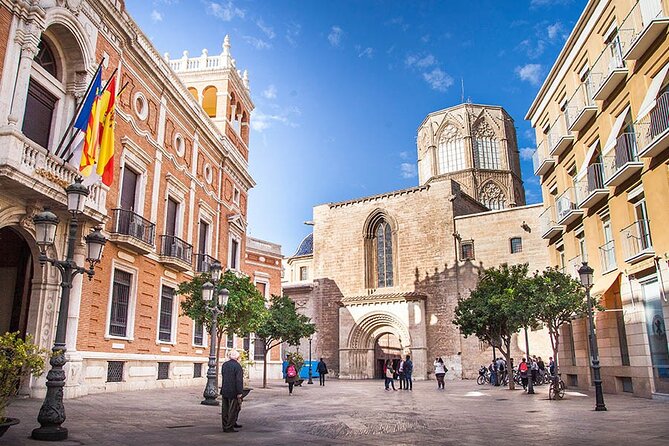
- Three UNESCO World Heritage sites in one guided loop: Silk Exchange, Water Court, and Fallas
- The Lonja de la Seda visit is front and center, not just an exterior stop
- Guides use visual help (like photos on a tablet) to make history easier to follow
- A very high satisfaction record, with a 4.9 rating and 99% recommendation
- Mobile ticket plus group discounts for a smoother start
- You finish in Ciutat Vella, handy for continuing on your own
Entering the UNESCO core: how this 2-hour walk stays focused
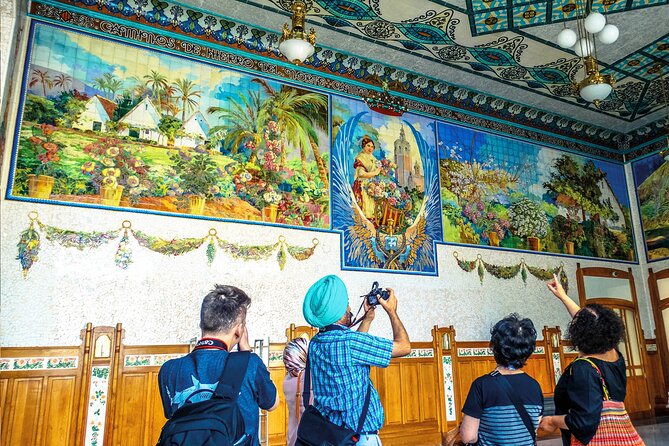
This is the kind of tour that works best on Day 1 or Day 2 in Valencia, when your brain is still mapping neighborhoods and streets. The route is designed to move you through the historic center while keeping your attention on the city’s World Heritage themes.
Think of it like a guided timeline with stops you can actually touch: medieval trade power, a tradition that still runs like a clock, and Fallas—Valencia’s famous festival of temporary art, fire, and fireworks. The guide’s job is to give you the why behind the wow, so you don’t just take photos—you understand what you’re looking at.
The pacing is efficient. That’s great if you have limited time. It can also mean you’ll cover a lot in a little, so you’ll want to pick one or two stops for deeper self-exploration afterward.
You can also read our reviews of more historical tours in Valencia

Price and value: what $121.91 buys (and what it doesn’t)
At $121.91 per person for about 2 hours, you’re paying for a professional guide and a structured route centered on major sights. The value is strongest if you like context—because the tour is built around explanations, not just walking past buildings.
What’s not included is transportation to or from the meeting/end points. The tour ends near Ciutat Vella, so you’ll likely connect to dinner, the Central Market area, or another planned stop on your own.
One practical note: this is the kind of activity people book ahead. Since it’s commonly reserved well in advance (on average about 92 days), I’d plan early if your dates are fixed. Fewer surprises, less scrambling.
Meeting point at Estació del Nord and finishing near Carrer del Micalet
The tour starts at Bailén – Estació del Nord (Extramurs) and finishes at Carrer del Micalet, 7 in Ciutat Vella. That matters more than it sounds.
Starting at a major rail area is convenient for arrivals by train or bus. Ending inside Ciutat Vella is a win because you’re dropped in the thick of the old-city vibe, closer to dining and evening strolling without needing extra transit planning.
Bring this into your day-plan: after the tour, give yourself time to roam the area on foot. The tour is meant to get you oriented and informed, not to occupy every minute of your schedule.
Lonja de la Seda: the Silk Exchange that explains Valencia’s trading past
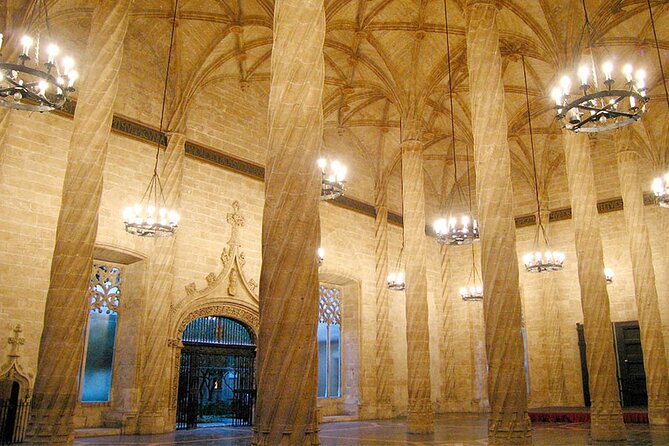
The Lonja de la Seda (Silk Exchange) is the headline stop, and for good reason. This is where Valencia’s economic muscle becomes visible in stone and design. Even if you’ve seen ornate buildings before, the value here is the guide’s ability to turn architectural details into meaning.
Expect more than a quick photo break. The tour experience is described as stepping inside the Lonja, which helps you understand why it earned World Heritage status in the first place. A good guide will connect the building’s style to the way trade worked, who benefited, and why Valencia’s commercial era mattered.
One reason this stop clicks for first-timers: it gives you a foundation. Once you grasp the city’s trading story, the rest of the walk feels less like separate attractions and more like different chapters of the same place.
Tribunal de les Aigües: an ancient water court that still matters

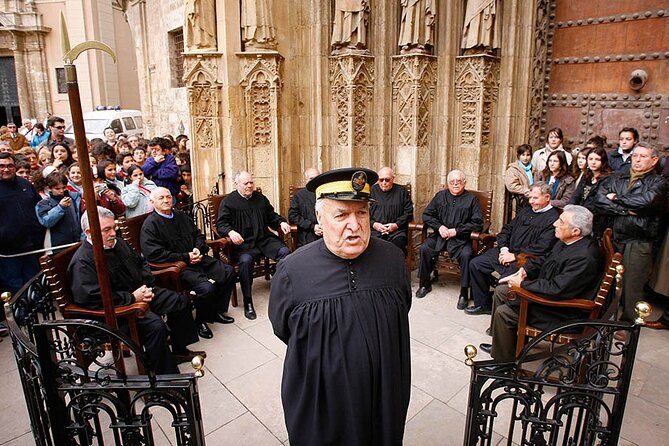
Valencia has three UNESCO properties, and the Water Court (Tribunal de les Aigües) is the one that feels most alive. It’s not just a monument to admire; it’s a tradition linked to how people manage water.
Why you’ll care: water is the practical backbone of life in many Mediterranean cities, and Valencia treats water governance as something worth preserving. When a guide explains the Water Court in context, it transforms the idea of a courthouse from a random historic building into a living system.
This is also a stop that helps you see Valencia’s personality. The city isn’t only about grand architecture. It’s about everyday systems that survive because they work.

Fallas UNESCO: understanding festival fire art beyond the fireworks
Fallas can look like spectacle from a distance. On this tour, you get the cultural frame for Fallas (World Heritage for ephemeral art, fire, and fireworks).
A helpful guide will make you think about craftsmanship, community participation, and the way the festival turns temporary creations into cultural identity. Even if you’re not visiting during peak festival days, knowing what the UNESCO designation is really celebrating changes how you read the city.
The most practical benefit: you’ll know what to look for later—signs, structures, and festival references—so Valencia doesn’t feel like it’s speaking a language you can’t translate.
Historic-center wayfinding: town hall, central market area, and major squares
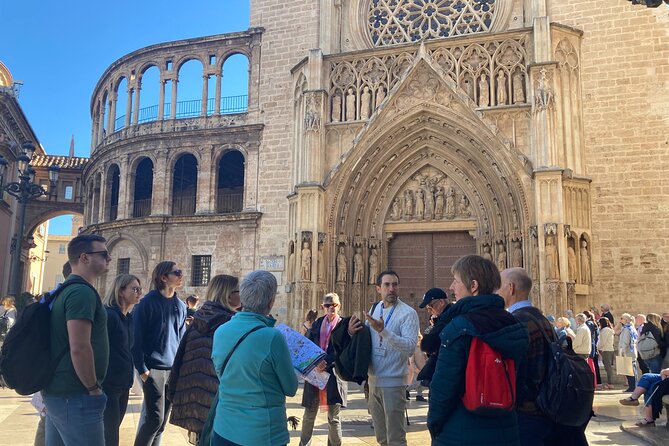
The walk also hits major sights that help you physically orient yourself. You’ll pass through key central landmarks such as:
- Valencia’s Town Hall
- The Central Market area
- Notable squares like Plaça de la Reina and Plaça de la Verge
- The route through the historic center connecting these points
These stops matter because they stitch the UNESCO sites to the everyday city fabric. After the tour, you’ll have a mental map of where things are, and that makes the rest of your time easier: shopping routes, museum choices, and even deciding where to start for dinner.
The trade-off is simple: because the route is tight, each non-UNESCO landmark is more of a guided highlight than a full deep visit. If you love architecture, you’ll probably want to circle back after.
Your guide experience: Sara, Gabor, and María Eugenia set the tone
This tour is only as good as the person holding the story together, and the feedback here is strikingly consistent. Guides named Sara, Gabor, María Eugenia (and also Eugenia in one account) earn praise for being organized and for making sure everyone can see and hear.
A pattern you should expect: clear pacing plus context. One guide style mentioned is using photos on a tablet to help explain what you’re seeing. That’s not just nice—it can save you from standing in front of a building and guessing what mattered.
If you like asking questions, this tour format tends to support it. People highlighted how guides answered and offered suggestions, including practical local pointers like where to find a good single portion of paella. That kind of advice turns the tour from sightseeing into planning support.
Mobile ticket and group setup: how it affects your day
This experience uses a mobile ticket, which is generally a smoother way to check in without hunting for paper. The tour also includes group discounts, so if you’re traveling with friends, bundling can help.
It’s also described as a private tour/activity where only your group participates. That can be a big quality-of-life upgrade in a city where meeting spots and crowds can get chaotic. A private format also often means the guide can respond to your group’s interests instead of sticking to a rigid script.
Timing-wise, it’s about 2 hours, so it’s ideal for fitting into a travel-day schedule without burning your whole morning or afternoon.
Who should book this UNESCO Valencia walking tour?
Book this if:
- You want UNESCO context without spending all day hopping around.
- You’re in Valencia for a few days and want a clear, walkable orientation.
- You like history told through real places, not museum-style lecture.
Consider something else if:
- You tend to hate time-boxed tours. Two hours goes fast.
- You want lots of unstructured wandering during the guided portion.
Best match: first-timers, history-minded food and culture travelers, and anyone who enjoys seeing how traditions and architecture connect.
Should you book Essential Valencia and World Heritage Sites?
I’d book it if your goal is to understand Valencia quickly and accurately. The strongest reason is the focus: you’re not just seeing famous sights. You’re getting the UNESCO story behind Lonja de la Seda, the Water Court, and Fallas, plus the historic-center landmarks that make those stories make sense.
If you’re on a tight schedule, this tour’s structure is the value. It’s short, guided, and efficient. Just plan your post-tour time so you can return to your favorite stop and linger a bit on your own.
FAQ
What is the duration of the Essential Valencia and World Heritage Sites tour?
It lasts about 2 hours.
Which UNESCO World Heritage sites are included in the tour?
The tour focuses on three UNESCO properties: the Silk Exchange (Lonja de la Seda), the Water Court (Tribunal de las Aigües), and Fallas.
Is transportation included in the price?
No. Transportation to and from the meeting/ending point is not included.
Where does the tour start and end?
It starts at Bailén – Estació del Nord (Extramurs), 46007 Valencia, Spain, and ends at Carrer del Micalet, 7, Ciutat Vella, 46001 Valencia, Spain.
Is this tour private?
Yes. Only your group will participate.
What happens if the weather is poor?
The experience requires good weather. If it’s canceled due to poor weather, you’ll be offered a different date or a full refund.