REVIEW · VATICAN CITY
Private Tours: A Journey through the Ancient Rome
Book on Viator →Operated by Cab Rome · Bookable on Viator
A car tour hits Rome fast. In four hours, you get a private ride in an air-conditioned vehicle that makes big sights feel doable instead of stressful.
I love that the route mixes Vatican City and Rome highlights, so you’re not bouncing around on your own.
I also like the structure: you’ll get short, focused stops (like Piazza Navona and Trevi) plus a longer window at places that need it, including St. Peter’s Square. And because you’re not locked to a constant scripted narration, you can adjust on the spot and see at your own pace during the time blocks.
One consideration: this is a driving tour, not a ticketed, guided museum day. A tour guide and attraction tickets/entrance fees are not included in the price, so you’ll need to handle any entry you want to make.
In This Review
- Key things that make this tour worth your attention
- Private driving and quick orientation across Vatican City and Rome
- Pickup from Port of Civitavecchia and the rhythm of a half-day
- Piazza Navona in 30 minutes: Bernini, an obelisk, and Baroque drama
- Trevi Fountain in 30 minutes: the aqueduct story you can see
- St. Peter’s Square in 1 hour: why the extra time matters
- Pantheon in 20 minutes: Hadrian’s cylinder and granite columns
- Spanish Steps in 20 minutes: Bernini’s fountain and the Keats corner
- Piazza del Popolo in 20 minutes: Porta Flaminia and the travelers’ first view
- Roman Forum (Foro Romano) in 45 minutes: the center of day-to-day Rome
- Colosseum and the value of seeing it as part of the loop
- Price and what you really get for about $145 per person
- Comfort, driver language, and how to get the most out of a car tour
- Who should book this private Rome driving tour
- Should you book Private Tours: A Journey through Ancient Rome?
- FAQ
- How long is the tour?
- Is this a private tour?
- Where does the tour start, and what time?
- Is pickup and drop-off included?
- What transportation is provided?
- Are tickets or entrance fees included in the price?
- Is there a tour guide included?
- Do I receive a mobile ticket?
- Can I get a full refund if I cancel?
Key things that make this tour worth your attention
- Private door-to-sightseeing: only your group, with hotel pickup/drop-off listed and a start from Port of Civitavecchia at 9:00 am
- Air-conditioned transport: you ride in a minivan or coach, with fuel surcharge included
- Time-targeted stops: Piazza Navona (30 min), Trevi (30 min), St. Peter’s Square (1 hour), Forum (45 min)
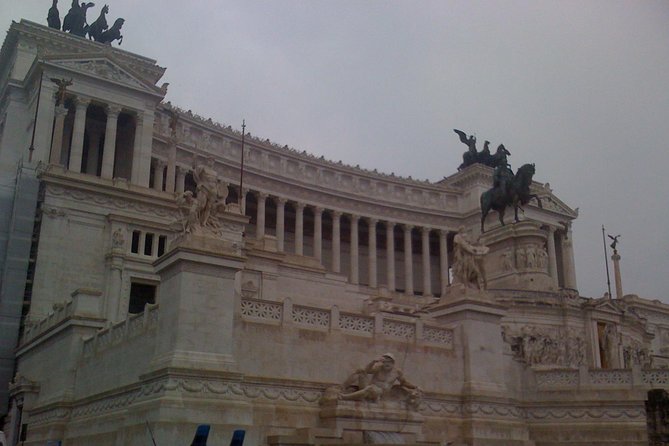
- Iconic Roman landmarks in one loop: Trevi Fountain, Pantheon, Spanish Steps, and major Vatican City stops
- Driver-led experience: a professional driver takes you around, but there’s no tour guide included
- Mobile ticket: you receive a confirmation and a mobile ticket for the day
Private driving and quick orientation across Vatican City and Rome
This tour is built for people who want the “greatest hits” without the full-day logistics. You’re not meant to spend all day queued up or sprinting between neighborhoods. Instead, you get a half-day loop where the car does the heavy lifting, and your time on foot is kept tight and useful.
The biggest value here is how many headline sights you can stack in just a few hours. You’ll cover Roman landmarks like Piazza Navona, the Trevi Fountain, the Pantheon, and the Roman Forum area, plus Vatican City’s St. Peter’s Square. And the tour is marketed as including the Colosseum as part of the ancient Rome circuit, even if your exact stop timing for it isn’t spelled out in the same way as the listed time blocks.
Just remember the trade-off: this is sightseeing time, not a full guided study session. If you want deep explanations or long indoor visits, you’ll need to plan extra time on your own later.
Pickup from Port of Civitavecchia and the rhythm of a half-day
The day starts at Port of Civitavecchia at 9:00 am. That’s a big deal if you’re on a cruise, because it aligns with the kind of port-day window people usually want: early, efficient, and back on track for the rest of the day.
Hotel pickup and drop-off are also listed as included, which can matter if you’re staying in Rome (or close enough for the operator to arrange it). Still, the published start point being the port is a clue about how this is commonly used, so I’d treat the 9:00 am start as the anchor time.
Transfers take an approximate amount of time and can change with traffic. On a day with heavy congestion, your on-foot minutes at each stop matter even more. The best move is to show up ready—comfortable shoes, layers, and a simple plan for what photos or quick sights you care about most at each location.
Piazza Navona in 30 minutes: Bernini, an obelisk, and Baroque drama
Piazza Navona is one of those places that feels like an open-air art textbook. The square was shaped when the city’s market moved there in the late 15th century, and later it became a major example of Baroque Roman architecture and art during Pope Innocent X’s reign (1644 to 1655).
In the center you get the Fontana dei Quattro Fiumi by Gian Lorenzo Bernini, topped by the Obelisk of Domitian, originally brought in pieces from the Circus of Maxentius. Nearby you also have the church of Sant’Agnese in Agone, associated with architects including Francesco Borromini and the Rainaldi family. That’s a lot of big-name art and architecture for a stop that’s only 30 minutes.
With limited time, your goal should be smart. Pick one focal point to linger on (the fountain works best), then do a quick circuit of the square’s edges so you catch the main façades without wandering too far. If you try to do everything, you’ll end up spending your minutes “walking to the next thing” instead of actually looking.
Trevi Fountain in 30 minutes: the aqueduct story you can see
The Trevi Fountain stop is timed at 30 minutes, which sounds short until you know what you’re really there for. The fountain sits at a junction of three roads—tre vie—and it connects visually to the water story behind ancient Rome’s aqueduct system.
The description ties it to Acqua Vergine, also known as Aqua Virgo, one of the aqueducts that supplied water to ancient Rome. It explains that a pure water source was found about 13 km away, and the route length became about 22 km due to the indirect path. That water fed the Baths of Agrippa and served the city for more than 400 years.
For your visit, this means you’re not just taking a classic photo. You’re standing at a point that represents a real piece of Rome’s engineering story—water, distance, and how the city powered everyday life.
If 30 minutes is all you have, go in with a mindset: arrive, take your key shots, and then slow down for one close-up moment where you actually look at the design details. That’s when the fountain stops being a postcard and starts feeling like Roman craftsmanship.
St. Peter’s Square in 1 hour: why the extra time matters
St. Peter’s Square is where the tour gives you the most walking time: 1 hour. That makes sense, because you’re not just looking at a building—you’re entering the center of a place that the Catholic world treats as a major shrine.
St. Peter’s Basilica in Vatican City is described as Renaissance style and one of the largest churches in the world. The big names tied to it include Donato Bramante, Michelangelo, Carlo Maderno, and Gian Lorenzo Bernini. It’s also framed as one of the holiest Catholic shrines, with a unique position in the Christian world.
One hour is a solid window for a first look and a calm moment to orient yourself in the square. Since the tour price doesn’t include a tour guide, the value of that hour is partly about letting you absorb the setting without feeling rushed.
A practical tip: before you arrive, decide how you want to experience the square—wide views and photos first, or slower observation first. With only one hour, switching plans mid-way costs time.
Pantheon in 20 minutes: Hadrian’s cylinder and granite columns
The Pantheon stop is set at 20 minutes. That’s brief, but it’s enough if you focus on what makes it unmistakably Pantheon.
The building is described as a former Roman temple now a church, built on an earlier temple commissioned by Marcus Agrippa. It was completed by Emperor Hadrian and likely dedicated around 126 AD. The description also notes that Hadrian didn’t inscribe the new temple, keeping Agrippa’s earlier inscription instead.
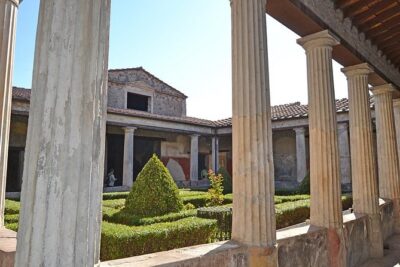
Architecturally, you’re looking at a cylindrical rotunda with a portico of large granite Corinthian columns—eight in the first rank and two groups of four behind. The rotunda connects to the porch through a rectangular vestibule.
In 20 minutes, you won’t have time for a long, step-by-step architectural study. So go with a simple sequence: arrive, orient to the cylinder shape, then look up and take in the columns and portico. After that, spend your remaining minutes stepping to a spot where you can see how the façade and entrance align.
If you care about interiors, remember the tour price doesn’t include tickets/entrance fees. You can still use the time for what’s possible without assuming entry is covered.
Spanish Steps in 20 minutes: Bernini’s fountain and the Keats corner
The Spanish Steps stop is 20 minutes, and it’s built around one specific focal point: the square’s Fontana della Barcaccia, at the heart of the scene. It dates to the beginning of the Baroque period and is associated with Pietro Bernini and his son Gian Lorenzo Bernini.
This stop also has a literary angle. The house of the English poet John Keats is mentioned at the right corner of the Spanish Steps. Keats lived there until his death in 1821, and it’s now described as a museum dedicated to Keats and his friend Percy Bysshe Shelley.
If you want to make 20 minutes feel longer, use it like this: do a quick look at the fountain area, then choose either the Keats house museum side or the Babington’s tea room corner (both are referenced in the description). Don’t try to split your attention evenly. Pick one and actually spend time with it.
Piazza del Popolo in 20 minutes: Porta Flaminia and the travelers’ first view
Piazza del Popolo is another 20-minute stop, and it’s a great place to understand how Rome guided people into the city. The name means People’s Square, historically linked to poplars (populus in Latin, pioppo in Italian). The church of Santa Maria del Popolo takes its name from that corner of the piazza.
What makes it special for your walk is the setting: it lies inside the northern gate in the Aurelian Walls, once called Porta Flaminia, and now called the Porta del Popolo. That connects directly to the ancient road story—Via Flaminia to Ariminum (modern-day Rimini).
The description also points out a human detail: before trains, this was a traveler’s first view of Rome upon arrival. And historically, for centuries it was used for public executions, with the last one taking place in 1826.
With only 20 minutes, you’re not trying to do a full “history walk.” You’re using the stop as a vantage point. Look at the piazza layout, then let the ancient road gateway idea help you read why it sits where it does.
Roman Forum (Foro Romano) in 45 minutes: the center of day-to-day Rome
The Roman Forum stop is 45 minutes, which is the longest time block after St. Peter’s Square. The Forum is described as a rectangular forum surrounded by ruins of important ancient government buildings. In Roman terms it was the center of day-to-day life—originally a marketplace, later the nucleus of commercial affairs and a place for public speeches, criminal trials, triumphal processions, elections, and even gladiatorial matches.
The descriptions also emphasize statues and monuments commemorating great men, and it’s often called the most celebrated meeting place in the world. Even if you’ve heard the Roman Forum name a hundred times, being here in real time changes the meaning. It’s not just ruins; it’s the stage where civic life happened.
Forty-five minutes is enough to get a sense of scale and layout, but you still need a plan. I’d focus on two things:
1) a quick orientation to the forum’s edges and main space
2) one path through the ruins that keeps you moving without backtracking
Because the tour doesn’t include a tour guide, the best approach is to use the time for pattern recognition—main routes, open areas, and where the civic action would have happened.
Colosseum and the value of seeing it as part of the loop
The tour highlights include the Colosseum, and you should expect it to appear as part of the ancient Rome drive. Even if your exact time and viewing distance aren’t listed like the other stops, the value of this arrangement is clear: you’re bundling the Colosseum into the same efficient loop as the Pantheon, Trevi Fountain, and Forum area.
This matters because the Colosseum is one of those places people try to prioritize above all else. When you only have half a day, forcing it into a strict standalone plan can waste time. The loop format reduces that risk by putting it in context with other major anchors.
If you want to do a serious indoor visit at the Colosseum, plan that separately. Here, you’re getting the big visual hit plus the convenience of a driver-led route.
Price and what you really get for about $145 per person
At $145.18 per person for a private 4-hour driving tour, the price isn’t just about transportation—it’s about how efficiently you turn limited time into multiple iconic stops. The included items are hotel pickup and drop-off (listed), fuel surcharge, and transport by air-conditioned minivan or coach. That’s the core value.
But the tour also sets clear limits:
- tickets/entrance fees for attractions are not included
- a tour guide is not included
- food and drinks are not included
So the true question for you is this: do you want a driver to get you around and let you wander during stop windows, or do you want a guided, ticket-based experience where entry is handled for you?
If your plan includes only seeing exterior highlights at each site—or you’re willing to buy tickets separately—this can feel like good value. If you were hoping for a guided walkthrough with included entry into everything, this price won’t cover that expectation.
Also note: the operator says you should select the tour option that matches number of passengers for correct pricing. That can affect how “private” the deal feels financially compared to splitting a shared tour.
Comfort, driver language, and how to get the most out of a car tour
A private driving tour is only as good as the execution on the day. The concept is simple: you sit back, ride between landmarks, and let the driver handle the route.
In the best scenario, you get a professional driver who’s well informed and helpful. The most positive experiences tied to this style of tour focus on drivers who go above and beyond to make it feel special, not like a rushed drive-by.
In the less-perfect scenario, you can get hit with communication issues. One account you should take seriously is that a driver did not speak English well, which made it harder to understand the visit sites. That doesn’t mean the tour is bad by default, but it does mean you should come prepared: have your must-see list ready, and don’t rely on a long spoken explanation during the ride.
Then there’s the rare but serious problem: a no-show situation was reported, and the person who experienced it requested and received a refund. That’s not common in most service plans, but it’s enough that I recommend taking the “be proactive” approach—confirm pickup details ahead of time and make sure you have a working way to contact the provider on the day.
Who should book this private Rome driving tour
This tour makes the most sense if you fit one of these profiles:
- You have limited time (half-day) and you want to cover Vatican City and major Rome icons efficiently.
- You prefer comfort and car transport over long public-transit navigation between distant sights.
- You’re okay doing independent sightseeing during stop windows, since tickets and a guide aren’t part of the price.
- You’d like a private experience where only your group participates.
It might not be the best fit if you want a “fully guided” experience with included entry to major attractions and a planned, spoken narrative throughout.
Should you book Private Tours: A Journey through Ancient Rome?
I’d book it if your goal is simple: hit the top landmarks in a comfortable half day, then build the rest of your Rome trip around the places you want to return to for deeper exploring. The stop mix—Piazza Navona, Trevi, St. Peter’s Square, Pantheon, Spanish Steps, Piazza del Popolo, and the Roman Forum—gives you strong anchors fast.
Skip it (or add your own planning) if you need included tickets, a dedicated tour guide, or a language-heavy explanation at every site. In that case, you’ll want an option that explicitly covers entry and guided commentary.
If you do book, the smart move is to come with a short list: one priority per stop. In a route like this, it’s the difference between “I saw it” and “I actually got something out of it.”
FAQ
How long is the tour?
It runs for about 4 hours.
Is this a private tour?
Yes. It’s private, and only your group participates.
Where does the tour start, and what time?
The start point is the Port of Civitavecchia, with a 9:00 am start time.
Is pickup and drop-off included?
Yes. Hotel pickup and drop-off are included.
What transportation is provided?
You travel in an air-conditioned minivan or coach.
Are tickets or entrance fees included in the price?
No. Tickets/entrance fees for attractions are not included.
Is there a tour guide included?
No. A tour guide is not included in the price.
Do I receive a mobile ticket?
Yes. The tour includes a mobile ticket.
Can I get a full refund if I cancel?
Yes. You can cancel up to 24 hours before the experience start time for a full refund.