REVIEW · POMPEII
Skip-the-line Exclusive Private Full-Day Complete Ancient Pompeii Guided Tour
Book on Viator →Operated by Private Tours of Pompeii · Bookable on Viator
Pompeii is huge, so time has to count. This private, skip-the-line tour is built to help you see major UNESCO sites in a focused window, with the freedom to shape the route to your interests. You’re not stuck in a mass-group shuffle; you get a guided walk that connects the places you’re standing in to how people actually lived.
I especially like the blend of guided expertise and practical pacing. Stops like the Roman Amphitheater, key domus, and the Stabian Baths are picked to show different sides of Pompeii—public life, home life, and daily relaxation—without feeling like you’re sprinting across the site. I also like that the admission tickets for each stop are included, so you’re not hunting down window hours while your guide is trying to keep momentum.
One thing to consider: the itinerary is listed as about 4 hours, but real timing can vary. In some cases, the tour may run late at the start, tighten the schedule mid-walk, or miss an indoor admission window if a cutoff time hits before you get there—so plan to arrive early and stay flexible.
In This Review
- Key highlights worth planning for
- Private Skip-the-Line Pompeii: what you actually get in 4 hours
- Meeting at Piazza Esedra: logistics that affect your start time
- Anfiteatro Romano: the Roman stage where Pompeii makes sense
- Pompeii Archaeological Park: reading the city, not just touring buildings
- Foro di Pompeya: the marketplace in 15 minutes
- Casa del Menandro: frescoes, garden, and why domus design matters
- Watch-out: indoor cutoffs and “missed” spaces
- Casa di Ottavio Quartione: Via dell’Abbondanza on your terms
- Stabian Baths (Terme Stabiane): where Pompeians reset
- Why the guide’s style matters more than you think
- Price and value: $347.21 per person for a private day
- Who this tour fits best
- Timing checks: how to protect your schedule
- Should you book this Pompeii skip-the-line private tour?
- FAQ
- How long is the Pompeii private tour?
- Is this a private tour?
- Does the tour include skip-the-line access?
- What language is the tour offered in?
- Where do we meet, and where does it end?
- Are admission tickets included?
- Is lunch included?
- What stops are included on the route?
- Do we get hotel pickup and drop-off?
- What if I’m traveling with children or a service animal?
- What’s the cancellation policy?
Key highlights worth planning for
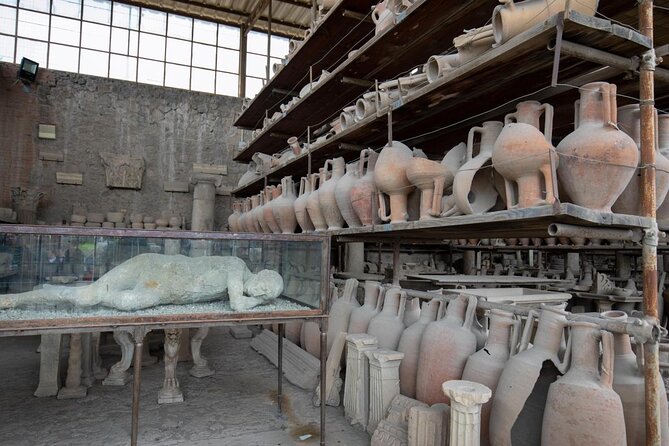
- Private only for your group: less crowd pressure, easier photo stops, faster questions answered
- Skip-the-line access: you should lose less time to ticket lines and waiting around
- Art-history angle at major stops: the domus get explained in a way that makes frescoes and rooms make sense
- A targeted route in ~4 hours: big anchor sites plus homes and baths, without trying to cover everything
- Admission tickets included: fewer surprises once you’re inside Pompeii
- Near public transport, no hotel pickup: simpler logistics if you’re already in Pompeii
Private Skip-the-Line Pompeii: what you actually get in 4 hours
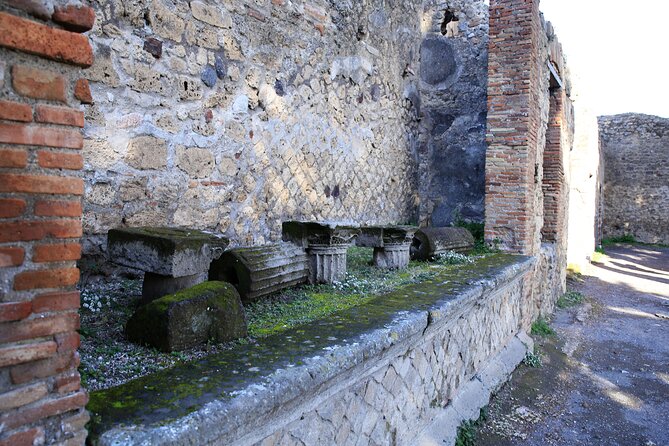
This is a private full-day Pompeii tour in spirit, but the schedule is really a focused Pompeii highlights sprint—listed at about 4 hours. That matters, because Pompeii is the kind of place where you can spend days and still find new streets. With a time-boxed route, your guide’s job is to help you see enough to understand the city, not just collect photos.
The biggest practical win is the skip-the-line setup. Pompeii’s entry and certain stop access can get slow, and waiting is the fastest way to turn a “must-see” day into a tired day. This tour is built around guaranteed skipping of the long lines, plus a mobile ticket approach, so you can get moving sooner.
The other thing you’ll feel is the private format. When it’s just your group, the guide can make micro-adjustments—where to pause, when to duck into a doorway, and how to keep the walk comfortable. One guide by name that stands out here is Italo/Italio, and another is Clelia; both are described as high-energy, clear, and passionate about making the ruins understandable.
You can also read our reviews of more guided tours in Pompeii

Meeting at Piazza Esedra: logistics that affect your start time
You meet at Piazza Esedra, 80045 Pompei NA, Italy, and the tour ends back at the same meeting spot. There’s no hotel pickup and drop-off, so you’ll want to be at the start point on your own. The good news: the meeting area is near public transportation, which makes it easier to plug into the rest of your day in Pompeii.
Arrive a bit early. Even with skip-the-line wording, your start can still be delayed if check-in coordination is off. A small number of experiences have described late departures or schedule tightening later, and starting early is the simplest way to protect your full plan.
Also note the physical pace. The tour asks for moderate physical fitness. Pompeii is stone, uneven ground, and lots of walking. Private tours can move more efficiently than group tours, but you’ll still want comfortable shoes and a water plan.
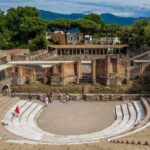
Anfiteatro Romano: the Roman stage where Pompeii makes sense
Stop one is the Anfiteatro Romano, with about one hour here and admission included. This isn’t just a pretty ruin. It’s your quickest way to grasp Pompeii’s public energy—where crowds gathered and spectacles happened.
A good guide turns this stop from archaeology into storytelling. When the amphitheater is explained, you start to connect the dots: how Romans used architecture for social life, how crowds organized their attention, and why Pompeii felt alive even though it’s now still.
The time allocation is generous enough to slow down. You can look across tiers, spot how the space is arranged, and ask questions without the guide constantly rushing to the next corner.
Pompeii Archaeological Park: reading the city, not just touring buildings
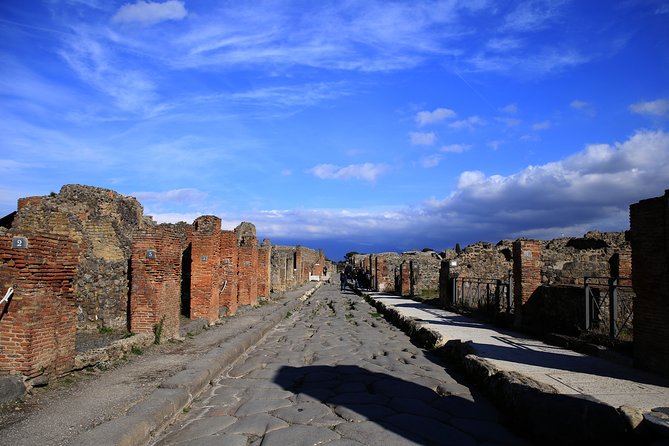
Next is the Pompeii Archaeological Park, again about one hour with admission included. Think of this as the “context” block. You’re not only walking from place to place—you’re learning how to interpret what you see: street patterns, building functions, and why certain areas matter.
This is also where private-pacing really helps. If your group is smaller, you’re more likely to step into less-crowded pockets and keep your bearings. One of the strongest themes in the feedback I’m seeing is that the guides work to avoid the worst crush spots when possible, which keeps the experience enjoyable rather than exhausting.
If you care about understanding how the city worked, this park stop is the one that can make the later houses click. When you know what you’re looking at, domus stop feeling like random rooms and start feeling like an everyday system.
Foro di Pompeya: the marketplace in 15 minutes
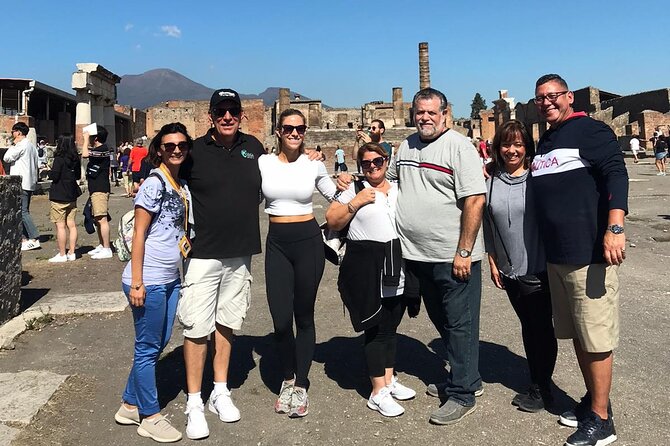
The Foro de Pompeya is scheduled for about 15 minutes. That’s short, but it’s also strategic. The forum is the hub where public life, commerce, and civic identity overlapped.
In this short window, you’ll want your questions ready. Ask what features signal trade or civic functions. Even a quick stop becomes more useful when your guide points out how the forum differs from residential areas you just saw.
Also, since the time is tight, this is where skipping the line and efficient guiding pays off. You won’t have hours here, so you’re aiming for “understand the role” rather than “fully exhaust the details.”
You can also read our reviews of more private tours in Pompeii
Casa del Menandro: frescoes, garden, and why domus design matters
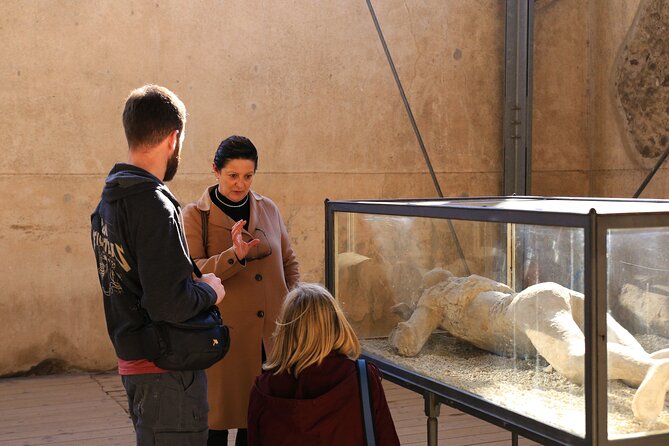
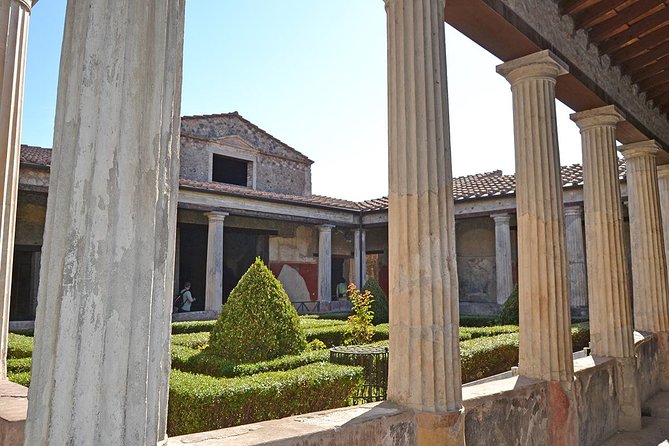
Stop four is the Casa del Menandro, about 20 minutes with admission included. This domus is described as one of Pompeii’s most beautiful, and it’s easy to see why: you’re not just looking at walls, you’re learning what rooms were for.
What stands out in the tour description is the focus on frescoes, a private garden, rooms, and a calidarium (a heated room). That combo tells you the house wasn’t just shelter—it was a machine for social status and comfort.
Here’s the value of a private guide: they can explain the flow of a house in a way that helps you picture daily life. You’re less likely to get lost when the guide says, in plain terms, what each space would have meant for the people living there.
Watch-out: indoor cutoffs and “missed” spaces
Some experiences have pointed to problems when an indoor admission window closes before the tour reaches a stop. If you’re especially interested in domus interiors or rooms that can have limited access, it’s smart to remind your guide early in the tour to call out any time-sensitive admissions. You’ll keep your expectations aligned and your day under control.
Casa di Ottavio Quartione: Via dell’Abbondanza on your terms

Next is Casa di Ottavio Quartione, about 15 minutes with admission included. The key here is location: it sits on via dell’Abbondanza, Pompeii’s main road. That detail alone adds meaning. A house on a main street isn’t hidden; it’s part of the public-city fabric.
Because the stop is shorter, you’ll get the highlights rather than a slow, room-by-room marathon. That’s not a downside if your goal is balance: you’re sampling important domus features and moving forward while energy is still high.
If you’re the type who likes to compare homes, use this moment to contrast what you saw at Casa del Menandro. Both are domus, but the emphasis can differ—style, scale, layout cues, and what the guide chooses to foreground.
Stabian Baths (Terme Stabiane): where Pompeians reset
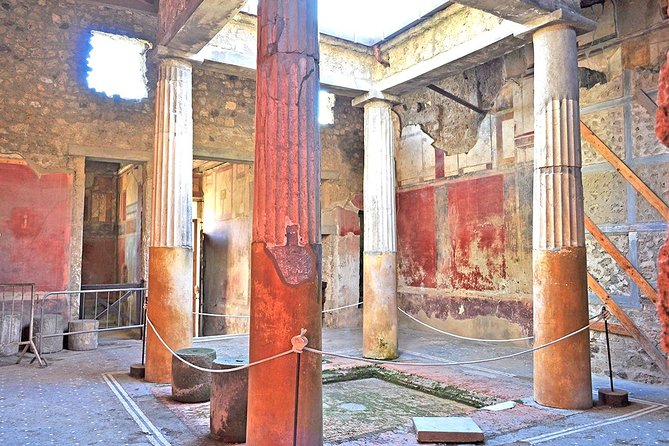
The final stop is the Stabian Baths, about 15 minutes with admission included. Baths were a big deal in Roman culture—social spaces as much as hygienic ones.
This is a smart “finish strong” choice for a 4-hour tour. After amphitheater, park context, forum life, and domus design, the baths give you a new lens: daily routines, comfort, and the idea that leisure had a built environment.
Even in a short stop, the right explanation can help you interpret heating systems and room purposes. If your guide is the energetic, passionate type (again, names like Italo/Italio and Clelia come up in feedback), you’ll likely leave with a better sense of how ordinary life worked—not just how the city looked.
Why the guide’s style matters more than you think
Pompeii can feel like a lot of stone. The difference between a forgettable visit and a satisfying one is often how a guide translates what you see.
The most praised part of this experience is the guide’s clarity and energy. Guides named Italo/Italio and Clelia are described as explaining things clearly, answering questions well, and sharing enough background to make the ruins feel understandable. Another theme is that they try to avoid the most crowded spots when possible, which helps the walk feel smoother.
This is also where the “art historian” angle earns its keep. You’re not just told what you’re looking at; you’re helped with how to see it—frescoes, room function, and the logic behind house layouts.
Price and value: $347.21 per person for a private day
The price is $347.21 per person for a tour listed at about 4 hours. For a private Pompeii experience, that can still be good value—but only if you treat it as a focused guide-driven visit, not an “I’ll linger everywhere” day.
Here’s the value math that matters to you:
- Admission tickets are included for the listed stops, which reduces on-site friction.
- Skip-the-line access can save real time and keep your day from grinding to a halt.
- Your group only means less waiting and fewer compromises.
The listed duration is about 4 hours, and the stops add up to a packed but workable plan. Still, the feedback patterns suggest you should stay aware of timing variability. If you want a slow, deep, multi-hour exploration of every room, you’ll likely outgrow a highlights route quickly.
Who this tour fits best
This tour is a strong match if you:
- want a private guide instead of a big group
- care about understanding the ruins, not just walking through them
- have limited time in Pompeii and want the main anchors covered
- prefer a route that tries to manage crowds
It may be less ideal if you:
- need a long day with lots of free wandering
- hate tight schedules and short stop windows
- rely on very specific indoor access times and aren’t flexible
Timing checks: how to protect your schedule
The itinerary is advertised as about 4 hours, but in practice, delays can happen. Some people have described a mid-tour break that felt unnecessary, a late start, and shortened time in the field. In one case, an indoor museum-like experience was missed because admission access shut earlier than expected.
So here’s what you can do:
- Confirm your start time and be at Piazza Esedra early.
- Ask your guide at the start: are there any stops with time-sensitive indoor access?
- Keep an eye on the day’s energy. A private tour is flexible, but it still has an overall arc.
Also remember: lunch is not included. Pompeii days can run long and walking adds up, so you’ll want a plan before or after the tour. With the tour ending back at Piazza Esedra, it’s easy to build around your meal schedule.
Should you book this Pompeii skip-the-line private tour?
If you want an efficient, guided Pompeii day with private pacing and included admissions, this is a very sensible choice. The best version of the experience is when the guide keeps the explanations clear, steers you away from the worst crowds, and protects the route so you see the planned stops.
I’d book it if your goal is highlights with understanding. I’d hold off or choose a longer-format option if you want endless time in each house or you’re traveling with tight indoor access constraints.
Bottom line: for most people, the combination of skip-the-line access, included admission tickets, and expert storytelling makes the higher per-person price feel earned.
FAQ
How long is the Pompeii private tour?
The tour is listed as about 4 hours.
Is this a private tour?
Yes. It’s private, and only your group participates.
Does the tour include skip-the-line access?
Yes. The experience is described as guaranteeing skip-the-line entry.
What language is the tour offered in?
It’s offered in English.
Where do we meet, and where does it end?
You meet at Piazza Esedra, 80045 Pompei NA, Italy, and the tour ends back at the same meeting point.
Are admission tickets included?
Yes. Admission tickets are included for the listed stops.
Is lunch included?
No. Lunch is not included.
What stops are included on the route?
The tour includes the Anfiteatro Romano, Pompeii Archaeological Park, Foro de Pompeya, Casa del Menandro, Casa di Ottavio Quartione, and Stabian Baths (Terme Stabiane).
Do we get hotel pickup and drop-off?
No. Hotel pickup and drop-off aren’t included.
What if I’m traveling with children or a service animal?
Children must be accompanied by an adult. Service animals are allowed.
What’s the cancellation policy?
You can cancel for a full refund if you cancel at least 24 hours in advance of the experience start time.