REVIEW · CLUJ NAPOCA
Saxon Heritage in Transylvania: Day Trip from Cluj-Napoca
Book on Viator →Operated by George Turism · Bookable on Viator
Saxon heritage in Transylvania can’t be understood from a guidebook page. This day trip strings together the key places you need—Sibiu’s medieval core, a fortified Saxon church in Cristian, and the glass-icon world around Sibiel—while keeping travel comfortable with round-trip transport. I especially like how the day includes both big-picture context and hands-on details, like tasting local țuică and learning how Saxon life shaped the region’s religious and cultural identity.
The biggest thing to consider is that it’s a long day (about 11 to 12 hours) with a lot of driving and walking. Also, you may not always have the same guide for every segment if schedules require an external guide, so the experience can rise or fall a bit with who’s leading that day.
In This Review
- Key highlights at a glance
- A Saxon Heritage day trip that fits real life from Cluj-Napoca
- Cluj-Napoca to Sibiu: start with Piata Mare and the old-city set-up
- Churches and the Council Tower: where the details start clicking
- Cristian fortified church: Saxon faith, village life, and the UNESCO connection
- Sibiel and Fântânele in the afternoon: horse-carts, țuică, and icons on glass
- The țuică tasting: more than a sip
- Zosim Oancea Museum of Icons on Glass
- What the timing really feels like: 11–12 hours of big contrasts
- Guide quality: George, Andrei, and why it affects your day
- Price and value: what $129.86 buys you (and what it doesn’t)
- Who should book this Saxon heritage tour—and who should skip it
- Should you book it?
- FAQ
- FAQ
- What time does the tour start?
- How long is the Saxon Heritage in Transylvania day trip?
- Where does the tour end?
- Is the tour offered in English?
- Is transportation included?
- Are admissions included?
- Is food included?
- Is alcohol included?
- How big is the group?
- What is the cancellation policy?
- Do children need an adult?
Key highlights at a glance
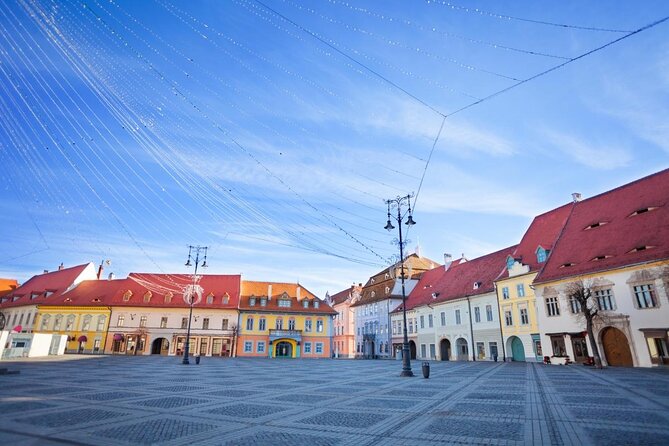
- Sibiu’s medieval squares and churches plus time to climb the Council Tower for a real bird’s-eye view
- Cristian Fortified Church and a close look at local Saxon traditions in a village that feels old-fashioned
- Schnapps tasting (țuică) and a taste of how locals still live and work in the surrounding countryside
- Sibiel and Fântânele villages where horse-drawn carriages can be part of everyday life
- Icon-on-glass museum visit at Zosim Oancea Museum of Icons on Glass
- Private vehicle transport from Cluj-Napoca with admissions included and alcohol included
A Saxon Heritage day trip that fits real life from Cluj-Napoca
If you base yourself in Cluj-Napoca, it’s easy to get stuck doing only one kind of day trip: either castles, or cities, or long bus tours that rush everything. This one is different. You get a full day that connects the dots between Saxon settlement, church life, and the villages that carried those traditions forward.
I also like that the schedule doesn’t pretend you’ll see everything. You hit the must-see medieval heart in Sibiu, then you slow down in smaller places where the story feels more personal. And you do it with transport handled for you—hotel pickup and drop-off, plus a private vehicle—so you’re spending energy on sites, not logistics.
Just remember: this is not a short “quick look” outing. It’s a structured day with several timed stops, so bring the right mindset. Plan on comfort, good shoes, and pacing yourself.
Cluj-Napoca to Sibiu: start with Piata Mare and the old-city set-up
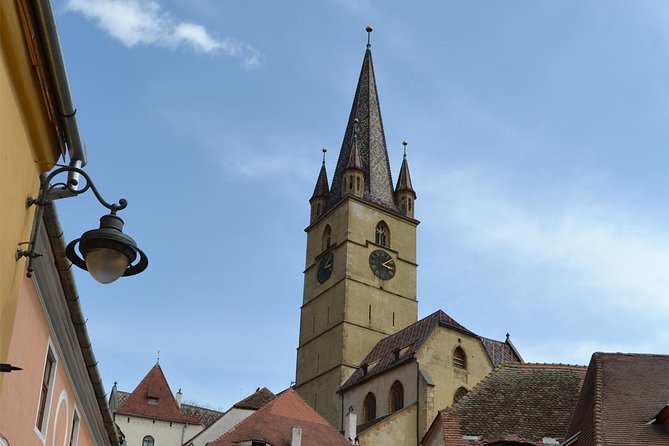
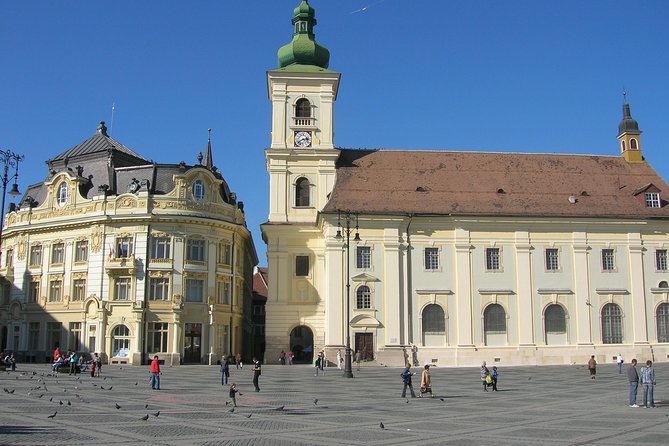
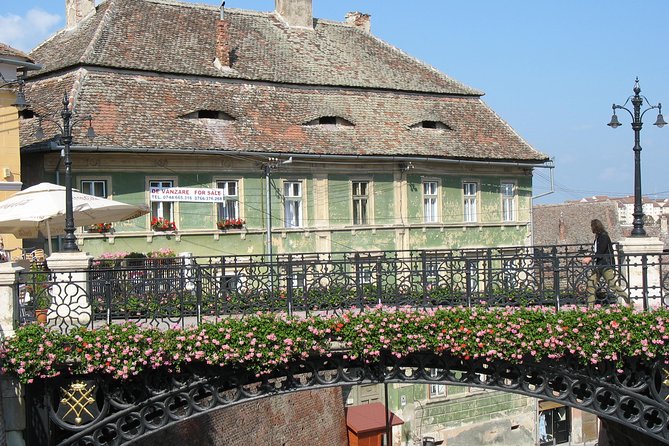
Your day begins with a morning departure around 8:30 am and heads straight to Sibiu. This is where the Saxon story becomes visible in stone and street layout. Sibiu was the capital of the historical region of Transylvania, and you can feel why people consider it one of Romania’s most striking medieval towns.
The first anchor point is Piata Mare (Big Square). Seeing the city’s main squares early is smart. It gives you orientation fast, and later churches and streets make more sense because you know how the town is organized around these public spaces.
From there, you’ll also see Sibiu’s city walls and focus on the three main squares. This isn’t just for pretty photos—these walls and square spaces tell you how fortified city life worked, how markets and gatherings shaped daily rhythm, and how power was displayed.
Churches and the Council Tower: where the details start clicking
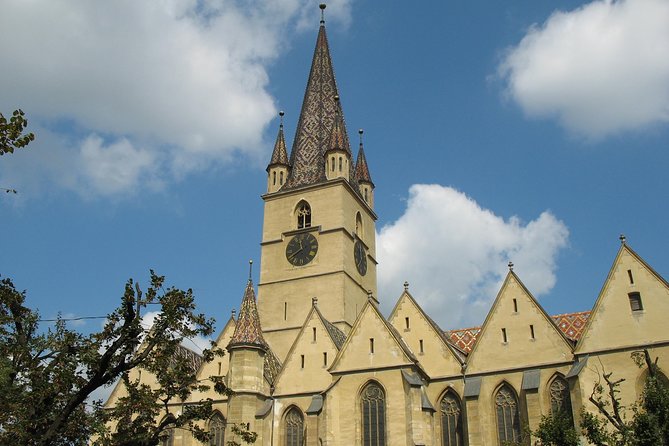
Sibiu’s church visits are a major part of the day. You’ll go to two of the most important churches, then you’ll have time for the Council Tower viewpoint. Climbing up to the top is one of those simple experiences that pays off immediately: suddenly the old town is no longer confusing streets and separate buildings. You get your bearings fast.
One practical note: any tower climb usually means stairs and a bit of effort, so if you’re sensitive to climbing or tired easily, take breaks. The climb is described as giving a beautiful overview, so it’s worth it—but treat it as activity, not sightseeing wallpaper.
Cristian fortified church: Saxon faith, village life, and the UNESCO connection
After Sibiu, you head to Cristian for the fortified church visit. This stop is shorter—about 45 minutes—but it’s the kind of stop that changes how you read the region. In many Transylvanian towns, churches weren’t just for worship. They were community centers built for survival.
This is also the one place in your day that connects directly to the highlight about a UNESCO World Heritage Site. The idea here is straightforward: fortified churches in Transylvania represent a specific Saxon-era response to danger and changing times, built into how people lived.
You’ll learn about local Saxon traditions and way of life in the village. What I like about this timing is that you’ve already seen Sibiu’s big medieval image, so Cristian becomes the “scale down” moment. You stop thinking in city blocks and start thinking in neighborhood survival—how a village used its church, its walls, and its routines.
Also, the description of Cristian “looking like time stood still” matters. It’s not just poetic. Short visits like this work best when the place feels coherent and you’re not constantly bouncing between far-flung viewpoints. Cristian is built for that.
Sibiel and Fântânele in the afternoon: horse-carts, țuică, and icons on glass
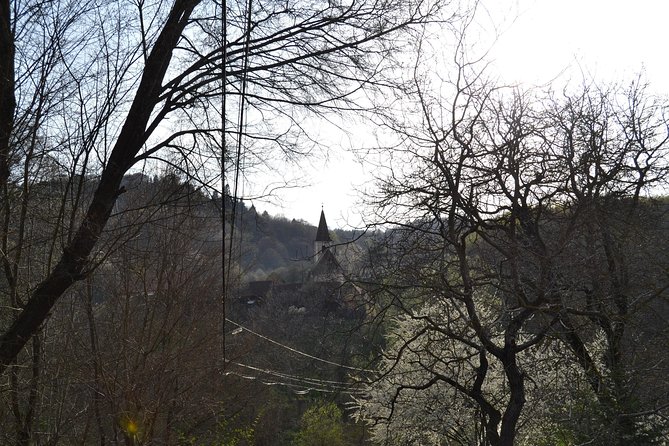
In the afternoon, you leave the bigger town energy and switch into villages where daily life feels slower. From Sibiu, you’ll make a short excursion to Sibiel and Fântânele.
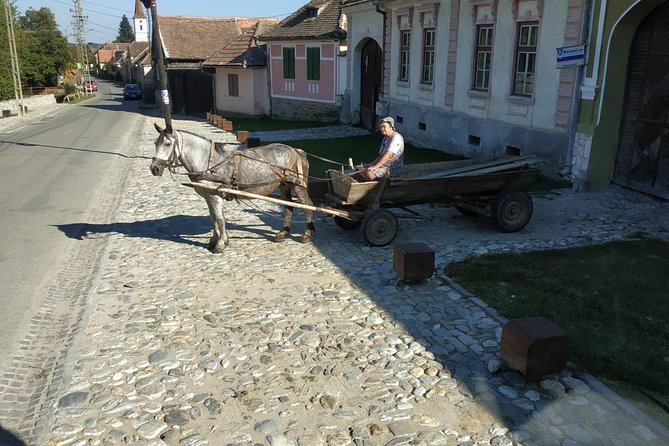
One of the most memorable details is how people describe the villages as looking stuck in the 19th century. And the day gives you a specific clue: horse-drawn carriages can be part of everyday life. That’s the kind of detail that makes history feel less like theory and more like something still present in daily rhythms.
The țuică tasting: more than a sip
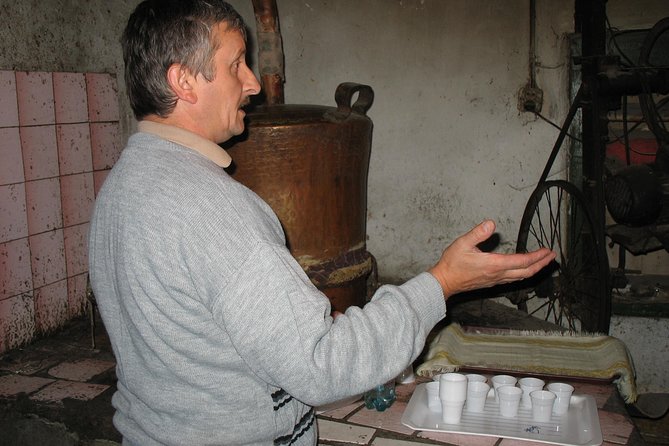
Before you move into the museum, you’ll taste local țuică, traditional Romanian schnapps. Alcohol is included, and that matters for value and pacing: you’re not hunting for a bar after a long day of driving.
I’d treat the tasting as a culture note, not a party stop. The point is learning how local production and local customs still feed into identity. If you don’t drink much, take small tastes and pace yourself—your next stop is still part of the day.
Zosim Oancea Museum of Icons on Glass
Then comes the glass-painting experience at the Zosim Oancea Museum of Icons on Glass. Icons on glass is one of those arts-and-craft traditions that’s hard to appreciate without seeing it in person. Even if you’re not a museum person, this stop has a practical appeal: it explains a local artistic language and gives context for religious visual culture in a Saxon-influenced region.
The session is about an hour, so it’s not a long museum marathon. You’ll likely come away with a new appreciation for how religious art can be both spiritual and handmade, shaped by local materials and local technique.
What the timing really feels like: 11–12 hours of big contrasts
This tour is long, and it makes sense to understand why before you book. You’re stacking three different “modes” of sightseeing:
1) Sibiu’s medieval city core (squares, churches, tower viewpoint)
2) Cristian’s fortified church (short, focused, history-and-faith concentrated)
3) Village afternoon (slow-life feel plus tasting plus museum)
That contrast is the value. But it also means your day has less flexibility. If you want lots of extra wandering in addition to scheduled time, you’ll find you have to work within the plan.
The good news: the tour is built around a full-day structure with transport handled. Hotel pickup and drop-off reduce the day-stress, and the private vehicle helps you avoid the “lost in traffic, fighting for seats” feeling that can ruin a day trip.
Guide quality: George, Andrei, and why it affects your day
From the experiences shared, the guide can make a noticeable difference. Some days are led by George, and others by Andrei, and both names came up positively. Andrei, in particular, is described as passionate and humorous, and patient when English wasn’t perfect. George is also mentioned as having very strong feedback for this route.
That said, one caution showed up too: there can be external guides depending on availability, and if that happens, you might feel the day’s flow depends on who’s speaking and how smoothly they guide the transitions.
So here’s my practical advice: if you care a lot about commentary, ask yourself if your ideal trip includes real conversation and explanations. If yes, this tour can be great. If you prefer self-guided sightseeing with minimal talk, you’ll still see the sites, but the “learn” value may vary.
Price and value: what $129.86 buys you (and what it doesn’t)
At $129.86 per person, this isn’t the cheapest way to do a Transylvania day trip from Cluj-Napoca. But you are not just buying transport. You’re paying for a lot of “busy-work” being handled:
- Round-trip transport by private vehicle
- Hotel pickup and drop-off
- A driver/guide
- Admission tickets at the stops where tickets are included
- Alcoholic beverages (including țuică tasting)
- Taxes, fees, and handling charges
What’s not included is food. That means you’ll need to budget for meals separately, unless the tour schedule gives you time to grab something on your own.
The value logic is simple: if you tried to copy this trip independently, you’d likely pay for multiple admissions, pay for your own transport across towns, and still spend time organizing timing. Here, the structure and inclusions remove those friction points.
One more practical point: the tour has a maximum of 40 travelers. That’s not tiny, but it’s not huge either. It usually supports group organization without turning into a cattle-car day.
Who should book this Saxon heritage tour—and who should skip it
This trip makes a lot of sense if you want a single day that teaches you how Saxon culture showed up in everyday life—cities, churches, crafts, and village traditions—without you doing the planning.
I think it’s especially good for:
- People who like context, not just photos
- Travelers comfortable with walking and a tower climb
- Anyone curious about Saxon heritage and Transylvania’s cultural mix
- First-timers who want a strong introduction before exploring further on your own
It might be less ideal if:
- You hate long days (this runs about 11 to 12 hours)
- You’re extremely timing-sensitive and need lots of free wandering
- You’d be disappointed if commentary quality varies due to guide availability
Should you book it?
Yes, if you want a structured, high-value day focused on Saxon heritage and the religious-village culture behind it. The combination of Sibiu’s squares and Council Tower, the fortified church stop, and the afternoon mix of țuică plus icons on glass is a strong set of experiences for one itinerary.
I’d especially recommend it if you’re starting from Cluj-Napoca and want to see more than one “type” of place in a single day. Just go in prepared for a full schedule and add your own meal plan, since food isn’t included.
FAQ
FAQ
What time does the tour start?
The tour starts at 8:30 am.
How long is the Saxon Heritage in Transylvania day trip?
It lasts about 11 to 12 hours.
Where does the tour end?
It ends back at the meeting point.
Is the tour offered in English?
Yes, it is offered in English.
Is transportation included?
Yes. You get round-trip transportation by private vehicle, with hotel pickup and drop-off.
Are admissions included?
Yes. Admission tickets are included for the scheduled stops.
Is food included?
No. Food and drinks are not included, unless specified otherwise.
Is alcohol included?
Yes. Alcoholic beverages are included, including the țuică tasting.
How big is the group?
The tour has a maximum of 40 travelers.
What is the cancellation policy?
Free cancellation is allowed up to 24 hours in advance for a full refund.
Do children need an adult?
Yes. Children must be accompanied by an adult.