REVIEW · KALAMATA
Skip The Line: Ancient Messini and Archaeological Museum of Ancient Messini
Book on Viator →Operated by Theodores Private Tours - Theodores Travel · Bookable on Viator
Ancient Messini gets busy in summer. This prebooked ticket lets you skip ticket lines and explore a well-preserved ancient city plus the Archaeological Museum of Messenia at your own pace. I like that you can use your phone QR or print out the ticket, and you’re not stuck waiting at the doorway when time matters in Kalamata. The main thing to watch is a reported ticket problem: if your voucher doesn’t scan (no barcode), you may need to repurchase at the kiosk.
You also get a simple two-stop plan built around independent visiting. Your access links the ancient site and museum into one experience, with a short validity window, so you can build it into a day in the area without overplanning. Just remember: these tickets are for people who are not EU citizens, and winter opening can be irregular from late October through late March.
In This Review
- Key things you should know before you go
- Ancient Messini in one ticket: why this is a smart Kalamata plan
- Skip-the-line access: QR tickets and the kiosk check-in step
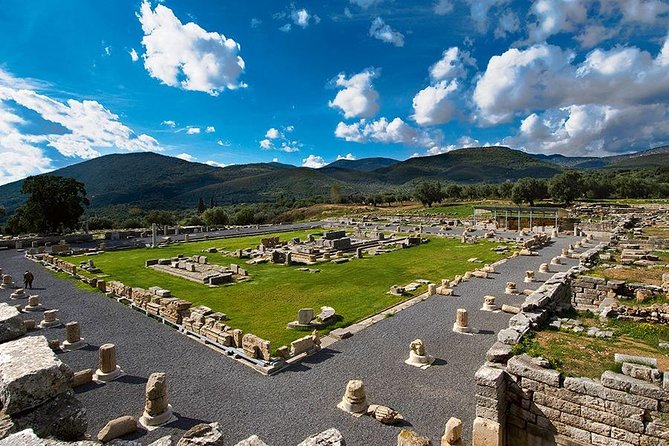
- Ancient Messini (Messene) at your pace: what you’re really walking through
- The landscape does its own storytelling
- How long should you plan for the ancient city?
- Archaeological Museum of Messenia: the objects that give the site meaning
- Museum time: how to make it fit
- How the two visits connect: 72-hour validity and the white card trick
- Price and logistics: is $17.45 really good value?
- Who this is best for (and who should think twice)
- Practical tips for a smoother day at Ancient Messini and the museum
- Should you book this skip-the-line ticket?
- FAQ
- Are these tickets for EU citizens?
- Where does this experience take place?
- How long does the experience last?
- When will I receive the tickets after booking?
- How do I enter Ancient Messini with the ticket?
- Can I use the ticket at both the site and the museum?
- What do I need to keep after my first entry?
- What if I don’t have a smartphone?
- Do the sites always operate year-round?
Key things you should know before you go
- Skip-the-line style entry using prebooked electronic tickets or printed A4 tickets
- One pass across two stops, Ancient Messini (Messene) plus the Archaeological Museum of Messenia
- 72 hours validity after your first use, so you’re not locked into one exact minute
- You must check in at the kiosk next to the doors, not at the monument entrance
- Keep the white card from your first visit for use with the second monument
- Winter hours may change between 31/10 and 31/3, so check start times
Ancient Messini in one ticket: why this is a smart Kalamata plan
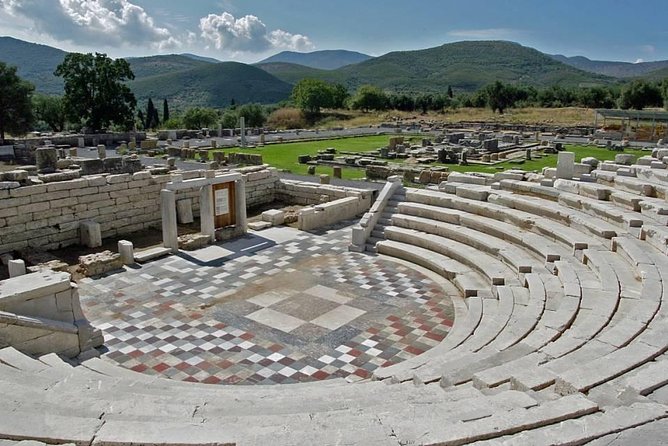
If you’re visiting Kalamata in the high season, the bottleneck is usually not the archaeology. It’s the line. Ancient Messini can have long ticket queues, and that steals the best part of your day: time on-site in daylight.
This ticket solves that with prebooked admission for both the ancient city and the museum. That means you’re not scrambling on the day to find the right counter or hoping tickets are still available. You get a practical, low-stress way to see two related sides of the story: the physical ruins in the landscape, and the objects that explain what life looked like across centuries.
Price-wise, at $17.45 per person, it’s positioned as a value add compared with buying on the spot when lines are worst. You’re paying to remove friction. That can matter a lot more than it sounds like when you’re trying to fit things into a single day near Kalamata.
Skip-the-line access: QR tickets and the kiosk check-in step
The biggest practical advantage is how you enter. The system is built around electronic tickets saved to your phone, with a QR code you can scan when you’re ready. If you prefer paper, printed tickets are also accepted.
Here’s the key detail that you should not ignore: don’t go straight to the monument door and expect the process to be automatic. You need to head to the ticket kiosk next to the doors. That’s where you present the tickets that are sent by email, and that’s where they make your entry work.
This step matters for two reasons:
- It saves you from walking the wrong path when the site is busy.
- It reduces the chances of a frustrating denial at the entrance.
Also pay attention to the small item that controls the second entry. After you use the ticket at Ancient Messini first, the kiosk gives you a white card. Don’t throw it away. You will use that for the next visit to the museum.
One caution from a real-world snag: there’s a reported case where a purchased voucher wasn’t accepted because it didn’t include a barcode, which led to repurchasing at the kiosk to gain admission. That’s not something you can fully predict, but you can protect yourself by doing two simple things:
- Make sure you have the ticket QR ready on your phone (or a printed version).
- Have the email ticket accessible offline if you’re worried about weak data inside the area.
Ancient Messini (Messene) at your pace: what you’re really walking through
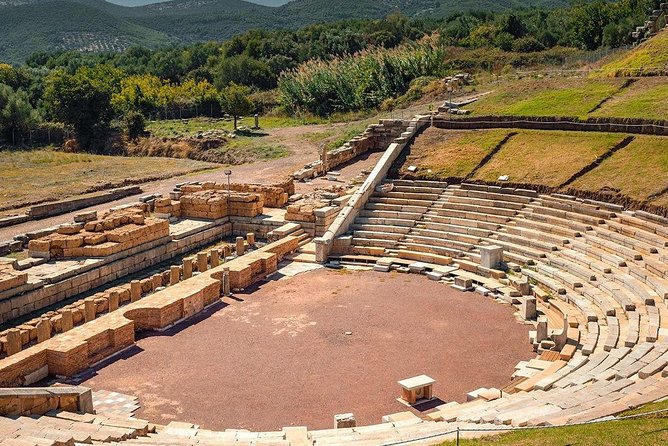
Ancient Messini, often called Messene, is the kind of archaeological site that makes time feel generous. It’s significant not only because of scale, but because of how well it survives in its setting. One of the best reasons to come is that it was never destroyed or covered by later settlements, so you’re reading the ancient city in a kind of open-air continuity.
On the ground, that shows up in the mix of features you can move between as you explore:
- Sanctuaries and public buildings
- Imposing fortifications
- Houses and tombs
The result is a site that supports wandering. You don’t have to treat it like a quick checklist. You can take your time and connect the urban layout to the human story, using your own rhythm instead of a forced pace.
The landscape does its own storytelling
The setting is a major part of the experience. Messene sits in an inland location with a natural frame that feels dramatic and grounded at the same time. The site is described as combining:
- The mountain grandeur associated with Delphi
- The low, river-like calm associated with Olympia
- The dominant bare limestone mass of Ithome, where the ancient acropolis sits
- The low fertile valley around the city
Even if you don’t know the references in advance, you’ll feel the geography while you walk. Limestone and stone fortifications make the scale easier to understand. And the view lines help you sense how the city defended itself and controlled routes.
How long should you plan for the ancient city?
Your total tour time is listed at about 2 hours. But the ancient site itself is big enough that you might want a little flexibility. A good approach is to plan for the “highlights plus breathing room” version:
- Give yourself enough time to get oriented early
- Then choose a couple of zones to focus on (fortifications and sanctuaries often feel like the best anchors)
- Skip rushing between far points if the day is hot
Because you’re visiting independently, you control the pace. If you’re someone who likes to linger and look closely, you may end up taking longer than two hours. If you’re efficient and your goal is broad coverage, you can likely fit the ancient portion into that window.
Archaeological Museum of Messenia: the objects that give the site meaning
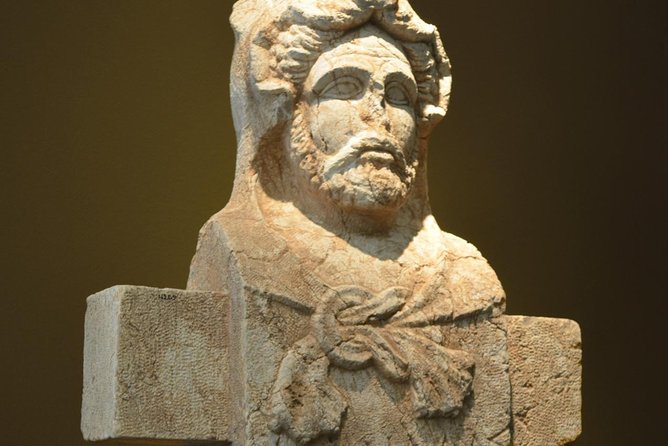
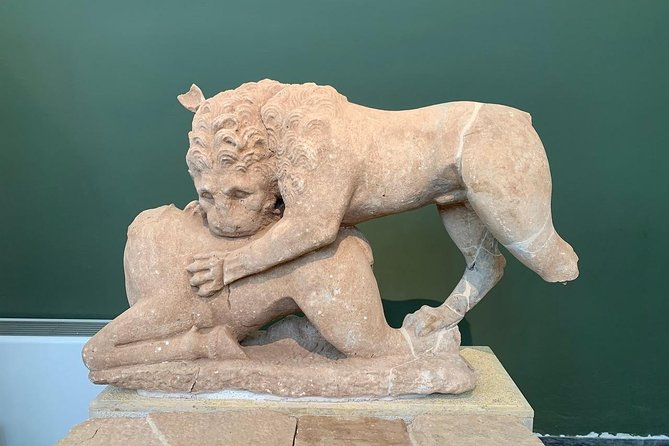
Once you’ve walked the stone streets and structures, the museum does the job of turning scenery into history you can hold in your head. The Archaeological Museum of Messenia is set up as a journey through the region’s long past, not a single time period snapshot.
The exhibits cover a wide span:
- Prehistory (Bronze Age)
- Through to the Byzantine Period
That range matters. It helps you understand that the region’s story didn’t stop when the ancient city did. Even if your main focus is Messene, the museum gives you context for what came before and what continued after.
What I like about the way the museum is described is the emphasis on how the displays are arranged. It’s set up to catch your attention and build curiosity, so you’re not just reading labels—you’re getting pulled deeper into the area’s culture and development.
Museum time: how to make it fit
The museum is also listed at about 2 hours. In real life, you can use that as a guide rather than a strict rule. If your day is tight, you can skim the most relevant themes first, then slow down for the sections that match what you just saw at the ancient city.
If your interest is stronger in everyday life (not just monuments), plan a bit more time. The museum is the place where small items can do big work for your understanding.
How the two visits connect: 72-hour validity and the white card trick
This ticket is designed as a linked admission experience. You don’t have to do both places in one exact day, but you do have to follow the timing rules.
- After your first use at Ancient Messini, the ticket remains valid for 72 hours to use at the other monument.
- On your first visit, you must use the kiosk check-in process.
- Keep the white card you receive from the kiosk after the first monument, because you’ll use it for the second visit.
That means you can build a buffer into your itinerary. If you start the ancient site in the morning, you could return to the museum later that day, or take it the next day within the validity window. It also helps if you get stuck in traffic or want a slower pace after exploring outside.
Price and logistics: is $17.45 really good value?
At $17.45 per person, this ticket is clearly aimed at travelers who want a time-saving advantage. The value isn’t in buying a souvenir or getting a guide who talks you through everything. The value is the friction removal: fewer queues, faster entry, and a built-in route through two related stops.
In practice, the cost is easiest to justify if:
- You’re visiting during peak summer when lines can be long
- You want independent exploring with your own pace
- You prefer controlling timing in the area instead of arranging separate admissions
It’s less of a bargain if you’re traveling in a season when lines are short and you’re already planning plenty of time. But even then, having an electronic option ready can still reduce stress.
One more value note: prebooking is also a way to reduce last-minute uncertainty. The average booking window is around 35 days in advance, which suggests many people plan ahead for this stop.
Who this is best for (and who should think twice)
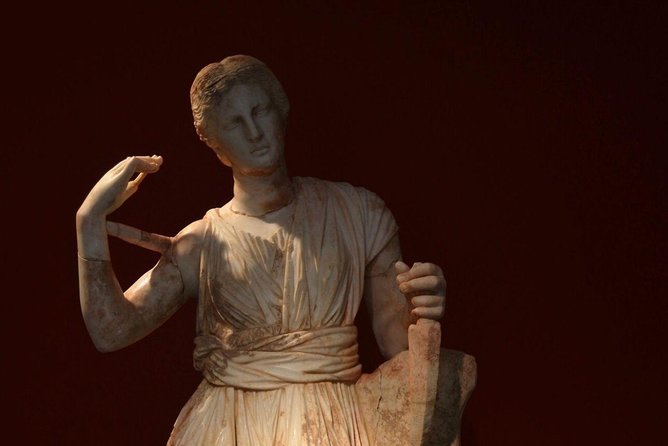
This ticket works well if you’re:
- A self-guided explorer who likes to roam a large site without being tethered to a schedule
- Someone visiting Kalamata and wanting to include a major ancient stop without losing half a day to lines
- Interested in a clear “ruins + museum” structure that helps you connect what you see
You might think twice if:
- You rely on very unreliable phone access. The system is designed for electronic tickets, with QR codes, though paper options exist for people without smartphone access.
- You dislike strict check-in steps. The kiosk is part of the process, and missing it can slow you down.
- You’re visiting close to the winter period (31/10 to 31/3), when start times and operation may be affected.
Practical tips for a smoother day at Ancient Messini and the museum
A few habits make this trip smoother with almost no extra effort.
First, keep your ticket info ready before you arrive. Having the QR code accessible on your phone (or printed) helps you avoid scrambling when lines form around the entrance area.
Second, approach the process like it’s a two-step check-in. Go to the kiosk next to the doors. Present your ticket there. Then proceed as directed. That single habit prevents the kind of confusion that can lead to delays.
Third, treat the white card as critical. Put it somewhere safe right after your first entry. If you forget it, you may have to handle the museum process differently than planned.
Fourth, if you’re visiting in winter months from 31/10 through 31/3, expect possible changes to opening and start times. It’s worth planning with extra flexibility and verifying the schedule closer to your visit day.
Should you book this skip-the-line ticket?
I’d book it if your goal is to see Ancient Messini and the Archaeological Museum of Messenia with less hassle and better timing control. The skip-the-line approach plus the linked access and 72-hour validity is a strong combo for an independent visit.
I’d hold off only if you’re unsure about the ticket format you’ll be able to use on-site (QR scanning vs. barcode vs. printed entry) or if you’re traveling during the winter window when hours can shift. In those cases, you can still go, but double-check your ticket format and plan extra time so you’re not rushed.
If you want a practical ancient Greece day—ruins outside, explanations inside—this is the kind of ticket that makes the experience easier to enjoy, not just easier to attend.
FAQ
Are these tickets for EU citizens?
No. The tickets included are for people who are not EU citizens.
Where does this experience take place?
It’s in Kalamata, Greece, with access to Ancient Messini and the Archaeological Museum of Messenia.
How long does the experience last?
The duration is listed as about 2 hours.
When will I receive the tickets after booking?
After booking, the operator contacts you for last details, and then you receive the tickets to your email 24 hours before the agreed date.
How do I enter Ancient Messini with the ticket?
When you arrive, you should go to the ticket kiosk next to the doors to provide the ticket sent by email. Electronic tickets from a mobile device or printed tickets are accepted.
Can I use the ticket at both the site and the museum?
Yes. Your first use at Ancient Messini starts the clock, and then the ticket is valid for 72 hours to use at the other monument.
What do I need to keep after my first entry?
Don’t throw away the white card you receive from the kiosk after your first visit, because you use it for the second monument.
What if I don’t have a smartphone?
The A4 paper option is noted as being for people who don’t have access to smartphones.
Do the sites always operate year-round?
From 31/10 until 31/3, the monument may not operate properly and start times/timetable may change.