REVIEW · ROME
Christianity in the Ancient Rome Private Tour
Book on Viator →Operated by Rome Private Excursions · Bookable on Viator
Rome’s early Christians are surprisingly close. This private 7-hour route through churches and burial spaces tied to St Peter and St Paul turns big names into real places you can stand inside and look at. I like how the guide keeps the story moving, so you’re not just hopping between stops.
I also love the mix of headline sites and quieter, more haunting stops. You’ll get short, focused time windows (so the day stays efficient), but you’ll also face a couple practical bumps: on-site tickets for some locations and a firm dress code (knees and shoulders covered) for places of worship.
In This Review
- Key things that make this tour worth your time
- How a private format changes the feel of early-Christian Rome
- Abbazia di San Paolo Fuori Le Mura: Constantine’s basilica in context
- Catacombs of Saint Callixtus: where the story goes underground
- Santa Sabina on Aventine Hill: early Roman church architecture at human scale
- Church of Domine Quo Vadis: a tradition tied to the Appian Way
- Carcer Tullianum (Mamertine Prison): the Peter-and-Paul jail you can actually visit
- Price and value: what you’re paying for (and what you still need to budget)
- Dress code and timing: the stuff that can ruin your day if you ignore it
- Your guide matters: Max, Manny, Antonio, John, Luca, and Iovanni
- Who should book this Christianity in Ancient Rome private tour
- Should you book this tour?
- FAQ
- How long is the tour, and what time does it start?
- Is hotel pickup and drop-off included?
- What entrance fees are not included in the price?
- Do I need to pay for tickets at the sites?
- What dress code is required?
- What fitness level do I need?
Key things that make this tour worth your time
- Private van + pickup: You start from your accommodation (or the airport on arrival) and end back the same way.
- Peter and Paul, not just Rome generalities: The stops connect directly to their story in the city.
- A mix of surface-and-subterranean sites: Churches above ground, then catacombs below.
- Short stop times, big payoff: You see a lot without spending all day in lines.
- Briefings before you enter: The guide sets context even when access rules limit where they can walk with you.
- Guides with real teaching energy: Names you may encounter include Max, Manny, Antonio, John, Luca, and Iovanni.
How a private format changes the feel of early-Christian Rome
Rome has plenty of tours. Most of them are built around logistics first—what bus can fit what line. This one is built around the story, so the drive time earns its keep.
You start at 8:30 am with pickup from your hotel or the airport, then you spend the day moving across town in a private vehicle with a driver. That matters because a single day can cover very different neighborhoods: walls and basilicas near the outskirts, then the Aventine area, then Appian Way territory, and finally prison archaeology in central Rome.
Because it’s private, you can ask questions and steer the day slightly. One common pattern in the guide feedback is that the guide responds to what you care about most—whether that’s the exact locations tied to Peter and Paul, or the broader historical conditions around the early church.
You can also read our reviews of more private tours in Rome
Abbazia di San Paolo Fuori Le Mura: Constantine’s basilica in context
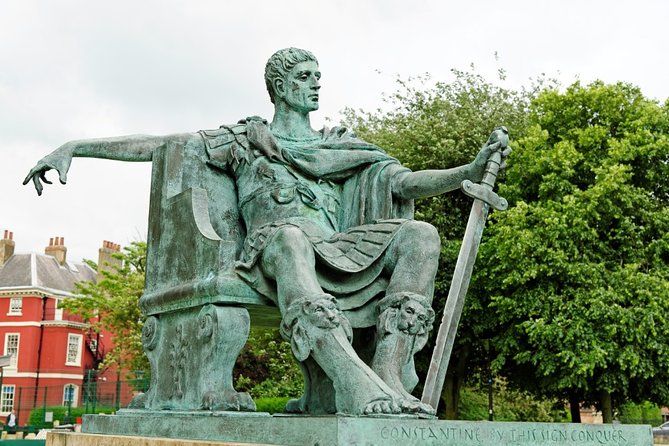
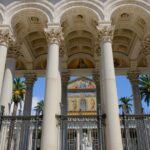
This stop is the morning anchor: the Abbazia di San Paolo Fuori Le Mura (St Paul Outside the Walls). It’s dedicated to St Paul and dates to the 4th century, founded by the Roman emperor Constantine I—so even before you get inside, you’re standing at a piece of the shift from persecution-era Christianity toward official tolerance.
You get about 30 minutes here. That’s enough time to walk the interior at a calm pace and still keep the day moving toward the more intense underground sites.
The main drawback is also the main reality: 30 minutes is not a long sit-down museum visit. If you want to read every plaque and slow-walk every side chapel, this part will feel short. Still, it’s a smart start—big setting first, then deeper layers later.
Practical tip: plan your clothing for church entry right away. The dress rules apply here and elsewhere, and it’s easier when you’re not scrambling between neighborhoods.
Catacombs of Saint Callixtus: where the story goes underground
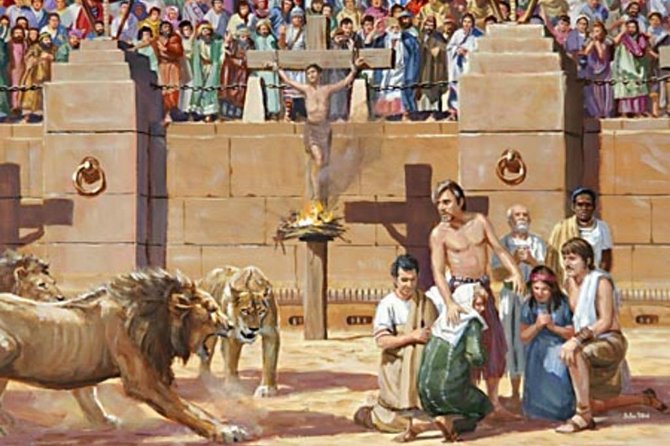
Next comes the Catacombs of Saint Callixtus, the day’s most physical and most emotional segment. You’ll visit an underground burial complex connected to the earliest Christian communities, including spaces tied to the burial tradition of popes.
Expect around 45 minutes underground. This is a good match for a private tour because the guide can help you get tickets smoothly—catacomb entry is not included, and you pay on site (the cost is listed as about €8 per person in the trip description).
What I find valuable here is that the catacombs aren’t treated like a random “cool underground thing.” The guide frames what you’re seeing before you descend, so the narrow corridors and burial niches feel like evidence of real lives rather than just a spooky set.
Two considerations:
- The day includes walking down and around in underground spaces. You only need moderate fitness, but you should be comfortable with uneven steps and enclosed areas.
- You can’t control how other visitors move in and out of entry points, even with a private guide. The catacombs are still a working site.
Santa Sabina on Aventine Hill: early Roman church architecture at human scale
After the underground, you shift back above ground at Basilica di Santa Sabina on Aventine Hill. You’ll have about 15 minutes, and that brevity is intentional: it keeps you from spending the whole day only on one kind of experience.
Santa Sabina is one of the early churches in Rome, and the highlight described here is the wooden doors carved with Biblical scenes. In a short time window, those doors are the kind of focal point that helps you actually see the church’s message rather than just admire the building in passing.
If you’re the type who likes architecture and symbolism, you’ll appreciate how this stop keeps the day from going totally dark and underground. If you’re expecting a long interior walkthrough with lots of lingering, 15 minutes can feel like a quick taste.
Church of Domine Quo Vadis: a tradition tied to the Appian Way
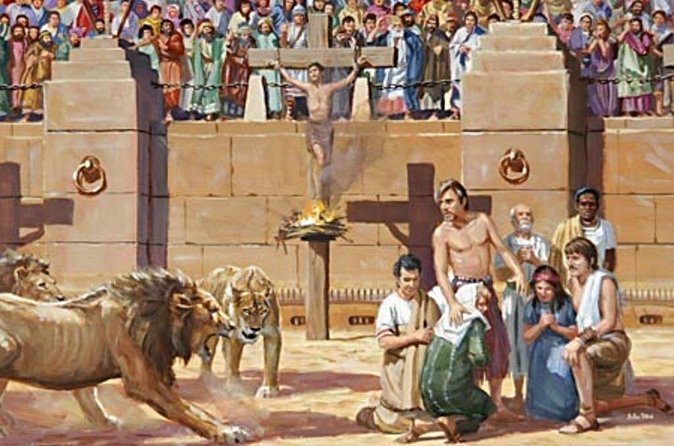
Then you go to Chiesa del Domine Quo Vadis, a stop that feels small—but it’s not shallow. The story connected to this church says that Peter met Jesus on the way out of Rome (traditionally linked to the Appian Way) and that Jesus responded with a message about going back to Rome.
The practical reason this works on a private day is the same as the other stops: you get guided context before you’re standing at the site. You also get to see the footprint associated with the tradition.
You’ll have about 15 minutes here. This isn’t a “read a guidebook” stop. It’s more like: take a breath, look at the place, and let the story land.
One consideration: because this is built around tradition, if you’re looking for strictly provable archaeology without any religious storytelling, you might find this stop more meaningful spiritually than academically.

Carcer Tullianum (Mamertine Prison): the Peter-and-Paul jail you can actually visit
The last stop is Carcer Tullianum, also associated with the Mamertine Prison. This is the visit that turns “early Christianity” into something bodily and immediate: a prison space where Peter and Paul are connected by tradition.
You’ll have about 30 minutes, and again the key practical point is money and entry. Entry is not included. The tour data lists the Carcer Tullianum ticket as about €12 per person, and it also notes an inside option around €6 per person. Either way, budget for a paid entry on site.
This is also where the private-guide approach pays off. A good guide doesn’t just say what happened. They help you understand why Rome’s power structures mattered to early Christians—why a city could be both the stage and the threat.
If you have limited time and the day has felt rushed, the prison stop is often the place that “locks in” the day’s emotion. It’s hard to keep it academic once you’re standing in a real detention space.
Price and value: what you’re paying for (and what you still need to budget)
At $469.14 per person for a roughly 7-hour private outing, this is not a casual add-on. But it also isn’t priced like a generic hop-on tour either. You’re paying for three big things:
- Pickup and drop-off from your accommodation (or airport on arrival)
- Private guide time over a full morning
- A driver and private vehicle to cover several far-apart sites efficiently
Then there’s the “small print” reality: some key components cost extra once you arrive. The catacombs and the prison have on-site entry fees (catacombs listed around €8; Carcer Tullianum listed with values around €12, plus the note about an inside option around €6).
So I’d look at this like a two-part budget:
- Your tour fee for the guided day and transportation
- A small add-on for the two ticketed sites
Whether that’s a good value depends on your group size and your priorities. If you’re two adults who want a focused, door-to-door day without line-wrangling, it can feel very fair for what you cover. If you’re traveling solo and don’t need a private vehicle, you may prefer a cheaper group option and add taxis yourself.
Dress code and timing: the stuff that can ruin your day if you ignore it

This tour has a strict dress code for places of worship and selected museums: no shorts or sleeveless tops. Knees and shoulders must be covered for both men and women. If you show up out of compliance, you can risk being refused entry.
You’ll be moving through multiple churches. That means one outfit choice needs to work all morning. I’d rather you over-plan than regret it halfway through.
Timing-wise, the day is built on short windows:
- St Paul Outside the Walls: ~30 minutes
- Catacombs: ~45 minutes
- Santa Sabina: ~15 minutes
- Domine Quo Vadis: ~15 minutes
- Carcer Tullianum: ~30 minutes
That adds up to the full day length without turning the tour into a slow crawl. The trade-off is that you won’t have hours to wander freely in every stop. But in exchange, you get a complete arc from major church foundation, to persecution-era burial spaces, to the prison connection.
Your guide matters: Max, Manny, Antonio, John, Luca, and Iovanni
Across the guide feedback for this experience, a consistent theme shows up: these guides don’t treat it like memorizing a checklist. They connect places to the larger “why” behind early Christianity in Rome.
You may get guides like Max, Manny, Antonio, John, Luca, or Iovanni. Several people highlight that guides can tailor the day—either to focus on Peter-and-Paul landmarks, or to spend more time on specific parts of the story.
One useful note if you care about the angle: some descriptions emphasize a history-and-context approach that separates what’s known from what’s tradition or legend. If you want a tour that sticks tightly to one church’s teaching lens, you might find this style less “sermon-like” and more academic. If you want a clearer sense of how the early church survived shifting Roman tolerance and persecution, that approach can be exactly what you’re after.
If you like visual reinforcement, one tip from the guide ecosystem is the book Rome Reconstructed, a flip-style reference that compares ruins then vs. ruins now. It’s not required, but if the ruins tend to blur in your mind, that kind of visual can help you see the ancient city while you’re standing in it.
Who should book this Christianity in Ancient Rome private tour
This is a strong fit if:
- You’re into religious history and want the sites connected to Peter and Paul, not just generic Rome churches.
- You want a day that covers more ground than you could comfortably manage on your own.
- You like having a guide set context before you walk into each place, especially for the catacombs.
It may be less ideal if:
- You hate church dress rules and don’t want to plan clothing.
- You don’t want to pay additional on-site admission fees.
- You want a long, slow museum-style visit at every stop. This tour keeps stops short to fit the whole narrative.
Should you book this tour?
I’d book it if you want a focused, private morning that turns early Christianity into walkable locations across Rome. The biggest value is the combination of transportation plus a guided story arc—churches outside the walls, catacombs underground, and the prison connection that helps the whole day click.
I’d think twice if your budget is tight or you dislike extra ticket payments. Also, if you’re only interested in one strict doctrinal presentation, this experience leans more toward historical context than church recitation.
If you’re excited by the idea of standing where traditions place key moments—then moving from basilica to catacombs to prison—you’ll likely find this one of the most meaningful ways to spend a day in Rome without burning time on guesswork.
FAQ
How long is the tour, and what time does it start?
The tour runs about 7 hours and starts at 8:30 am.
Is hotel pickup and drop-off included?
Yes. Pickup and drop-off are offered directly from your Rome accommodation, or from the airport on arrival.
What entrance fees are not included in the price?
Lunch is not included. Entrance fees are also not included for certain stops, including the Catacombs of Saint Callixtus (listed around €8 to €10 per person) and Carcer Tullianum/Mamertine Prison (listed around €12 per person, with an inside option noted around €6).
Do I need to pay for tickets at the sites?
Yes for the catacombs and the prison. Your guide can help with purchasing where needed, and you pay on site.
What dress code is required?
You must cover knees and shoulders. Shorts and sleeveless tops are not allowed for entry to places of worship and selected museums.
What fitness level do I need?
You should have a moderate physical fitness level for this day.