REVIEW · LECCE
Tour of Lecce with a visit to the basement of the ancient synagogue
Book on Viator →Operated by Infotab Tours · Bookable on Viator
Stepping into Lecce’s underground history is a surprise. This short tour pairs the basement Jewish Museum with major Baroque sights, so you get more than postcards—you get layers of the city in 90 minutes. I especially like how the guide turns church façades and symbolism into something you can actually notice as you walk.
I also love the structure: a focused mix of Santa Croce, the Duomo square, and the historic core, so you leave with a clear mental map of Lecce. One thing to consider is that it’s still a walk and the tour ends at the cathedral area, so double-check where you’ll want to go after if you’re traveling with slower mobility or planning tight connections.
In This Review
- Key things worth knowing before you go
- Why the ancient synagogue basement changes how you see Lecce
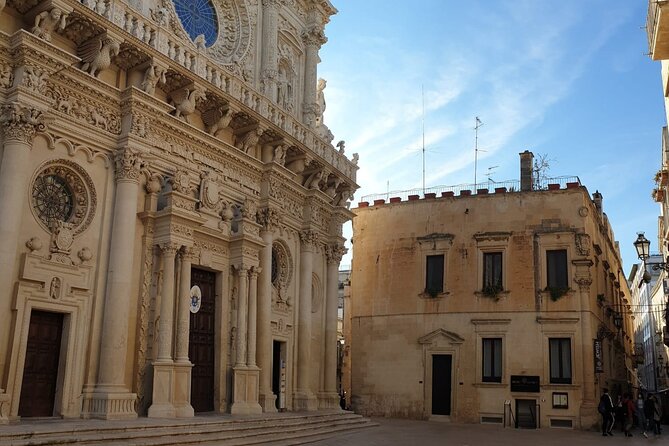
- Santa Croce in 10 minutes: Baroque symbolism you’ll actually recognize later
- Duomo square at a human scale: symbols plus the buildings around them
- Centro Storico walk: from Roman stages to Baroque palaces
- Hearing the guide, managing the walk, and working with headsets
- Price and ticket value: what $24.20 actually buys
- Should you book this Lecce walking tour?
- FAQ
- How long is the Lecce tour?
- Is the tour offered in English?
- What is included in the ticket price?
- Where does the tour start and end?
- How big is the group?
- Is the ticket mobile?
- What if the weather is bad?
- Can I get a refund if plans change?
Key things worth knowing before you go
- Basement synagogue museum: medieval Jewish history housed underground, a rare stop in Lecce
- Baroque symbol spotting: you get coached on what to look for at Santa Croce
- Duomo square context: the cathedral and its surrounding buildings are part of the story
- Roman-to-Baroque sweep: the historic center route links amphitheater/theater origins to later Baroque power
- Headsets help, but stay close: audio can get spotty in large squares and inside tight spaces
Why the ancient synagogue basement changes how you see Lecce
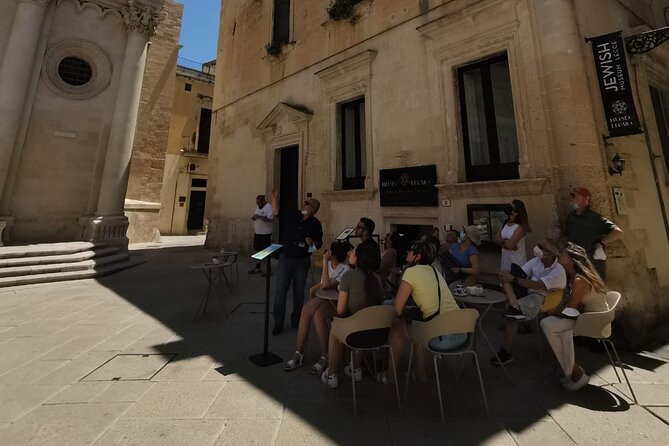
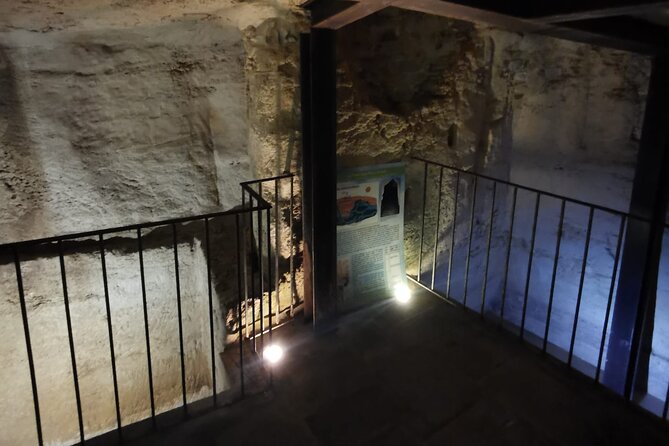
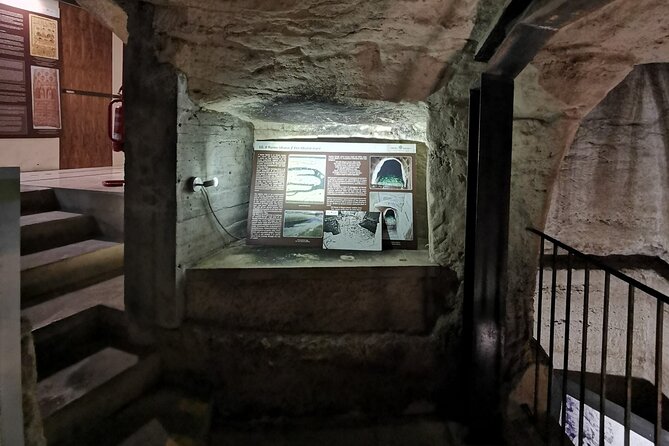
The star move here is the visit to the Jewish Museum Lecce, located in the basement of the ancient synagogue. It’s not a quick hallway stop. Plan on a real descent and a real shift in tone: you’re going from bright street-level Lecce to the quieter, medieval world the museum preserves.
What I like about this stop is the way it resets your expectations. Lecce is famous for Baroque stonework, yes. But this basement museum reminds you the city also has older stories—community life, faith, and the long timeline of change that built the present-day streets you’re walking now. In a city where architecture is everywhere, underground history adds perspective.
The timing is tight—about 15 minutes—so you won’t have time to read every label word-for-word. But that’s actually good for a guided tour. You’re there for context and the right details to notice. If you’re the type who takes photos nonstop, keep an eye on your pace so you don’t fall behind when the group moves back up.
You can also read our reviews of more tours and experiences in Lecce.
Santa Croce in 10 minutes: Baroque symbolism you’ll actually recognize later
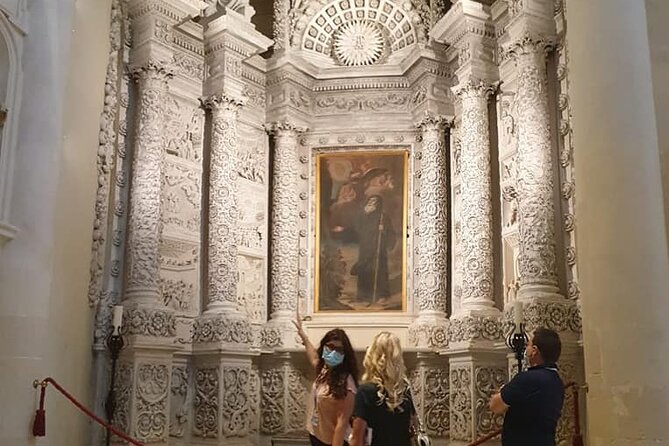
Next up is Basilica di Santa Croce, with a short visit (about 10 minutes). This is the kind of church where the exterior and the interior feel like they’re competing with each other for attention. The payoff is that the guide points out the symbols instead of letting you wander in a blur of ornament.
Santa Croce is often treated like a must-see, but symbolism is what makes it more than a photo op. The “secret” isn’t magic—it’s pattern recognition. Once you learn what to look for, those details start popping out at you even when you’re walking away from the basilica.
Just budget mentally for this: admission here is not included. That doesn’t mean it’s a bad value. It just means you should plan a little extra for tickets at Santa Croce and later at the cathedral.
Also, because the stop is brief, treat it like a sprint with a target. Stand where you can see the guide’s focus area and try not to drift too far. If you miss the explanation, the art will still impress, but you’ll lose some of the meaning.
Duomo square at a human scale: symbols plus the buildings around them
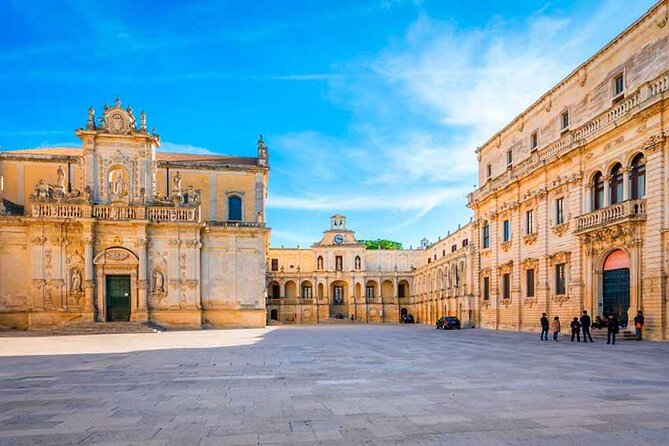
After Santa Croce, you head to Cattedrale Maria Santissima Assunta e S.Oronzo and the Piazza del Duomo area (about 15 minutes). The cathedral is important, but the square is part of the lesson. The tour frames the setting—what’s around the cathedral helps you understand why this location mattered and how power and education were organized in the same zone.
You’ll also get pointed toward the cathedral’s symbols, and you’ll notice the surrounding complex described in relation to the archiepiscopal residence, the seminary, and the bell tower. That’s the kind of context that makes you feel less like you’re chasing individual sights and more like you’re learning how the city functioned.
Admission here is also not included, so keep that in mind when you calculate your full day cost.
One practical note: cathedral interiors can be busy and acoustics can get weird. Since the tour is short, you’ll want to be positioned early so you can hear the explanation and still look around. If you have mobility limits, take a moment before entering so you’re ready to move quickly when the group does.
Centro Storico walk: from Roman stages to Baroque palaces
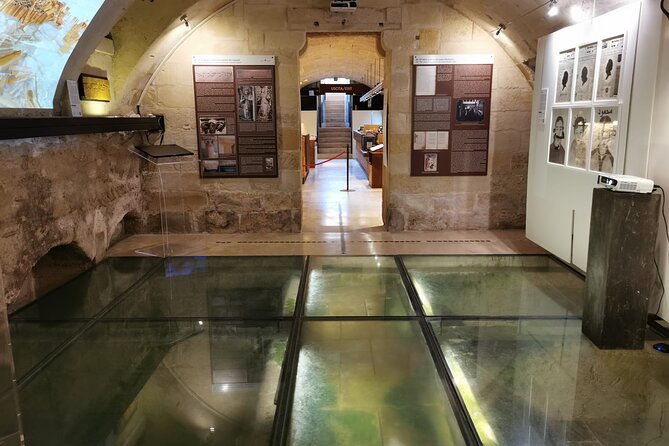
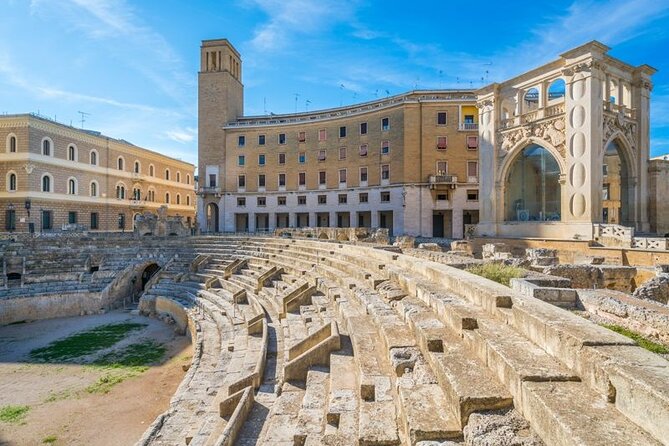
The final stretch is the long one: about 50 minutes in Centro Storico, the historic center. This is where Lecce goes from “sights I visited” to “a city I understand a bit.” The route links earlier roots to later style, starting with Roman-era highlights like the amphitheater and Roman theater, then moving toward the churches and Baroque palaces that shaped the streets you see today.
This part matters because it’s the connective tissue. If you only did the underground museum and then the churches, you’d miss how the city’s look and feel developed. Walking the historic core gives you spacing and scale. You begin to see where sightlines change, where major buildings anchor the street grid, and how later builders used earlier spaces.
Time-wise, 50 minutes is enough for a solid circuit, not enough for lingering at every doorway sculpture. So keep expectations realistic: this is guided orientation. If you fall in love with a façade, mark it for a return visit later on your own.
Also, one review-style detail you might benefit from: some guides include quick “look-down” moments around older infrastructure. If you get a route that points out less-obvious features like underground storage elements visible at street level, take it. Those little stops are exactly how the city rewards slow attention.
Hearing the guide, managing the walk, and working with headsets
The tour runs for about 1 hour 30 minutes, and the group can be up to 30 people. That group size is manageable for a short circuit, but it’s big enough that the headsets can become important. In most cases, you’ll have audio support, though a few people reported that sound can be spotty when you’re farther from the guide or when you’re in louder, wider spaces.
Here’s the simple tactic that helps in every city with headsets: stay within a few steps of where your guide is speaking. If you’re at the back, you’ll miss the details that make the symbolism and architecture click. Downstairs in the museum, audio can be especially hit-or-miss, so don’t hang back there.
The other practical issue is that the tour ends at the cathedral area, not back at your starting point. That’s normal for walking tours, but one important caution came up about start/end mapping and the walk afterward. If you’re relying on nearby drop-off points for elders or for a tight schedule, verify your exact route from the ending plaza to wherever you want to go next. Google Maps can make it look shorter than it feels in real walking.
If you want a stress-free experience, wear comfortable shoes and keep water in your day bag. Lecce’s center is walkable, but it still adds up when you’re moving between multiple sites fast.
Price and ticket value: what $24.20 actually buys
The price is $24.20 per person for roughly 90 minutes, in English, with a mobile ticket. For a short time, the best value piece is that the Jewish Museum admission is included (about 15 minutes). That stop alone can justify the ticket because it’s the kind of access you often can’t easily arrange on your own without planning.
The other two main church stops—Santa Croce and the Duomo—are not included. That means your total spend depends on what you pay for those admissions. Still, the tour is built around time-efficient explanations: you get the “what you’re looking at” part, not just entry.
So how should you judge whether it’s worth it? Ask yourself this: do you want a fast, guided orientation that connects Lecce’s Jewish underground story with its Baroque architecture and Roman roots? If yes, this price makes sense. If you only want churches with no commentary, you might be happier using your time for a self-guided walk and buying only the admissions you care about most.
A bonus note from some participants: a small tasting at the end was mentioned as an extra plus in some versions of the experience. Since it’s not guaranteed in the basic outline you’ll plan around, treat it as a potential perk, not the core reason to book.
Should you book this Lecce walking tour?
Book it if you want a tight 90-minute overview that covers three big parts of Lecce: the underground Jewish story, Baroque church symbolism, and the historic center’s Roman-to-Baroque evolution. This is also a strong first day choice if you’re trying to get your bearings fast and pick targets for later solo wandering.
Consider skipping or pairing it with a longer independent plan if you’re very sensitive to crowding or you want lots of free time inside buildings. The shortest visits are the ones that depend most on good hearing and good positioning, and one or two reports flagged audio or pacing issues.
If you do book, go in with one smart mindset: listen for the symbols and keep asking in your own way what you’re supposed to notice. When the guide is at their best, the churches stop being random façades and start making sense.
FAQ
How long is the Lecce tour?
It runs for about 1 hour 30 minutes (approximately).
Is the tour offered in English?
Yes, the tour is offered in English.
What is included in the ticket price?
Jewish Museum Lecce admission is included. Admission for Basilica di Santa Croce and the cathedral are not included.
Where does the tour start and end?
It starts at Infotab – Lecce Walking Tours on Via Umberto I, 18, Lecce. It ends at the Cathedral of Saint Mary of the Assumption and Saint Orontius in Piazza del Duomo.
How big is the group?
The maximum group size is 30 travelers.
Is the ticket mobile?
Yes, you receive a mobile ticket.
What if the weather is bad?
This experience requires good weather. If it’s canceled due to poor weather, you’ll be offered a different date or a full refund.
Can I get a refund if plans change?
Free cancellation is available up to 24 hours in advance for a full refund. If you cancel less than 24 hours before, the amount paid is not refunded.