REVIEW · DERRY LONDONDERRY
Walking Bogside History Tour in Guildhall
Book on Viator →Operated by Bogside History Tours · Bookable on Viator
A walk through the Bogside hits different. This 90-minute history tour connects the streets you see now with the politics and human fallout of Bloody Sunday, using a route that traces parts of the original march and leads you to the area where the dead and wounded fell. I love that the stop-by-stop pacing keeps it easy to follow, and I also love that guides bring lived detail that turns names and dates into real faces and choices. The main thing to consider: because this is an outdoor walking tour, the experience can depend on your guide’s delivery and volume, and one guest noted trouble hearing.
You’ll be walking in and around the neighborhood outside the city walls that people call the Bogside (Taobh an Bhogaigh). Along the way you’ll pass murals by the Bogside Artists, stop near Free Derry Corner, and finish near the Bloody Sunday monument below the walls—an ending that makes the whole story feel tied to the ground under your feet.
In This Review
- Key Points at a Glance
- Entering the Bogside: A 90-Minute Story You Can Actually Follow
- Price and Timing: Why $27.73 Feels Like Solid Value
- Meeting at Guildhall: Where the Walk Sets Its Ground Rules
- A practical tip
- Bogside Murals and Free Derry Corner: Symbols You’ll Understand After the Walk
- Bloody Sunday Monument: The Ending That Gives the Story Weight
- What Makes the Guides Matter (Jimmy Toye, John, Paul, and More)
- If you can choose a guide
- Who This Tour Is Best For (and Who Might Want to Think Twice)
- Tips to Get the Most Out of Your Walk
- Should You Book the Bogside History Walking Tour?
- FAQ
- How long is the Walking Bogside History Tour in Guildhall?
- Where does the tour start and end?
- What is the tour price?
- Is the tour offered in English?
- How big are the groups?
- What should I expect to see on the route?
- Is there a mobile ticket?
- What is the cancellation policy?
Key Points at a Glance
- Firsthand narration from guides with personal connections to the Troubles, including Jimmy Toye, John, Paul, McCrea, Peter, and Neil
- Focused route: Guildhall to the Bogside sites, ending at the Bloody Sunday monument in sight of Free Derry Corner
- Street-art context: large gable-wall murals and the story behind Free Derry’s symbolism
- Short and practical: about 1 hour 30 minutes, with a maximum group size of 20
- Good value for what you get at $27.73, especially compared to longer tours that try to cover everything at once
Entering the Bogside: A 90-Minute Story You Can Actually Follow
This tour works because it doesn’t try to cram all of Derry into one afternoon. Instead, it narrows in on a single, painful turning point—Bloody Sunday—and then shows you how the political and social repercussions spread through the community. You’ll start at Derry Guildhall (Londonderry BT48 7BB) and then move through the Bogside, which sits outside the city walls.
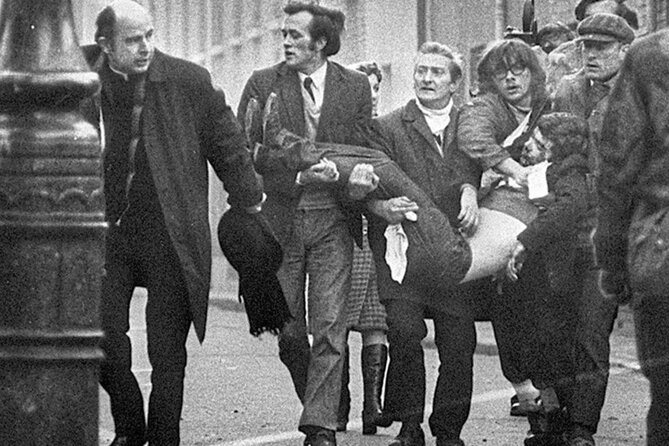
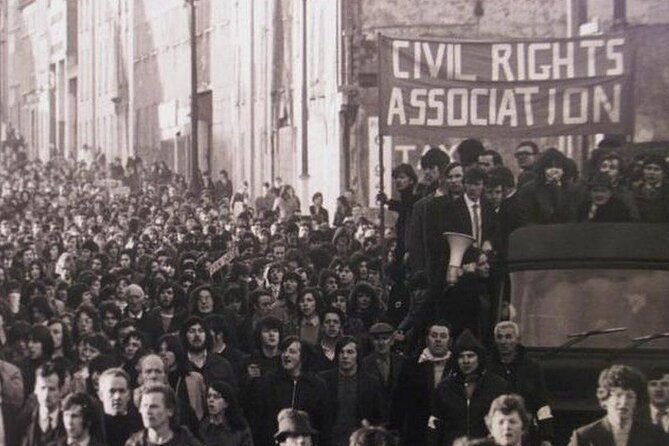
The walk feels like a guided sequence of “this matters because…” moments. One segment retraces parts of the original march, and you’ll hear about places where the dead and wounded fell. That detail is heavy, but it’s also what makes this tour more than mural spotting.
It’s also well-suited to real-world touring. At roughly 1 hour 30 minutes, you won’t feel dragged across town. And because the group size caps at 20, the guide can keep track of questions without the usual chaos.
Price and Timing: Why $27.73 Feels Like Solid Value
At $27.73 per person, you’re paying for a guided walk with a clear purpose: history you can see, not just history you hear. In this kind of setting, the value comes from two things:
- Time efficiency: you get a focused route in about 90 minutes instead of a long, multi-stop itinerary where the story gets diluted.
- Human context: the tour’s strongest asset is the guide’s personal connection, which you can’t replicate with a self-guided app.
Booking tends to happen ahead of time—about 15 days on average—so if Derry is your one-city stop, I’d lock it in before your plans get messy. The tour is offered in English, so you don’t need to stress about language logistics.
Meeting at Guildhall: Where the Walk Sets Its Ground Rules
You begin at Derry Guildhall, which is a smart starting point. It gives you a clear “starting frame” before you step into the Bogside neighborhood and start connecting today’s streets to yesterday’s events.
From there, the guide leads an hour-long portion that includes retracing parts of the march and visiting the kind of locations where the day’s violence left the most lasting consequences. You also pass the Museum of Free Derry, which matters because it anchors the story in the way local people understood their own identity and demands—this wasn’t just a headline event, it was a community response.
Expect the tour to be story-led. The guides you’ll see listed for this experience are often described as using humor to balance the darkness, and that mix is one of the reasons the tour doesn’t feel like a lecture with uncomfortable pacing. If you want a history lesson that stays human (and not just factual), this is a good fit.
A practical tip
This is an outdoor walk with walking time built in. Bring comfortable shoes and be ready for weather. If you’re sensitive to hearing issues, arrive a couple of minutes early so you’re positioned where you can follow the guide’s voice.
Bogside Murals and Free Derry Corner: Symbols You’ll Understand After the Walk
As you move deeper into the Bogside, you’ll hit the visual anchors that most visitors come to Derry to see anyway—plus you’ll get the meaning that turns them from “cool photos” into real memory.
You’ll see the large gable-wall murals created by the Bogside Artists. These aren’t just decorations. They’re part of how the community commemorates, argues, and insists on being seen. When you understand the surrounding context—especially how the Bogside became a focus point for the events of the Troubles—the murals stop being background.
Then comes Free Derry Corner, a key stop. This is where the neighborhood’s identity becomes hard to ignore. The tour passes the Museum of Free Derry and then continues toward the Bloody Sunday monument, all with the corner and the city walls in view.
One unique detail that helps you understand why this area attracts visitors even today: the Bogside also hosts Gasyard Féile, an annual music and arts festival held in a former gasyard. That matters because it reminds you that the neighborhood isn’t only defined by conflict. It has culture, creativity, and ongoing community life.
Bloody Sunday Monument: The Ending That Gives the Story Weight
The final section brings you to the Bloody Sunday monument, which sits within sight of Free Derry Corner and beneath the city walls. That placement isn’t random. It’s a deliberate geographic statement, and your guide will connect the setting to what happened and what followed.
This is where the tour’s tone lands. The narration is about more than the day itself. It’s about consequences—how grief, anger, and politics shaped the community afterward, and how those ripples affected the social fabric well beyond the immediate street-level events.
If you’re visiting Derry for only a short time, this ending is the moment you’ll likely remember most. Not because it’s the most scenic spot in town, but because it’s where the story becomes concrete.
What Makes the Guides Matter (Jimmy Toye, John, Paul, and More)
The single biggest driver of satisfaction here is the guide’s voice—especially when the guide has a personal connection to the events. Names that show up again and again include Jimmy Toye, John, Paul, McCrea, Peter, and Neil.
When the tour is done well, it feels like you’re hearing someone tell the truth from lived experience, not just recite history. Many guides are praised for mixing candor with good craic (that friendly, humorous rhythm people associate with local storytelling). That doesn’t erase the tragedy. It keeps the guide from turning the experience into a grim monologue.
At the same time, not every departure is perfect. One guest reported a guide who came across cold and rushed, and another noted that the group couldn’t hear the guide clearly. So if you’re the type who needs smooth delivery to enjoy a tour, consider bringing a bit more patience than usual—and be upfront with yourself about what you want from the experience.
If you can choose a guide
If you see availability with Jimmy Toye or John, I’d lean toward those listings. The strongest feedback for this experience highlights firsthand perspective, humor that lightens the load, and real room for questions.
Who This Tour Is Best For (and Who Might Want to Think Twice)
This is best for you if:
- You want modern Derry and the Troubles explained in a human way, not just a timeline
- You like walking tours where the route ties directly to what the guide is saying
- You’re comfortable with emotional topics and want to understand community impact
It might not be ideal if:
- You need a strictly neutral, academic delivery with no personal framing
- You struggle with audio outdoors and rely on clear volume to follow a tour
- You’re on a tight schedule where even 90 minutes feels too long
No matter what, go in expecting something more than sightseeing. This tour is about memory—how a place carries events forward, and how people talk about them.
Tips to Get the Most Out of Your Walk
A few small habits make a big difference on a tour like this:
- Bring questions: if the guide is the type who answers well, that’s where you’ll get your best clarifications
- Take breaks mentally: some stories are intense. Let the silence after a tough moment land instead of rushing to fill it
- Use the landmarks: when you’re near Free Derry Corner or the Museum of Free Derry, use that as a mental anchor for the story you just heard
- Plan the rest of your day: give yourself time afterward to process it, because this tour sticks with you
Also, the tour uses a mobile ticket, so make sure your phone battery is happy. Public transport is nearby, which helps if you want to combine this with other Derry stops.
Should You Book the Bogside History Walking Tour?
I’d book it if you’re visiting Derry and want a guided walk that connects the city you see to the events that shaped it. The value feels strong for the price and time, and the best version of the tour offers what the best history experiences do: it makes the past feel real without turning it into spectacle.
I’d pause before booking if you’re very sensitive to heavy subject matter or if you know you can’t handle outdoor audio or less-engaging delivery styles. In that case, you might still go, but plan to treat it as a moving narrative you’ll experience differently depending on your guide that day.
If you do book, aim to wear comfortable shoes, arrive early, and be ready for a story that balances dark history with local voice—murmured, joked, and held together by a community that learned to live with the consequences.
FAQ
How long is the Walking Bogside History Tour in Guildhall?
The tour lasts about 1 hour 30 minutes.
Where does the tour start and end?
It starts at Derry Guildhall (Londonderry BT48 7BB, UK) and ends back at the meeting point.
What is the tour price?
The price is $27.73 per person.
Is the tour offered in English?
Yes. The experience is offered in English.
How big are the groups?
The tour has a maximum of 20 travelers.
What should I expect to see on the route?
You’ll walk through the Bogside area, pass the Museum of Free Derry, stop at Free Derry Corner, and end at the Bloody Sunday monument in sight of Free Derry Corner and beneath the city walls.
Is there a mobile ticket?
Yes, the tour includes a mobile ticket.
What is the cancellation policy?
Free cancellation is available. You can cancel up to 24 hours in advance for a full refund. If you cancel less than 24 hours before the start time, the amount paid is not refunded.