REVIEW · KERALA
Zamorin’s Tales by Tyndis – Calicut Heritage Walk
Book on Viator →Operated by Tyndis Travel · Bookable on Viator
Kozhikode’s past is still walking beside you. This Calicut Heritage Walk turns ordinary streets into a story trail, with a local guide narrating how the city grew from spice connections to today’s community life. You can pick a morning or afternoon tour, and the format stays flexible since it’s a private walk for just your group.
I especially like the spice-trade storytelling and how it gives you a clear timeline instead of random facts. I also like that you’re not stuck staring at plaques; you’re walking to landmark stops, hearing why each one matters. The stops are free to enter, so your money goes to the guide and the experience.
One thing to consider: some segments feel crowded, and you shouldn’t plan on a long, shop-heavy market wander. If you’re hoping for a relaxed market scene, keep your expectations grounded and treat Valiyangadi Market more like a living commercial street than a themed bazaar.
In This Review
- Key Highlights You’ll Feel Right Away
- Why a 3-Hour Walk in Kozhikode Works
- Start at Kozhikode Beach: Spice Trade, Ships, and Vasco da Gama Lore
- Mishkal Mosque: A 14th-Century World of Architecture and Trade
- Valiyangadi Market: A Historic Trade Street (Not a Shopping Spectacle)
- Matri Dei Cathedral: One of Kerala’s Oldest Churches
- How the Private, Storyteller-Led Format Changes the Experience
- Price and Value: Is $19 Worth It?
- Timing, Meeting Point, and Ending Where You Still Want to Be
- Weather and Comfort: What to Pack for a Smooth 3 Hours
- Who Should Book This Walk?
- Should You Book Zamorin’s Tales by Tyndis: Calicut Heritage Walk?
- FAQ
- How long is the Calicut Heritage Walk?
- How much does it cost?
- Is this tour private?
- Can I choose a morning or afternoon tour?
- What are the main stops on the walk?
- Are admission tickets required for the stops?
- What’s included in the $19 price?
- Where do I meet, and where does the tour end?
- What kind of weather does the tour require?
- What is the cancellation policy?
- Is it suitable for most people?
Key Highlights You’ll Feel Right Away
- Storyteller narration that connects past and present in plain language
- Private group setup for flexibility and personal attention
- Kozhikode Beach spice-trade lore and European contact at Kappad
- Mishkal Mosque architecture details tied to its 14th-century founder
- Valiyangadi Market as a historic Malabar Kingdom trade hub
- Matri Dei Cathedral as one of Kerala’s oldest churches
Why a 3-Hour Walk in Kozhikode Works
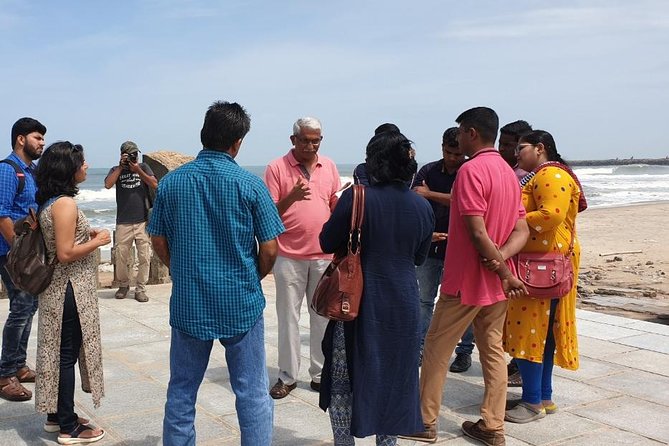
A three-hour walk sounds short. In this case, that’s the point. You get a tight route that’s easy to fit into a day, without sprinting between far-flung sites.
I like the structure because it’s designed around story stops: coastline lore, a landmark mosque, a commercial street with trade roots, and an old church. Instead of trying to “cover everything,” you get enough context to understand what you’re seeing and what came before it. And because it’s private, your guide can pace the narration to the group’s energy.
You’ll also get a simple reality check about Kozhikode itself. The walk isn’t a museum with quiet hallways. It’s city streets and public places, which means you’ll notice how many communities have shaped the area over time—and how that layering still shows up in daily life.
Start at Kozhikode Beach: Spice Trade, Ships, and Vasco da Gama Lore
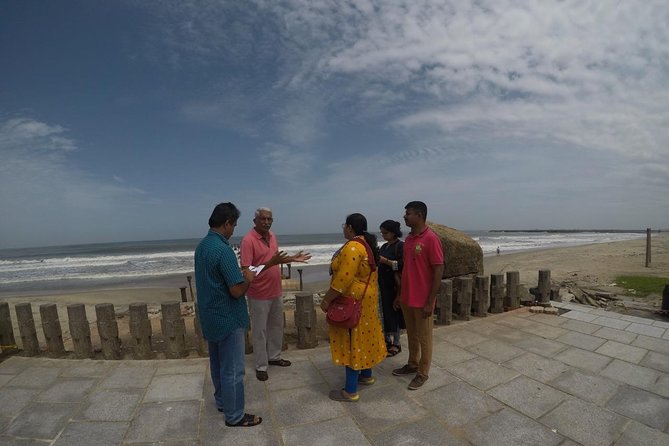
Your tour begins at Kozhikode Beach, and that’s a smart choice. When a city’s identity is tied to seafaring trade, starting at the water gives the story gravity right away.
Here’s what the guide’s narration helps you connect: Kozhikode was described as a major capital in the spice trade, trading items like cardamom and black pepper. The story reaches beyond India’s coastline, naming trading partners such as the Chinese, Dutch, Portuguese, Arabs, and Jews. Even if you don’t remember every name, the overall pattern sticks—this was a port town shaped by global exchange.
You’ll also hear about Vasco da Gama’s first recorded European contact tied to Kappad, which was the docking point. That detail matters because it grounds the big historical themes in a specific place. It’s not just “Europe came”—it’s linked to how the maritime world intersected with Kozhikode at a key moment.
Practical tip: plan for time on foot along public waterfront areas. Expect sun and local activity. Bring water if you tend to get thirsty, and wear comfortable shoes because beach-side transitions to city streets can involve uneven footing and frequent stops.
Mishkal Mosque: A 14th-Century World of Architecture and Trade
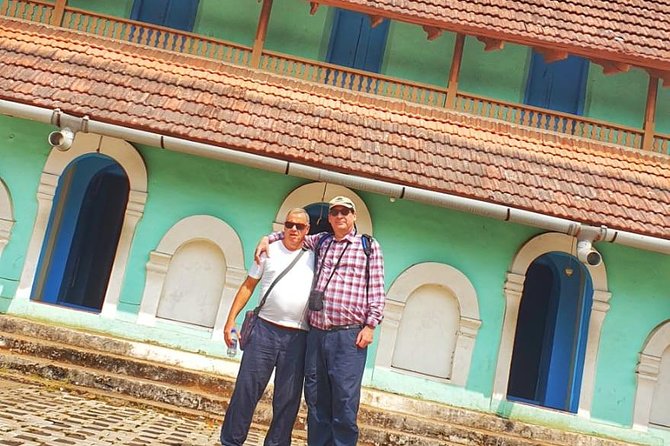
From the beach, the walk shifts from seafaring to structure. The next stop is the 14th-century Mishkal Mosque, and it’s one of those places where the guide’s details make you look at the building differently.
You’ll learn it was built by an Arab trader and ship owner named Nakhooda Mishkal. That connection alone is powerful. It ties the mosque not just to religion, but to the commercial networks that moved people and money across the sea.
The mosque is described as four-storeyed and built to hold around 400 people, with 48 entrances. Those numbers aren’t trivia; they explain how the site was meant to function in real life. A building with many entry points suggests movement—people coming and going as a community gathers. The guide’s narration helps you see the mosque as a civic space, not only a spiritual one.
Another thing I value here is the stop length. You’ll spend about 15 minutes at the mosque, which is enough for orientation and storytelling without turning it into a rushed photo session. The time is short, but the architecture facts are specific, so you leave with real anchors for memory.
Practical tip: be respectful about how you dress and behave at religious sites. Even on a guided walk, you’ll still need to follow the local pace—slow down, listen, and let the guide handle the context.
Valiyangadi Market: A Historic Trade Street (Not a Shopping Spectacle)
Next comes Valiyangadi Market, described as one of the oldest and largest commercial streets in Kozhikode. It also served as a trade hub of the Malabar Kingdom, which is the kind of phrase that can sound abstract. The walk helps make it concrete by moving you through the area while your guide explains what trade meant here.
This stop is a good one if you like urban context. You’re not just seeing a landmark—you’re understanding how commerce shaped daily routes and rhythms. Even without a long checklist of sights, you’ll get a feel for how a port city developed an inland layer of trading activity.
Now, the honest note: the market segment can feel crowded, and it’s not built like a curated market stroll. One common downside is that people hoping for a big shopping scene may feel a little shortchanged. If you want to browse for souvenirs for an hour, you may find the time here doesn’t bend that way.
So I suggest treating Valiyangadi as a historical connector stop. Think of it as: street life + trade roots + community flow. If you want quiet contemplation, you might find the surroundings noisy. If you want perspective, you’ll likely enjoy it.
Matri Dei Cathedral: One of Kerala’s Oldest Churches
The final landmark stop is Matri Dei Cathedral, also known as the Mother of God Cathedral. It’s described as one of the oldest churches in Kerala, and that age gives it a different emotional tone than the earlier stops.
What I like about ending with a church is that it broadens the story beyond spice commerce and Muslim architectural heritage. Kozhikode has been shaped by many faiths and communities over time, and this stop reinforces that the city’s identity wasn’t built by one cultural thread alone.
The cathedral stop is also about timing—around 15 minutes. That’s enough for a quick orientation and a sense of significance, but it’s not meant to swallow the whole walk. The experience stays balanced: beach context, mosque architecture, commercial street, and then the oldest-church perspective.
Practical tip: because you’ll be walking from stop to stop, your feet will be tired by the end. Use the last stop to slow down and soak in details. Even if you don’t remember every fact, the building’s age and name give you something lasting to carry.
How the Private, Storyteller-Led Format Changes the Experience
This is a private tour, meaning only your group participates. That matters more than people think. On a typical group tour, the guide often has to rush to fit everyone’s pace. Here, the guide can keep narration matched to your group’s attention span.
The “storyteller” approach is the other key piece. Instead of reading out facts, you’re hearing them as a chain of cause and effect—trade creates connections, connections bring people and structures, and those structures show up in architecture and community spaces you can still visit.
It’s also flexible in a real-world way. The itinerary is structured, but the experience isn’t locked to a rigid sequence of photo stops. If someone in your group asks a good question, there’s room to follow it.
Also, the tour is built for practical participation. It notes that most people can join, and the stops are close enough that a walking schedule makes sense for a short city outing. There’s even a “near public transportation” note, which is useful if you’re planning the rest of your day around buses or local transit.
Price and Value: Is $19 Worth It?
At $19, the value is mostly about what you’re buying: narration and guided interpretation. The tour includes all fees and taxes, plus the storyteller service. The listed sites also show free admission tickets, so you’re not paying extra on top for entry.
If you compare this to “self-walk + phone notes,” the difference is the guide. The guide gives you names, numbers, and context—like Nakhooda Mishkal, the mosque’s four-storey design, and the Kappad connection—that you probably wouldn’t assemble on your own in the right order.
You’re also getting a time-efficient route. A three-hour heritage walk in a port-city context is a strong use of limited vacation time. You’ll feel like you covered meaningful ground without spending the whole day moving between far locations.
Group discounts and a mobile ticket are small perks, but they point to another value angle: this tour is meant to be easy to manage. You’re not juggling multiple paid entries, and you’re not forced into complicated logistics to get started.
Timing, Meeting Point, and Ending Where You Still Want to Be
The tour starts at Kozhikode Beach in Kozhikode and ends at Mishkal Mosque, Kuttichira, Kozhikode 673001. That matters because you’re finishing near another major landmark zone rather than being dropped in an obscure spot.
You’ll spend the most time at the beach (about 30 minutes), with shorter stops at each of the next landmarks (about 15–20 minutes each). That distribution makes sense: the beach sets the story frame, then the buildings and street segment add detail and proof.
You can choose morning or afternoon options, which helps if you’re planning your overall route through Kerala. In practice, it also gives you a way to manage crowd energy. If you’re sensitive to busy sidewalks, selecting the calmer-feeling slot can make the walk more comfortable. Even without perfect crowd control, picking the time that fits your day rhythm helps.
And yes, you should plan for the walk to happen in good conditions. It specifically notes that the experience needs good weather.
Weather and Comfort: What to Pack for a Smooth 3 Hours
Since this is a walking tour, the comfort basics matter. You’ll be outside at a beach location and moving through busy streets between stops. Bring shoes you can walk in for a few hours without complaining.
You’ll also be exposed to sun, especially at Kozhikode Beach. Even if you don’t burn easily, plan for heat and dehydration. Water and light layers help.
If rain shows up, the tour requires good weather, so you should be prepared for the possibility of schedule changes or a refund option if it’s canceled due to poor weather.
Who Should Book This Walk?
I think this tour fits best if you want story-based sightseeing and you like clear connections between place and historical themes. It’s ideal for:
- People who enjoy spice-trade context and port-city history
- Anyone who likes architecture and wants practical details, not just a quick name-and-date
- Groups that want a private guide and a route that doesn’t eat a full day
It may be less ideal if you’re mainly hunting for long shopping time or a slow, calm city stroll. The walk can include crowded roads and a market stop that feels more like a commercial street than a market-themed wandering.
Should You Book Zamorin’s Tales by Tyndis: Calicut Heritage Walk?
If you like guided storytelling and you want a compact route that explains why Kozhikode matters, yes, book it. The $19 price is mostly paying for a guide to connect the big ideas—spice trade, global contact, and community layering—to specific places you’ll stand in front of.
I’d especially recommend it when you have only a half-day and you want more meaning than a checklist. But go in with the right expectations about the market stop: it’s a historical street segment, not a spend-the-afternoon shopping festival.
If you want a short heritage walk with real context and free-to-enter landmarks, this one is a strong choice.
FAQ
How long is the Calicut Heritage Walk?
The tour lasts about 3 hours.
How much does it cost?
The price is listed as $19.
Is this tour private?
Yes. It’s described as a private tour/activity, and only your group will participate.
Can I choose a morning or afternoon tour?
Yes. You can choose from morning or afternoon tours.
What are the main stops on the walk?
The tour includes Kozhikode Beach, Mishkal Mosque, Valiyangadi Market, and Matri Dei Cathedral.
Are admission tickets required for the stops?
The stop information lists admission ticket free for each of the included landmarks.
What’s included in the $19 price?
Included are all fees and taxes, plus the storyteller service.
Where do I meet, and where does the tour end?
You start at Kozhikode Beach, Kozhikode, Kerala, India. The tour ends at Mishkal Mosque, Kuttichira, Kozhikode 673001, India.
What kind of weather does the tour require?
It requires good weather. If it’s canceled due to poor weather, you’ll be offered a different date or a full refund.
What is the cancellation policy?
Free cancellation is available. You can cancel up to 24 hours in advance for a full refund.
Is it suitable for most people?
The experience notes that most people can participate.