REVIEW · REIMS
3 days in Champagne – Cellars, tastings, winemakers meetings and heritage
Book on Viator →Operated by TOURS IN CHAMPAGNE - Stéphane Demissy · Bookable on Viator
Champagne gets personal fast. This 3-day private trip in Reims and the Champagne region mixes big-house cellar time with hands-on sessions at smaller producers, all paired with tastings and winemaker moments that make the region feel real, not scripted.
What I like most is the range: you go from iconic Champagne names to smaller Grand Cru and 1er Cru villages. I also like that the experience is private for your group, so tastings come with focused commentary instead of a rushed walk-through.
One consideration: this is a packed itinerary with multiple tastings and several shop-and-cellar stops, so if you prefer slow travel, you may feel the pace.
In This Review
- Key things to know before you go
- Why this Champagne circuit feels better than a DIY day
- Reims as your home base (and why it matters)
- Day 1 in Epernay: Pommery, Veuve Clicquot, Moët & Chandon, Mercier
- Pommery: old vinification center and the cellar where bottles age
- Veuve Clicquot: branding you’ll remember and a focused tasting room
- Moët & Chandon: cellars, tasting, and a Dom Pérignon display-heavy moment
- Mercier: cellar tour by small train and an oak barrel scale shock
- Avenue de Champagne drive: a quick taste of the Epernay vibe
- Day 2: the quieter winemaker side—Verzenay and Rilly-la-Montagne
- Verzenay: a private winemaker visit in a Grand Cru village
- Rilly-la-Montagne: 1er Cru village character in a second winemaker session
- Verzy: UNESCO-protected vineyard views with a drive-through
- Day 3 Reims heritage: cathedral crowns, Saint-Remi, Carnegie, and Dom Pérignon roots
- Cathedrale Notre-Dame de Reims: the royal crowning place
- Basilique Saint-Remi: baptism story tied to the earliest king
- Bibliothèque Carnegie: an Art Deco standout from 1925
- Abbaye Saint-Pierre d’Hautvillers: the Dom Pérignon connection
- Romery finish: a small producer’s handcrafted Champagne tasting
- What to pay attention to during the tastings
- Breakfast, lunch, and the real value of included meals
- Pickup, timing, and comfort: the logistics that make or break tours
- Price and value: what you’re paying for in this 3-day private format
- Should you book it? My straightforward take
- FAQ
- FAQ
- Is this a private tour or shared?
- Where does pickup happen?
- If I stay in Paris, do I still go to Reims for the tour?
- What language is the tour offered in?
- Are tastings included?
- Are drinks included with lunch?
- Is dinner included?
- What is the cancellation policy?
Key things to know before you go
- Big houses plus small producers in one loop, so you see both branding-scale and winemaker-scale Champagne.
- Seven winery stops across three days, including cellar visits and tastings at multiple producers.
- Private, guided tastings with a winemaker during the small-producer days, with commentary specifically for your group.
- Mercier’s cellar tour by small train, so you can see more with less walking.
- Reims UNESCO heritage on Day 3, adding context to the Champagne story beyond the vineyards.
- Pickup in Reims or Epernay (and station pickup if you connect from Paris), keeping logistics simple.
Why this Champagne circuit feels better than a DIY day
The hardest part of Champagne tourism is timing. Wine regions spread out, and if you try to pick tours on your own, you can lose most of your day to driving and scheduling. This experience fixes that with private transportation and a tight route built around cellars, tastings, and a few heritage stops that actually connect to why Champagne matters.
I also like the balance between famous labels and smaller names. You get to stand in the world of major houses, with their grand production spaces and brand-heavy retail experiences, then switch gears to smaller producers where the winemaker can talk through decisions and the differences between villages. That contrast is the whole point: Champagne isn’t one uniform thing. It’s a regional style shaped by people, place, and time in the cellar.
Reims as your home base (and why it matters)
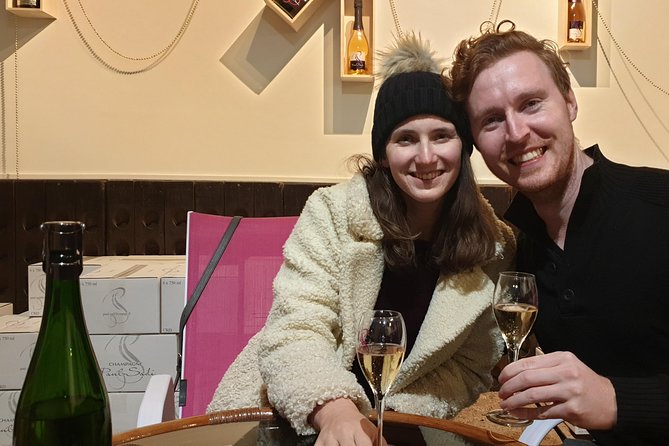
You stay in a 4-star hotel in the heart of Reims, which is a big deal for comfort and timing. Reims gives you an easy start for Day 1 and Day 2, then it becomes part of the story on Day 3 with UNESCO heritage sights like the cathedral and basilica.
Staying centrally also helps you decompress between winery sessions. Even if the days are busy, you’re not commuting from far out. And since the tour offers pickup in Reims or Epernay (including hotels and train stations), you’re not spending your energy wrangling taxis or figuring out where to meet.
Day 1 in Epernay: Pommery, Veuve Clicquot, Moët & Chandon, Mercier
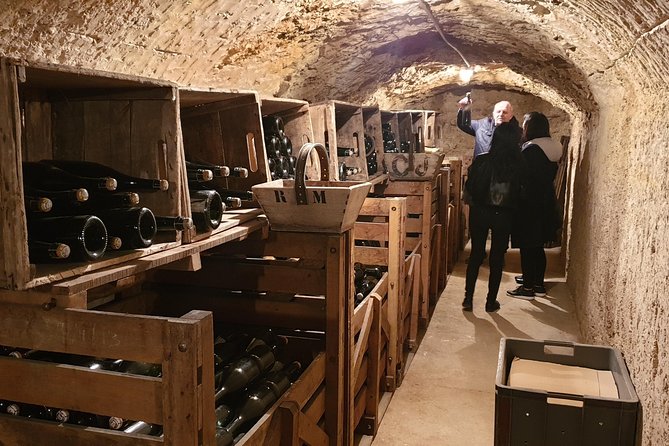
Day 1 is about the big Champagne world—cellars you can’t really replicate at home, plus tastings and shops that show how the region presents itself.
Pommery: old vinification center and the cellar where bottles age
You begin at Champagnes Pommery, where you visit the cellars and spend time in an old vinification center. That “then vs. now” feel matters because it shows how methods and equipment changed over time, not just how labels look on a shelf. There’s also a look at the brand shop, plus a stop crossing part of the cellar where the biggest bottles are ageing. That visual scale tends to hit people even if you’re not a technical wine nerd.
Practical note: these places often emphasize cellar lighting and displays, so wear something comfortable and plan to move at a steady pace.
Veuve Clicquot: branding you’ll remember and a focused tasting room
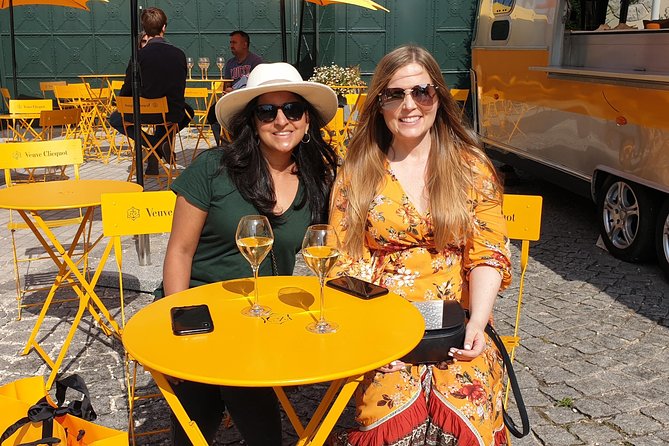
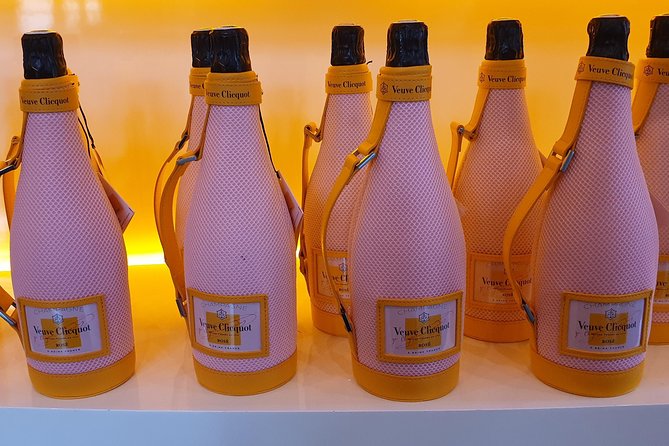
Next is Veuve Clicquot. You get time in the shop—everything designed around the brand identity—then you move to a tasting room for your session. If you love Champagne as a cultural product as well as a beverage, this stop is fun. The brand is part of the experience, and you’ll likely spot how the house teaches you to taste: with guided attention on the style.
Moët & Chandon: cellars, tasting, and a Dom Pérignon display-heavy moment
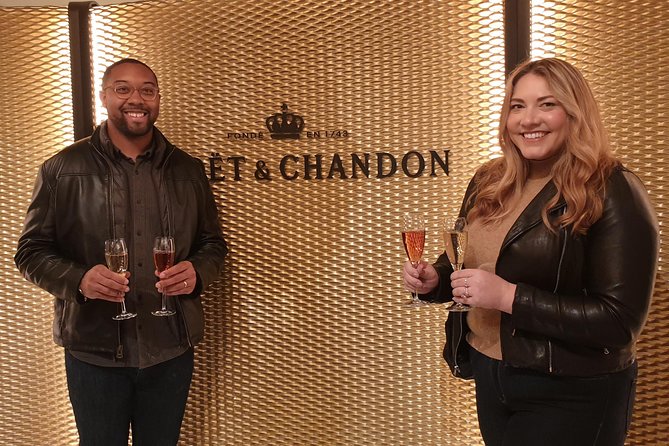
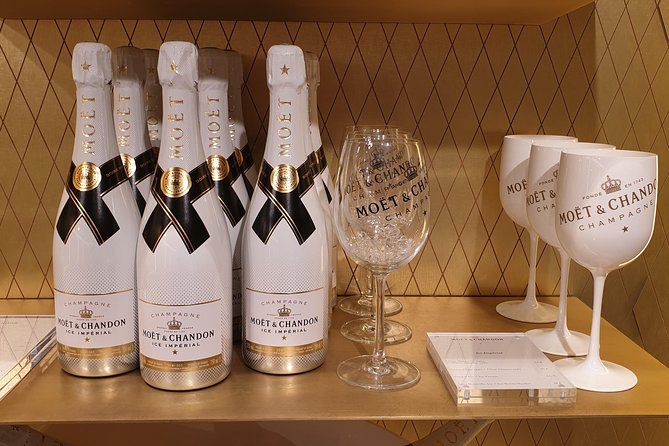
At Moët & Chandon, you do another cellar visit and tasting. You’ll also see a shop space with Moët and Dom Pérignon bottles and branding products. It’s easy to think the big houses are only about marketing, but the cellar time pulls you back to what matters: time, storage, and the work required before a bottle reaches you.
Mercier: cellar tour by small train and an oak barrel scale shock
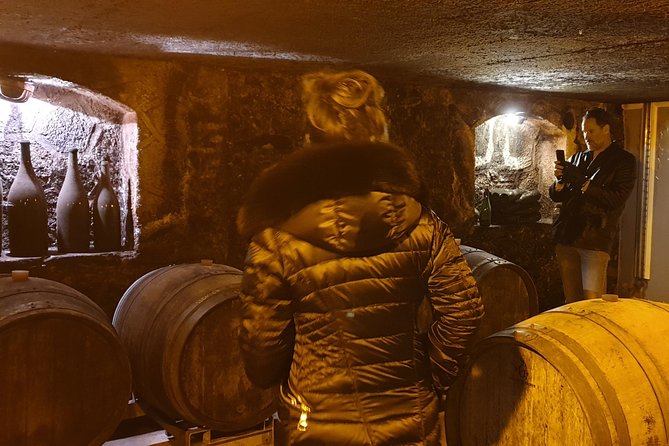
Then comes Mercier, and it’s a smart shift. The cellar visit is done by small train, so you can see a lot without spending the whole tour slogging around on your feet. After that, there’s a tasting plus time in the shop.
One detail worth keeping in mind: Mercier features the biggest Champagne oak barrel for around 200,000 bottles. Even if you forget the exact number later, you’ll remember the size—and that gives context for why logistics and cellar infrastructure are so central to major-house Champagne.
Avenue de Champagne drive: a quick taste of the Epernay vibe
After all the cellar time, you drive along Avenue de Champagne in Epernay. It’s only about 30 minutes, and it’s free, so think of it as a visual breather. You’re moving from underground production to the surface-level “what this region looks like,” including the street that became famous for Champagne houses lined up side by side.
Day 2: the quieter winemaker side—Verzenay and Rilly-la-Montagne
Day 2 changes the feel. Instead of major houses, you’re in smaller-producer territory, specifically around Grand Cru and 1er Cru areas. This is where you start noticing that Champagne isn’t only a brand game. It’s also a place game.
Verzenay: a private winemaker visit in a Grand Cru village
At Verzenay, you visit a small producer in the mountain of Reims, in a Grand Cru village. The winemaker gives a private visit that includes a press center, vinification center, and cellars. That workflow matters because it shows you Champagne as a series of steps, not a single magical bottle moment.
Then you taste three different champagnes with the winemaker, and the commentary is only for your group. This is one of the best parts of the trip if you like understanding why styles differ. You’re not just tasting. You’re learning how the winemaker frames the differences.
Rilly-la-Montagne: 1er Cru village character in a second winemaker session
In Rilly-la-Montagne, you meet another winemaker in a 1er cru classified village. You get a cellar visit, learn the producer’s history, and see their way of making Champagne. After that, you taste different champagnes from another village, with commentary meant only for your group.
The itinerary highlights that the wines can taste totally different between villages. That’s exactly what you want to experience on a short trip: a clear A/B comparison that makes the region’s geography feel tangible.
Verzy: UNESCO-protected vineyard views with a drive-through
You also visit Verzy, focusing on UNESCO-protected views in Champagne via a drive through the vineyards. This stop is shorter and lighter than the winemaker sessions. It’s there to give you a sense of the broader setting, not to add more cellar time.
Day 3 Reims heritage: cathedral crowns, Saint-Remi, Carnegie, and Dom Pérignon roots
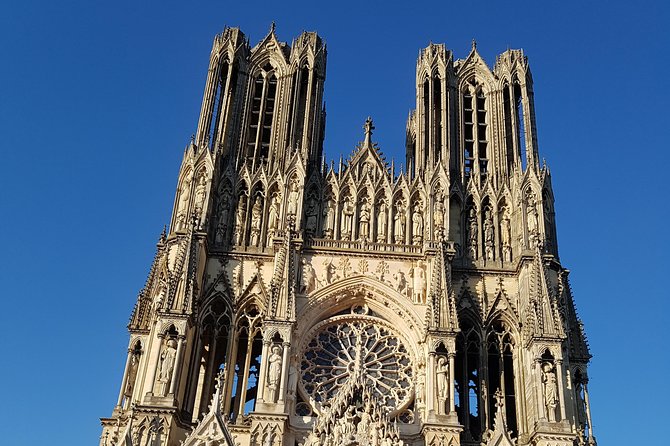
Day 3 is the “why this region matters” day. It mixes UNESCO heritage with a key Champagne origin stop, then ends back in a small-producer tasting.
Cathedrale Notre-Dame de Reims: the royal crowning place
You visit Cathedrale Notre-Dame de Reims, a UNESCO heritage site tied to the coronation of French kings for around 1,000 years. It’s a reminder that Champagne wasn’t only a beverage. It was tied to power, ceremony, and national identity.
Even if you’re not a church person, the timing adds meaning. It places Champagne culture in a bigger story than vineyards alone.
Basilique Saint-Remi: baptism story tied to the earliest king
Next is Basilique Saint-Remi, another UNESCO site. You’ll learn how the first king of France came to Reims to be baptised, with the basilica’s Roman and Gothic character supporting the story. This kind of context makes your Champagne tasting day feel less random.
Bibliothèque Carnegie: an Art Deco standout from 1925
Then you visit Bibliothèque Carnegie, described as one of the most striking Art Deco buildings, and noted for winning first prize at the international Art Deco exhibition of 1925. It’s a very different kind of heritage stop, but it helps round out Reims as a city, not only a Champagne launchpad.
Abbaye Saint-Pierre d’Hautvillers: the Dom Pérignon connection
You end the heritage sequence at Abbaye Saint-Pierre d’Hautvillers, connected to Dom Pérignon. The tour frames it as the place where Dom Pérignon is credited with creating the first bubble of Champagne. Whether you know that story already or not, the abbey makes it feel physical—less like trivia, more like a location with meaning.
Romery finish: a small producer’s handcrafted Champagne tasting
To close the loop, you visit Romery, a small winemaker crafting Champagne by hand. Like the other small-producer stops, you taste three different champagnes with the winemaker, with commentary just for your group.
This final tasting session is a smart way to wrap things up. After tasting the big-house styles and comparing village character earlier, you leave with a fresher memory of how a smaller producer thinks. You’ll likely find it easier to remember what you liked—and why—because you’ve built comparisons over the previous two days.
What to pay attention to during the tastings
This tour is built around tastings, so your best strategy is to treat each stop like a mini lesson.
Here’s what I’d focus on as you go:
- Compare the tone: big houses often emphasize a consistent style, while smaller producers can highlight village or process differences.
- Listen for the reason behind the taste: you’ll get winemaker commentary at the small-producer sessions, so ask questions that match what they’re explaining.
- Use notes (even rough notes): three bottles in one session plus multiple stops can blur together fast.
- Slow down between tastings: take a breath before the next pour. Your palate stays happier.
Also, because the tour includes many cellar visits and some shops, plan for a steady pace rather than long “wandering” time. It’s a structured experience on purpose.
Breakfast, lunch, and the real value of included meals
This trip includes breakfast (2) and lunch (3), but drinks with lunch are extra, and dinners are not included. That’s a common approach in regional tours: meals are handled so you’re not hunting for food between stops.
What’s worth noting is that the included meals are part of the value. They’re the kind of places you might not find on your own in a short time window, especially if you’re trying to keep everything aligned with your cellar schedule. It also means fewer decisions during the day, which keeps the tour feeling smooth.
Pickup, timing, and comfort: the logistics that make or break tours
The tour offers pickup in Reims or Epernay, including hotels and train stations. If you stay in Paris, you can commute to Reims in about 45 minutes by train, and you’ll be picked up at the Reims station and driven back at the end.
That matters because Champagne days can get messy if you’re mixing schedules: trains, transfers, booking confirmations, and the time it takes to reach the right address. By removing most of that friction, the tour lets you spend energy on tastings instead of transportation puzzles.
The tour uses a mobile ticket, and it’s offered in English. Confirmation is typically received within 48 hours of booking, subject to availability.
Price and value: what you’re paying for in this 3-day private format
At $2,235.73 per person for 3 days, this isn’t a budget Champagne weekend. The price makes sense when you look at what’s included and what would cost you extra if you booked everything separately.
You’re paying for:
- Private transportation across multiple days and stops
- Multiple guided cellar visits and tastings at several producers
- Winemaker-led private sessions where you taste three different champagnes each time
- Included breakfast and lunch to keep the schedule workable
- A 4-star hotel in Reims in the middle of the action
If you like meeting winemakers and comparing styles with guided help, the value shifts strongly in your favor. If you only want a quick taste and a couple of photos, you could spend less elsewhere. But for a structured, high-contact, three-day Champagne education, this price is easier to justify.
Should you book it? My straightforward take
Book it if you want:
- Seven winery stops with both big-house and small-producer viewpoints
- Private tasting time that doesn’t feel rushed
- A strong mix of production and Reims heritage on the same trip
- The chance to hear directly from winemakers during multiple tastings
Consider a different option if:
- You dislike fast-paced schedules with several structured stops
- You don’t drink Champagne (or you’d rather have fewer tastings and more free time)
If you like comparisons, context, and guided tasting moments, this is a solid way to spend three days in Champagne without losing your time to planning.
FAQ
FAQ
Is this a private tour or shared?
This is a private tour/activity. Only your group participates.
Where does pickup happen?
You can get pickup in any place in Reims or Epernay, including hotels and train stations.
If I stay in Paris, do I still go to Reims for the tour?
Yes. You can commute to Reims within about 45 minutes by train, and the tour provides pickup directly to the Reims station and drives you back at the end.
What language is the tour offered in?
The tour is offered in English.
Are tastings included?
Yes. Champagne tastings are included, along with several scheduled cellar visits.
Are drinks included with lunch?
No. Drinks during lunch are not included and are extra.
Is dinner included?
No. Dinners are not included.
What is the cancellation policy?
You can cancel up to 3 days in advance of the experience for a full refund. Cut-off times are based on the experience’s local time.