REVIEW · BRUGES
Private Historical Tour: The Highlights of Bruges
Book on Viator →Operated by Legends of Bruges Free & Private Tours · Bookable on Viator
Old Bruges, mapped in two hours. This private walk through the city’s top sights helps you understand why Bruges mattered in medieval trade, religion, and politics. You’ll hit the big landmarks plus a few quieter corners, and your guide adds the human stories that make the stones feel less like souvenirs and more like a living place.
What I like most is the private format. With hotel pickup and drop-off, you start relaxed and you can ask questions without competing with a crowd. I also like the way the tour connects places to meaning, from the Markt’s medieval power plays to the Beguinage’s 800+ years of community life. One thing to consider: some highlights require you to pay admission on your own (like Gruuthusemuseum and Sint-Janshospitaal), so check what you want to enter before you go.
Private walking tour reviews often mention guides by name, and that matches what you’re paying for here. People praise guides such as Martin, Piet, Patrick, Louis, Sam, Erik, Wouter, Helga, and Mauricio for clear English, good pacing, and practical tips for food and what to see next. If you want a tour that’s truly history-forward, ask your guide to keep the focus there and not just on photo stops.
In This Review
- Key highlights I’d plan around
- How the private format changes your Bruges experience
- Markt and Belfort: the political engine room of Bruges
- Gruuthusemuseum: a palace tied to trade power
- Sint-Janshospitaal: medieval healthcare and community values
- Ten Wijngaarde and Minnewater: 800 years of community, then the swan story
- De Halve Maan and Onze-Lieve-Vrouwekerk: beer pipes and Michelangelo in brick
- Groeningemuseum garden, tanners’ square, and ending on Burg
- Price and value: what $99.81 buys you in Bruges
- Should you book this private highlights tour?
- FAQ
- How long is the private Highlights of Bruges tour?
- Is this tour private?
- What language is the tour offered in?
- Do I get hotel pickup and drop-off?
- Where does the tour start and end?
- Are tickets and admissions included?
- Is food included?
- Is there a mobile ticket?
- Can I choose my start time?
- What if I need to cancel?
Key highlights I’d plan around
- Hotel pickup and drop-off so you don’t waste Bruges time finding your guide.
- Private group only for more questions, fewer bottlenecks, and a calmer pace.
- Free views plus paid entries: many stops are outside, but a few museums/church-adjacent stops may cost extra.
- Trade and power stories: Markt and Belfort link commerce to political control.
- Bruges “everyday life” sites: beguinage, hospital, tanners’ square, and beer infrastructure.
- Local recommendations after the tour: guides often share dining and sightseeing ideas via text.
How the private format changes your Bruges experience
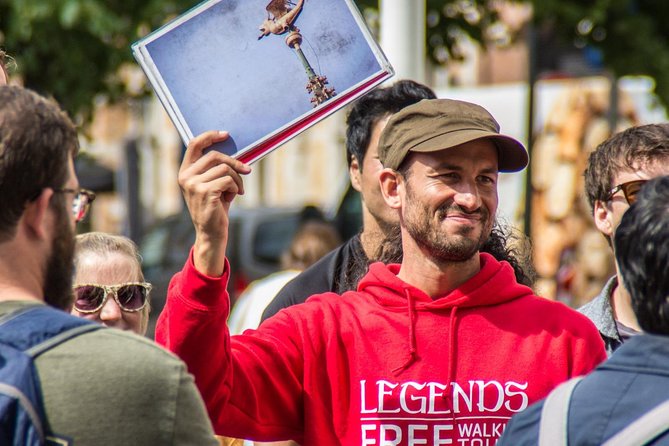
This is a 2-hour intro to Bruges that’s built for comfort and momentum. Hotel pickup and drop-off mean you’re not juggling buses or walking half the route just to get started. That matters in Bruges because the center is pretty compact, but the streets can feel crowded, especially during seasonal events like markets.
Because it’s private, your guide can move at your pace. Reviewers describe easy pacing and lots of opportunities for questions and quick photos. Guides like Martin and Piet are also praised for checking in and keeping people comfortable when the weather turned cold, which is a real-life problem in Belgium.
One more practical win: the tour is offered in English, and many guides communicate well in advance so you know where to meet. Several people mention text-style communication that made it easy to find the guide and made the handoff after the tour smooth.
Markt and Belfort: the political engine room of Bruges
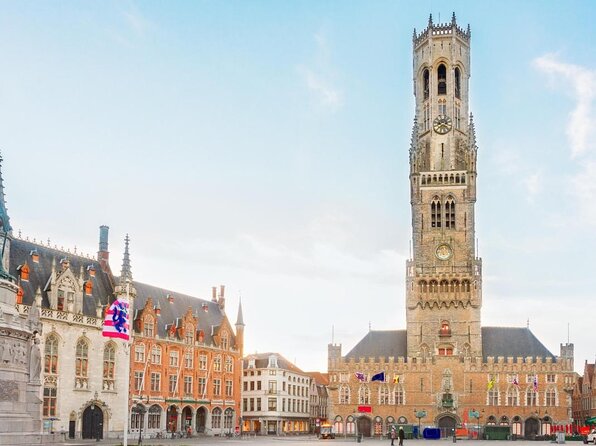
You start at the Markt, Bruges’ central square, where the guide sets the historical stage fast. You’ll learn how Bruges became a medieval trading hub, and you’ll also hear about the city’s uneasy relationship with the French king. That conflict theme keeps showing up as you walk, so it’s a smart way to begin: you’re not just admiring buildings, you’re understanding the forces behind them.
From there you go to the Belfort. The big bell tower is dramatic, but what’s special here is the explanation of why the tower mattered during the Middle Ages, plus a look at the halls behind it. That’s a good moment for history lovers because you get the sense that these weren’t just civic decorations. They were tools of authority and identity.
What to watch for: the stops are short—think around 10 minutes each—so if you want extra time in any area, plan to follow up after the tour with your guide’s recommendations.
Gruuthusemuseum: a palace tied to trade power
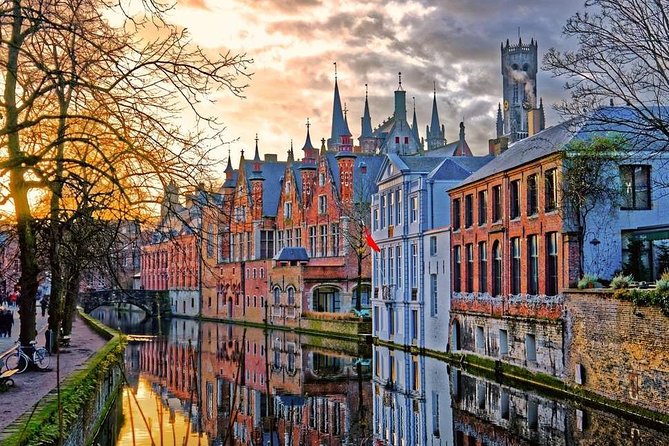
Next comes the Gruuthusemuseum, a former city palace that belonged to a wealthy Bruges family. The tour ties the building to economic control, including the idea that this family held a monopoly on a specific part of the trade. That’s the kind of detail that makes the story click: Bruges wasn’t powerful just because it was pretty. It was powerful because it handled money, routes, and leverage.
You’ll get guided context on what the palace represented socially and economically, and then you decide whether you want to pay admission to go inside. The museum admission isn’t included in the tour price, so budget for that if your interest is more than exterior storytelling.
One drawback to plan around: if you’re travel-light or you’re trying to keep expenses tight, some of the best-looking stops may still be outside-only unless you choose to enter the ticketed locations. If that’s you, ask your guide to point out what you can see for free versus what requires entry.
Sint-Janshospitaal: medieval healthcare and community values
The walk then turns to the Sint-Janshospitaal (St John’s Hospital). This is one of those Bruges stops where the exterior alone feels impressive, but the real value is the explanation. The guide frames it as one of the oldest still-existing hospitals in the world and a cornerstone of medieval society.
That message changes how you see it. Instead of thinking of the Middle Ages as just war and kings, you start noticing institutions built for care, organization, and civic responsibility. If you’re the type who likes to understand how ordinary life worked in the past, this stop tends to land well.
Admission is not included, so again, you’ll decide whether to enter. Even if you don’t, the guided setup is meant to help you understand why this site matters long after the tour ends.
Ten Wijngaarde and Minnewater: 800 years of community, then the swan story
At the Princely Beguinage Ten Wijngaarde, you’ll walk into one of Bruges’ most unique living spaces. The guide sets the scene about women’s communities that lived together for over 800 years. It’s a surprisingly gentle contrast after civic power and palace wealth. The beguinage represents a different kind of history: day-to-day resilience, faith, and social structure.
Then you move toward Minnewater Lake, where the guide tells the story behind the swans on the canals and how Bruges got into a conflict with Emperor Maximilian of Austria. The swan detail is the hook, but the bigger point is how this city’s waterways and politics tangled up over time.
Admission is free for this stop, so it’s one of the easiest “yes” moments on the schedule. In practice, it’s also a good place to slow down for a couple photos because the story gives you something to look for beyond the postcard view.
De Halve Maan and Onze-Lieve-Vrouwekerk: beer pipes and Michelangelo in brick
Next is De Halve Maan Brewery, and the tour doesn’t treat beer as a side quest. You’ll hear why people in Bruges got the nickname Fools of Bruges, and you’ll also learn about a beer pipeline that runs beneath the city. That under-the-streets detail is exactly the kind of thing a good guide supplies. It turns the city into a system, not a list.
From there, you head toward the Onze-Lieve-Vrouwekerk (Church of Our Lady). This is where Bruges mixes big ambition with surprising art. You’ll get the story of the church’s famous brick tower and learn why it’s known as the second tallest brick tower in the world. The guide also points out what’s inside the cultural highlights: a statue by Michelangelo and the tombs of the last Dukes of Burgundy.
Admission is not included here, so if you want the full effect, set aside extra time and money beyond the basic tour. But even from the outside, the guide’s framing makes the church feel less like a landmark and more like a message sent across centuries.
Groeningemuseum garden, tanners’ square, and ending on Burg
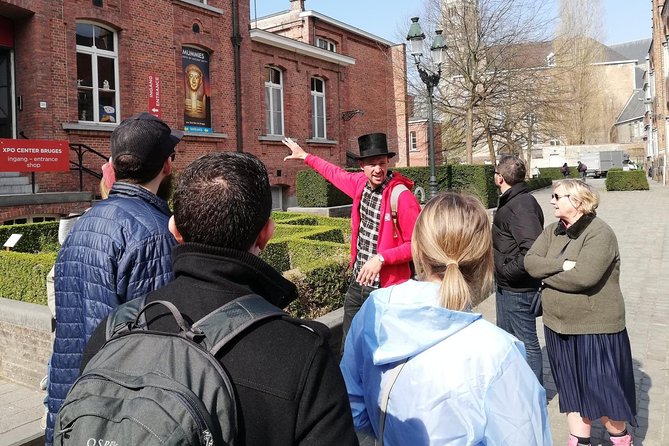
The tour finishes with a mix of art setting and everyday labor, then lands at the heart of political Bruges.
You’ll spend time in the garden area connected to the Groeningemuseum. The guide points out that major Flemish masters have works displayed here. This part is brief, and admission is not included, but it’s a helpful “taste” if you’re deciding later whether to go back for a longer museum visit.
Then you stop at Huidenvettersplein, the old tanners’ square. The guide explains what tanning involved—greasing skins and turning them into leather—and you feel the contrast between smells, work, and the clean-looking city streets today. It’s a smart reminder that medieval cities were not gentle places. They were functional and sometimes gritty.
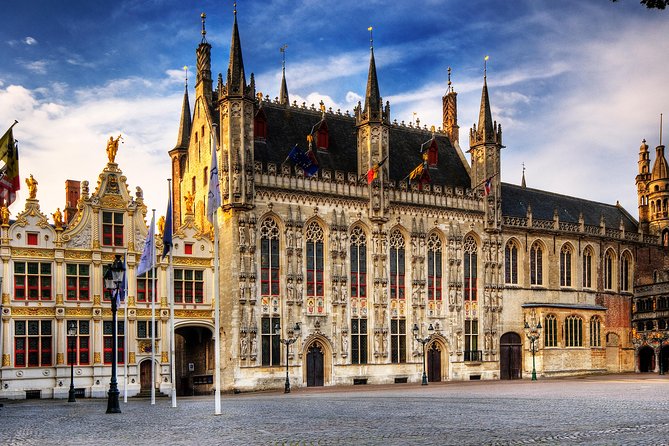
Finally, you end on Burg Square, the political heart and birthplace of Bruges. You’ll also pass by the old fishmarket area on the way. Ending here works because it wraps the tour’s themes—trade, authority, institutions, and public power—into one location.
Price and value: what $99.81 buys you in Bruges
At $99.81 per person for roughly 2 hours, the big value is not that you’re seeing everything. It’s that you’re getting a private, structured intro to the city with hotel pickup and drop-off.
If you compare it to group tours, your time feels less chaotic. And because it’s private, you’re not stuck listening only to whatever a big group needs. You can ask about what to do next, and many guides (including Martin, Piet, and others) are praised for sharing helpful dining and sightseeing recommendations afterward.
The other value check is cost stacking. Several stops are free from an admission standpoint (you’re mainly outside), but places like Gruuthusemuseum and Sint-Janshospitaal aren’t. So if you add those tickets, your total spend rises. Still, even without entering everything, the guided storytelling is the core product.
If plans change, you can cancel for a full refund up to 24 hours before the experience starts, which lowers the stress if weather or schedules shift.
Should you book this private highlights tour?
Yes, I’d book it if you want a fast, guided orientation to Bruges that covers both the famous monuments and the smaller human-history threads. It’s especially worth it when you’d rather not spend your first day guessing where to start or fighting crowds.
If you’re a hardcore museum-goer who plans to spend hours inside ticketed sites, you might treat this as a kickoff and then build your day around the places that require admission. And if you’re history-focused, ask your guide to keep the storytelling depth high so you get the full payoff, not just quick photo stops.
Overall, this tour is a solid value for people who want Bruges explained clearly, paced well, and tied to real context. If you do it early, you’ll walk the rest of the city with a much better map in your head.
FAQ
How long is the private Highlights of Bruges tour?
The tour lasts about 2 hours.
Is this tour private?
Yes. It’s a private tour, and only your group participates.
What language is the tour offered in?
It’s offered in English.
Do I get hotel pickup and drop-off?
Yes. Hotel pickup and drop-off in Bruges are included.
Where does the tour start and end?
It starts at Pieter de Coninck en Jan BreydelMarkt, 8000 Brugge and ends at Burg Square, Burg, 8000 Brugge.
Are tickets and admissions included?
Some stops are free to view, but not all admissions are included. For example, Gruuthusemuseum and Sint-Janshospitaal are not included, while other stops are noted as free.
Is food included?
No. Food and drinks are not included, unless specified.
Is there a mobile ticket?
Yes. The tour includes a mobile ticket.
Can I choose my start time?
Yes. You should mention what time you’d like to start the tour when booking.
What if I need to cancel?
You can cancel for a full refund if you cancel at least 24 hours in advance of the experience start time. Cancellation within 24 hours is not refunded.