REVIEW · AHMEDABAD
Ahmedabad Half Day Heritage Walking Tour
Book on GetYourGuide →Operated by Amusing destinations · Bookable on GetYourGuide
Ahmedabad’s heritage walk moves fast. You start at the carved Swaminarayan Temple in Kalupur, glide through royal gates and major mosques, then end in the lively Manek Chowk area where you can keep exploring on your own.
I especially like the stop selection because it mixes sacred spaces and city landmarks in one loop. The Jama Masjid area and Teen Darwaza give you a clear sense of how Ahmedabad’s old power and faith worked side by side.
One thing to keep in mind: the tour length can run short in practice. It’s listed as 3 hours, but some schedules have felt closer to 90 minutes to 2 hours, so it’s smart to plan your day with a little slack.
In This Review
- Quick hits
- Your walk through Ahmedabad: timing, pace, and how to plan your day
- Where you start and where you end: Kalupur to Manek Chowk
- Swaminarayan Temple Kalupur: the carved start that sets the tone
- Dalpatram Memorial Chowk: culture, not just monuments
- Teen Darwaza and the Bhadra Fort connection: royal scale in real time
- Jama Masjid: the architectural conversation between traditions
- Rani no Hajiro: Mughal queens and a market around the story
- Old Stock Exchange Building: the city remembers trade
- Manek Chowk finish: end with street energy and your own choices
- Guide quality and storytelling: what you should look for on the day
- Price and value at $57: fair if you time it right
- What to wear and bring for comfortable heritage walking
- Who this tour suits best (and who should skip it)
- Should you book this Ahmedabad Heritage Walking Tour?
- FAQ
- How long is the Ahmedabad Half Day Heritage Walking Tour?
- Where does the tour start?
- Where does the tour end?
- Is hotel pickup included?
- What’s included in the price?
- Are monument or temple entrance fees included?
- Does the tour offer skip-the-ticket-line?
- What language is the guide?
- What should I bring for the tour?
- Is the tour cancellable?
- Is this tour suitable for pregnant women?
Quick hits
- Swaminarayan Temple, Kalupur: wood-carving detail plus a calm start to the walk
- Poet Dalpatram Memorial Chowk: a quieter cultural pause amid everyday streets
- Teen Darwaza: a royal gateway tied to Bhadra Fort
- Jama Masjid: 15th-century mosque with cross-cultural architectural blending
- Rani no Hajiro: Mughal queen resting place, surrounded by craft-market energy
- Manek Chowk finish: an easy handoff to street food and market wandering
Your walk through Ahmedabad: timing, pace, and how to plan your day
This is a half-day heritage walking tour designed to connect several big sights without you needing to figure out route logistics on your own. The official duration is 3 hours, but a key practical reality is that time on the ground may vary depending on the day, crowd flow, and how many people are in the group.
The route mixes walking and short tuk-tuk hops if needed. That’s helpful in a city where a straight line walk can still mean uneven sidewalks, lots of street crossings, and long detours around crowds. You’ll want comfortable shoes because you’re still on foot for meaningful stretches.
Plan your schedule so you’re not rushing immediately after the tour. The experience finishes at Manek Chowk, and your guide can help arrange transportation to your hotel or chosen drop-off afterward. If you have a later appointment, give yourself buffer time.
You can also read our reviews of more tours and experiences in Ahmedabad.
Where you start and where you end: Kalupur to Manek Chowk
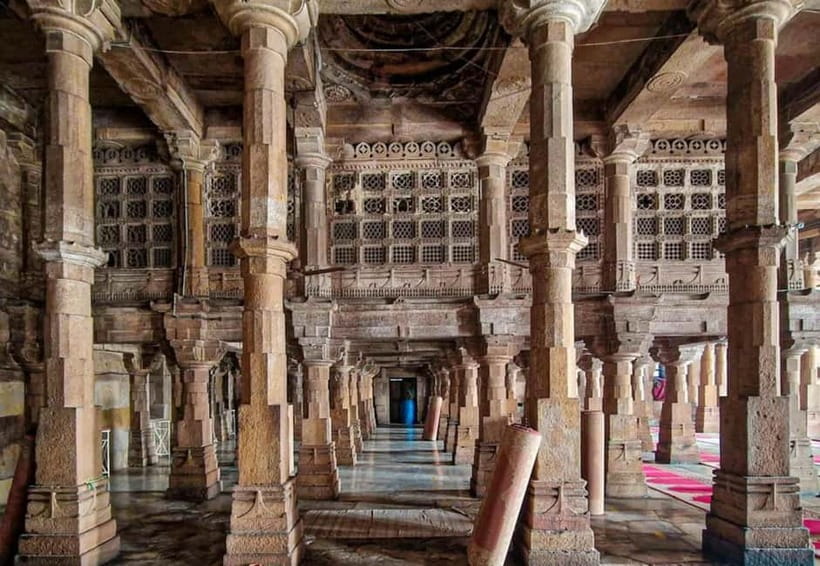
You meet all travelers at the designated meeting point, which is Shree Swaminarayan Mandir Kalupur. That’s a strong choice because it puts you at a major landmark right away, and it also helps you get oriented before you move into older neighborhoods.
The tour ends at Manek Chowk. This matters because Manek Chowk isn’t just a dot on a map; it’s one of those places where the city’s daily life is on display. After the formal part of the tour, you’re in a better position to keep roaming independently for snacks, shopping, and photos.
Also note the practical detail: hotel pickup and drop-off aren’t included. So treat this like a “meet there, then go” style tour rather than a door-to-door service.
Swaminarayan Temple Kalupur: the carved start that sets the tone
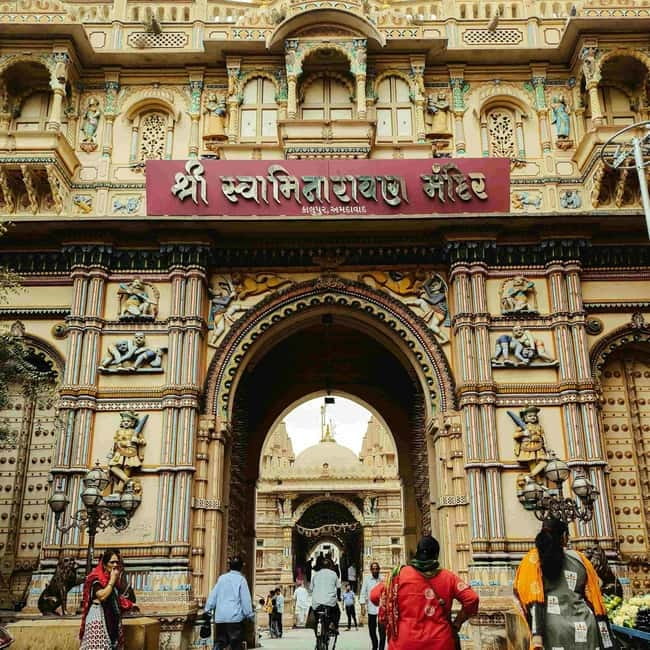
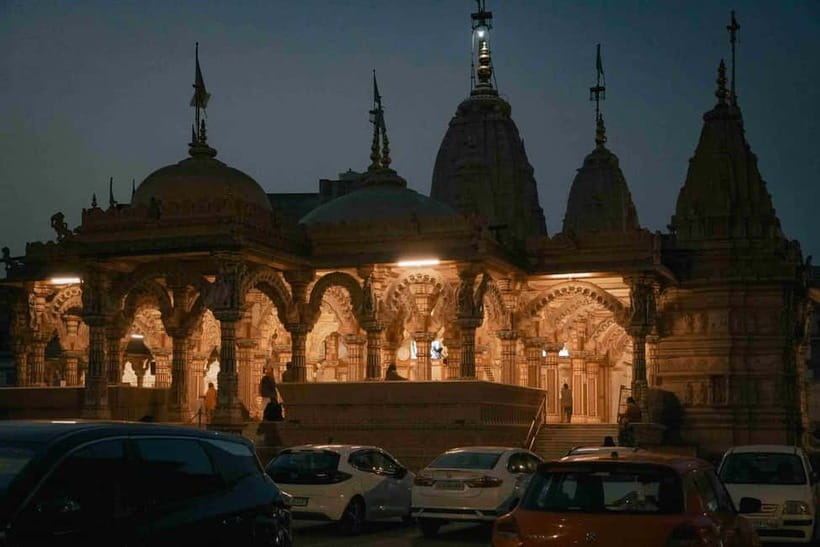
The tour begins with a visit and photo stop at Shree Swaminarayan Mandir Kalupur. You’re not just seeing a building from the outside. The focus is on the temple’s intricate wood carvings and its peaceful atmosphere, which makes for a calmer entry point than starting in the middle of a market crowd.
This first stop is also a useful way to read the rest of Ahmedabad. Wood carving detail tends to signal craftsmanship priorities, and once you spot that early, you’ll notice similar care in nearby structures and street-level design.
If you’re sensitive to crowds or want a quiet start, this temple visit helps. Still, keep an eye on your footing and clothing—temple areas often mean rules about how you dress and behave, even when a tour guide is managing the flow.
Dalpatram Memorial Chowk: culture, not just monuments
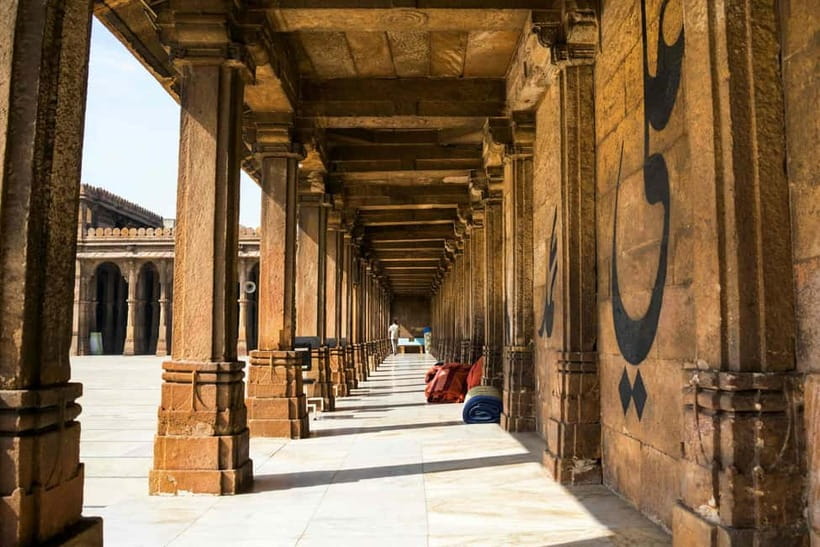
Next up is Poet Dalpatram Memorial Chowk, with a photo stop and guided walk through the area. This is one of the stops I like most because it shifts you from architecture to language and identity.
Ahmedabad’s old neighborhoods aren’t only about big structures. Memorial chowks help explain who the city celebrated and why. Poet Dalpatram’s presence in the itinerary is a reminder that heritage is also people—ideas, poetry, and local storytelling woven into everyday geography.
If you like taking breaks where the streets feel calmer, this stop works. It’s short, but it adds variety to a route that otherwise leans heavy on temples and gateways.
Teen Darwaza and the Bhadra Fort connection: royal scale in real time
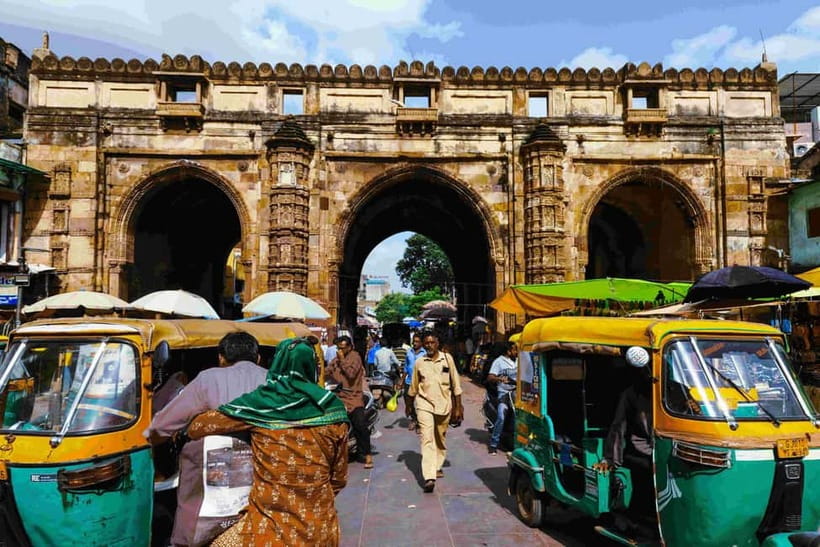
The tour then moves to Teen Darwaza, the impressive royal gateway linked to Bhadra Fort. Even if you don’t know the background, you can usually read the significance from scale and framing: gateways like this are built to control movement, announce power, and shape the city’s flow.
You get a photo stop and a guided look here, but the bigger value is context. With a good English-speaking guide, you’ll understand why the gate matters beyond the photo—how it fits into the historic defenses and urban planning around the old core.
This is also a stop where timing can matter. If crowds are thick, you might spend more time waiting for space to take pictures or see details. It’s still worth it because gateways reward slowing down and looking at structure, not just snapping shots.
Jama Masjid: the architectural conversation between traditions
One of the most important stops is Jama Masjid, a mosque with 15th-century roots and an architectural style described as blending Hindu and Islamic elements. This is where the tour becomes more than sightseeing. It starts to feel like you’re watching history as an actual design system.
You’ll have a photo stop, plus time for a visit and guided tour. This is also where your guide’s explanations can really pay off—because the value here isn’t only that the building is old. It’s that you can see how influences overlap in physical space.
A practical note: some temple and mosque areas can get crowded, and the experience you get may depend on where you’re standing when you arrive. The good part is that the guide often offers opportunities to go inside or see key spots when possible, but crowd levels can limit how much you can do.
If you like architecture and you enjoy learning how styles merge, don’t rush this stop.
Rani no Hajiro: Mughal queens and a market around the story
After Jama Masjid, you head to Rani no Hajiro, described as the royal resting place of Mughal queens. It’s another site where guided context turns the visit from a quick look into something more meaningful—this is the kind of place where you start connecting names, power, and location.
You’ll have a photo stop and time for visit and guided tour. The setting is also important because it’s surrounded by a colorful market of traditional crafts. In other words, you’re learning while living right next to the city’s trade life.
This stop is perfect if you enjoy practical souvenirs but don’t want a hard-sell shopping experience. You’ll likely notice textiles, small craft objects, and the kind of everyday commerce that makes heritage feel real rather than staged.
Old Stock Exchange Building: the city remembers trade
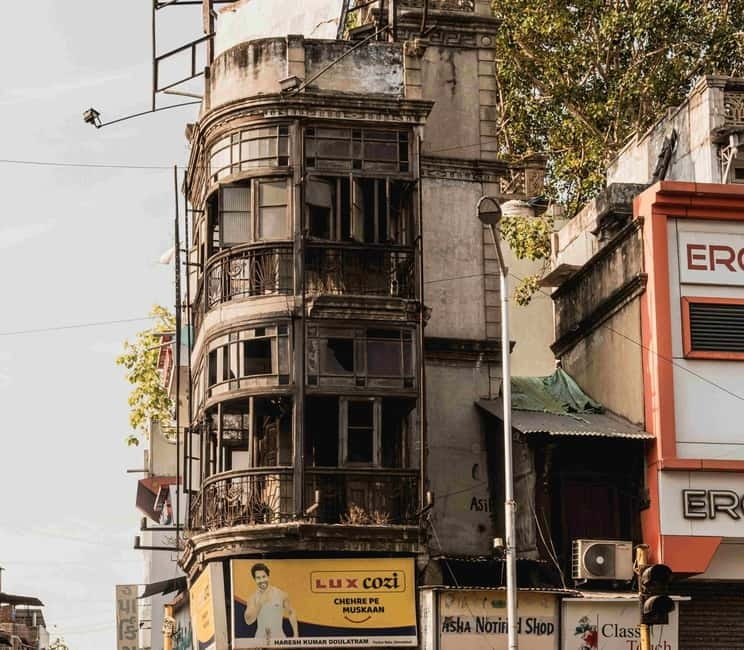
Next comes the Old Stock Exchange Building, with a guided tour and walk segment. This is a smart inclusion because it broadens the meaning of heritage.
Many walking tours stick only to religious sites and forts. Adding a commercial landmark helps explain how Ahmedabad’s importance also came through finance and trade networks. Even if you’re not a history nerd, you’ll probably enjoy how this stop anchors the story in modern city function—old money and old streets connecting.
The time here is shorter than some of the other landmarks, but it’s a good “okay, so what happened beyond temples?” moment. If you like a route that doesn’t ignore everyday economics, this will feel balanced.
Manek Chowk finish: end with street energy and your own choices
The final stop is Manek Chowk, where you’ll have guided tour time and a walk segment. This is where the tour hands you the keys. You’re finishing in a place known for energy, and it’s also the ideal backdrop to eat.
The tour wraps up here, and after the guided part ends, you can enjoy the market atmosphere and look for local street food. Just keep your expectations realistic: street food is great, but it can be crowded and a little chaotic, so don’t treat it like a quiet museum cafe.
If you want to keep the day flexible, Manek Chowk is perfect. You can linger for snacks, browse around, or take transportation back to your hotel based on how the weather and crowds feel.
Guide quality and storytelling: what you should look for on the day
This tour includes a professional English-speaking guide, and several guides—like Anant—are described as having excellent English and strong storytelling. That matters more than people think. Walking tours live or die on interpretation: the guide turns stones and arches into a timeline you can actually hold in your head.
What to expect from a great guide is simple:
- clear explanations at each stop
- connections between sites (temples, gates, mosques, royal memorials)
- guidance about what you can enter or photograph
- practical pacing so you don’t get stuck waiting too long
If you get a guide who doesn’t introduce themselves clearly, it’s still fine—ask a simple question. Something like, what should I look for right now? Often that gets you the real value fast.
Price and value at $57: fair if you time it right
At $57 per person for about 3 hours, the value looks solid on paper. You get an English guide, bottled water, and tuk-tuk support if needed, plus a skip-the-ticket-line perk. For a city where navigation can get tricky and where cultural sites may have busy entrances, those inclusions reduce friction.
The caution is that practical duration can be shorter than expected. If your day runs closer to 90 minutes or around 2 hours, you’ll feel the price more. That doesn’t make the experience bad—it just changes how much ground you can cover with enough explanation to earn your time.
My advice: if your schedule is tight, choose your day carefully and keep an extra hour free after the tour. That turns a shorter finish into a smoother day instead of a rushed one.
What to wear and bring for comfortable heritage walking
Bring comfortable shoes. Even with tuk-tuk support, you’ll still be walking between stops, crossing busy streets, and spending time looking up at gates and down at carved details.
Wear comfortable clothes. You’ll be moving between religious sites and market areas, where temperatures, shade, and crowds can change hour to hour. Also expect you may need to adjust how you handle clothing rules around temples and mosques, guided by your guide.
If you’re prone to heat fatigue, carry a small water habit beyond what’s provided. The tour includes bottled water, but market time can mean you’ll want a little extra as you continue after the tour ends.
Who this tour suits best (and who should skip it)
This heritage walking tour is a strong match for first-timers who want a focused route through old Ahmedabad without building an itinerary from scratch.
It’s also good if you like guided interpretation—especially if you enjoy architecture and cultural context. The mix of Swaminarayan Temple carvings, Teen Darwaza, Jama Masjid, and Rani no Hajiro makes it more than a checklist.
It’s not suitable for pregnant women, so plan an alternative if that applies to you.
If you hate walking or hate crowds with a passion, the tour might feel too active. On the other hand, the short tuk-tuk support can help some visitors keep a steady pace.
Should you book this Ahmedabad Heritage Walking Tour?
Book it if you want a guided route that connects major heritage sites with enough explanation to make them click. The format is a good value at $57, especially because you get an English guide and skip-the-ticket-line support.
Don’t book it blindly if your schedule is extremely tight. Build in buffer time, because practical tour length can run short. If you can flex your day and you’re comfortable with temple and market crowds, this is a fun, efficient way to experience Ahmedabad’s old core and finish with street-life energy at Manek Chowk.
FAQ
How long is the Ahmedabad Half Day Heritage Walking Tour?
The tour duration is listed as 3 hours.
Where does the tour start?
You meet at Shree Swaminarayan Mandir Kalupur, which is also the tour’s starting location.
Where does the tour end?
The tour concludes at Manek Chowk.
Is hotel pickup included?
No. Hotel pickup and drop-off are not included.
What’s included in the price?
The tour includes a professional English-speaking guide, bottled water, and transportation during the tour by tuk-tuk if needed.
Are monument or temple entrance fees included?
No. Entrance fees are not included if applicable.
Does the tour offer skip-the-ticket-line?
Yes, the tour includes skip-the-ticket-line.
What language is the guide?
The guide is available in English.
What should I bring for the tour?
Bring comfortable shoes and comfortable clothes.
Is the tour cancellable?
Yes. Free cancellation is available up to 24 hours in advance for a full refund.
Is this tour suitable for pregnant women?
No, it is not suitable for pregnant women.