REVIEW · CRETE
An audio tour of Rethymno: From Ancient Greece to modern times
Book on Viator →Operated by VoiceMap Audio Tours · Bookable on Viator
Rethymno tells its story without a crowd. This audio tour gives you a themed walk through the waterfront and old town, built around places like the Venetian Harbour and the Fortezza area, with extra context that connects Rethymno’s name and Crete’s history to what you see on the street. It’s an easy way to turn a normal stroll into something you actually remember.
Two things I really like: the price is low for what you get, and you get lifetime access to the audio tour after you book. I also like that you’re not tied to a schedule once you start, because the app comes with offline support—so you’re not stuck hunting for signal in the middle of your walk.
One drawback to consider: audio quality and narration can vary by listener. In one experience, the narration was hard to follow because of a strong Dutch accent, and the app’s playback didn’t feel as polished as it should have. If you’re picky about accents or prefer very clear audio, I’d plan on using the on-screen text for help when needed.
In This Review
- Key highlights worth planning around
- Why an audio route works so well around Rethymno
- Before you go: what you need to run VoiceMap smoothly
- Hitting the Egyptian Lighthouse and Venetian Harbour stretch
- Quick church pause: why short stops can still matter
- Neratze Mosque area: use the audio to focus your gaze
- Rimondi Fountain and the value of built-in context
- Optional Fortezza of Rethymnon: choosing the extra time right
- Timing and pace: how to finish in the 2:40–3:05 window
- Price and value: $11.99 for lifetime access and offline flexibility
- Who this audio tour suits best (and who might not)
- Should you book this Rethymno audio tour?
- FAQ
- How much does the Rethymno audio tour cost?
- How long does the tour take?
- Is the audio available in English?
- Where does the tour start?
- Does the tour end back at the same place?
- Is offline access included?
- Do I need tickets for the Fortezza of Rethymnon?
- What should I bring?
- Is the experience refundable if I cancel?
Key highlights worth planning around
- Lifetime access means you can repeat the walk later, not just once
- Offline audio and maps help you keep going when your phone signal drops
- A route through standout stops like the Egyptian Lighthouse, Venetian Harbour, Neratze Mosque, and Rimondi Fountain
- Optional Fortezza timing lets you choose a shorter walk or add about 30 minutes (ticket not included)
- English narration suits most visitors staying in Crete’s tourist corridors
- Private-by-group format keeps it focused on your own pace rather than herding
Why an audio route works so well around Rethymno

Rethymno is the kind of place where the streets move like a slow tide. You wander, you look up at façades, you glance at the harbor, then you realize you’ve gone from one era to another without even noticing.
That’s exactly why I like an audio tour here. You’re not sitting in one spot waiting for a guide to finish a sentence. Instead, you get short segments that match the route—so the story stays tied to what you’re seeing, from older sites around the waterfront to the more modern layers of the town.
This one also leans into a theme: from Ancient Greece to modern times. You’ll hear little-known facts about what’s behind the name Rethymno and how Crete’s past connects to present-day landmarks. The benefit for you is simple: you’re not just collecting photos. You’re building a mental map of how the town fits together.
And since it’s a private activity for your group, you can pause as long as you want at the Egyptian Lighthouse area or spend extra time near the Rimondi Fountain stop without feeling like you’re holding anyone up.
You can also read our reviews of more tours and experiences in Crete.


Before you go: what you need to run VoiceMap smoothly
This tour runs through the VoiceMap app on Android and iOS. That’s great because it’s familiar, but it also means you should treat it like a small tech project once—then you’re done.
Here’s what you’ll want to plan for:
- You must have a smartphone and headphones. They’re not included.
- You’ll want to rely on the app’s offline access (audio, maps, and geodata). That’s a big deal in older towns where reception can be spotty.
- The tour includes lifetime access, so after you book, you’re not racing against a deadline to use it. You can come back later if you want.
One more practical note: the tour lists a wide daily window—12:00 AM to 11:59 PM, Monday through Sunday (for the stated availability period). That tells me this is built to let you start when it suits your day. So you’re not forced into the early morning or the last tour of the evening.
If you’re the type who likes to be prepared, download what you need before you start walking. If the audio is a little hard to catch (and yes, accents can be a factor), having the app’s text view handy can save you time.
Hitting the Egyptian Lighthouse and Venetian Harbour stretch

The tour route starts at NafpigioArkadiou 254, Rethymno 741 31, Greece. After that, it’s a waterfront-led story where the audio cues your attention as you move.
Early on, you pass the Egyptian Lighthouse. This is one of those moments where an audio guide can make a streetscape feel purposeful. Instead of just seeing a structure and moving on, you get added context so you know what detail to look for and why it’s worth a second glance.
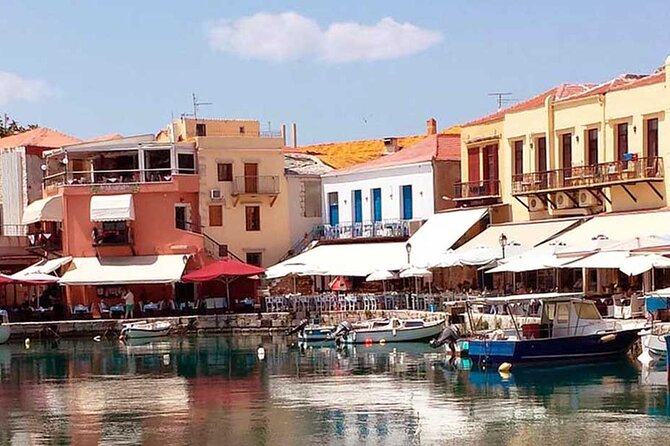
Next comes the Venetian Harbour. This is a strong anchor point for an audio walk because harbor areas naturally pull you in—boats, stonework, and the way buildings line up toward the water. The narration here helps you connect present-day views to the longer arc of Rethymno’s history theme.
What I find valuable as I walk: you’re not trying to memorize facts. You’re getting a running thread. You hear a point, then you immediately see the corresponding piece in the environment. That rhythm is what keeps self-guided tours from feeling like random trivia.
A small planning tip: if you want clear audio, keep your walking pace steady during the audio segments. If you stop suddenly or wander off the main pedestrian flow, you may have to wait for the narration to catch up visually.
Quick church pause: why short stops can still matter
The route includes a brief stop outside a church. It doesn’t sound like a big-ticket moment on paper, but that’s often where audio tours win.
Short segments work because you’re forced to slow down for a minute. You look at the façade, notice how the building sits in the street, then you hear the context. By the time you walk away, you have one extra lens for understanding the neighborhood.
Even without a named landmark in the route details, these quick pauses tend to function as “story beats.” They help break up the walk so it doesn’t become one long listen. For a route that runs around 2 hours 40 minutes to 3 hours 5 minutes, those mini resets can be the difference between finishing energized and finishing tired.
And if audio clarity ever becomes an issue—like it did for one listener in the supplied feedback—the text on the screen is your backup plan. That way you’re not forced to miss the whole segment.
Neratze Mosque area: use the audio to focus your gaze

Next up you pass the Neratze Mosque. This kind of stop is exactly where an audio tour can help you be a respectful, attentive visitor without turning the experience into a checklist.
Instead of staring at one spot and hoping you understand what you’re seeing, the narration steers you toward what to notice. It also keeps you from feeling lost. In places like this, a little guidance goes a long way because the built environment carries meaning beyond what’s obvious from street level.
One thing to watch: respect the space. When you’re hearing narration, it’s easy to forget you’re still in a functioning community area. I recommend stepping aside from main foot traffic during any pauses, then moving again when the segment ends.
If you’re sensitive to audio accents, treat this as a moment to rely on the app text. The supplied feedback highlighted that a thick accent made listening difficult at times—having the written support available helps you stay in sync with the tour even if the spoken audio isn’t perfect for your ears.
Rimondi Fountain and the value of built-in context
The tour stops briefly at the Rimondi Fountain. Fountain areas work well for audio tours because they’re a natural pause point. People linger here anyway, and the audio can make that waiting time feel productive.
This is also where the tour’s theme—Ancient Greece to modern times—can feel more tangible. Rather than thinking only about one era, you get little pieces that help you read the town across time. The narration includes less-famous facts, including the meaning and origin of Rethymno’s name and connections to broader Crete history.
So even if you’re not a museum person, you’re still learning. You’re learning in the same place you’re taking photos.
If you like to sketch or take notes, this is a good stop for it. You can use the app’s map view if it’s helpful, then rejoin the route when you’re ready.
Optional Fortezza of Rethymnon: choosing the extra time right
The centerpiece option on this walk is the Fortezza of Rethymnon. The tour offers it as an optional add-on of about 30 minutes, and importantly: admission tickets are not included.
This matters for your planning. If you want to go inside or pay the entrance fee, you’ll need to budget extra. But if you’re short on time, you can still enjoy the surrounding route segments tied to the Fortezza area without committing to the extra visit.
Here’s how I’d decide what fits you:
- Choose the Fortezza option if you like fortress layouts and want a longer story arc tied to the waterfront area.
- Skip it if you’d rather keep the walk lighter and spend more time wandering on your own afterward.
Either way, the audio tour is designed to keep moving you through the historic core—so you’re not just taking the Fortezza as a stand-alone “attraction.” You’re experiencing it as part of the town’s overall timeline theme.
Timing and pace: how to finish in the 2:40–3:05 window

Your total time estimate is around 2 hours 40 minutes to 3 hours 5 minutes. That range makes sense for an audio walk with several pass-by stops and a few quick holds.
To stay close to that window, you’ll want to:
- Use brief photo breaks rather than long “camera marathons”
- Pay attention to the segments that stop briefly outside landmarks
- Decide early whether you’ll add the Fortezza option, since that’s where time can expand quickly
Also note: the activity lists “Most travelers can participate,” and it’s described as private for your group only. That typically translates to a flexible vibe. You’re not doing rigid turn-taking with strangers.
The tour is near public transportation, which is useful if you start by walking some of the way and want the option to hop back without committing to a full on-foot loop.
Price and value: $11.99 for lifetime access and offline flexibility
At $11.99 per person, this is priced like one of the smart impulse buys that still feels practical later.
Here’s the value math I see:
- You’re not paying separately for each stop.
- You get lifetime access to the audio tour, so if you revisit Rethymno (or if friends ask you what you did), you can reuse it.
- Offline audio, maps, and geodata can make or break a walking tour experience. When your phone loses signal, the tour’s usefulness shouldn’t disappear.
You do pay in preparation, though. You need a smartphone and headphones, and you may want to download content beforehand. Also, any museum or entrance fees along the route—like the Fortezza option—are not included.
One last value reminder: this experience is listed as non-refundable and not changeable. So double-check your plans before you book if your travel dates are shaky.
Who this audio tour suits best (and who might not)
This is a good match if you:
- Want a structured walk without joining a group tour
- Like learning in small doses tied to what you see outside
- Prefer offline flexibility, especially in older areas with unpredictable reception
- Are comfortable using an app while walking
It may be less ideal if you:
- Depend on very clear, universally understandable narration and get frustrated with accents
- Hate headphone use or prefer tours with a live person explaining in real time
If you’re in the first group, you’ll likely find the self-guided format freeing. If you’re in the second group, keep your expectations grounded and lean on the app’s text support when needed.
Should you book this Rethymno audio tour?
I think you should book this if you want a simple, low-cost way to understand Rethymno as more than a pretty waterfront. The lifetime access is a big win, and the offline maps and audio help you keep control of your day.
Book it with care if audio clarity is your top priority. The feedback about accent difficulty is real, and it’s the kind of issue that can annoy you mid-walk. My practical advice: bring headphones you trust, and be ready to use the on-screen text when a spoken segment isn’t landing.
If you’re looking for a guided museum day, this isn’t that. If you want a walk that turns into a meaningful story in the streets, this fits well.
FAQ
How much does the Rethymno audio tour cost?
It costs $11.99 per person.
How long does the tour take?
It takes about 2 hours 40 minutes to 3 hours 5 minutes.
Is the audio available in English?
Yes, it’s offered in English.
Where does the tour start?
The tour starts at NafpigioArkadiou 254, Rethymno 741 31, Greece.
Does the tour end back at the same place?
Yes, it ends back at the meeting point.
Is offline access included?
Yes. You get offline access to audio, maps, and geodata through the VoiceMap app.
Do I need tickets for the Fortezza of Rethymnon?
If you choose the optional Fortezza visit, admission tickets are not included.
What should I bring?
You’ll need a smartphone and headphones. Transportation, food, and drink are also not included.
Is the experience refundable if I cancel?
No. This experience is non-refundable and cannot be changed for any reason.