Colonial Korea was brutal, and this tour shows you how courage survived. I like the way the route connects independence history to later pressure under military rule, instead of treating them as separate lessons. I also love that you get an English-speaking guide with strong storytelling at Seodaemun Prison History Hall and Namsan KCIA headquarters, plus admissions and transit handled. One drawback: it’s heavy content and can run longer than you expect, so plan a calm evening afterward.
I also appreciate the practical setup. This runs with a small group (up to 10), uses a mobile ticket, and stays near public transportation. The guides I saw mentioned in the experience were Joseph and Jonathan (also spelled Jonathon), and their focus on clear explanations and human stories is a big reason people feel moved by the day.
In This Review
- Key highlights at a glance
- Entering Seodaemun Prison: The Independence Story You Can Walk Through
- Dongnimmun Gate and Dilkusha: Symbols and the Journalist Who Spoke Up
- Tapgol Park and the March 1st Movement: When Public Protest Took Hold
- Switching Time Periods: The Museum That Makes the Later Sites Make Sense
- Tongin Traditional Market Lunch: Eating in the Middle of the Story
- Namsan and the KCIA Headquarters Area: Surveillance as a Daily Reality
- Korea Democracy Foundation: From Protest to Institutional Memory
- How the Two Options Fit Together (and Who Should Pick What)
- Price and Value: What $57.14 Actually Buys You
- Getting Through the Day Smoothly: Transit, Timing, and Footwear
- Should You Book Blood & Tears in Seoul?
- FAQ
- What packages are available on this Seoul tour?
- How long does the tour take?
- What is included in the price?
- Do I need to remove my shoes during the tour?
- Is the group size small?
- Is there free cancellation?
Key highlights at a glance
- Seodaemun Prison History Hall makes colonial punishment real, not abstract
- Tapgol Park ties the independence movement to the March 1st uprising
- National Museum of Korean Contemporary History gives you postwar context before the harder sites
- Namsan area KCIA sites show how surveillance and interrogation worked in military rule
- Tongin Traditional Market turns lunch time into a pause that still fits the story
- Dilkusha shoe rule means you should bring easy-to-handle footgear (slippers provided)
Entering Seodaemun Prison: The Independence Story You Can Walk Through
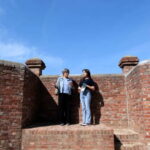
If you want Korean history that feels physical, start with Seodaemun Prison History Hall. This is a former prison used under Japanese colonial rule, and the site is arranged so you can follow the logic of detention: capture, interrogation, suffering, and punishment. It’s not just a set of signs. You’re walking through a place built to break people, which is exactly why it works.
What I especially like here is pacing. You begin with the independence struggle first, then you move outward to symbols and locations tied to the March 1st Movement. That order helps your brain organize the day. Instead of jumping from one topic to another, you see how resistance was staged and how the public protest movement gained force.
A practical point: this stop includes admission and takes about 1 hour 35 minutes. That’s long enough to absorb the gravity, but not so long you’ll feel like you’re stuck in one room forever. Still, expect an emotional reaction. If you’re sensitive to stories about torture and executions, you’ll want to mentally prepare and take breaks when the group pauses.
You can also read our reviews of more historical tours in Seoul
Dongnimmun Gate and Dilkusha: Symbols and the Journalist Who Spoke Up
From the prison, you go to Dongnimmun Gate, a short stop but an important one. This gate is described as a symbol of lost sovereignty and resilience. It later became a silent witness during the colonial period, which is a powerful concept for a tourist: places can carry political meaning even when nothing is happening in front of you.
Then the route shifts to Dilkusha (Albert W. Taylor House), a Western-style residence tied to an American journalist who exposed Japan’s atrocities. That detail changes the tone in a helpful way. It reminds you that the resistance story wasn’t only happening inside Korea. It also spread through international attention, and individual reporting mattered.
There’s also a clear on-the-ground tip: for Dilkusha, you may need to remove shoes to help preserve the historic residence. Slippers are provided on-site. If you wear shoes that are easy to slip off and on, your day stays smoother. If you’re in complicated footwear, consider planning for an extra minute or two here.
Time-wise, Dilkusha is about 30 minutes. It’s enough to read the context, look around, and absorb why a house like this exists in a story about resistance and international awareness.
Tapgol Park and the March 1st Movement: When Public Protest Took Hold
Next comes Tapgol Park, where the tour focuses on the birthplace of the March 1st Movement in 1919. This is where history stops being only about prison cells and starts becoming about public action. The atmosphere of an open public space matters here: you can feel the difference between being controlled and being visible.
The tour frames Tapgol Park as the place where Korea’s first cries for independence rang out and sparked a nationwide revolution. That connection is one reason this stop lands well even if you’re not a history buff. It gives you a real geographic anchor for a movement that can otherwise become a date in a textbook.
Tapgol Park is about 30 minutes, and it’s typically an easier emotional landing than Seodaemun. Not because it’s lighter history, but because the spirit here is about collective action rather than solitary suffering.
Switching Time Periods: The Museum That Makes the Later Sites Make Sense
If you choose the second option, you begin with the National Museum of Korean Contemporary History. This is where the day gains structure. Instead of jumping straight to interrogation sites, you get a larger map of postwar struggles, recovery, and rapid change, which helps you understand what came before the “now” of surveillance and political oppression.
The stop is about 1 hour and admission is included. Because it’s free of the walk-through physical confinement feel of Seodaemun, it can serve as a mental reset. You’re still covering hard topics, but the museum format gives you context and timelines, which makes everything else clearer.
I like this approach for one simple reason: when you arrive at places connected to the KCIA era, your questions are smarter. You’re not just thinking what happened. You’re also thinking why dissent was treated as a threat, and how postwar politics created the conditions for that kind of repression.
Tongin Traditional Market Lunch: Eating in the Middle of the Story
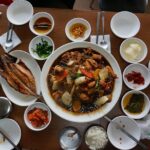
Between the museum and the harder political sites, you visit Tongin Traditional Market for lunch. This is about 1 hour, and you eat a traditional meal during that time.
What I find valuable is that the market stop isn’t thrown in as a tourist convenience. It fits the theme of ordinary people living through extraordinary pressure. Food works as a breather. It keeps the day from becoming one long chain of grim sites with no break in your body’s rhythm.
You do need to remember that meals are not included. The tour description lists meals as not included, so you’ll budget for lunch even though the guide, transport, and site admissions are covered.
If you’re traveling with someone who gets tired quickly in museums, this market stop can be a sanity saver. You still get history in the background, but you also get something hands-on and human.
Namsan and the KCIA Headquarters Area: Surveillance as a Daily Reality
Next is Namsan, described as a place where the dark past includes KCIA headquarters and the interrogation and torture of dissidents during military rule. The tour frames Namsan as peaceful hill terrain today, but with an origin tied to oppression.
This contrast matters. On a hill in daylight, it’s easy to forget what happened there. The guide’s job is to keep that gap from forming in your mind. You don’t just look at the view—you connect the view to the mechanism of control that operated there.
This stop is about 1 hour, and admission is listed as free for the tour component. Even so, the emotional weight can feel heavy. If you’re comparing it to the earlier independence story, you’ll likely see a pattern: political pressure changes tactics, but the goal—silencing opposition—stays stubbornly consistent.
Korea Democracy Foundation: From Protest to Institutional Memory
The last major stop in the “Now” option is the Korea Democracy Foundation, housed in a former police building. That building choice is not decorative. It tells you that democracy here is understood as something won through conflict, not granted as a prize.
The exhibits focus on protests, uprisings, and reforms, honoring the citizens who fought for freedom. This is where you can see the outcome side of the story: people suffering under surveillance and imprisonment pushing back until change became possible.
Time-wise, the stop is about 40 minutes. There’s also a note that the visit to the foundation may be adjusted depending on on-site conditions. So keep your expectations flexible on that last leg. If you’re planning another appointment the same day, try to avoid tight timing right after the tour.
How the Two Options Fit Together (and Who Should Pick What)
You have two ways to do this: Then: Fight for Independence or Now: Road to Democracy. You can take one or do both for a fuller understanding.
- If you choose Package 1, you get the independence arc: Seodaemun Prison, Dongnimmun Gate, Dilkusha, and Tapgol Park.
- If you choose Package 2, you get the democratic arc: the contemporary history museum, Tongin Market lunch, Namsan KCIA-related sites, and the Korea Democracy Foundation.
If you’re short on time or you’re traveling with older family members, picking one package can be the right call. If you want the full message—that the struggle for freedom doesn’t just happen once—doing both is worth it.
In terms of duration, the tour runs about 4 to 7 hours depending on which package you pick and how the day flows. One review I saw noted it ran from about 9:50 AM to 3 PM, and that length can feel like a real day. Plan on being tired afterward. That fatigue is not a failure; it’s your brain absorbing a lot.
Price and Value: What $57.14 Actually Buys You
At $57.14 per person, the big value isn’t just the sites—it’s what’s included. You get an English-speaking guide, admission fees, and public transportation fees during the tour.
That matters in Seoul, because site-to-site movement can eat time and money fast if you’re doing it solo. Here, the tour organizes the route and covers those transport costs, so you don’t have to pay each leg separately.
Meals are not included, and insurance is not included. That’s normal. But if you compare what you’d pay for guide help plus admissions plus getting between these specific locations, this price looks more reasonable than it first appears.
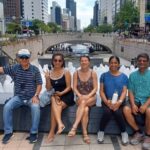
Also, the small group size (max 10 travelers) keeps the experience from turning into a noisy assembly line. That’s helpful when the content is serious and you want questions answered clearly.
Getting Through the Day Smoothly: Transit, Timing, and Footwear
This tour uses public transportation and is described as being near public transit. That reduces stress at the start of the day and makes it easier to return to your hotel afterward.
The schedule is also subject to traffic and weather, which is honest and realistic. If it rains or there’s congestion, you may feel the timing shift a bit. Build in buffer time if you have dinner reservations.
Footwear is the one place you should take action before you go. For Dilkusha, you might remove shoes and wear slippers. If you want the least hassle, choose shoes that come off quickly and won’t be annoying to slip back on.
And because this is history with dark themes, I recommend bringing water and using restroom breaks when the group has them. That’s basic comfort, but it also helps you stay present for the heavier moments.
Should You Book Blood & Tears in Seoul?
Book it if you want Korean history that connects the independence struggle to later fights against oppression, and you like learning with a guide who can explain why specific places matter. This is a strong choice for first-time visitors who want a coherent story rather than a random list of landmarks.
Skip it or choose only one package if you’re short on time, you dislike darker historical content, or you don’t want a long day. You’ll be walking through sites tied to imprisonment, torture, and political suppression, and that can be exhausting even when the tour is well run.
If your goal is understanding Korea’s freedom story through real places—prison walls, public protest ground, surveillance-era sites—this tour is a direct route to that.
FAQ
What packages are available on this Seoul tour?
You can choose either Then: Fight for Independence or Now: Road to Democracy, or take both for a fuller picture. Package 1 focuses on the independence era sites like Seodaemun Prison History Hall and Tapgol Park. Package 2 focuses on postwar struggles and democracy through the National Museum of Korean Contemporary History, Tongin Market lunch, Namsan KCIA headquarters area, and the Korea Democracy Foundation.
How long does the tour take?
The tour duration is listed as about 4 to 7 hours, depending on conditions like traffic and weather and whether you choose one package or both.
What is included in the price?
Included: public transportation fees during the tour, an English-speaking guide, and admission fees. Not included: meals, travelers insurance, and other personal expenses.
Do I need to remove my shoes during the tour?
If you take Package 1, you may need to remove your shoes when visiting Dilkusha. Slippers are provided on-site.
Is the group size small?
Yes. The tour has a maximum of 10 travelers.
Is there free cancellation?
Yes. You can cancel for a full refund up to 24 hours before the experience’s start time. If you cancel less than 24 hours before, the amount paid will not be refunded.