REVIEW · CHIANG RAI
Ancient City Tour from Chiang Rai with Golden Triangle and Royal Villa
Book on Viator →Operated by Sunleisure World · Bookable on Viator
Morning in Chiang Rai turns into mountain views fast, and the day has real variety. What I like most is the live guide commentary on the sights you pass, plus the small-group feel capped at 8 people (a calmer way to see the north). I also like how the stops connect—Doi Tung transitions into the Golden Triangle area without you feeling shuffled around.
The one thing to consider is pacing. Even with private-style comfort, you’re stacking multiple major sights in about 8 hours, so you’ll enjoy highlights more than linger for deep museum-style time at each stop.
In This Review
- Key highlights you’ll actually feel on the day
- Starting at Chiang Rai Night Bazaar and easing into the mountain roads
- Doi Tung: scenic views, a hill-tribe village, and what to watch for
- Mae Fah Luang Garden: a break from travel fatigue
- Doi Tung Royal Villa: recycled wood, old power, and a surprising material story
- Wat Phrathat Doi Tong: the relic legend and the mountain-temple view
- Golden Triangle: where borders meet river curves
- Sop Ruak: the confluence viewpoint and the small optional add-on
- Mae Sai border gate and shopping time: practical and quick
- Chiang Saen: double city walls and the feeling of a revived old town
- Price and logistics: what $209.74 gets you
- Who this tour is perfect for (and who should choose differently)
- Should you book this Chiang Rai to Golden Triangle day trip?
- FAQ
- What time does the tour start?
- How long is the experience?
- Does the tour include hotel pickup and drop-off?
- What’s included in the price?
- Do I need a passport?
- Is free cancellation available?
Key highlights you’ll actually feel on the day
- Small group size (max 8) keeps the drive and photo stops less chaotic
- Doi Tung Royal Villa + Mae Fah Luang Garden gives you both royal-era architecture and well-kept grounds
- Temple stop with a relic story (Wat Phra That Doi Tong, built 911 AD) adds meaning, not just views
- Golden Triangle viewpoints focus on how rivers and borders shape the landscape
- Mae Sai border market time is useful if you want quick shopping and people-watching
- Ancient Chiang Saen ruins round out the day with city-wall history and a revived old town vibe
Starting at Chiang Rai Night Bazaar and easing into the mountain roads
This is an all-in-one kind of day trip. You start at Chiang Rai Night Bazaar (around 8:30 am) and then head out by air-conditioned vehicle with a guide, plus hotel pickup/drop-off if your hotel is in the selected group. If you like having transportation solved for you, this is the easiest way to cover a lot of ground in one go.
The drive up into the mountains is a big part of why this tour works. It’s not just a transfer; you get the sense of scale—Chiang Rai’s hills, valleys, and changing vegetation—before you even reach the main stops. That matters because when you arrive at places like Doi Tung, you’re already oriented to the terrain.
Also, the guide format is built for conversation. The day is designed around live commentary as you go, so you’re not just watching scenery slide by. In reviews, guides like Bank are singled out for being both informative and fun, which usually means better timing at each stop and more useful context when you’re taking photos.
You can also read our reviews of more city tours in Chiang Rai
Doi Tung: scenic views, a hill-tribe village, and what to watch for
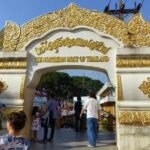
The first real sightseeing chunk is Doi Tung, with a scenic mountain drive that sets the tone. You’re aiming for panoramic views—on a clear day, you’ll get that wide “northern Thailand” feeling where the borders in the distance start to make sense.
After the views, you visit a hill-tribe village. The key detail here is the historical angle: it’s described as a former opium cultivation site. You’ll want to go in with a respectful mindset. This kind of stop is most rewarding when you see it as context—how livelihoods and trade routes shaped the region—rather than as a quick photo stop.
One practical tip: this portion of the itinerary can involve walking or standing for short periods. Wear shoes you’re comfortable with, because “village stop” often means uneven ground, not museum flooring.
Mae Fah Luang Garden: a break from travel fatigue
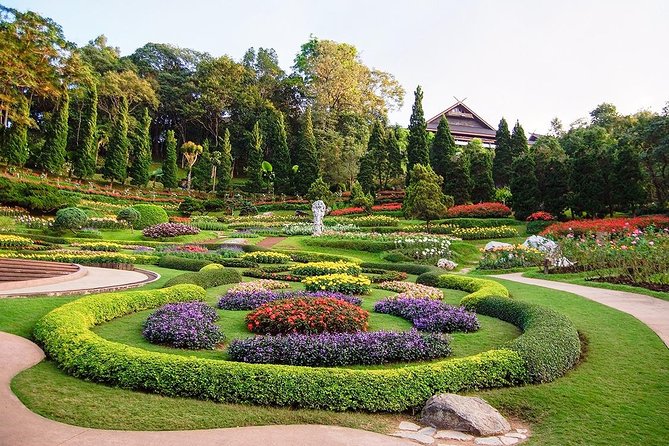
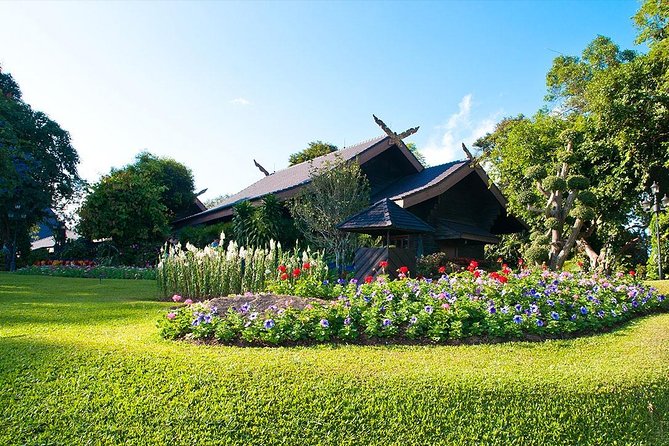
Then the day shifts into something gentler: Mae Fah Luang Garden. Even if you’re not the type to chase pretty gardens, this is a smart palate-cleanser after travel. The time slot is short, about 30 minutes, but it’s built so you can enjoy the layout and colorful flowers without feeling trapped in long botanical paths.
Look at how the garden is maintained. The appeal here isn’t wild natural chaos; it’s order and care, which is exactly what you want on a day packed with temples and viewpoints. It’s also a good time to cool down, slow your pace, and refocus your energy before the next set of historic stops.
Doi Tung Royal Villa: recycled wood, old power, and a surprising material story
Next comes one of the big-name highlights: Doi Tung Royal Villa, the former home of Srinagarindra, the Princess Mother. The villa is constructed from recycled pine wood and discarded teak trees. That detail matters because it turns the stop from just “royal architecture” into a story about materials and responsibility.
You’ll typically have around 30 minutes here. That’s enough time to get the overall feel and notice features without turning it into a rushed checklist. If you’re traveling with people who love architecture, this stop gives you something to talk about even after you leave.
Keep your expectations realistic. A half hour won’t cover every angle deeply, but it will let you understand what makes the villa distinctive. The value is in connecting this royal-era influence back to the broader Doi Tung area you’ve been visiting all morning.
Wat Phrathat Doi Tong: the relic legend and the mountain-temple view
From the villa area you continue farther up to Wat Phra That Doi Tong. This is the oldest-and-holiest type of stop on the list, with a foundation date mentioned as 911 AD. The temple is associated with a relic story: it’s said to be built from Buddha’s left collarbone.
Why I think this stop is more than a photo opportunity: the relic angle adds weight to what you see. Even if you’re not a “temple expert,” it gives you a reason to slow down and pay attention—practices, symbolism, and the fact that this place has been meaningful for an extremely long time.
The time you’re given is about 1 hour, which is good. You’ll have enough time to walk the main areas, observe how people behave, and still get a feel for the mountain setting. Expect some stairs or uneven surfaces depending on where you go—bring shoes that handle Thailand’s mixed terrain.
Golden Triangle: where borders meet river curves
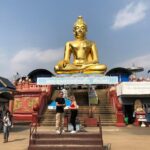
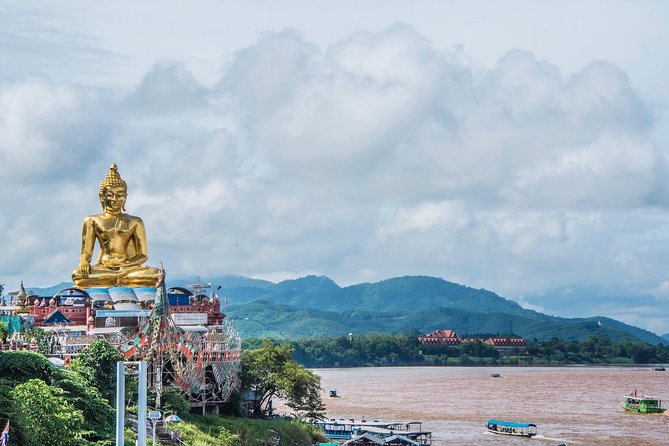
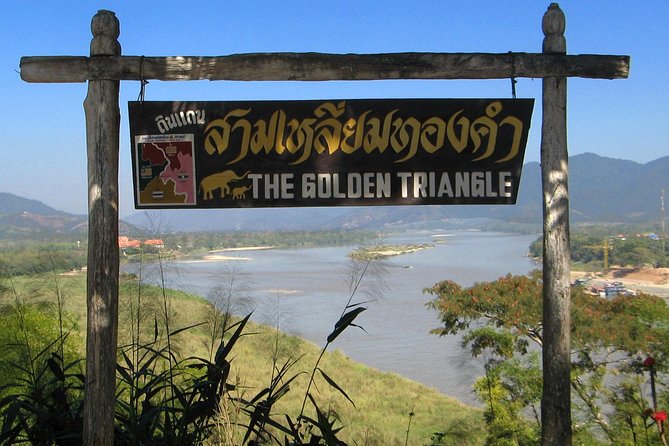
Now the day hits its most famous zone: the Golden Triangle. This is described as the frontier between Laos, Myanmar, and Thailand, separated by the Mekong River. Standing here, the idea of a border becomes less abstract and more visual. The rivers create natural edges, and that’s why this location became historically important.
You get about 1 hour for the Golden Triangle area. That’s just right for views and key photo angles, especially if your guide keeps the timing tight so you aren’t waiting around. On days with better light, this is where your camera roll gets its payoff.
One extra note from a review: some versions of the experience include a lunch cruise element around the Golden Triangle area. If that’s offered on your exact day, consider it a bonus because it adds movement and river atmosphere to what could otherwise be a stop-and-look segment.
Sop Ruak: the confluence viewpoint and the small optional add-on
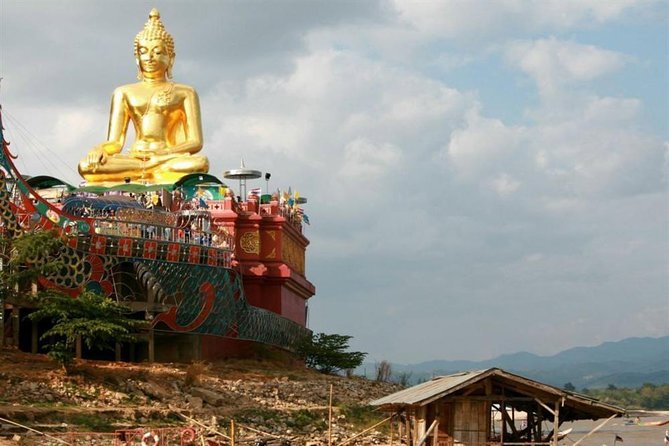
After the main Golden Triangle stop, you move to Sop Ruak, described as the center of the Golden Triangle. Here, the highlight is the scenery over the Mae Khong River and the physical triangle formed at the confluence of the Ruak and Mekong rivers.
Your time is about 30 minutes, and that short block is usually enough for the main viewpoint sweep and a few photos in each direction. There is also mention of a small fee (extra 300 THB) for an added option, noted as something you can do for a fee. If you’re budget-conscious, you can also skip it and still enjoy the viewpoints.
If you want the smartest approach: decide in the moment. If the option looks calm, quick, and worth your time, go for it. If you’ve already got the photos you need, saving money and energy is totally fine.
Mae Sai border gate and shopping time: practical and quick
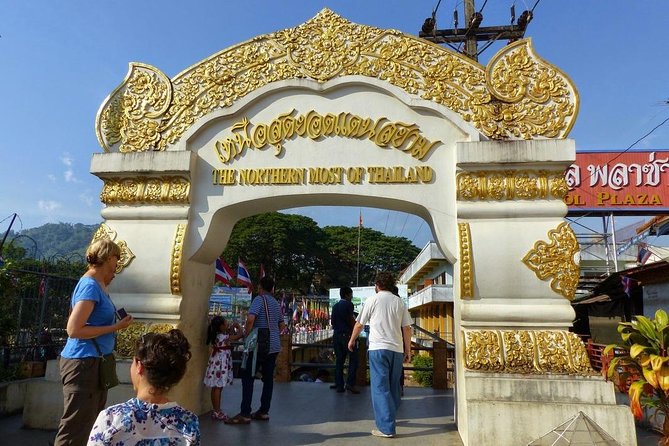
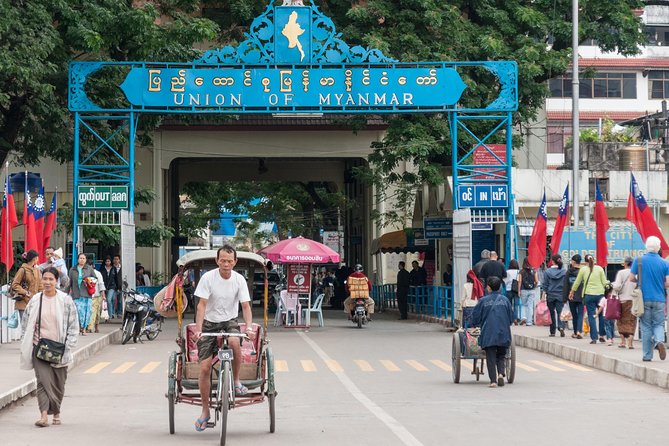
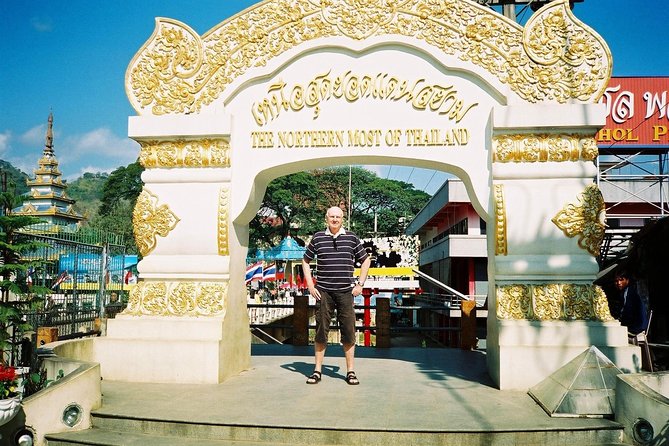
After lunch (Thai lunch is included), the itinerary shifts to Mae Sai, including a stop at the Thai–Burmese Border Gate. You’ll have about 1 hour, and the description is clear: it’s a border town with a big market for shopping.
This is a good stop if you want quick browsing for souvenirs, local goods, or market snacks. It’s also useful if you like seeing how border towns function day-to-day—different products, different rhythms, and a different kind of energy than the temples and gardens.
Keep an eye on your time here. Market stops can stretch if you drift, and later you still have ancient city time to enjoy.
Chiang Saen: double city walls and the feeling of a revived old town
The day ends with Chiang Saen, an ancient city that was abandoned for more than 100 years and has been revived. You’ll see references to the grand double city walls and antiquities from the city’s history.
You’ll have about 1 hour here, which works well because you’re not expecting a massive archaeological site marathon. The value is in atmosphere: you’re walking around a place that used to be central, fell quiet, and then came back to life.
This is also a nice emotional payoff. After a day shaped by borders, mountains, and royal and religious sites, Chiang Saen brings it back to daily life and settlement history. You leave with a sense of continuity—human choices repeated over centuries, even if the politics changed.
Price and logistics: what $209.74 gets you
At $209.74 per person, this tour sits in a “midrange day trip” spot. What helps justify the price is what’s bundled in: professional guide, Thai lunch, bottled water, and hotel pickup/drop-off (selected hotels), plus an air-conditioned vehicle. You’re also getting a route that would be harder to piece together on your own without spending time figuring out drivers, tickets, and sequencing.
Another value factor: the tour is designed for comfort without rushing you through tiny stops. Admission tickets are listed as free for the described stops, which can matter because religious/attraction fees add up when you travel independently.
The main cost you should plan for is personal spending and any optional add-ons. The data specifically mentions an extra 300 THB fee for an option at Sop Ruak. Also, the tour doesn’t include extra food and drinks beyond what’s listed, so if you get thirsty between stops, you’ll want to use the bottled water and then budget for anything else you buy.
Finally, the group size cap of 8 travelers makes a difference. You get more flexibility and better flow than bigger bus tours. In reviews, guides like Suzy are praised for being friendly and adjusting plans when needed, which is the kind of service that often makes the day feel smoother than the itinerary alone.
Who this tour is perfect for (and who should choose differently)
This is ideal if you want a single, organized day that links Doi Tung, the Golden Triangle area, border-town Mae Sai, and Chiang Saen. If you hate the stress of planning routes and ticket timing, the guided structure is your friend.
You’ll likely love it if you enjoy variety: temples, gardens, royal history, viewpoints, and one market stop. It’s also a good fit for couples or small groups who want a calmer pace than large-group tours.
If you’re the kind of traveler who wants long stays at fewer places, you might find the schedule tight. Even with the comfort factor, this is still a highlight route, not a slow travel day.
Should you book this Chiang Rai to Golden Triangle day trip?
Yes, if you want a well-connected day with guide-led context and minimal planning. The biggest reason to book is the way the itinerary builds meaning: Doi Tung’s mountain story leads naturally into the Golden Triangle’s border-river reality, then closes with Chiang Saen’s revived ancient city. Add in lunch, bottled water, and pickup, and it becomes a strong value package for the effort saved.
If you prefer slow pacing or deep time in just one theme, you might be happier with a smaller “pick two regions” plan instead. But for most first-timers to northern Thailand, this one-day sweep is a practical way to see what you’d otherwise struggle to combine in one coherent route.
FAQ
What time does the tour start?
The tour starts at 8:30 am.
How long is the experience?
The duration is listed as 8 hours (approx.).
Does the tour include hotel pickup and drop-off?
Yes. Hotel pickup and drop-off are included for selected hotels.
What’s included in the price?
The included items are a professional guide, Thai lunch, bottled water, hotel pickup and drop-off (selected hotels), and an air-conditioned vehicle.
Do I need a passport?
Yes. You should bring along a valid passport on the day of travel.
Is free cancellation available?
Yes. You can cancel for a full refund up to 24 hours before the experience’s start time.