REVIEW · CORINTH
Ancient Corinth: Self-Guided Audiovisual Tour with 3D Models
Book on Viator →Operated by Culture App · Bookable on Viator
Ancient Corinth gets a lot easier when you have the right story in your pocket. This self-guided audiovisual tour pairs an audio guide with 3D reconstructions and an interactive map, so you can make sense of ruins that would otherwise feel like random stone.
I like two things most: the way the tour explains major spots with clear narration, and the 3D models/360 panoramas that help you picture what stood here.
One drawback to keep in mind: the tour depends on your phone and internet access, and geolocation can be picky if permissions aren’t set right.
In This Review
- Key things to know before you go
- Entering Ancient Corinth: where the experience actually starts
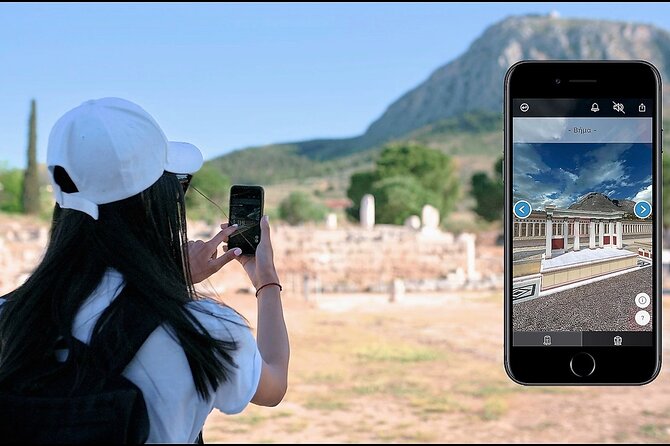
- How the app tour works on your phone (and why that matters)
- The main route: Greek, Roman, and Byzantine layers you can follow
- What to look for as you walk
- The Bema and Apostle Paul: putting a famous name on the ground
- The Peirene Fountain: still water, ancient myth
- Acrocorinth at the end: the view that ties the visit together
- Price and value: what you’re paying for (and what you’re not)
- Languages and pacing: comfort matters more than you think
- Logistics you’ll feel on the ground (even with GPS)
- Who this tour is best for
- Should you book Ancient Corinth’s 3D audio tour?
- FAQ
- Is the archaeological site entrance fee included in the tour price?
- How long does the self-guided tour take?
- What do I need to bring?
- Where does the tour start and where does it end?
- How do I get the tour on my phone?
- What languages are available?
Key things to know before you go
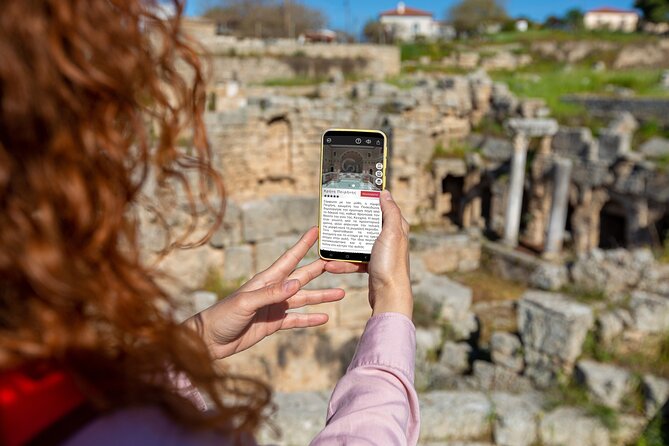
- GPS map with location tracking helps you follow the route without constantly checking signage
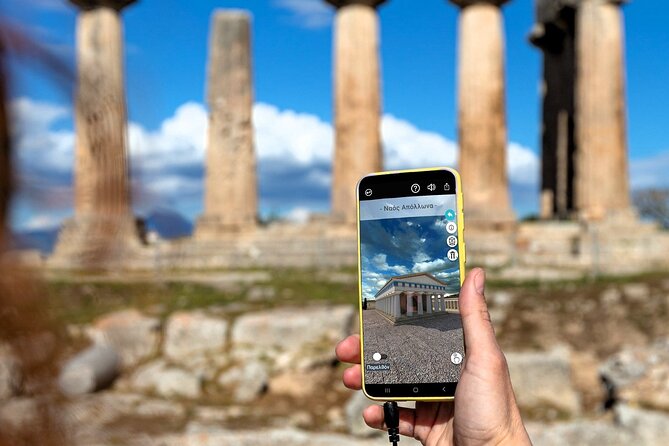
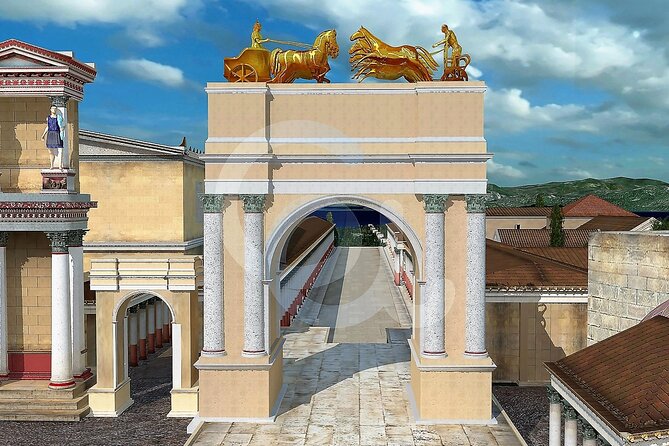
- 3D models and 360° panoramas clarify what you’re looking at on the ground
- Audio + text across 15 monuments gives structure to a site that can feel huge
- Videos for 13 monuments add context when ruins get confusing
- Multiple languages (English, Greek, Spanish, German, French, Italian, Dutch, Chinese) keep it comfortable
- Entrance ticket is separate (€8 full / €4 reduced), so plan that cost
Entering Ancient Corinth: where the experience actually starts
You begin at the Archaeological Museum of Ancient Corinth, Argous 105, in Archea Korinthos (200 07). The good news is the site is set up so that the main walk connects to this area, and there’s only one exit from the archaeological grounds. After you finish, the exit is near the central square, and a quick 2-minute walk brings you back to your meeting point area.
The tour runs about 1 to 1.5 hours, which is a realistic window for an independent visit. You’re not forced into a full-day plan, and that matters at Ancient Corinth because the place rewards slow looking. If you’re also planning museum time, you can use this as a spine for your visit rather than getting lost in wandering.
Also, check the site hours for your day. The archaeological area is listed as 8:00 AM to 8:00 PM (Monday through Sunday) for the current schedule window shown.
You can also read our reviews of more guided tours in Corinth
How the app tour works on your phone (and why that matters)
This experience is delivered through a downloadable app for Android and iOS. After booking, you get an email with instructions, and the content downloads automatically once you open the app and choose your language.
You’ll want to plan for three practical needs:
- Smartphone + headphones are required (they’re not included)
- Internet access is required for the tour to function properly
- Geolocation permission needs to be allowed during the download/setup process
That last point is more than a technical detail. One low-rated experience specifically complained that geolocation didn’t work, making the map hard to use and the 3D content less helpful for orientation. So if you want the GPS map to guide you smoothly, don’t skip the permission prompts.
Once it’s running, you use an interactive map with GPS location tracking, plus audio narration and on-screen text. There are 15 monuments covered by audio and text, and 13 monuments with 3D models and 360° panoramas, supported by 13 immersive videos.
The main route: Greek, Roman, and Byzantine layers you can follow
The tour starts at the entrance of the archaeological site and guides you along main paths through monuments from different periods. That’s the core value here. Ancient Corinth isn’t one single story—it’s several eras stacked on top of each other, and the ruins can look similar at first glance.
What I like about this format is that it doesn’t treat Corinth like a single stop. Instead, it frames what you’re seeing as part of a changing city. You get the feel of Greek, Roman, and Byzantine tradition all in one walking circuit, with 3D help where your eyes might need backup.
What to look for as you walk
As you move along, watch for spots where signage alone won’t tell the full picture. That’s where the app’s 3D reconstructions and 360° views are most useful. A lot of museum labels describe what’s left; the app tries to help you imagine what the place looked like when it was functioning.
Also, take advantage of the audio pacing. If you pause at a monument longer than the app expects, you still get the content when you’re ready. For a self-guided experience, that flexibility is a real win.
The Bema and Apostle Paul: putting a famous name on the ground

One highlighted moment in the tour is the Bema, the place where the Apostle Paul defended himself about 2,000 years ago. Even if you only know the story in broad strokes, this kind of stop helps you connect text-history to real space.
This is also the kind of moment where 3D and videos can matter, because ruins often don’t broadcast their original purpose. The Bema is a good example: it’s not just a block of stone. It’s a specific location tied to courtroom-style speeches and public judgment.
If you’re interested in early Christian tradition, you’ll likely feel the tour is doing what a good guide should do: translating a narrative into a physical landmark you can stand at and understand.



The Peirene Fountain: still water, ancient myth
Another memorable theme is the Peirene Fountain, where water still runs. The tour invites you to listen and frames it through mythology, asking whether you can hear the Nymph’s lament.
Even if mythology isn’t your main interest, this stop works because it’s sensory. It’s one thing to read about a fountain; it’s another to stand near water sound as the tour tells you what people once connected to that sound and place.
This is also a smart pacing tool inside a ruin field. You’ll likely find it easier to reset your attention when the tour includes a quiet, observational moment like this one.
Acrocorinth at the end: the view that ties the visit together
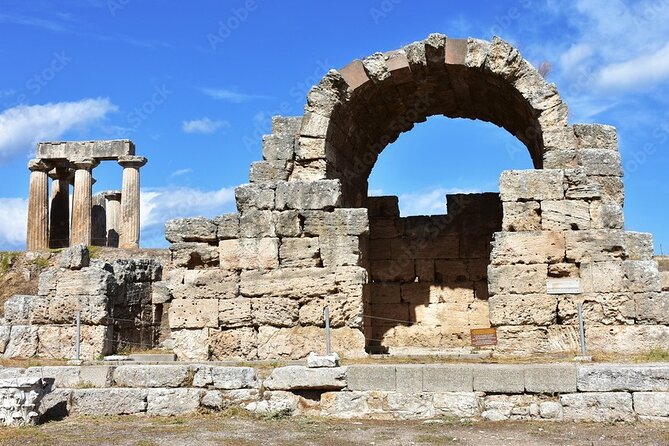
The tour finishes by moving toward Acrocorinth rock and gives you a chance to take in the scenery. This matters because ruins alone can make you forget why Corinth mattered in the first place.
A high lookout gives you scale. You start to understand how the city’s layout connected to distance, routes, and strategic thinking. Even if you don’t memorize every detail, the visual payoff helps the earlier stops feel less random.
If you like photos, this is the part where you’ll probably want to linger. The app’s storytelling helps, but the view is what makes the final minutes feel worth the walk.
Price and value: what you’re paying for (and what you’re not)
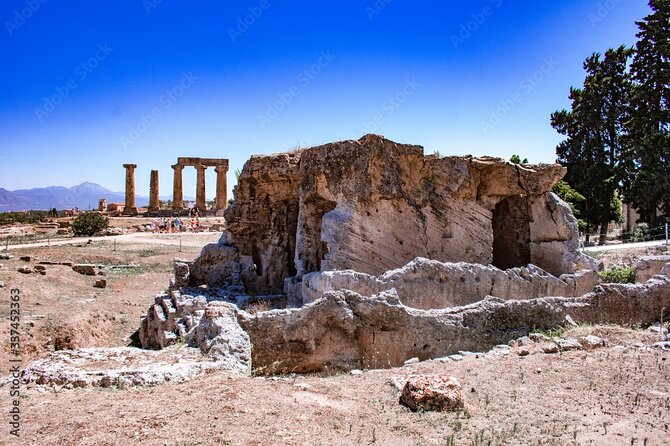
The tour price is listed as $8.13 per person, and the site entrance is not included. Entrance costs are €8 full price or €4 reduced, so budget for that separately.
Here’s the honest value math: you’re paying a low-cost fee for structured audio, text, and tech help on-site—things that can save time and confusion. If you already know Ancient Corinth well, you might feel the app is extra. If you don’t, you’ll likely find the narration and 3D reconstructions reduce the frustration of trying to interpret ruins alone.
Also remember what’s not included:
- Entrance fee
- Smartphone and headphones
- Any pick-up/drop-off service (so you’ll walk or handle your own transport to the start)
If you go prepared with a charged phone, a pair of earbuds, and internet access, this ends up being a cost-effective way to make your time on the ground more meaningful.
Languages and pacing: comfort matters more than you think
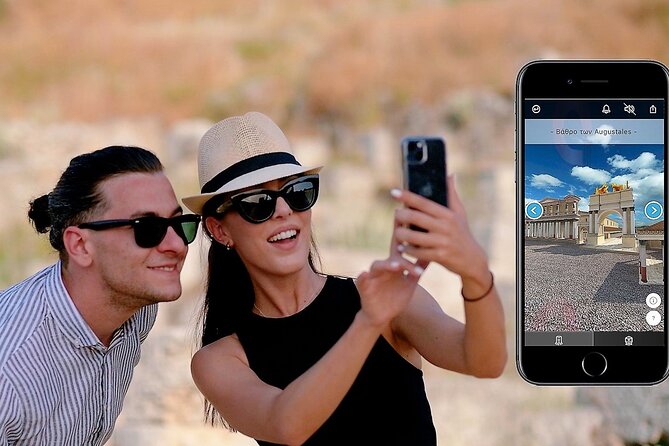
The app is available in a long list of languages: English, Greek, Spanish, German, French, Italian, Dutch, and Chinese. That’s not just a nice-to-have. When you’re standing in front of ruins, the difference between understanding the story and guessing the story is massive.
The format also includes both audio narration and text information. That’s ideal for moments when the audio speed doesn’t match your reading pace. You can glance at the screen, absorb the key points, then go back to listening.
Timing is another practical advantage. At around 1 hour to 1.5 hours, you won’t feel stuck. You can combine it with museum time or a second stop in the area without turning your day into a marathon.
Logistics you’ll feel on the ground (even with GPS)
This is self-guided, so your experience depends on your setup. The meeting point is the museum area, and the tour uses an interactive map with GPS location tracking.
To avoid the one downside some people reported—geolocation not working—do this before you step into the archaeological grounds:
- Enable location/GPS permissions when the app asks
- Download or load the content as instructed after booking
- Test audio before you enter the main ruins
You should also note the tour “requires internet access.” So plan around weak signal areas. If your phone struggles with data, that’s a risk to performance.
One more small reality: there’s no mention of a pickup. You’ll want to be comfortable walking between the museum meeting area, the archaeological entrance, and the end point near Οδός Απόλλωνος 825. A quick 2-minute return from the only exit to the meeting area helps, but you still need to start and finish under your own steam.
Who this tour is best for
This experience fits well if you want structure without paying for a live guide. It’s also a great match if you like religious and myth themes mixed into a multi-era site, because the tour specifically touches Greek, Roman, and Byzantine monuments, plus Christian tradition through the Bema and Paul reference.
You’ll likely get the most from it if you:
- want help interpreting ruins without reading every label for an hour
- like tech support such as 3D models and 360° panoramas
- prefer a flexible pace over joining a group schedule
If you hate apps at the museum and would rather rely only on signage, you might not love this. But if you’re open to using your phone as a guide, it can turn a tough-to-picture site into something far more understandable.
Should you book Ancient Corinth’s 3D audio tour?
I’d book it if you want a low-cost, self-guided way to understand Ancient Corinth’s layers—Greek, Roman, Byzantine, and early Christian—while using 3D reconstructions to fill in gaps you’ll otherwise see as blank spaces.
I’d think twice if you know your phone’s GPS permissions are a hassle for you, or if you don’t want to rely on internet access. In that case, the map and tech features may not deliver the full benefit, and the site can feel harder to orient.
If you’re ready to bring a charged phone, headphones, and location permission on day-of, this tour offers good value for turning a walk among ruins into a story you can actually follow.
FAQ
Is the archaeological site entrance fee included in the tour price?
No. The tour does not include the entrance ticket. The entrance fee is listed as €8 full price or €4 reduced.
How long does the self-guided tour take?
It runs about 1 hour to 1 hour 30 minutes.
What do I need to bring?
You need a smartphone and headphones. The tour also requires internet access to function properly.
Where does the tour start and where does it end?
It starts at the Archaeological Museum of Ancient Corinth (Argous 105, 200 07). It ends near Οδός Απόλλωνος 825 in Archea Korinthos 200 07.
How do I get the tour on my phone?
After booking, you receive an email with instructions to download the app. You open the app, choose your tour language, and the content downloads automatically.
What languages are available?
The tour is available in English, Greek, Spanish, German, French, Italian, Dutch, and Chinese.