REVIEW · CORINTH
Ancient Corinth Self-Guided Tour with 3D & Audio (No Ticket)
Book on GetYourGuide →Operated by Culture App · Bookable on GetYourGuide
Corinth has always been a crossroads, and this tour lets you feel it fast. What makes this experience interesting is the pairing of 3D reconstructions with clear audio narration—so the ruins stop being just stone stacks and start making spatial sense. Two things I especially like: you can explore at your own tempo without pushing through crowds, and the tour is designed around specific anchors like the Temple of Apollo and the Bema with interactive 3D models. One watch-out: the app gives the experience, but you’ll still need to purchase the archaeological site entrance ticket separately.
If you’ve ever stood in front of a ruin and wondered what you’re looking at, this kind of guide helps. I like that the tour works fully offline after download, and that it comes with multiple languages so you’re not stuck listening to a mismatched track. The main consideration is simple: you’re responsible for your phone setup (charging, storage, and earphones), and if audio quality or language voice acting matters to you, it’s smart to test your language before you walk up to the site.
In This Review
- Key Highlights That Matter On-Site
- Ancient Corinth, Explained in 3D (Without Waiting for a Guide)
- Apollo Temple and the Bema: Two Stops That Anchor the Whole Site
- The 360 Panoramas: How to Read Corinth From Above
- “Travel Over Time and Space” Routes You Control
- Offline-First Smartphone Tour: The Setup That Makes or Breaks It
- Languages and Audio Quality: A Small Risk to Be Aware Of
- Price and Value: Paying for the App, Not the Ruins
- Getting There and Where You Start (No Meeting Point, No Handholding)
- What You’ll Love Here (And Who Might Prefer Something Else)
- Should You Book This Ancient Corinth 3D & Audio Tour?
- FAQ
- Is the entrance ticket included in the price?
- How much is the entrance ticket?
- Can I use the tour offline on site?
- How long is the tour valid?
- What languages are available for the audio narration?
- Where do I meet the guide?
- How do I get to the archaeological site?
- What should I bring with me?
Key Highlights That Matter On-Site
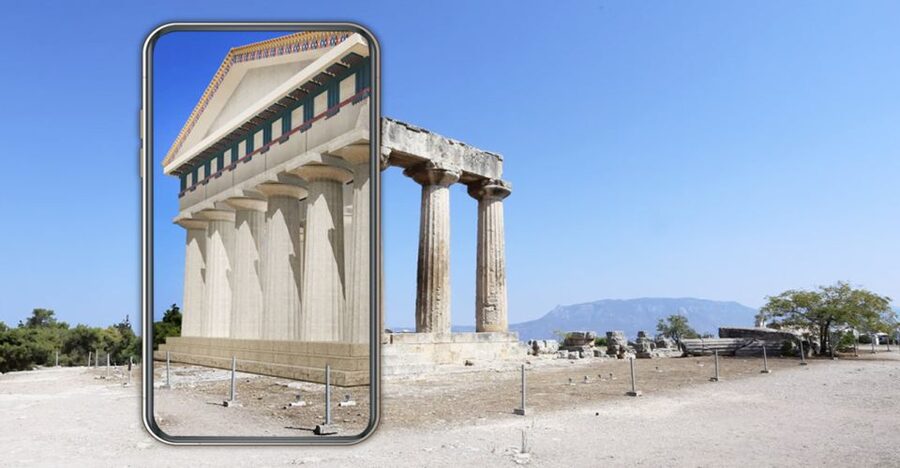
- 3D models of the Temple of Apollo and the Bema so you can understand what used to stand where
- 360 panoramic views that help you read Ancient Corinth from above before you walk it
- Offline-first smartphone audio after you download on Wi‑Fi, with no roaming stress
- Audio plus text in multiple languages, including English and Greek, plus several others
- Explore by “travel over time and space” routes, not a rigid checklist of stops
- Low price for the guide layer (the app), with the site ticket handled separately
Ancient Corinth, Explained in 3D (Without Waiting for a Guide)
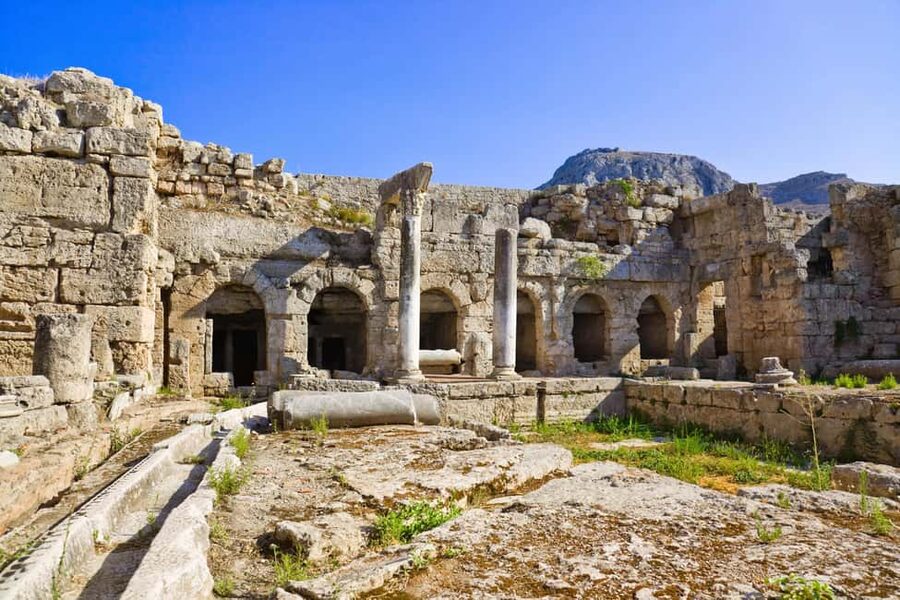
Ancient Corinth sits where the Mediterranean world rubs elbows. Ships and trade pushed through here, and the city’s power shows up in how many different stories you can still trace in the landscape. The best part of this self-guided setup is that it treats the ruins as a place you can reconstruct mentally, not just wander around.
The app’s “guide layer” is built on visuals: 3D reconstructions, panoramas, and short video segments. That means you can spend your time using your eyes and ears together. Instead of walking past a foundation and hoping a book will click, you get narration timed to what you’re seeing. For first-timers, it’s the difference between looking at ruins and actually understanding the layout.
I also appreciate the “no crowd pressure” angle. A group guide can be great, but it comes with a pace you didn’t choose. With this, you can slow down where the site gets confusing and speed up where you already understand. That’s especially useful at archaeological sites, where one viewpoint can teach you more than ten minutes of straight-line walking.
You can also read our reviews of more tours and experiences in Corinth.


Apollo Temple and the Bema: Two Stops That Anchor the Whole Site
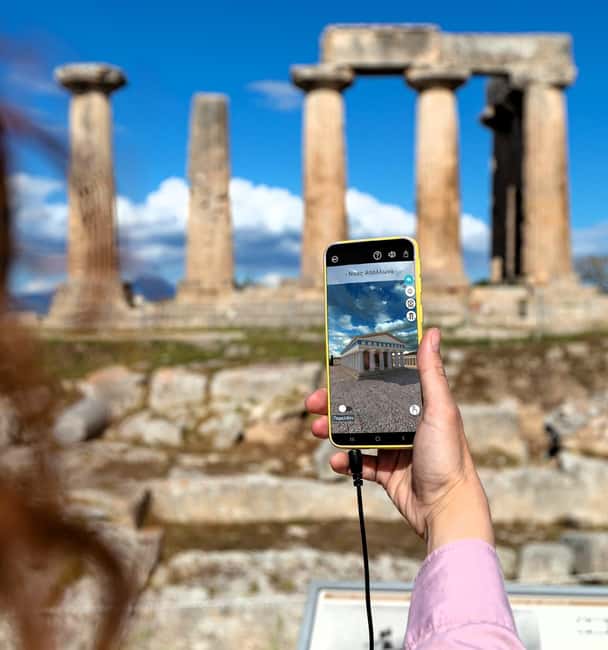
You don’t need a long list of monuments to make sense of Ancient Corinth. What you need is a few strong reference points that keep you oriented. This tour gives you exactly that with interactive 3D models tied to two key locations: the Temple of Apollo and the Bema.
Here’s how that helps you in practice:
- When you reach the Temple of Apollo area, the 3D model gives your brain a “before” image. You’re better able to see the proportions and how the space would have felt when it was intact. Even if you don’t know Corinth already, this kind of reconstruction can quickly turn confusion into recognition.
- The Bema functions like a stage in an argument about civic life—where speeches and public moments would have mattered. A 3D approach helps you understand the scale and setting rather than just memorizing a description.
Because both are supported with 3D interaction, you can connect the physical ruins to their roles in everyday life. That’s where self-guided tours often win: you control the moment you learn, and you can replay segments as needed.
One more useful angle: the tour doesn’t only explain one monument and stop. It encourages routes that connect places, so you’re not bouncing randomly from marker to marker.
The 360 Panoramas: How to Read Corinth From Above

Archaeological sites can be tricky because what you’re seeing is fragmentary. Walls are gone, floors are worn down, and the “shape” of a building doesn’t always jump out at street level.
That’s why the 360 panoramic views are more than a cool extra. They’re a practical orientation tool. You can use the panoramas to:
- spot where major areas sit relative to each other,
- understand why certain paths likely existed,
- and get your bearings before you walk the ground.
If you like to arrive ready—eyes up, not just looking down—this feature is a big plus. And even if you’re the type who wanders first and reads later, panoramas still help you build a mental map once you start hearing the narration.
Also, since the tour includes short media clips and 3D visuals, it’s designed to keep your attention anchored to “this is what you’re looking at.” That matters because it’s easy to get mentally tired at sites where everything is visually similar stone.
“Travel Over Time and Space” Routes You Control
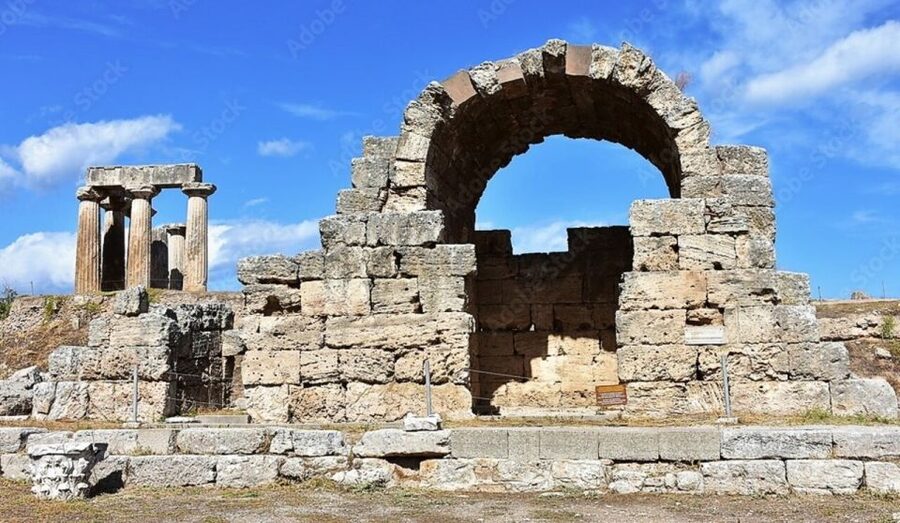
Instead of forcing a strict order, the tour is structured around routes that let you discover the site in a more interpretive way—moving through time and across spaces. For you, that means fewer moments where you feel like you’re following a script.
In plain terms, this works like a good museum exhibit:
- you get context,
- you watch how pieces relate,
- and you learn the why, not only the what.
There’s also a nice built-in flexibility for your day. If you’re hot, tired, or you found one area more interesting than expected, you can adjust. That’s a real advantage at archaeological sites, where weather and energy can control the experience more than any itinerary.
One small practical detail that also shows up in real-world use: finding the exact spot where the information cues match the viewpoint can become part of the fun—like a low-stakes scavenger hunt. If you like that kind of “get your bearings fast,” you’ll likely enjoy it. If you want zero friction, be ready to take a moment to line up your phone with the right area.
Offline-First Smartphone Tour: The Setup That Makes or Breaks It

This is a digital tour, so your phone setup matters. The good news: once you download, the app works offline, meaning you don’t need internet on site or roaming data. That’s a big comfort factor if cellular coverage is spotty where you are.
But you do need to do the prep right:
- Download while on Wi‑Fi before you go (unless you have enough data).
- Plan for about 200MB of storage space.
- Bring a fully charged smartphone and your earphones/headphones.
- Expect iPhone to require iOS 11.0+ and Android 5.1+.
Think of it this way: you’re paying for the experience layer, not for convenience. The app’s value is highest when it’s ready to play without delays. If your phone battery is low, the “self-guided at your pace” promise turns into stress.
A quick practical tip: before you walk in, check that the audio is working and your language is correct. The tour offers English, Greek, Spanish, Italian, French, German, Dutch, and Chinese, and having the right language selected from the start makes the whole site feel smoother.
Languages and Audio Quality: A Small Risk to Be Aware Of

This tour includes audio narration and text in multiple languages. The list is wide, which is a real strength, especially if you’re traveling with someone who wants the guide in a specific language.
That said, audio can be personal. In a few of the provided ratings, people raised concerns about how German narration sounded and whether voice delivery matched expectations. That’s not a guaranteed issue for everyone, but it’s a good reason to be cautious.
My advice is simple: once you get the email instructions and download the content, open the app and confirm the language track before you arrive. It’s a two-minute check that can save a half-day of irritation.
Price and Value: Paying for the App, Not the Ruins
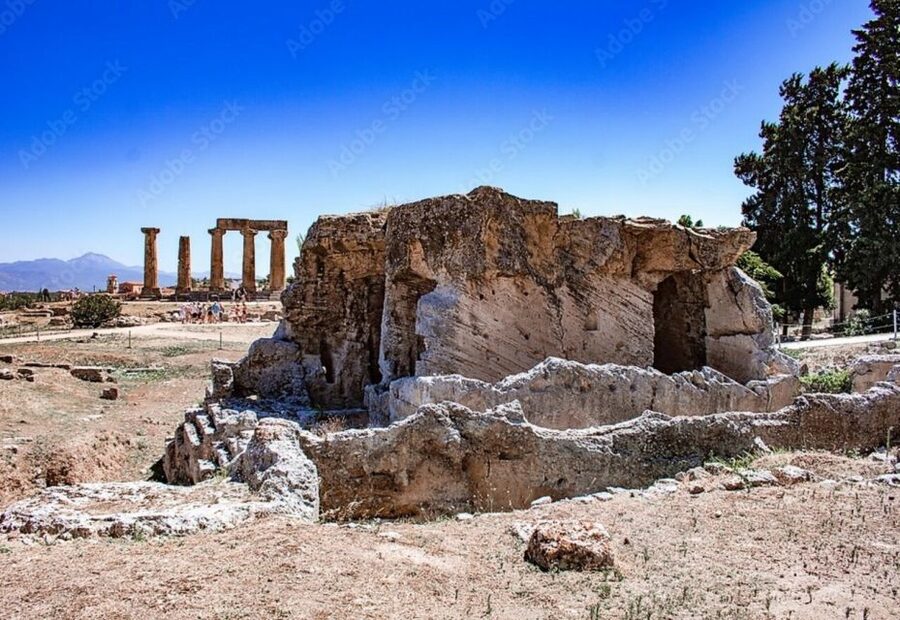
At $8 per person for the tour, this is priced like an add-on guide. And that’s exactly what it is: the audio and 3D experience, not the archaeological site entry ticket.
The site ticket isn’t included:
- full price: 15€
- reduced price: 8€
So your real budget is basically $8 plus the site entrance fee (in euros), with the exact total depending on eligibility. Even with that added cost, it can still be good value if:
- you don’t want to hire a human guide,
- you’re okay exploring independently,
- and you’ll actually use the 3D and audio (instead of just walking past screens).
Also remember what you’re buying. You’re not only getting narration; you’re getting tools that help you interpret the space—3D models and 360 panoramas. Those features are what make the low price feel reasonable, because they do “explanation work” you’d otherwise have to get elsewhere.
Getting There and Where You Start (No Meeting Point, No Handholding)

There’s no meeting point because this is a self-guided tour. The easiest route is by car or taxi.
The provided directions are straightforward:
- Take the detour to the Ancient Corinth National Highway Corinth – Patra, then follow signs toward Patras (Ancient Corinth node).
- There’s a parking lot next to the site, which helps you avoid wasting time circling.
Once you’re parked, you’re on your own in the best way. You can start when you’re ready, not when a group leader herds the clock.
What You’ll Love Here (And Who Might Prefer Something Else)

If you enjoy learning while you walk, you’ll probably click with this. The tour is best for people who want:
- flexibility over a fixed schedule,
- interpretation tools (3D + audio),
- and a lower-stress experience without group pacing.
It also suits travelers who plan to spend time in the hot sun and want a guide that can pause, rewind, and adapt as your energy changes.
Who might not love it?
- If you’re hoping for a live guide to answer questions on the spot, you’ll miss that human back-and-forth.
- If you’re very sensitive to audio voice acting quality, double-check your language setup early.
- If you prefer someone else to handle logistics completely, you’ll want to have basic tech comfort.
In short: it’s a strong match for self-starters, and a weaker match for people who want everything handled for them.
Should You Book This Ancient Corinth 3D & Audio Tour?
Book it if you want a low-cost way to make Ancient Corinth legible. The combination of 3D models, 360 panoramas, and offline audio is exactly the kind of “ruins translation” that helps you feel like you understand what you’re seeing—without paying for a full guided tour.
Skip it or think twice if you:
- don’t plan to use your phone for audio/visual cues,
- can’t deal with app downloading and battery planning,
- or you strongly prefer a live guide.
For most independent travelers, this is a smart value move: pay for the guide layer, buy the site ticket separately, and spend your time learning rather than guessing.
FAQ
Is the entrance ticket included in the price?
No. The Ancient Corinth archaeological site entrance ticket is not included and must be purchased separately at the site or online.
How much is the entrance ticket?
The full ticket price is 15€, and the reduced price is 8€.
Can I use the tour offline on site?
Yes. After you download the content, the app works fully offline, so you don’t need internet or roaming during your visit.
How long is the tour valid?
The tour is valid for 5 days from the first activation.
What languages are available for the audio narration?
The audio guide is available in English, Greek, Spanish, Italian, French, German, Dutch, and Chinese.
Where do I meet the guide?
There is no meeting point because this is a self-guided smartphone tour.
How do I get to the archaeological site?
The easiest option is by car or taxi. You should follow the detour to the Ancient Corinth National Highway Corinth – Patra toward Patras (Ancient Corinth node). There is a parking lot next to the site.
What should I bring with me?
Bring comfortable shoes, a sun hat, water, and a charged smartphone. You should also bring earphones/headphones since they are not included.