REVIEW · MUSEUM OF ANCIENT GREEK TECHNOLOGY
Athens: Kotsanas Museum of Ancient Greek Technology Ticket
Book on GetYourGuide →Operated by Kotsanas Museum · Bookable on GetYourGuide
Ancient gears, ancient brains, real motion. In Athens, the Kotsanas Museum of Ancient Greek Technology turns operating models into a hands-on lesson, with highlights like the oldest analog computer. I love the sheer practicality of it: you are not just reading about ideas, you’re watching mechanisms do what they were built to do.
One possible drawback: it is a self-paced visit with entry only, so if you want a person to walk you through the bigger historical stories, you’ll need to rely on the labels and the video explanations.
In This Review
- Key points I’d circle before you go
- What This Museum Does Differently Than Most
- The Big Idea: 100 Operating Models of Greek Inventions
- Entering the Art Nouveau Museum Near Syntagma
- A Practical Walk-Through of What You’ll See
- What makes the labels and visuals worth your time
- Hands-On Interactive Displays (The Part I’d Plan Around)
- Video Stations and Documentaries in Greek and English
- How Much Time Do You Really Need?
- Price and Value: Is $7.90 Worth It?
- Who Should Book This Ticket?
- Quick Logistics You’ll Actually Care About
- Should You Book the Athens Kotsanas Museum Ticket?
- FAQ
- Where is the Kotsanas Museum of Ancient Greek Technology located?
- What does the ticket include?
- How long is the ticket valid?
- What languages are available?
- Is the museum wheelchair accessible?
- Are food and drinks allowed inside?
- Can I cancel and get a refund?
Key points I’d circle before you go
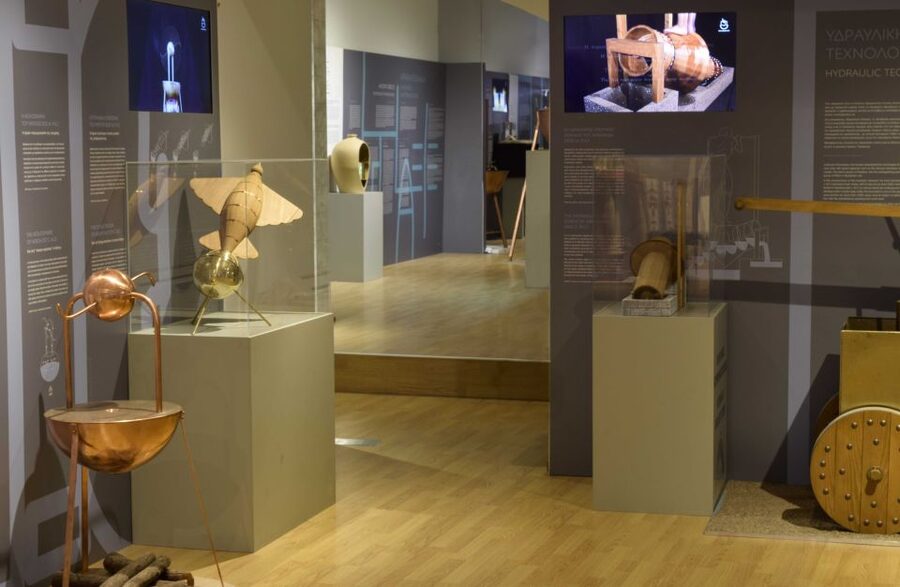
- About 100 working exhibits on ancient Greek invention, including famous mechanisms you may have only heard about.
- Hands-on interactive displays, where you can put mechanisms into use yourself.
- Audio-visual support in Greek and English, with diagrams, posters, photos, and bibliographical references.
- An Art Nouveau setting in a historic building, covering about 700 square meters.
- Easy location near Syntagma Metro Station, about a 5-minute walk away.
What This Museum Does Differently Than Most
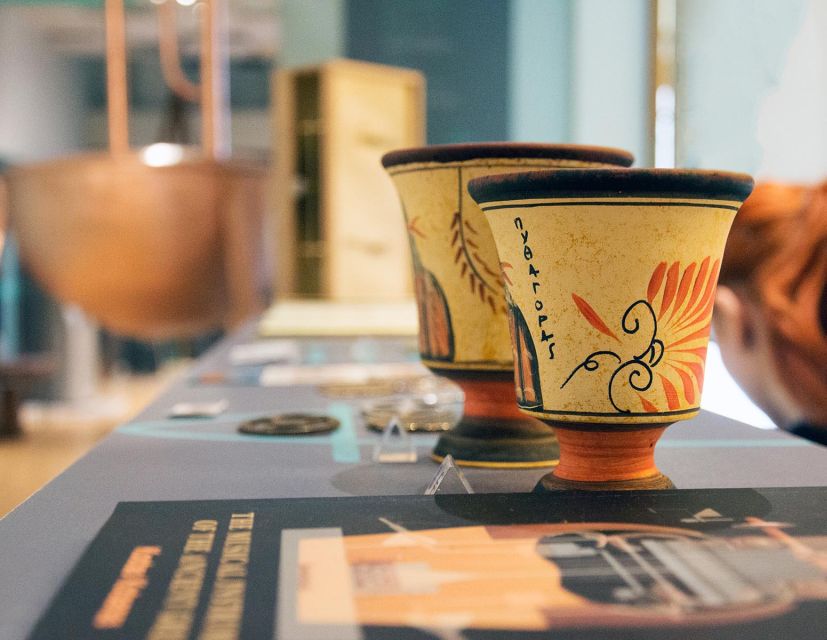
The Kotsanas Museum of Ancient Greek Technology is built for people who like real stuff working. Many history sites show replicas or static displays. Here, you can see mechanisms in action, and that changes how you understand the claims. When a system actually runs, it stops feeling theoretical.
I also like how the museum focuses on engineering thinking. You’ll meet inventions and experiments tied to practical problems: timing, calculation, motion, and control. It is a great reminder that ancient Greeks weren’t only philosophers and poets. They were tinkerers too, and in many cases they built machines that look surprisingly familiar.
The Big Idea: 100 Operating Models of Greek Inventions
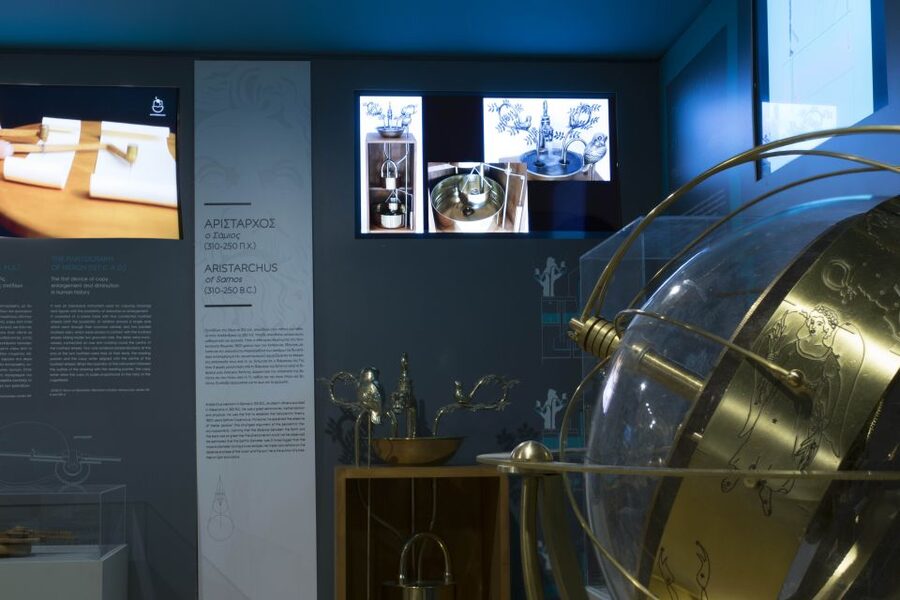
The museum’s core promise is straightforward: around 100 selected exhibits of Greek inventions, many of them operating models. That means you are not waiting for explanations before you can appreciate what you’re seeing. The first wow comes fast.
Here are some of the featured topics you should watch for as you move through the exhibits:
- The oldest analog computer concept and other calculating tools
- The Antikythera calculating mechanism
- Hydraulic clock work attributed to Ktesibios
- The robot-servant
- The cinema of Philon
- The automotive-puppet show of Heron
Even if you only catch part of the story, the variety helps. You get a sense that ancient technology covered entertainment, measurement, automation, and display. That is what makes the collection feel less like a single gimmick and more like a real workshop of ideas.
Entering the Art Nouveau Museum Near Syntagma
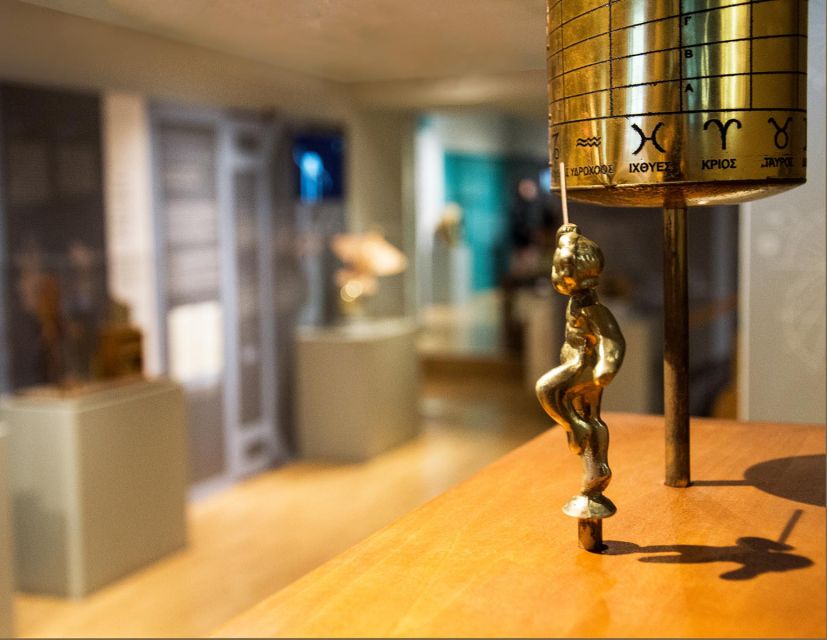
The museum is located at Pindarou 6, Athina 106 71, Greece, about a 5-minute walk from Syntagma Metro Station. If you’re staying in central Athens, this is an easy add-on. You can slot it into a day that already includes museums and walking, without needing complicated transit.
The setting is also part of the experience. It’s housed in a historic Art Nouveau building, with a total exhibition space of about 700 square meters. That matters because the museum does not feel like a tiny room stuffed with objects. It gives exhibits room to be presented with labels, diagrams, photos, and visuals.
A Practical Walk-Through of What You’ll See
Because this is an entry ticket to the museum (not a guided tour), you will effectively set your own route inside. Still, the museum is organized around themes: the exhibits focus on mechanisms, their functions, and how they relate to Greek invention.
Expect this rhythm:
- You start with overview context and big visual panels that explain what you’re looking at.
- You then move into individual displays where you can see the mechanism concept and watch how it works.
- You’ll hit interactive moments, including stations where you can test mechanisms with your own hands.
- You finish by using the video and documentary-style explanations that explain function and use.
The exhibit presentation is built to be self-guided but not hands-off. Many displays include explanatory text and diagrams, and there are projecting stations with video and animation. That gives you a way to slow down where you want and speed past what you do not.
What makes the labels and visuals worth your time
The museum includes audio-visual material in both Greek and English, plus:
- explanatory labels
- giant poster panels with lots of information
- detailed diagrams
- photos
- complete bibliographical references
If you like to understand the why behind the machine, these references are the difference between a fun stop and a lasting takeaway. You can actually trace ideas and terminology rather than just collecting impressions.
Hands-On Interactive Displays (The Part I’d Plan Around)
The interactive side is one of the main reasons this ticket earns such strong interest. The highlights mention that many exhibits are interactive, and the museum invites you to put mechanisms into use with your own hands.
That matters because it turns you from a viewer into a participant. Even basic interaction can teach you what the mechanism needs to operate: timing, alignment, force, sequence, or output. Once you feel the mechanics under your fingers, the next exhibit about a similar principle makes more sense.
If you are visiting with kids or people who usually bounce off museum exhibits, this is the area where you can get them to stick around. It gives them a job: try it, understand it, repeat it.
Video Stations and Documentaries in Greek and English
Not every exhibit will click instantly from the object alone. The museum adds help through projecting stations with video and animation, plus documentary-style content where the exhibitor explains function and use.
Two useful benefits for you:
- You can watch a short explanation without needing to track down a guide.
- You get both visual and verbal support, which helps when a mechanism has multiple steps or depends on a specific relationship between parts.
Because the audio-visual content is available in Greek and English, you can match your comfort level. If you read labels slowly, you can skim visuals. If you prefer visuals first, you can use the animations to guide the rest.
How Much Time Do You Really Need?
Your ticket is valid for 1 day, and starting times vary based on availability. Since it is self-paced and there are about 100 operating models, I’d plan enough time to do two passes: one quick walkthrough to spot the big themes, then a slower revisit for the interactive stations and the displays you care about most.
A good rule of thumb: if you like science and how machines work, allow extra time. If you’re more into quick cultural stops, you can still enjoy it, but prioritize the interactive sections first so you do not leave feeling like you missed the best part.
Price and Value: Is $7.90 Worth It?
At $7.90 per person, this is priced like a museum entry ticket, not a specialized guided tour or a full-day attraction. The value comes from how much is included in that admission:
- entry to the museum only
- access to a large collection of operating models
- interactive displays
- audio-visual stations and explanatory materials
The value gets weaker only if you strongly prefer guided interpretation. The offering specifically does not include a guided tour, so you will be doing the interpretation work yourself via labels and videos.
If you enjoy hands-on learning and you want to see ancient technology that works, this ticket is a good deal. If you only want broad museum narration with minimal reading, the lack of a guide could feel limiting.
Who Should Book This Ticket?
This is a strong fit for:
- people who like how things work (mechanics, timing, measurement, display)
- visitors who enjoy interactive museums
- anyone curious about the Antikythera mechanism and other famous Greek inventions, but wants to see them presented as functioning systems
- families or mixed groups where not everyone wants the same type of history
It is less ideal if you need a live guide to explain the historical context in depth, because the experience is entry-only and self-guided.
Quick Logistics You’ll Actually Care About
- You start near Syntagma Metro Station and the activity ends back at the meeting point.
- The host/greeter language is English.
- The museum is wheelchair accessible.
- Food and drinks are not allowed, so plan to snack before or after.
Should You Book the Athens Kotsanas Museum Ticket?
Yes, if you want a science-and-mechanisms museum that shows you working ancient technology, not just artifacts. The mix of around 100 operating models, interactive stations, and English support through audio-visual materials makes it a practical, memorable stop in central Athens.
Skip it only if you strongly dislike self-guided museums or if you expect a guided tour included with admission. For everyone else, this is one of those rare tickets where curiosity turns into understanding through motion, mechanics, and hands-on testing.
FAQ
Where is the Kotsanas Museum of Ancient Greek Technology located?
It is at Pindarou 6, Athina 106 71, Greece, about a 5-minute walk from Syntagma Metro Station.
What does the ticket include?
The ticket includes entry to the museum. A guided tour is not included.
How long is the ticket valid?
The ticket is valid for 1 day. You should check availability to see the starting times.
What languages are available?
The host or greeter is English, and the museum’s audio-visual material is available in Greek and English.
Is the museum wheelchair accessible?
Yes. The activity is wheelchair accessible.
Are food and drinks allowed inside?
No. Food and drinks are not allowed.
Can I cancel and get a refund?
Yes. There is free cancellation up to 24 hours in advance for a full refund.